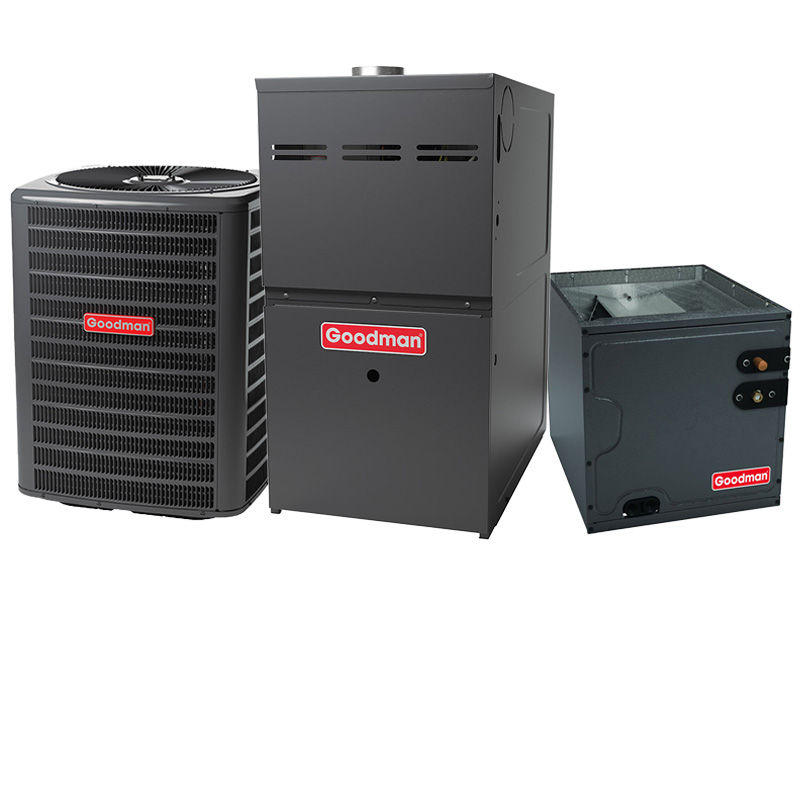
Goodman 3 Ton 15.2 SEER2 60000 BTU 80% AFUE Multi-Speed ECM Gas Furnace System – Upflow | R32
View on AC Direct see your lowest price →Check current price on AC Direct →
Key features
- 15.2 SEER2 cooling efficiency meets current federal regional minimums
- 60,000 BTU 80% AFUE gas furnace with multi-speed ECM blower motor
- Upflow configuration for installations where the air handler sits below the ductwork
- R-32 refrigerant with lower global-warming potential than R-410A
- ECM motor reduces blower electricity use and operating noise versus PSC motors
- Factory-matched system simplifies AHRI certification and warranty compliance
About this system
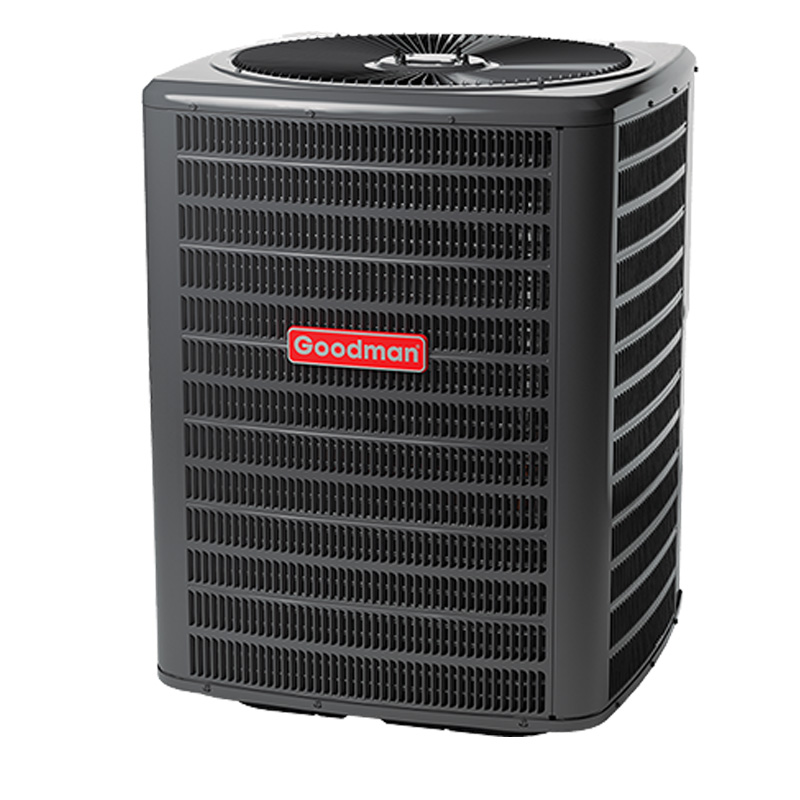
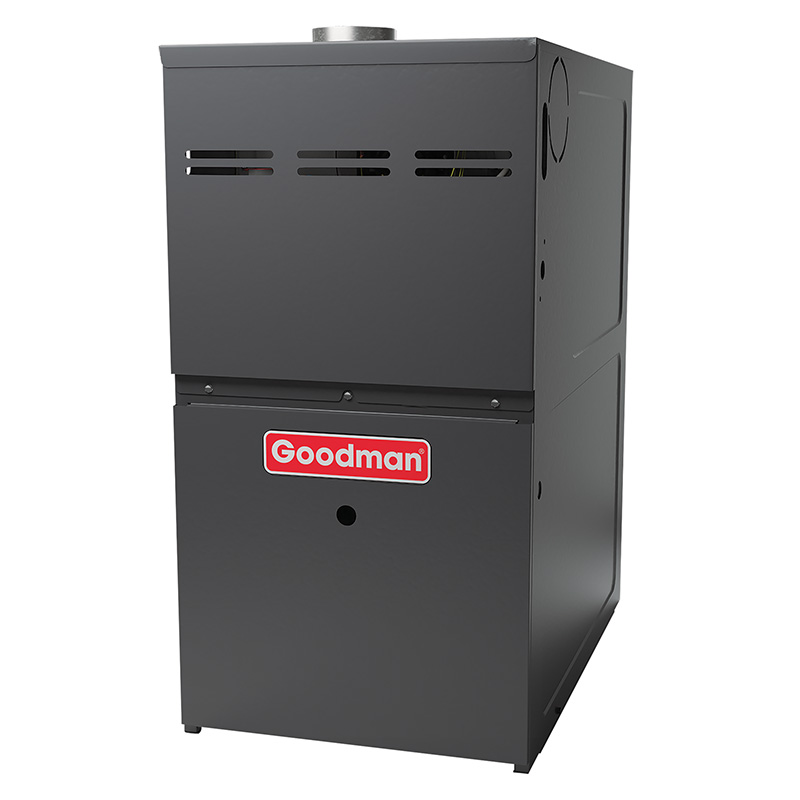
The Goodman 3-ton, 15.2 SEER2 upflow system pairs a 60,000 BTU, 80% AFUE multi-speed ECM gas furnace with a matched R-32 condensing unit sized for homes roughly in the 1,400 to 1,900 square foot range, depending on climate zone and insulation. R-32 refrigerant carries a lower global-warming potential than the older R-410A it is replacing across the industry, and at 15.2 SEER2 this system clears the federal minimum efficiency thresholds currently required in most regions without stepping into the premium-tier price territory of two-stage or variable-capacity equipment.
The multi-speed ECM blower motor is the meaningful upgrade over single-speed furnace pairings at this price point. ECM motors use less electricity at partial loads, move air more quietly, and tend to distribute conditioned air more evenly than a PSC motor running at full blast. The 80% AFUE rating means roughly 20 cents of every heating dollar exits through the flue, which is a real trade-off compared to 96% AFUE condensing furnaces, but it also means simpler PVC or metal venting rather than a secondary condensate drain system. For a house already vented for an 80% furnace, this system fits without a full venting overhaul.
This configuration is best suited for budget-conscious homeowners replacing aging equipment in a single-stage setup who want a reliable step up in cooling efficiency and quieter airflow without paying premium-brand prices. It is not the right pick for a buyer who wants multi-stage cooling, maximum heating efficiency, or who expects the compressor to match the longevity of a Trane or Carrier unit without a proactive maintenance plan.
This Goodman system delivers solid entry-level efficiency and a genuinely quieter blower at a price that undercuts comparable Carrier, Trane, and Lennox equipment by 15 to 25 percent. The trade-offs are real: compressor longevity trails premium brands, a few documented failure modes require watching, and long-term performance depends heavily on the quality of the installing contractor. It is a reasonable buy for the budget-focused homeowner who understands what they are getting.
Overall score is the average of the five ratings above.
What we like
- 15.2 SEER2 clears current federal efficiency minimums without overpaying for rarely-needed variable-capacity technology
- Multi-speed ECM blower is quieter and more efficient than single-speed PSC motor alternatives at this price tier
- R-32 refrigerant is better for the environment and is widely available for service technicians
- Factory-matched system simplifies permitting, AHRI certification, and warranty claims
- Price point is 15 to 25 percent below comparable Carrier, Trane, and Lennox systems, freeing budget for a quality installation
Trade-offs
- Compressors average 10 to 14 years in documented owner experience, several years shorter than premium-brand benchmarks
- Dual-run capacitors are the most frequently reported repair item, typically needed within the first 7 to 10 years
- 80% AFUE leaves real heating efficiency on the table compared to condensing furnaces, adding up in cold-climate heating seasons
- A minority of first-year refrigerant leak reports suggest quality control is more variable than premium brands
What homeowners and pros say about Goodman
Homeowners who have lived with a Goodman system for several years tend to split along a clear line: those who had a skilled contractor install it and who schedule annual maintenance are generally satisfied, citing low upfront cost and adequate performance. Those who had a rushed or discount installation tell a different story, which is reflected in Goodman’s ConsumerAffairs score of roughly 2.5 out of 5, a platform where complaints cluster around repair costs climbing after year seven or so. The Google dealer review picture is more balanced at around 3.8 out of 5, where the most consistent praise is the affordable entry price. Neither number is stellar, and both are consistent with what you would expect from a value-tier brand in a category where installation quality does more to determine a system’s life than the nameplate alone.
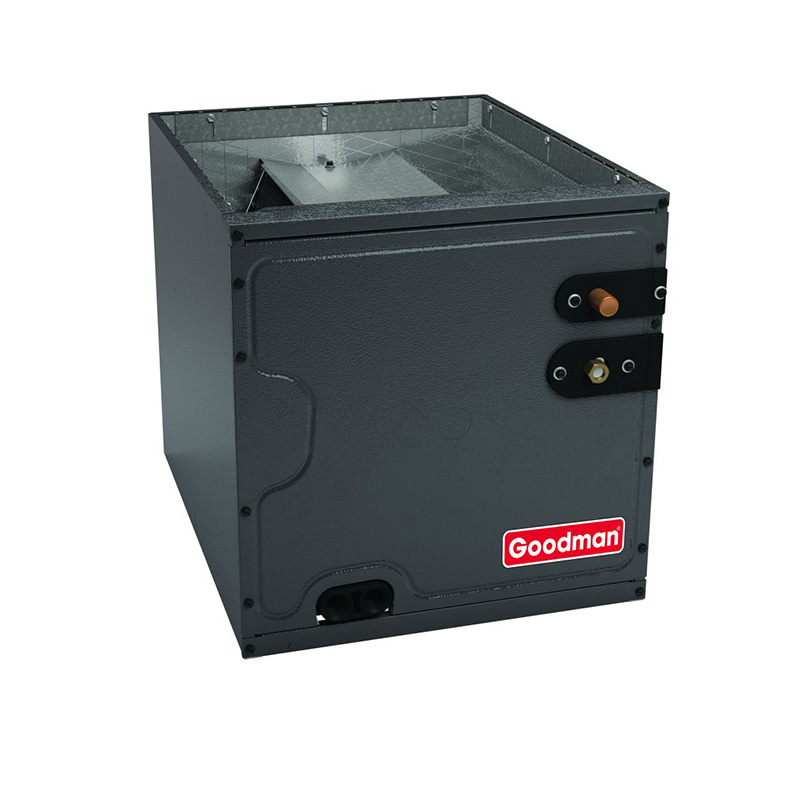
HVAC technicians are candid about specific weak points. Dual-run capacitors are the most common service call on Goodman outdoor units, usually a straightforward repair in the 300 to 600 dollar range but a recurring one without annual maintenance. Evaporator coil leaks appear in a meaningful share of owner accounts and are a more expensive fix. Compressor lifespan averages 10 to 14 years across documented owner experience, a genuine gap compared to the 15 to 20 years technicians typically see from Trane, Carrier, and Lennox compressors. A small but documented minority of owners report refrigerant leaks in the first year, which experienced installers attribute primarily to charge errors or flare connections rather than a manufacturing defect. None of these issues are disqualifying for a budget buyer, but they are real factors to weigh when comparing total cost of ownership over a decade or more.
Sources: ConsumerAffairs Goodman owner reviews, AHRI Directory of Certified Product Performance, U.S. DOE appliance and equipment efficiency standards, Goodman product specification sheets.
What it costs to run
At 15.2 SEER2, cooling this 3-ton system for a typical 1200-hour cooling season at the U.S. average electricity rate of $0.17/kWh works out to roughly $483 per year in cooling, about $65 less per year than a minimum-efficiency 13.4 SEER2 unit of the same size. Your real cost depends on your climate and local rate.
Method: (36,000 BTU/hr ÷ 15.2 SEER2) × 1200 hours ÷ 1000 × $0.17/kWh. Rate source: U.S. EIA average; cooling hours: moderate-climate estimate.
How it compares
| Brand | Comparable model | SEER2 | Stage | Price position |
|---|---|---|---|---|
| Goodman | GSXH5 / GMVC8 Series | 15.2 | Single-stage | Value pick |
| Carrier | Comfort 14 (24ACC4) | 15.2 | Single-stage | Typically 15 to 25 percent more than this Goodman system |
| Trane | XR15 Series | 15.0–16.0 | Single-stage | Typically 15 to 25 percent more than this Goodman system |
| Lennox | Merit ML15 Series | 15.2 | Single-stage | Typically 15 to 25 percent more than this Goodman system |
Competitor rows are comparable single-stage units at similar efficiency; price is relative position, not a quote.
Questions about this system
Will this system work with my existing R-410A line set?
R-32 systems are not directly compatible with line sets or components contaminated with R-410A or its oil. In most cases a new line set is required or the existing one must be thoroughly flushed and verified clean. Confirm this with your installer before purchase, as it affects total installed cost.
Why does this furnace only have 80% AFUE instead of 96%?
80% AFUE furnaces vent combustion gases through a standard flue, which means they can use your existing metal or PVC single-pipe venting. A 96% AFUE condensing furnace requires a two-pipe PVC system and a condensate drain, adding installation complexity and cost. The 80% unit is simpler to retrofit but costs more to operate in heating-heavy climates.
What is the most common repair I should expect on this Goodman system?
Dual-run capacitors are the most frequently reported failure on Goodman equipment, typically surfacing after roughly 7 years. The repair generally runs between 300 and 600 dollars and is a straightforward fix for any HVAC technician. Keeping a maintenance contract and scheduling annual tune-ups is the most reliable way to catch a weakening capacitor before it causes a no-cooling call in mid-summer.
How does the ECM blower motor affect my monthly energy bills compared to a standard motor?
ECM motors use significantly less electricity at lower speeds than PSC motors, which run at full power or not at all. In a system running fan-only mode for air circulation, or cycling at lower heating demands, the ECM can cut blower electricity use by 50 to 75 percent compared to a PSC motor. The savings are real but most noticeable in climates where the fan runs frequently.
Is a 3-ton unit the right size for my home?
Three tons of cooling capacity is a rough fit for homes between about 1,400 and 1,900 square feet, but the actual answer depends on your climate zone, insulation level, window area, and ceiling height. An oversized system will short-cycle, reducing dehumidification and increasing wear. Ask your installer to perform a Manual J load calculation before confirming the tonnage, and do not let anyone size the replacement unit simply by matching what was there before.
Specifications
| Cooling capacity | 3 Ton |
| Efficiency | 15.2 SEER2 |
| Furnace output | 60000 BTU |
| Furnace efficiency | 80% AFUE |
| Configuration | Upflow |
| Refrigerant | R-32 |