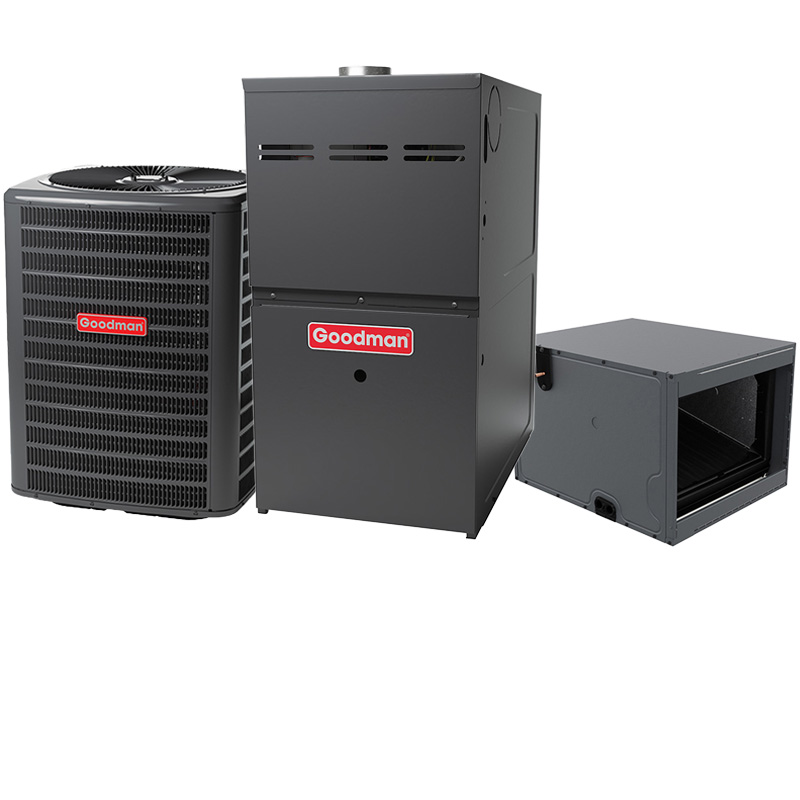
Goodman 3 Ton 15.2 SEER2 80000 BTU 80% AFUE Multi-Speed ECM Gas Furnace System – Horizontal | R32
View on AC Direct see your lowest price →Check current price on AC Direct →
Key features
- 3-ton cooling capacity suited to approximately 1,400 to 1,800 sq ft
- 15.2 SEER2 efficiency meets current federal minimums for most U.S. regions
- 80,000 BTU, 80% AFUE gas furnace for moderate-climate heating loads
- Multi-speed ECM blower motor for quieter operation and lower fan energy use
- R-32 refrigerant with lower global warming potential than R-410A
- Horizontal configuration designed for attic, crawlspace, or side-discharge installs
About this system
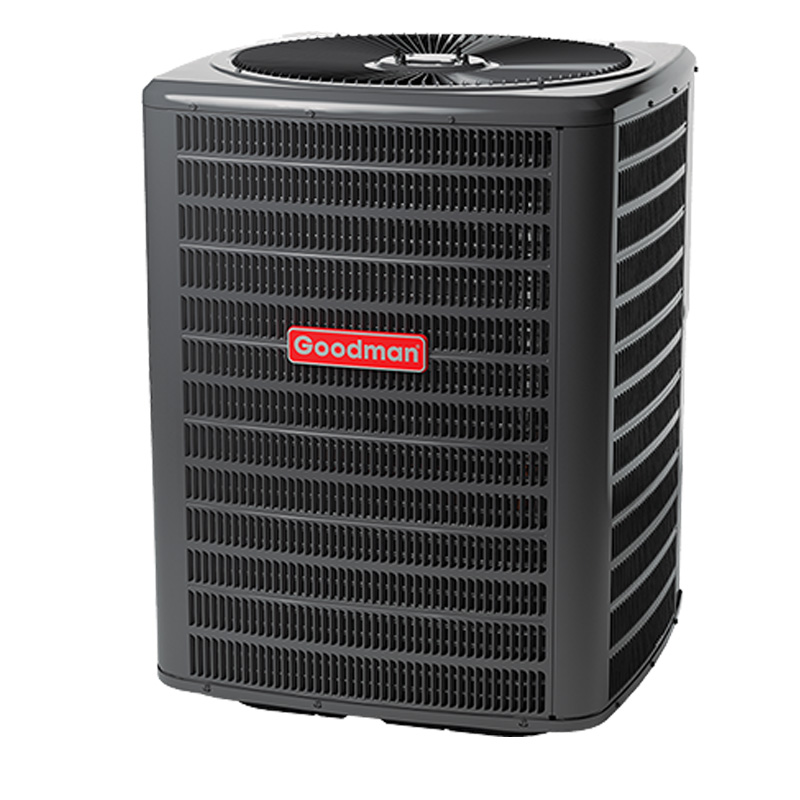
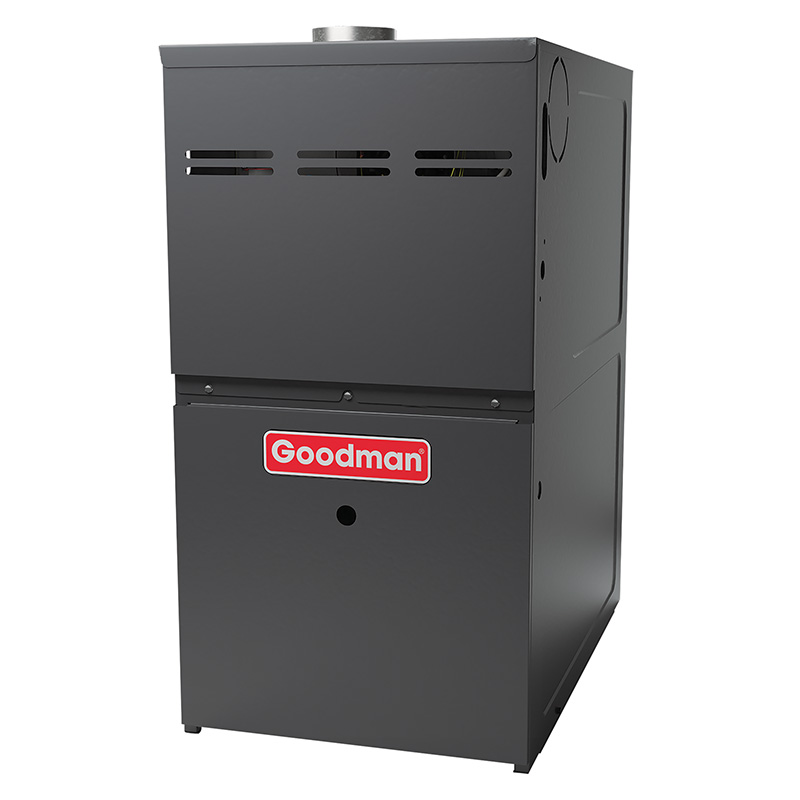
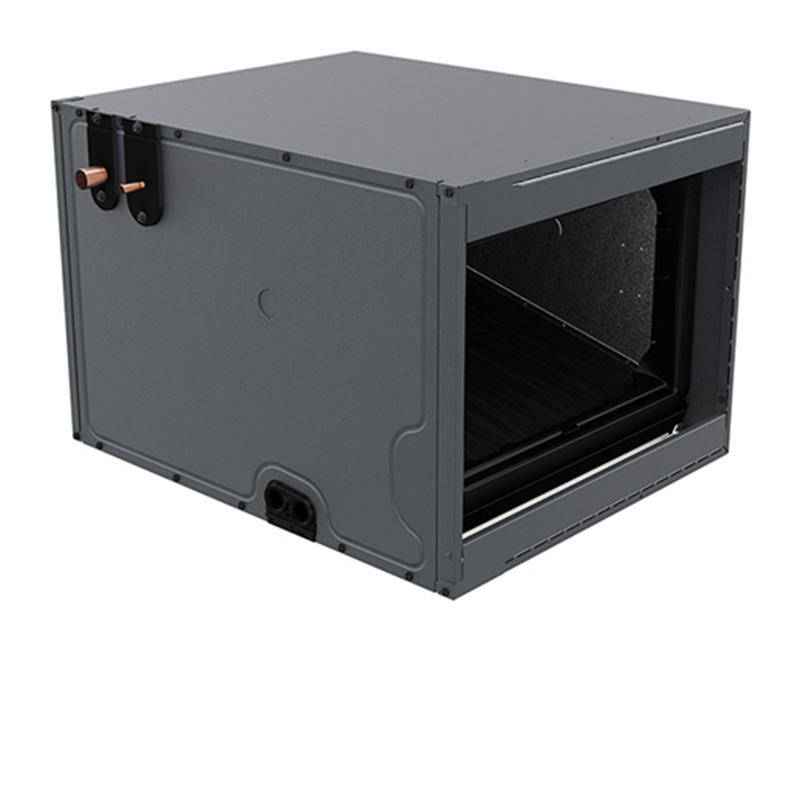
This Goodman 3-ton horizontal system pairs a 15.2 SEER2 air conditioner with an 80,000 BTU, 80% AFUE multi-speed ECM gas furnace, making it a practical choice for homes in the 1,400 to 1,800 square foot range that require horizontal equipment placement, such as attic or crawlspace installations. The R-32 refrigerant charge is a step in the right direction environmentally, carrying a lower global warming potential than the R-410A it replaces, and it tends to operate at slightly lower pressures, which can ease the load on system components over time. The multi-speed ECM blower motor improves airflow consistency and reduces electricity draw compared to a single-speed PSC motor, contributing to comfort and modest operating cost savings.
The 15.2 SEER2 rating clears the current federal minimum efficiency standards for most U.S. climate zones and lands in the entry-to-mid tier of efficiency, meaning operating costs will be lower than older equipment but not as low as 17 or 18 SEER2 systems. The 80% AFUE furnace is straightforward: one dollar in five goes up the flue. Homeowners in very cold climates who run the furnace heavily through winter may find the payback on a 95% AFUE unit worthwhile over a decade, while those in milder regions or with moderate heating loads will likely see adequate savings at this tier. Horizontal configuration adds installation complexity and is best handled by a technician experienced with attic or tight-space setups, since improper leveling and condensate drainage are common problem sources in that orientation.
This Goodman system offers an accessible price point and meets current efficiency standards, making it a reasonable fit for budget-focused homeowners in moderate climates who plan to invest in quality installation. The trade-offs are real: compressor longevity and coil reliability lag behind premium brands, and the 80% AFUE furnace leaves efficiency gains on the table for heavy-heating climates. Get the install right and maintain it consistently, and this system can deliver solid service for a decade or more.
Overall score is the average of the five ratings above.
What we like
- Priced roughly 15 to 25 percent below comparable Trane, Carrier, and Lennox systems
- Multi-speed ECM motor improves comfort and reduces blower electricity consumption versus single-speed units
- R-32 refrigerant is more environmentally responsible and operates at lower pressures than R-410A
- 15.2 SEER2 clears federal minimums and delivers meaningful savings over older sub-14 SEER equipment
- Horizontal configuration availability makes it viable for attic or crawlspace installations where upflow units cannot fit
Trade-offs
- 80% AFUE means significant heating efficiency loss versus 95% AFUE alternatives, especially in colder climates
- Compressor lifespan averages 10 to 14 years compared to 15 to 20 years seen in premium-brand equipment
- Documented evaporator coil leaks and a minority of early refrigerant leak reports raise long-term reliability concerns
- Horizontal installs are less forgiving of poor workmanship, and Goodman's performance is heavily dependent on install quality
What homeowners and pros say about Goodman
Homeowners who have lived with Goodman equipment for several years tend to land in two camps. Those who had a skilled installer and kept up with annual maintenance often report years of trouble-free operation and point to the lower upfront cost as money that stayed in their pocket. Those who faced problems frequently mention repair costs climbing after the 7-year mark, a pattern consistent with Goodman’s ConsumerAffairs score of around 2.5 out of 5, a channel that skews toward people motivated to report frustration. Google dealer reviews tell a somewhat more balanced story, averaging around 3.8 out of 5 across locations, where affordability is the most common reason buyers say they are satisfied.
HVAC technicians who service Goodman equipment regularly note that dual-run capacitors are the failure they see most often on these systems, and they generally describe it as a quick, low-cost fix when caught on an annual check rather than a hot July afternoon. The more consequential concerns they raise are evaporator coil leaks, which appear in a meaningful share of owner reports, and compressor lifespan that tends to land in the 10 to 14 year range rather than the 15 to 20 years more common in Trane, Carrier, and Lennox equipment. For a horizontal installation specifically, experienced technicians stress that proper leveling, condensate management, and a correct refrigerant charge on first startup are non-negotiable, because this configuration leaves less room for sloppy work than a standard upflow install.
Sources: ConsumerAffairs Goodman owner reviews, AHRI Directory of Certified Product Performance, U.S. DOE appliance and equipment efficiency standards, Goodman product specification sheets.
What it costs to run
At 15.2 SEER2, cooling this 3-ton system for a typical 1200-hour cooling season at the U.S. average electricity rate of $0.17/kWh works out to roughly $483 per year in cooling, about $65 less per year than a minimum-efficiency 13.4 SEER2 unit of the same size. Your real cost depends on your climate and local rate.
Method: (36,000 BTU/hr ÷ 15.2 SEER2) × 1200 hours ÷ 1000 × $0.17/kWh. Rate source: U.S. EIA average; cooling hours: moderate-climate estimate.
How it compares
| Brand | Comparable model | SEER2 | Stage | Price position |
|---|---|---|---|---|
| Goodman | 3 Ton 15.2 SEER2 / 80K BTU 80% AFUE Horizontal R-32 | 15.2 | Multi-speed | Value pick |
| Carrier | Comfort 15 Series (24ACC6) | 15.2 | Single-stage | Typically 15 to 25 percent more than Goodman |
| Trane | XR15 Series | 15.0 to 15.5 | Single-stage | Typically 15 to 25 percent more than Goodman |
| Lennox | Merit 14ACX / ML14XC1 Series | 15.0 to 15.5 | Single-stage | Typically 15 to 25 percent more than Goodman |
Competitor rows are comparable single-stage units at similar efficiency; price is relative position, not a quote.
Questions about this system
Is 80% AFUE good enough, or should I upgrade to a 96% furnace for this system?
At 80% AFUE, 20 cents of every fuel dollar exits through the flue. In mild to moderate climates with lower annual heating hours, the price difference between an 80% and 96% furnace often takes many years to recover. In cold northern climates where the furnace runs hard from November through March, the higher-efficiency unit can pay back the cost difference within 5 to 8 years, so it deserves serious consideration before you commit.
What does horizontal configuration mean, and are there extra risks with this install?
Horizontal means the furnace lies on its side with airflow moving laterally rather than upward, which is required in attics or low-clearance crawlspaces. The risks are real: improper leveling can cause condensate drainage problems, and attic installations face wider temperature swings that stress components. Using a technician experienced with horizontal setups is not optional if you want this system to perform as intended.
How does R-32 refrigerant affect service and maintenance compared to R-410A?
R-32 is mildly flammable (A2L classification), which means technicians working on this system must be certified to handle it and use appropriate tools. On the upside, R-32 has a global warming potential roughly 68 percent lower than R-410A and operates efficiently at lower charge weights. Parts and refrigerant availability are expanding rapidly as the industry transitions, so servicing this system should not be a problem with a current-certified technician.
What is the most likely repair I will need on this Goodman system, and what will it cost?
Dual-run capacitors are the most commonly reported failure point across Goodman equipment, and the repair is typically straightforward and relatively inexpensive, usually in the 300 to 600 dollar range including labor. Evaporator coil leaks are a more significant concern documented in owner reviews and would be a more costly repair or replacement. Staying current on annual maintenance checks helps catch capacitor degradation and refrigerant charge issues before they become larger problems.
Does Goodman's warranty cover parts and labor, and how long does it last?
Goodman's standard registered warranty typically covers parts for 10 years on the compressor and heat exchanger and 5 years on other covered components when registered within the required window after installation. Labor is not covered by the manufacturer, so that cost falls to the homeowner or any extended service plan you purchase separately. Failing to register the equipment within the required timeframe can reduce coverage to a shorter base warranty, so registration immediately after install is important.
Specifications
| Cooling capacity | 3 Ton |
| Efficiency | 15.2 SEER2 |
| Furnace output | 80000 BTU |
| Furnace efficiency | 80% AFUE |
| Configuration | Horizontal |
| Refrigerant | R-32 |