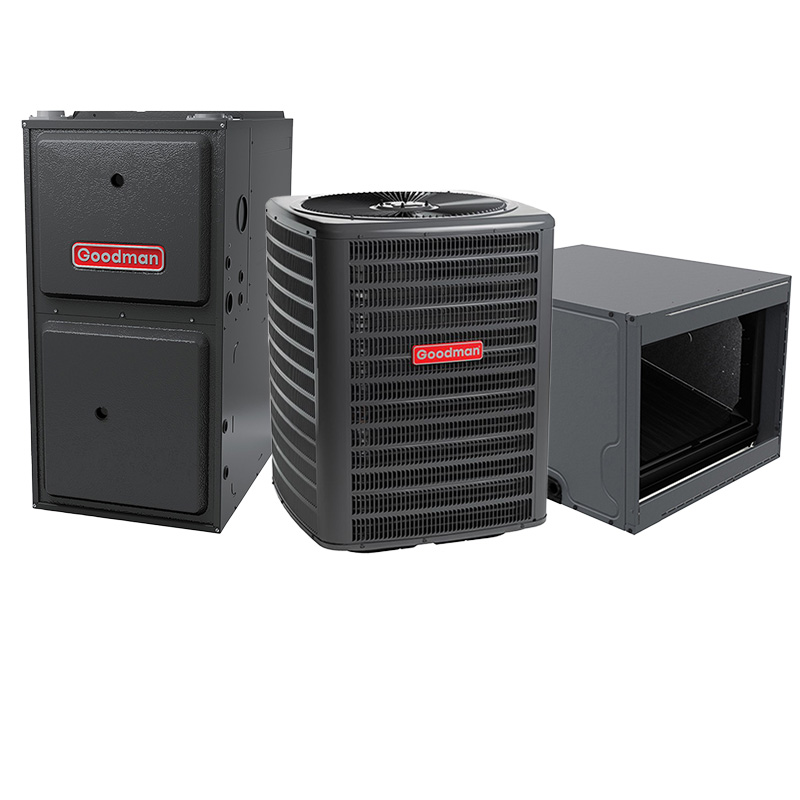
Goodman 3 Ton 15.2 SEER2 80000 BTU 80% AFUE Two Stage Multi-Speed ECM Gas Furnace System – Horizontal | R32
View on AC Direct see your lowest price →Check current price on AC Direct →
Key features
- 15.2 SEER2 cooling efficiency, meeting federal minimum standards for most U.S. regions
- 80,000 BTU two-stage gas furnace at 80% AFUE for improved comfort over single-stage units
- Horizontal configuration for attic and crawlspace installations where vertical units will not fit
- Multi-speed ECM blower motor reduces energy use and improves airflow consistency
- R-32 refrigerant with lower global warming potential than outgoing R-410A systems
- Goodman 10-year parts warranty when registered within 60 days of installation
About this system
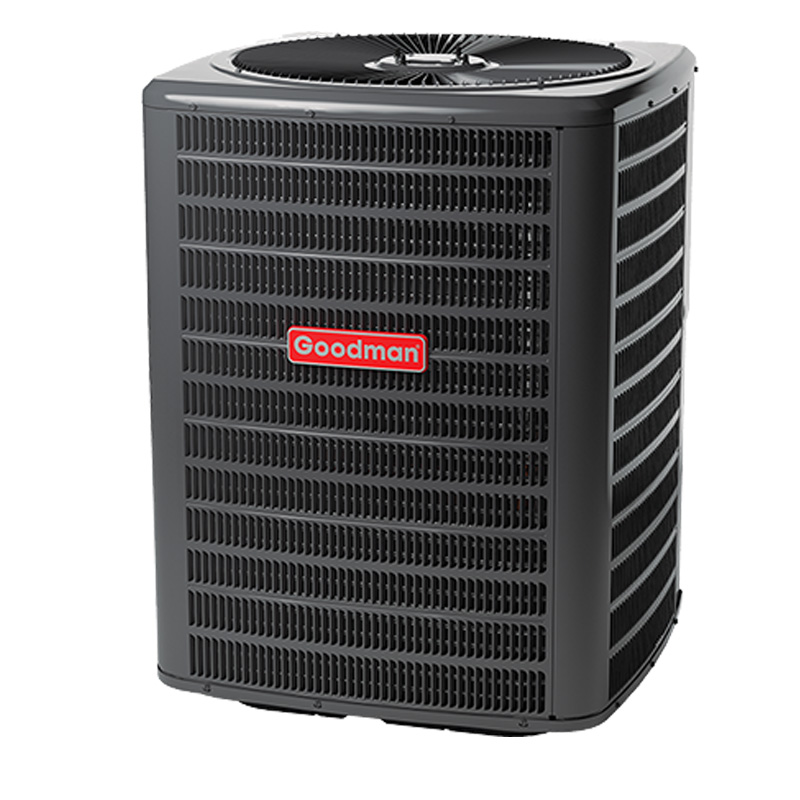
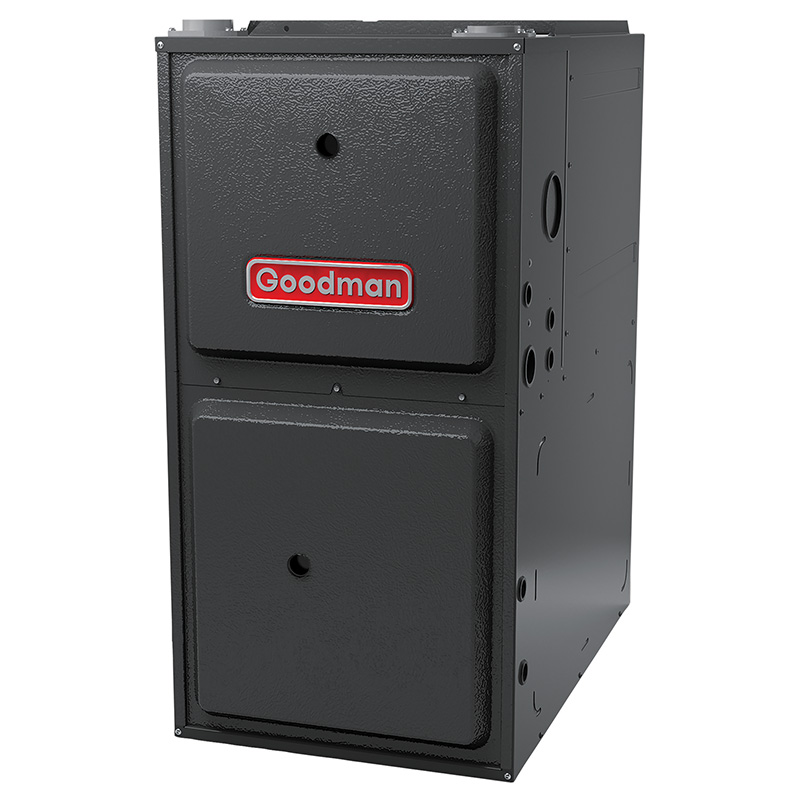
The Goodman GLXS4BA3610 is a 3-ton, 15.2 SEER2 split system paired with an 80,000 BTU, 80% AFUE two-stage gas furnace configured for horizontal installation. That horizontal layout makes it the right call for tight attic spaces or crawlspaces where a vertical unit simply will not fit, and the R-32 refrigerant charge puts it ahead of older R-410A systems on environmental impact. At 15.2 SEER2, this system clears the federal minimum for most U.S. regions without climbing into premium efficiency territory, which keeps the upfront cost reasonable for a mid-size home in a moderate climate.
The two-stage furnace is a meaningful step up from single-stage equipment. On milder days it runs at low fire, cutting short-cycling, improving humidity control, and reducing temperature swings room to room. The multi-speed ECM blower motor reinforces those gains by matching airflow to demand rather than blasting full speed every cycle. Together, those two features make the system quieter, more consistent day-to-day, and somewhat more efficient than the rated AFUE number suggests in real-world use. Homeowners replacing an older single-stage 80% furnace will likely notice the difference in comfort even before they check an energy bill.
This package suits buyers who need to replace aging equipment on a budget, own a home in the 1,500 to 2,200 square foot range in a mixed heating and cooling climate, and want a system that a competent independent contractor can service anywhere in the country. It is not aimed at buyers chasing the lowest possible utility bills long-term or expecting the same lifespan as a premium brand installation.
The GLXS4BA3610 delivers a genuine two-stage heating and multi-speed cooling package at a price point most premium brands cannot touch, making it a sensible choice for budget-conscious homeowners who accept a somewhat shorter expected compressor lifespan and the possibility of component repairs after year seven. It is honest value, not exceptional quality, and how long it lasts will depend heavily on installation quality and whether the contractor charges it correctly the first time. Buyers who prioritize longevity or who plan to stay in their home 18 to 20 years should price the premium alternatives before committing.
Overall score is the average of the five ratings above.
What we like
- Two-stage furnace and ECM blower deliver noticeably better comfort and humidity control than single-stage budget alternatives
- Priced roughly 15 to 25 percent below comparable Trane, Lennox, and Carrier packages, lowering the payback period on replacement
- R-32 refrigerant is a forward-looking choice with lower environmental impact than R-410A
- Horizontal configuration is a practical solution for attic installs where most competing units require special conversion kits
- Parts and repair service are widely available from independent contractors nationwide due to Goodman's large installed base
Trade-offs
- Dual-run capacitors are the most frequently reported failure point, often appearing within the first several years and adding 300 to 600 dollars per repair visit
- Compressor lifespan averages 10 to 14 years versus 15 to 20 years for premium-brand compressors, which affects total cost of ownership
- A minority of owners have reported refrigerant leaks in year one, typically traced to installation or initial charge errors rather than factory defects
- Evaporator coil leaks appear in a meaningful share of long-term owner reviews, a failure mode that can be costly outside the warranty window
What homeowners and pros say about Goodman
Homeowners discussing Goodman equipment online tend to split along a predictable line: those who bought on price and got a working system for years without incident, and those who ran into repair bills after the seven-year mark and wish they had spent more upfront. On ConsumerAffairs, Goodman averages roughly 2.5 out of 5, with the recurring theme being frustration over repair frequency as systems age past that point. On Google dealer reviews, the brand sits closer to 3.8 out of 5, where the most common praise is straightforwardly about price and the most common criticism is about longevity. Neither score should be read as definitive, but together they paint a consistent picture of a brand that delivers on its core promise of affordability while asking owners to accept more maintenance risk over time.
HVAC technicians who work on Goodman equipment regularly point to dual-run capacitors as the brand’s most predictable failure point, a repair that tends to run 300 to 600 dollars and is not exclusive to Goodman but shows up in service records often enough to be worth budgeting for. Evaporator coil leaks are a documented concern in longer-term owner reviews, and compressor lifespan in Goodman systems is generally cited in the 10 to 14 year range rather than the 15 to 20 years common in premium-brand equipment. For this horizontal two-stage system specifically, technicians consistently note that installation quality is the single biggest variable in how long the unit lasts, which means the contractor choice is arguably as important as the equipment choice itself. A first-year refrigerant leak, when it happens, is almost always attributed to an installation or charge error rather than a factory defect, which reinforces that point.
Sources: ConsumerAffairs Goodman owner reviews, AHRI Directory of Certified Product Performance, U.S. DOE appliance and equipment efficiency standards, Goodman product specification sheets.
What it costs to run
At 15.2 SEER2, cooling this 3-ton system for a typical 1200-hour cooling season at the U.S. average electricity rate of $0.17/kWh works out to roughly $483 per year in cooling, about $65 less per year than a minimum-efficiency 13.4 SEER2 unit of the same size. Your real cost depends on your climate and local rate.
Method: (36,000 BTU/hr ÷ 15.2 SEER2) × 1200 hours ÷ 1000 × $0.17/kWh. Rate source: U.S. EIA average; cooling hours: moderate-climate estimate.
How it compares
| Brand | Comparable model | SEER2 | Stage | Price position |
|---|---|---|---|---|
| Goodman | GLXS4BA3610 | 15.2 | two-stage | Value pick |
| Carrier | Performance 24ACC636 with 59TP6 | 15.2 | two-stage | Typically 15 to 20 percent higher than this Goodman package |
| Trane | XR15 with S9X2 furnace | 15.0 | two-stage | Typically 20 to 25 percent higher than this Goodman package |
| Lennox | Merit ML15XC1 with ML196E furnace | 15.2 | two-stage | Typically 20 to 30 percent higher than this Goodman package |
Competitor rows are comparable single-stage units at similar efficiency; price is relative position, not a quote.
Questions about this system
Why is this unit configured horizontal-only, and can I install it vertically if I change my mind?
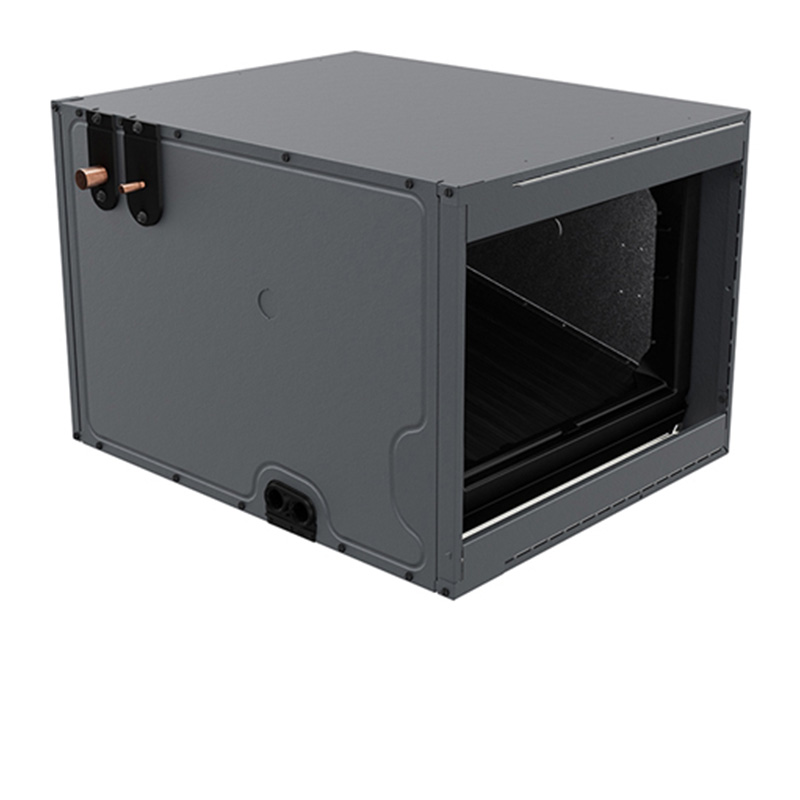
The GLXS4BA3610 air handler and coil cabinet are engineered specifically for horizontal airflow orientation, which means the drain pan, coil supports, and blower mounting are set up for that position from the factory. Installing it in a vertical orientation is not supported and can cause condensate drainage failures and uneven coil performance. If you need vertical installation flexibility, you would need to select a different model or cabinet.
What does the two-stage furnace actually do for me compared to a standard single-stage unit at the same AFUE rating?
A two-stage furnace fires at a lower capacity on mild days and steps up to full output only when the temperature outside drops significantly. That means shorter bursts of full heat, fewer large temperature swings, better moisture removal in transitional seasons, and a quieter operating sound on most days. The AFUE rating does not fully capture those comfort and runtime benefits, so the real-world experience is generally better than the 80% number alone suggests.
Goodman has mixed reviews online. Should I be worried about reliability for this specific system?
Goodman scores around 2.5 out of 5 on ConsumerAffairs, a channel that skews toward complaint-driven posts, and around 3.8 out of 5 across Google dealer reviews where affordability is the most common praise. Documented failure points for Goodman systems include dual-run capacitors (a relatively inexpensive fix in the 300 to 600 dollar range), evaporator coil leaks, and compressor lifespans that tend to run shorter than premium brands. The single biggest factor in how this specific system performs is installation quality, so choosing a contractor with documented experience on Goodman equipment matters more than the brand name alone.
Does this system use R-32 refrigerant, and will that cause any issues finding a contractor to service it?
Yes, this unit is pre-charged with R-32, which is newer than R-410A but increasingly common as manufacturers phase out older refrigerants under updated EPA rules. Most licensed HVAC technicians can handle R-32 with proper equipment, though you should confirm your contractor is certified and equipped for it before scheduling service, especially in rural areas where some smaller shops may not yet have R-32 handling tools.
How do I make sure the 10-year parts warranty stays valid?
Goodman requires the system to be registered on their website within 60 days of installation to unlock the full 10-year parts warranty. Without registration, coverage typically drops to a shorter baseline period. You also need the unit installed by a licensed HVAC contractor, and keeping records of that installation and any service visits is wise in case a warranty claim arises years down the road.
Specifications
| Cooling capacity | 3 Ton |
| Efficiency | 15.2 SEER2 |
| Furnace output | 80000 BTU |
| Furnace efficiency | 80% AFUE |
| Configuration | Horizontal |
| Refrigerant | R-32 |
| Model | GLXS4BA3610 |