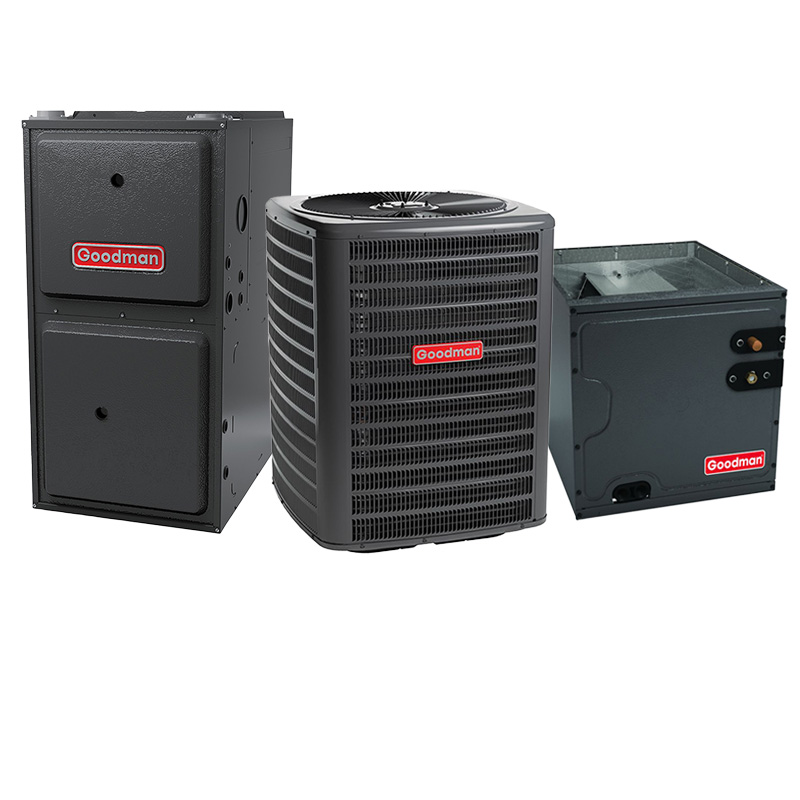
Goodman 3 Ton 15.2 SEER2 80000 BTU 80% AFUE Two Stage Multi-Speed ECM Gas Furnace System – Upflow | R32
View on AC Direct see your lowest price →Check current price on AC Direct →
Key features
- 3-ton, 15.2 SEER2 two-stage cooling with R-32 refrigerant
- 80,000 BTU two-stage gas furnace rated at 80% AFUE
- Multi-speed ECM blower motor for variable airflow efficiency
- Upflow configuration suits most standard basement or closet installations
- R-32 refrigerant with lower global warming potential than R-410A
- Two-stage operation reduces short-cycling and improves humidity management
About this system
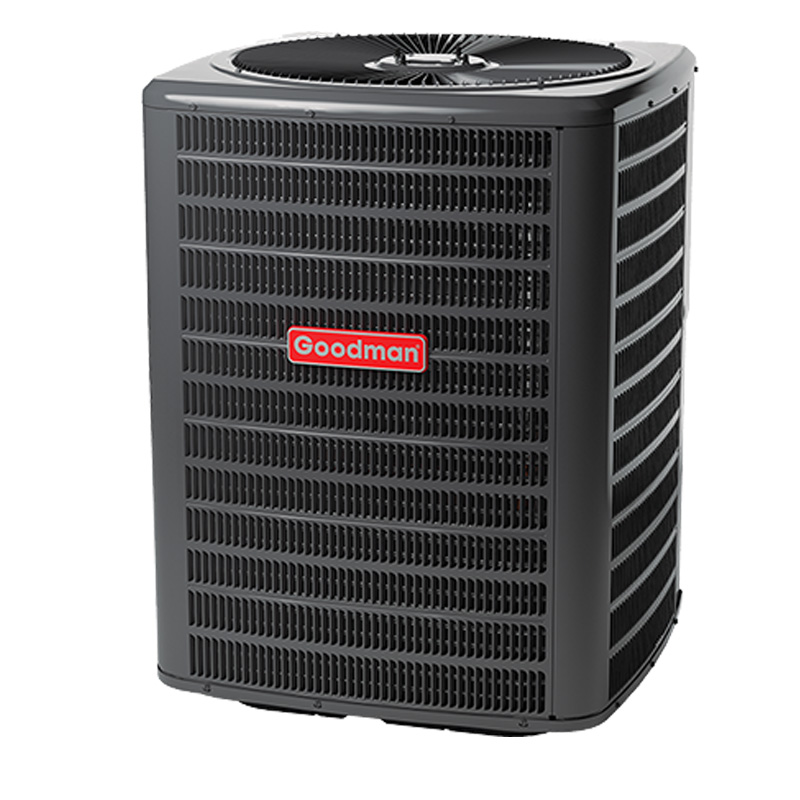
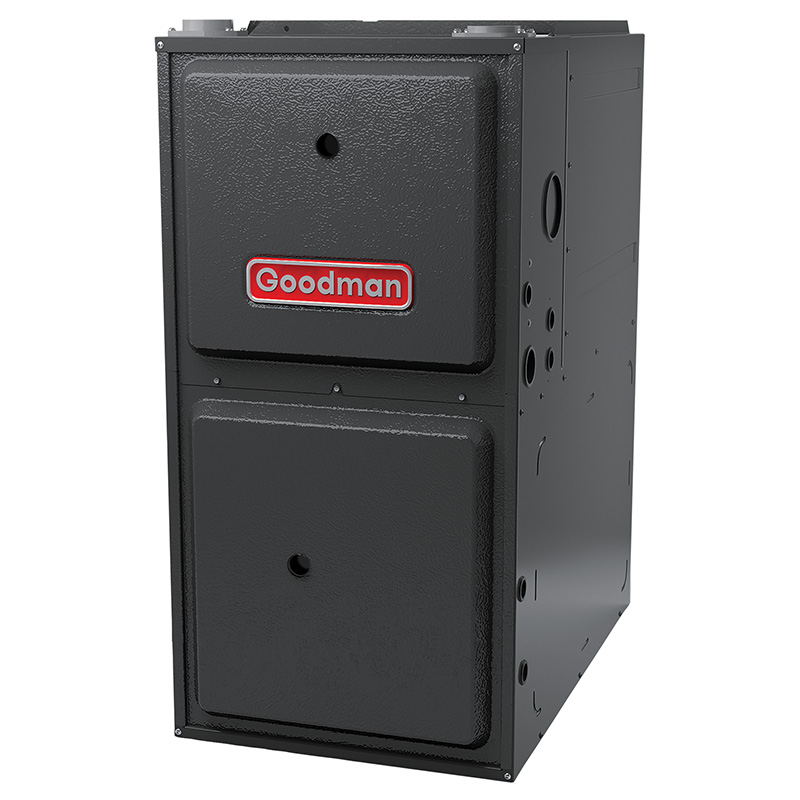
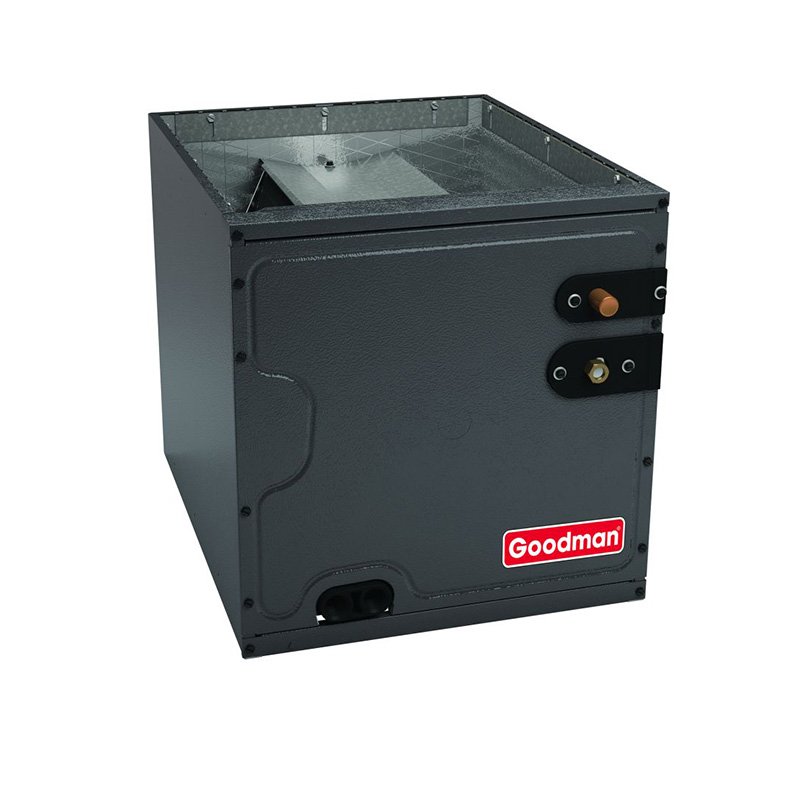
The Goodman GLXS4BA3610 pairs a 3-ton, 15.2 SEER2 R-32 central air condenser with an 80,000 BTU, 80% AFUE two-stage gas furnace in an upflow configuration, making it a practical all-in-one comfort system for homes in the 1,500 to 2,200 square foot range. The two-stage cooling and heating operation means the system runs at a lower capacity the majority of the time, cycling less aggressively than a single-stage unit, which generally improves humidity control and reduces temperature swings room to room. The multi-speed ECM blower motor adds further efficiency by adjusting airflow to match demand rather than running at a fixed speed throughout every cycle.
The switch to R-32 refrigerant is worth noting for buyers planning long-term ownership. R-32 has a lower global warming potential than the R-410A it replaces and is already the dominant refrigerant in new residential equipment, so servicing this system a decade from now should be straightforward. The 80% AFUE rating is a code-minimum tier in most northern climate zones, meaning roughly one in five units of gas combustion energy leaves as flue exhaust rather than becoming usable heat. Homeowners in colder climates who run their furnace heavily from October through March may find a 96% AFUE unit pays back the price difference over time, while buyers in mild-to-moderate heating climates will likely never recoup that premium.
This system sits squarely in Goodman’s value positioning, typically priced 15 to 25 percent below comparable equipment from Trane, Lennox, or Carrier. That gap makes it an attractive choice for budget-conscious buyers, rental property owners, or anyone replacing a failed system on short notice, provided the installation is performed carefully by an experienced technician. Because Goodman’s real-world longevity is heavily influenced by install quality, choosing a contractor with verifiable references on Goodman equipment matters more here than with some premium brands.
The Goodman GLXS4BA3610 delivers a capable two-stage system at a price point that competing brands rarely match, making it a reasonable choice for budget-focused buyers who can secure a quality installation. The 80% AFUE furnace and 15.2 SEER2 cooling land in middle-tier efficiency territory, which suits mild-to-moderate climates better than extreme heating or cooling regions. Long-term ownership costs depend significantly on install quality and the luck of the draw on components, particularly capacitors and evaporator coils.
Overall score is the average of the five ratings above.
What we like
- Priced 15 to 25 percent below comparable Trane, Carrier, and Lennox systems
- Two-stage operation improves comfort and humidity control versus single-stage alternatives at this price
- ECM blower motor reduces blower energy consumption during the long run times typical of two-stage systems
- R-32 refrigerant is forward-compatible and widely available for future service calls
- Upflow configuration is straightforward to install in the majority of existing duct layouts
Trade-offs
- 80% AFUE is the lowest efficiency tier and a poor long-term fit for climates with sustained cold winters
- Compressor lifespan averages 10 to 14 years versus 15 to 20 years documented for premium-brand compressors
- Dual-run capacitor failures are the most commonly reported issue and, while usually inexpensive, add to service call frequency
- Evaporator coil leaks and first-year refrigerant loss appear in a meaningful share of owner reports, sometimes tracing back to install or factory charge issues
What homeowners and pros say about Goodman
Homeowners who have lived with Goodman equipment for several years tend to split into two camps: those who got a clean installation and report few problems through the first seven or eight years, and those who hit repair costs sooner and point to the brand’s roughly 2.5 out of 5 rating on ConsumerAffairs as evidence of a pattern. That ConsumerAffairs figure is worth contextualizing since the channel skews toward frustrated owners, but the recurring theme there, rising repair bills after roughly year seven, does align with the documented 10 to 14 year compressor lifespan that puts Goodman behind premium-brand compressors rated for 15 to 20 years. Dual-run capacitor failures come up frequently and are usually a quick, low-cost fix in the 300 to 600 dollar range, but they add to the overall service call frequency owners report.
HVAC technicians who leave Google reviews at dealer locations give Goodman a more moderate 3.8 out of 5, and affordability is consistently the leading praise in those reviews. Pros who work on Goodman regularly are candid that install quality is the single biggest variable in how long one of these systems lasts, and that evaporator coil leaks and early refrigerant loss are real failure modes that show up in a meaningful share of owner histories, often tracing back to the original installation rather than the equipment itself. For the GLXS4BA3610 specifically, the two-stage operation and ECM motor are genuine functional upgrades over single-stage Goodman offerings at similar prices, and the R-32 refrigerant keeps the system current with industry direction. The honest takeaway is that this system can deliver solid value with a careful install, but it asks more of its owner in terms of maintenance attention and realistic expectations about long-term component life than a premium-brand alternative would.
Sources: ConsumerAffairs Goodman owner reviews, AHRI Directory of Certified Product Performance, U.S. DOE appliance and equipment efficiency standards, Goodman product specification sheets.
What it costs to run
At 15.2 SEER2, cooling this 3-ton system for a typical 1200-hour cooling season at the U.S. average electricity rate of $0.17/kWh works out to roughly $483 per year in cooling, about $65 less per year than a minimum-efficiency 13.4 SEER2 unit of the same size. Your real cost depends on your climate and local rate.
Method: (36,000 BTU/hr ÷ 15.2 SEER2) × 1200 hours ÷ 1000 × $0.17/kWh. Rate source: U.S. EIA average; cooling hours: moderate-climate estimate.
How it compares
| Brand | Comparable model | SEER2 | Stage | Price position |
|---|---|---|---|---|
| Goodman | GLXS4BA3610 (this system) | 15.2 | two-stage | Value pick |
| Carrier | Comfort 15 series (24ACC636) | 15.2 | single-stage | Typically 15 to 25 percent more than this Goodman system |
| Trane | XR15 series (4TTR5036) | 15.0-15.2 | single-stage | Typically 15 to 25 percent more than this Goodman system |
| Lennox | Merit 14ACX series | 15.0-15.2 | single-stage | Typically 15 to 25 percent more than this Goodman system |
Competitor rows are comparable single-stage units at similar efficiency; price is relative position, not a quote.
Questions about this system
Is the 80% AFUE furnace enough for my climate, or should I upgrade to a 96% AFUE unit?
In mild-to-moderate heating climates such as the mid-Atlantic, Southeast, or Southwest, 80% AFUE is generally sufficient and the payback on a 96% unit can stretch to 10 or more years. In colder climates like the Midwest or Northeast, where the furnace runs three to five months of the year at high demand, a 96% AFUE furnace typically recovers its cost premium within four to eight years through lower gas bills. Check your local energy code as well, since some northern jurisdictions now require 90% AFUE or higher for new installations.
What does switching to R-32 refrigerant mean for me as an owner?
R-32 is increasingly the standard refrigerant for new residential equipment, so it should remain readily available for recharge or repair throughout this system's life. It requires slightly different handling procedures than R-410A, so confirm your service technician is certified and equipped for R-32 work before scheduling any future maintenance or repairs.
How common are capacitor failures, and what do they typically cost to fix?
Dual-run capacitor failures are the most frequently reported repair issue across Goodman equipment. They are generally a straightforward repair, with most technicians quoting between 300 and 600 dollars including labor for a service call and replacement. Keeping a note of your system's capacitor specs can help speed up future service calls.
What warranty does this system carry, and what voids it?
Goodman typically offers a 10-year parts limited warranty when the equipment is registered within a set window after installation, dropping to a shorter period if registration is missed. The warranty requires professional installation and does not cover failures caused by improper sizing, poor installation, or lack of routine maintenance, which is one more reason installer selection matters for this brand.
Why does my installer say Goodman's performance depends so much on installation quality?
Technicians consistently note that Goodman equipment is more sensitive to installation variables such as refrigerant charge accuracy, airflow calibration, and electrical connection quality than some premium brands with tighter factory tolerances. A first-year refrigerant leak or an early coil issue is often traceable to an install or charge problem rather than a factory defect, which is why choosing a contractor experienced with Goodman specifically can reduce the risk of early service calls.
Specifications
| Cooling capacity | 3 Ton |
| Efficiency | 15.2 SEER2 |
| Furnace output | 80000 BTU |
| Furnace efficiency | 80% AFUE |
| Configuration | Upflow |
| Refrigerant | R-32 |
| Model | GLXS4BA3610 |