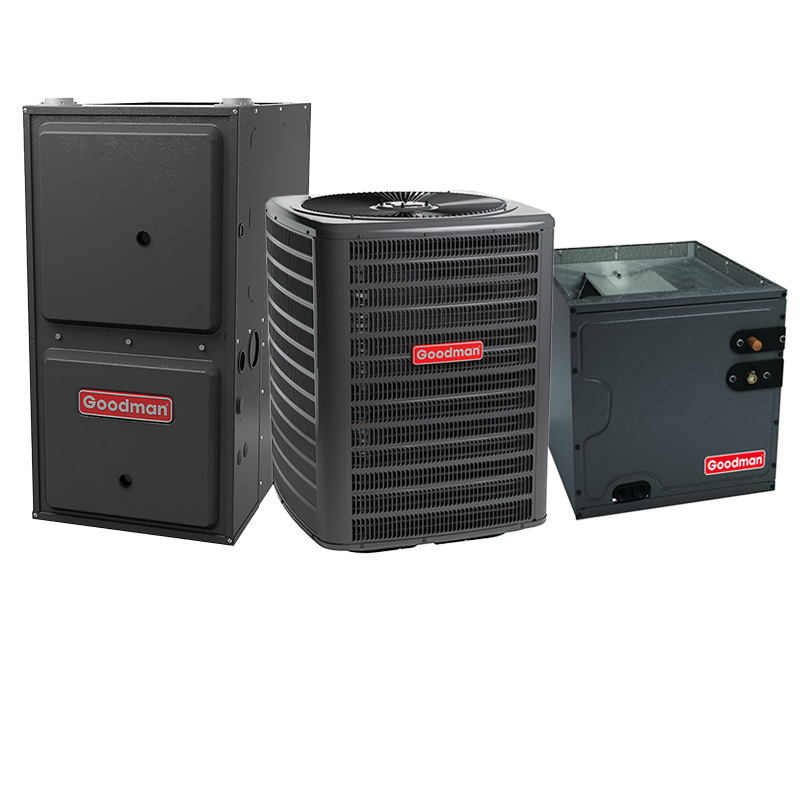
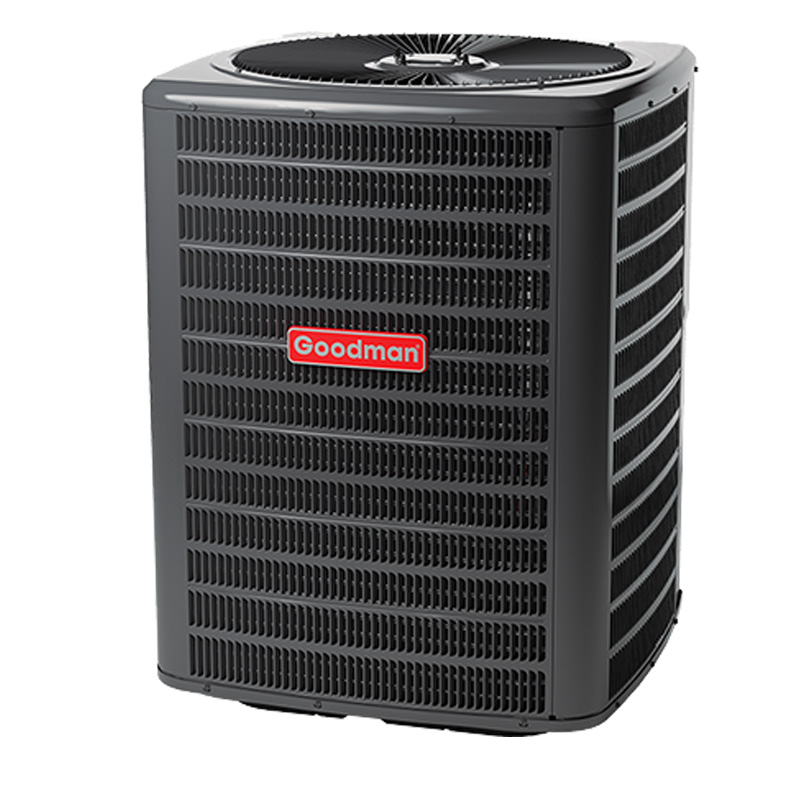
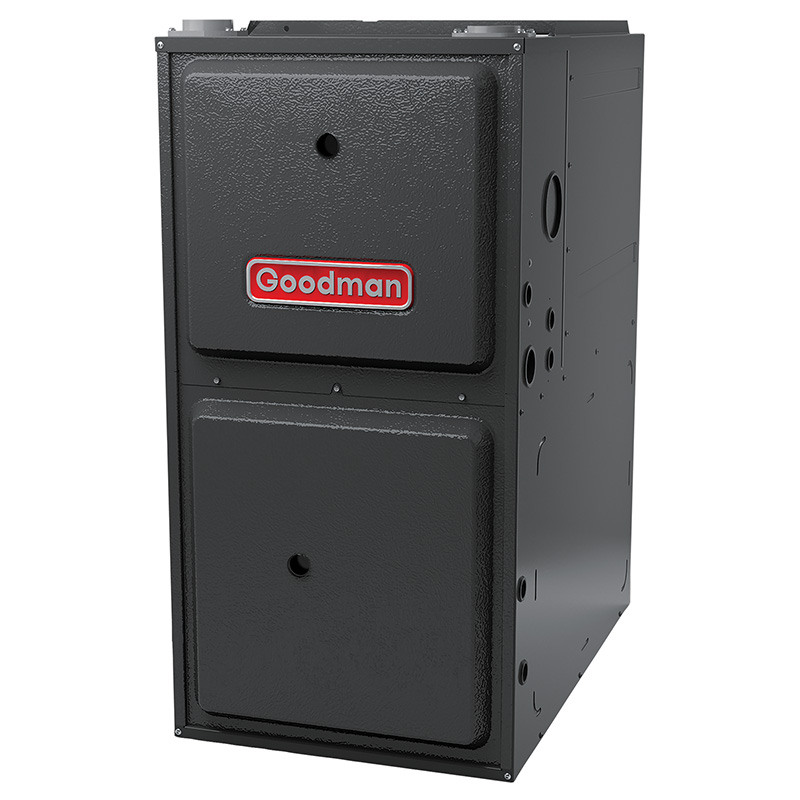
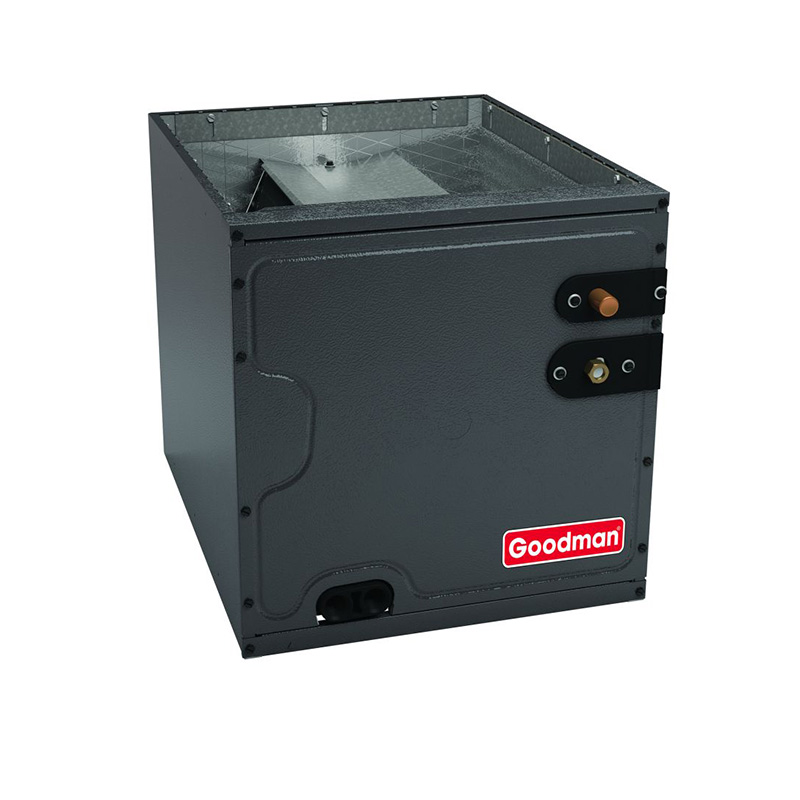
Goodman 3 Ton 15.2 SEER2 R32 AC System with 80,000 BTU 96% AFUE Gas Furnace – California & Colorado Ultra Low NOx, Upflow, Multi-Speed ECM
View on AC Direct see your lowest price →Check current price on AC Direct →
Key features
- 3-ton, 15.2 SEER2 R-32 cooling system meets current federal minimum efficiency standards
- 80,000 BTU, 96% AFUE condensing gas furnace captures 96% of fuel as usable heat
- Ultra Low NOx certified for California and Colorado emissions compliance
- Multi-speed ECM blower motor reduces electricity use and improves comfort consistency
- Upflow configuration suits the most common forced-air installation in North American homes
- R-32 refrigerant carries a lower global warming potential than the R-410A it replaces
About this system
The Goodman GLXS4BA3610 pairs a 3-ton, 15.2 SEER2 R-32 air conditioner with an 80,000 BTU, 96% AFUE multi-speed ECM gas furnace in an upflow configuration. The combination is built specifically to meet California and Colorado Ultra Low NOx emissions standards, so it is one of the few budget-accessible systems that clears the NOx thresholds those states require. R-32 refrigerant replaces the older R-410A, carrying a lower global warming potential and slightly better thermodynamic efficiency, though it does require technicians who are current on R-32 handling procedures.
The 15.2 SEER2 rating sits just above the federal minimum for most northern and southern climate regions, meaning efficiency is adequate rather than exceptional. Homeowners in mild climates or those upgrading from a system more than 15 years old will likely notice a meaningful drop in cooling costs, but buyers chasing the lowest possible utility bills may want to compare the incremental payback of stepping up to a 17 or 18 SEER2 unit. The 96% AFUE furnace is a strong performer on the heating side, capturing 96 cents of heat from every dollar of gas, which is well within condensing-furnace territory and appropriate for cold-winter states like Colorado. The multi-speed ECM blower motor improves airflow consistency and reduces electrical draw compared to a standard PSC motor.
This system is best understood as a replacement-grade package for homeowners who need to satisfy state emissions rules without moving into the premium price tier. It suits single-story or two-story homes in the 1,200 to 1,800 square foot range where a 3-ton load calculation is confirmed by a Manual J. Because Goodman’s reputation leans on install quality more than most brands, pairing this equipment with a licensed, experienced HVAC contractor is not optional advice, it is the single most important purchasing decision you will make alongside the equipment itself.
This Goodman bundle covers the Ultra Low NOx compliance requirement at a price point 15 to 25 percent below comparable Carrier, Trane, and Lennox systems, making it a straightforward value choice for budget-conscious homeowners in California or Colorado. The 96% AFUE furnace is a genuine strong point, but the air conditioner sits at the low end of the efficiency range, and Goodman's documented repair history after year seven means long-term ownership costs deserve a realistic look before committing. If the install is done right, most owners get a functional decade or more out of the equipment; if it is not, the warranty and repair experience can be frustrating.
Overall score is the average of the five ratings above.
What we like
- Price is typically 15 to 25 percent below Carrier, Trane, and Lennox systems of comparable efficiency
- 96% AFUE furnace is a high-efficiency condensing unit well suited to cold Colorado winters
- Certified Ultra Low NOx for both California and Colorado, satisfying state-level compliance in one package
- Multi-speed ECM motor improves comfort distribution and lowers blower electricity costs vs. single-speed PSC
- R-32 refrigerant is a forward-looking choice with lower environmental impact than R-410A
Trade-offs
- 15.2 SEER2 is near the regulatory floor; homeowners in hot climates will see limited utility savings compared to 17+ SEER2 alternatives
- Dual-run capacitors are the most frequently reported failure point, typically arising within the first decade and costing $300 to $600 per incident
- Evaporator coil leaks and compressor longevity averaging 10 to 14 years (versus 15 to 20 for premium brands) raise lifetime cost questions
- A minority of owners report refrigerant leaks within the first year, often traced to install or charge quality rather than the equipment itself
What homeowners and pros say about Goodman
Homeowners who track Goodman feedback online encounter a split picture. On ConsumerAffairs, Goodman scores around 2.5 out of 5, a channel that skews toward people motivated to leave a complaint, and the recurring pattern there is repair costs that climb noticeably after the seventh year of ownership. Google dealer reviews paint a more balanced story, with scores around 3.8 out of 5 across locations where affordability comes up most often as the reason buyers chose the brand. Neither number is a verdict on this specific unit, but together they suggest Goodman earns its keep early in ownership and requires more financial attention in the back half of the equipment’s life.
HVAC technicians who work on Goodman equipment regularly point to two things: dual-run capacitor failures are the most predictable service call, usually a straightforward and relatively inexpensive fix in the $300 to $600 range, and evaporator coil leaks show up often enough in owner accounts to be worth noting before purchase. Compressor lifespan averaging 10 to 14 years versus the 15 to 20 years more commonly reported for Trane, Carrier, and Lennox is the trade-off baked into the lower purchase price. A small share of owners also report refrigerant leaks in the first year, which technicians generally attribute to install or initial charge quality rather than a factory defect, underlining why contractor selection matters as much as equipment selection when buying into this brand.
Sources: ConsumerAffairs Goodman owner reviews, AHRI Directory of Certified Product Performance, U.S. DOE appliance and equipment efficiency standards, Goodman product specification sheets.
What it costs to run
At 15.2 SEER2, cooling this 3-ton system for a typical 1200-hour cooling season at the U.S. average electricity rate of $0.17/kWh works out to roughly $483 per year in cooling, about $65 less per year than a minimum-efficiency 13.4 SEER2 unit of the same size. Your real cost depends on your climate and local rate.
Method: (36,000 BTU/hr ÷ 15.2 SEER2) × 1200 hours ÷ 1000 × $0.17/kWh. Rate source: U.S. EIA average; cooling hours: moderate-climate estimate.
How it compares
| Brand | Comparable model | SEER2 | Stage | Price position |
|---|---|---|---|---|
| Goodman | GLXS4BA3610 (this system) | 15.2 | Single-stage | Value pick |
| Carrier | Comfort 24ACC6 Series | 15.2 | Single-stage | Typically 15 to 25 percent more than this Goodman system |
| Trane | XR15 Series | 15.0 to 16.0 | Single-stage | Typically 15 to 25 percent more than this Goodman system |
| Lennox | Merit ML14XC1 Series | 15.0 to 16.0 | Single-stage | Typically 15 to 25 percent more than this Goodman system |
Competitor rows are comparable single-stage units at similar efficiency; price is relative position, not a quote.
Questions about this system
Is this system actually legal to install in California and Colorado right now?
Yes. The GLXS4BA3610 carries Ultra Low NOx certification for both states, which is the specific emissions standard California's Air Quality Management Districts and Colorado's regulations require for new residential gas heating equipment. Always confirm with your local AHJ that no additional local amendments apply, but the base certification is in place.
Do I need a special technician to work on R-32 refrigerant?
Any EPA Section 608 certified technician can legally handle R-32, but it is mildly flammable (A2L classification), so technicians need to be familiar with the specific handling and recovery procedures it requires. Ask your contractor directly whether their team has worked with A2L refrigerants before scheduling the install.
What does the Goodman warranty actually cover on this system, and are there conditions?
Goodman's standard registered warranty on this equipment is 10 years on parts for registered homeowners, with registration typically required within 60 days of installation. The compressor carries its own coverage period. Warranty claims generally require the system to have been installed by a licensed contractor, so DIY or unlicensed installs can void coverage, which matters given Goodman's documented early-year refrigerant leak rate.
How concerned should I be about the capacitor failures and coil leaks I read about in reviews?
Dual-run capacitor failures are the most commonly reported issue with Goodman AC units and are worth budgeting for, typically $300 to $600 when they occur. Evaporator coil leaks appear in a meaningful share of owner reports and are more disruptive and expensive to address. Neither is unique to Goodman, but they occur at a higher reported rate than in premium-brand reviews, which is part of why the price gap exists.
Is 3 tons the right size for my house, or should I go up to 3.5 or 4 tons?
Sizing should be determined by a Manual J load calculation based on your home's square footage, insulation levels, window area, local climate data, and duct system, not by replacing old equipment with the same tonnage or by rough rules of thumb. An oversized system short-cycles, reducing dehumidification and increasing wear, while an undersized one runs constantly on peak days. Ask your contractor for the load calc before confirming this unit.
Specifications
| Cooling capacity | 3 Ton |
| Efficiency | 15.2 SEER2 |
| Furnace output | 80,000 BTU |
| Furnace efficiency | 96% AFUE |
| Configuration | Upflow |
| Refrigerant | R-32 |
| Model | GLXS4BA3610 |