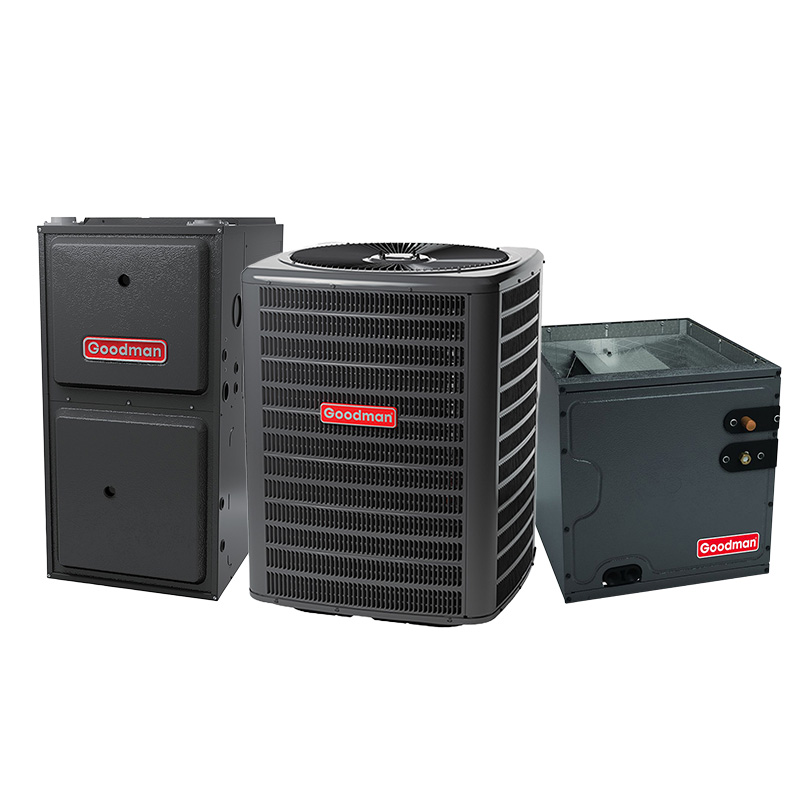
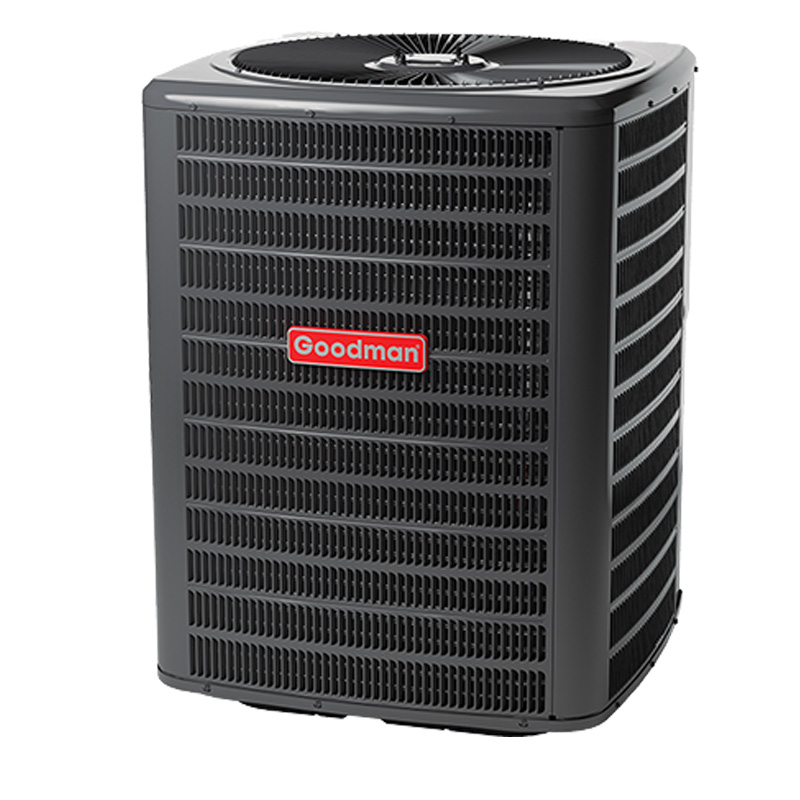
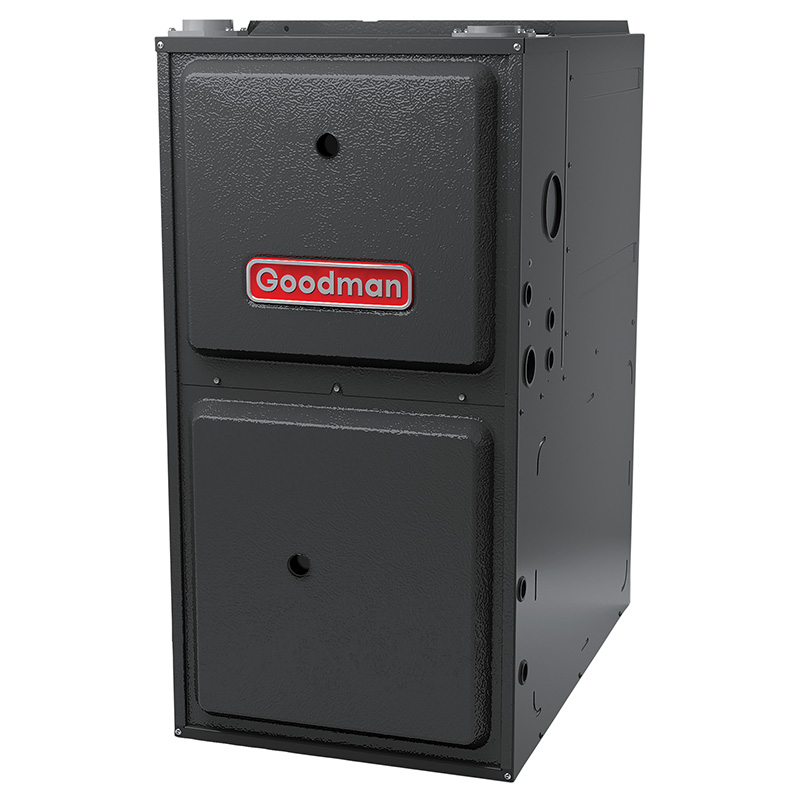
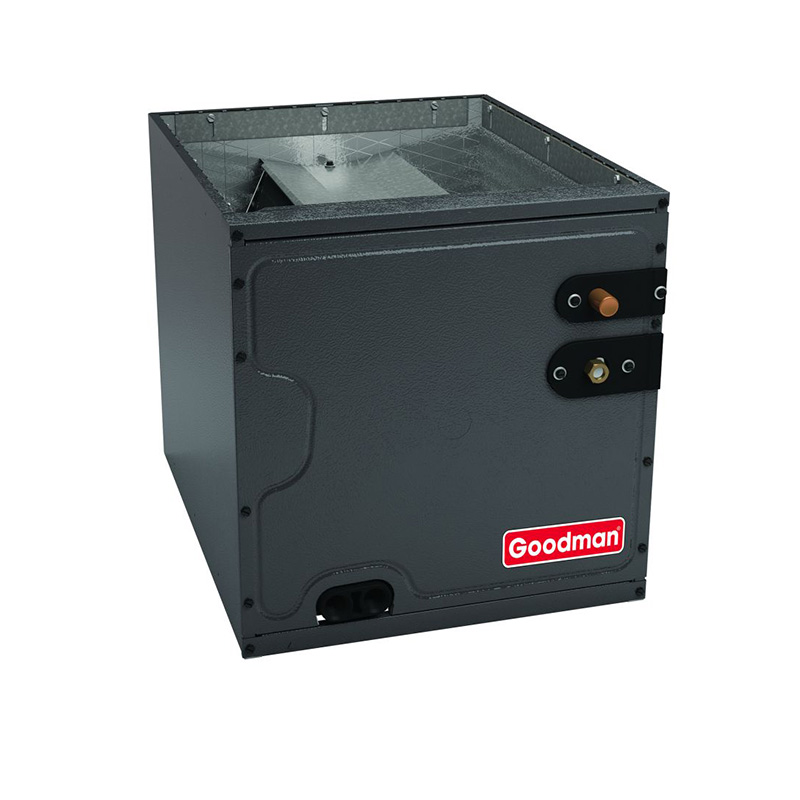
Goodman 3 Ton 15.2 SEER2 AC & Gas Furnace System – Modulating Variable-Speed, 60000 BTU Gas Furnace, 97% AFUE, Upflow, R32
View on AC Direct see your lowest price →Check current price on AC Direct →
Key features
- 3-ton variable-speed cooling rated at 15.2 SEER2 for above-baseline efficiency
- 97% AFUE modulating gas furnace reduces fuel waste to roughly 3 cents per dollar of gas burned
- R-32 refrigerant with lower global-warming potential than outgoing R-410A
- Upflow cabinet design for basement or closet installations with overhead ductwork
- Modulating burner stages output continuously, reducing temperature swings and cycling noise
- Variable-speed blower improves dehumidification and air circulation during cooling season
About this system
The Goodman GLXS5BA3610D pairs a 3-ton, 15.2 SEER2 variable-speed air conditioner with a 60,000 BTU, 97% AFUE modulating gas furnace in an upflow configuration. That combination puts it at the upper end of what most utility companies consider “high efficiency” for both cooling and heating, and the modulating burner means the furnace ramps output up or down in small increments rather than cycling fully on and off. The result is steadier indoor temperatures, quieter operation, and noticeably lower gas bills compared with a standard 80% AFUE single-stage furnace. R-32 refrigerant has a lower global-warming potential than the R-410A it replaces and is becoming the industry standard, so parts and service will not be a concern going forward.
This system is a strong fit for homeowners in mixed climates who want meaningful year-round energy savings without paying Trane or Lennox prices. The upflow configuration suits homes where the furnace sits in a basement or utility closet and conditioned air rises into the ductwork above. Variable-speed airflow also improves humidity control during cooling season, which matters in humid regions. That said, the modulating furnace and variable-speed blower add complexity relative to a basic two-stage system, so installation quality and commissioning by a licensed technician are not optional extras here. A rushed or under-trained install can erase every efficiency advantage the specs promise.
The GLXS5BA3610D delivers genuine high-efficiency performance at a price point that undercuts comparable Carrier, Trane, and Lennox systems by 15 to 25 percent, making it an attractive option for budget-conscious buyers who understand what they are getting. The trade-off is a brand with a documented history of capacitor failures, evaporator coil leaks, and compressors that tend to top out around 10 to 14 years rather than the 15 to 20 typical of premium brands. If you have a skilled installer and a realistic maintenance plan, the value case holds; if either is uncertain, the savings narrow quickly once repair costs enter the picture.
Overall score is the average of the five ratings above.
What we like
- 97% AFUE furnace is among the highest efficiency ratings available and cuts heating bills meaningfully versus 80% AFUE equipment
- 15.2 SEER2 clears the federal minimums by a comfortable margin and qualifies for many utility rebate programs
- Modulating and variable-speed operation delivers more consistent comfort and quieter cycling than single- or two-stage systems
- R-32 refrigerant is forward-compatible with industry direction, reducing long-term service risk
- Significantly lower upfront cost than comparable Carrier, Trane, or Lennox variable-speed systems
Trade-offs
- Dual-run capacitors are the most frequently reported failure point, typically adding $300 to $600 in repair costs after several years of use
- Evaporator coil leaks appear in a notable share of owner reports and can be costly to address once the unit is out of warranty
- Compressor longevity tends to average 10 to 14 years, shorter than the 15 to 20 years often seen with premium brands
- Modulating variable-speed complexity demands a thorough, properly commissioned install; a poor setup can undermine efficiency and reliability significantly
What homeowners and pros say about Goodman
Homeowners who share their experiences with Goodman equipment tend to land in two camps. On ConsumerAffairs, where the brand scores around 2.5 out of 5, the recurring frustration is repair costs that start climbing after roughly year seven, with capacitor replacements and refrigerant-related issues showing up repeatedly. On the other hand, Google dealer reviews average closer to 3.8 out of 5 across many locations, and the most consistent praise there is straightforward: the equipment costs less and it works when installed correctly. Both data points are real, and together they suggest that buyer experience with Goodman is more variable than with premium brands, and that the install matters enormously.
HVAC technicians tend to be candid about where the brand sits. The documented weak points are specific: dual-run capacitors fail more often than they should and typically cost $300 to $600 to replace; evaporator coil leaks appear in a meaningful share of units over time; and compressors on Goodman equipment tend to average 10 to 14 years in the field rather than the 15 to 20 years that Trane, Lennox, and Carrier compressors often reach. Pros who are willing to vouch for Goodman almost always add the same condition: the contractor doing the work needs to be thorough. For a modulating variable-speed system like this one, that condition carries even more weight than it does for simpler equipment.
Sources: ConsumerAffairs Goodman owner reviews, AHRI Directory of Certified Product Performance, U.S. DOE appliance and equipment efficiency standards, Goodman product specification sheets.
What it costs to run
At 15.2 SEER2, cooling this 3-ton system for a typical 1200-hour cooling season at the U.S. average electricity rate of $0.17/kWh works out to roughly $483 per year in cooling, about $65 less per year than a minimum-efficiency 13.4 SEER2 unit of the same size. Your real cost depends on your climate and local rate.
Method: (36,000 BTU/hr ÷ 15.2 SEER2) × 1200 hours ÷ 1000 × $0.17/kWh. Rate source: U.S. EIA average; cooling hours: moderate-climate estimate.
How it compares
| Brand | Comparable model | SEER2 | Stage | Price position |
|---|---|---|---|---|
| Goodman | GLXS5BA3610D | 15.2 | Variable | Value pick |
| Carrier | Infinity 24 Series (24VNA) with 59MN7 Modulating Furnace | 16.0+ | Variable | Typically 15 to 25 percent more than Goodman |
| Trane | XV18 with XC95m Modulating Furnace | 16.0+ | Variable | Typically 15 to 25 percent more than Goodman |
| Lennox | XC21 with SLP99V Modulating Furnace | 16.0+ | Variable | Typically 15 to 25 percent more than Goodman |
Competitor rows are comparable single-stage units at similar efficiency; price is relative position, not a quote.
Questions about this system
What does the modulating furnace actually do differently from a two-stage furnace?
A two-stage furnace runs at a high or low fire setting, while the modulating burner in this unit adjusts output in small, continuous increments to match what the house actually needs at any moment. This reduces temperature swings, lowers the frequency of full on-off cycles, and typically results in quieter operation and more even room-to-room comfort.
Is R-32 refrigerant safe and will technicians be able to service it?
R-32 is mildly flammable but has been used widely in residential equipment in Europe and Asia for over a decade and is now becoming common in North America as R-410A is phased down. Most HVAC technicians are already certified to handle it, and refrigerant availability is not a concern for new equipment.
What are the most likely repair costs I should budget for after the warranty period?
Based on documented Goodman failure patterns, dual-run capacitor replacement is the most common service call and typically runs $300 to $600 including labor. Evaporator coil leaks are a second documented concern and are more expensive to repair, so keeping up with annual maintenance and catching refrigerant loss early is worthwhile.
Does this system qualify for federal tax credits or utility rebates?
A 97% AFUE modulating furnace and a 15.2 SEER2 variable-speed AC can qualify for the federal 25C energy efficiency tax credit, subject to annual limits and IRS requirements. Many utilities also offer rebates for equipment above certain efficiency thresholds, so check your local utility's website before purchasing.
Why does Goodman emphasize install quality so strongly, and what should I look for in a contractor?
A modulating, variable-speed system requires correct refrigerant charge, proper airflow commissioning, and accurate controls setup to perform as rated. Goodman's value positioning means the margin for a cutting-corner install is lower than with more forgiving premium brands. Look for a contractor who will perform a Manual J load calculation, pull permits, and verify charge and airflow with instruments rather than estimating by feel.
Specifications
| Cooling capacity | 3 Ton |
| Efficiency | 15.2 SEER2 |
| Furnace output | 60000 BTU |
| Furnace efficiency | 97% AFUE |
| Configuration | Upflow |
| Refrigerant | R-32 |
| Model | GLXS5BA3610D |