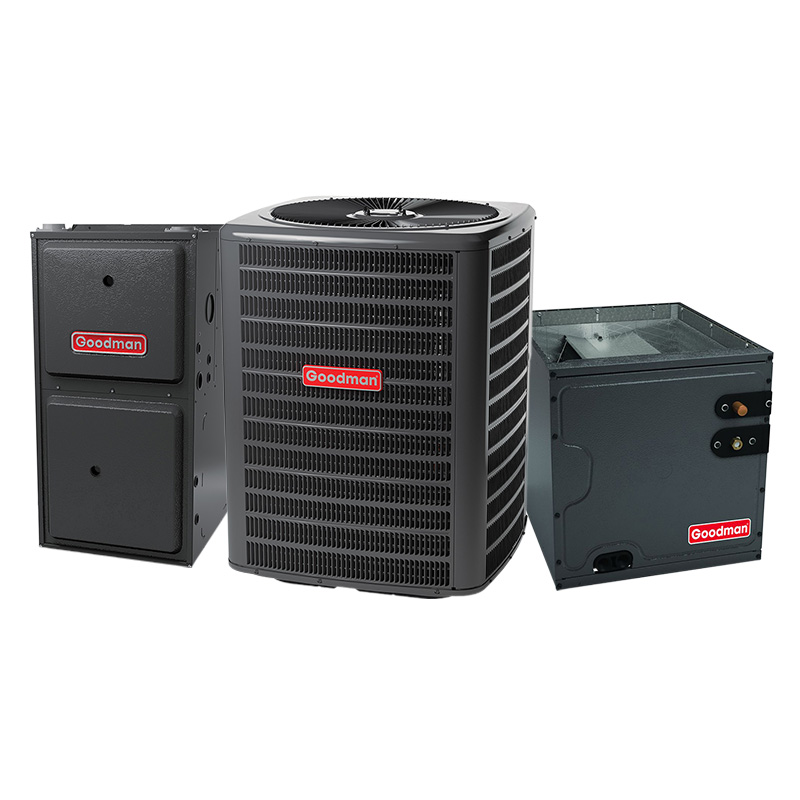
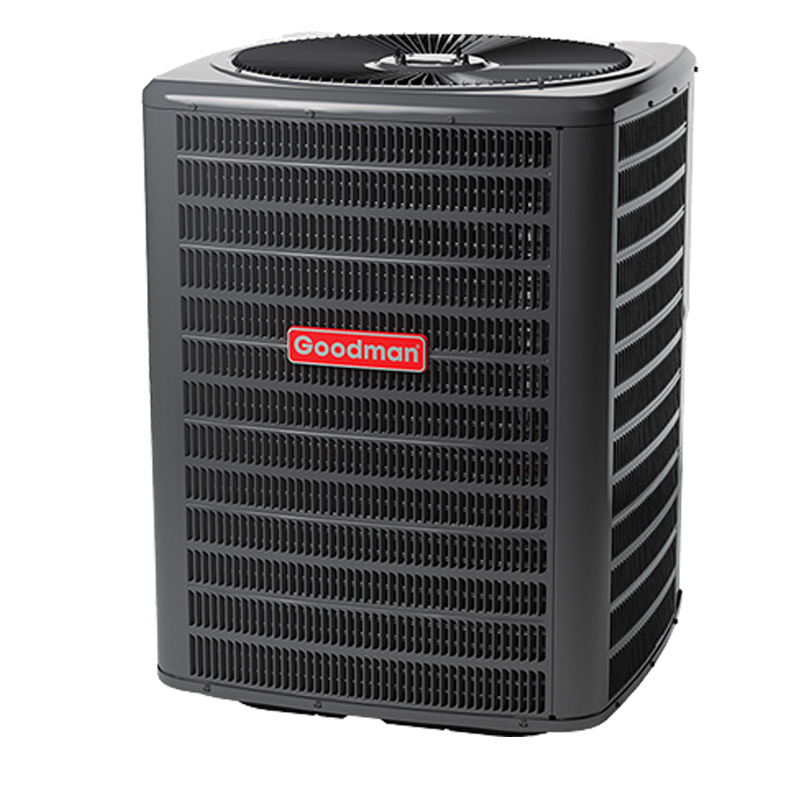
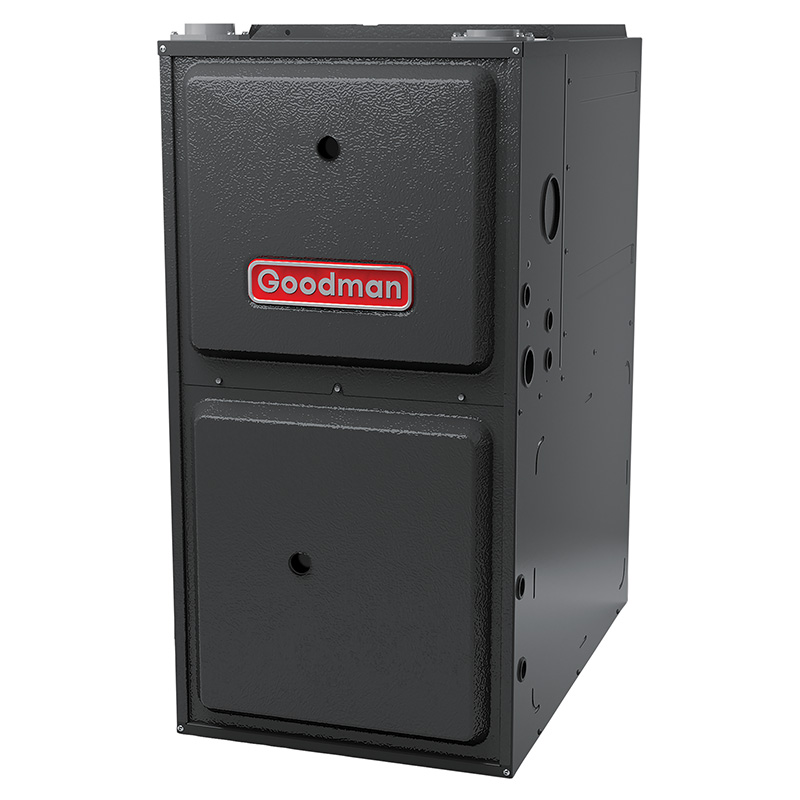
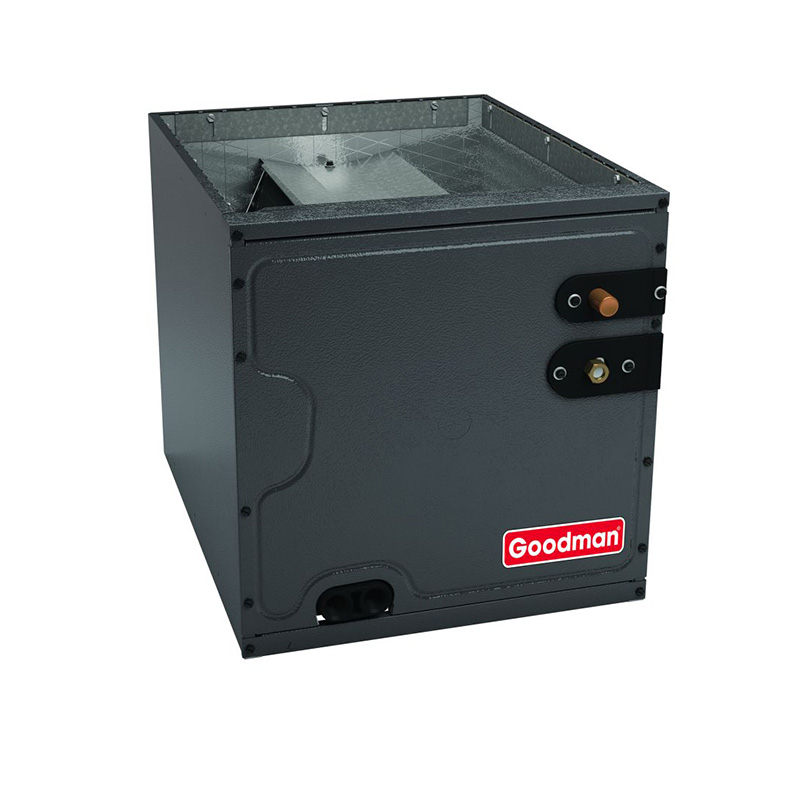
Goodman 3 Ton 15.2 SEER2 AC & Gas Furnace System – Multi-Speed, 80000 BTU Gas Furnace, 92% AFUE, Upflow, R32
View on AC Direct see your lowest price →Check current price on AC Direct →
Key features
- 3-ton, 15.2 SEER2 cooling efficiency meets federal minimum standards for most U.S. regions
- 80,000 BTU gas furnace with 92% AFUE for mid-tier heating fuel efficiency
- Multi-speed blower motor improves airflow consistency and dehumidification versus single-speed
- Upflow configuration designed for basement, closet, or utility room installations
- R-32 refrigerant with a lower global-warming potential than R-410A
- Factory-matched system designed for straightforward coil and cabinet compatibility
About this system
The Goodman GLXS4BA3610 pairs a 3-ton, 15.2 SEER2 air conditioner with an 80,000 BTU, 92% AFUE upflow gas furnace in a single matched system. The SEER2 rating clears the federal minimum for most U.S. climate zones, which means this system is designed to run at a level that keeps utility bills reasonable without stretching into the premium-efficiency tier. The 92% AFUE furnace converts 92 cents of every dollar of gas into usable heat, a solid mid-efficiency rating that suits homeowners who want meaningful fuel savings without paying for a 96% or 98% unit. R-32 refrigerant is a lower global-warming-potential option compared to the R-410A it replaces, and the upflow configuration works well in homes where the air handler sits in a basement, closet, or utility room and pushes conditioned air upward through the duct system.
This system is sized for homes roughly in the 1,400 to 1,800 square foot range, though actual sizing must be confirmed by a Manual J load calculation before purchase. The multi-speed furnace blower gives the system more flexibility than a single-speed unit, improving airflow consistency and helping the AC coil remove humidity more effectively during shoulder seasons. Goodman positions this as a value-oriented system, typically priced 15 to 25 percent below comparable Trane, Lennox, and Carrier equipment. That price gap is real and meaningful, but so are the trade-offs in component longevity and the brand’s consumer satisfaction record, which prospective buyers should weigh honestly before committing.
The Goodman GLXS4BA3610 delivers a functional, code-compliant HVAC system at a price point that is genuinely hard to match from major competitors. It is a reasonable choice for budget-conscious buyers who accept shorter average component lifespans and a higher probability of mid-cycle repairs, particularly after year seven. Install quality will likely determine whether this system performs closer to its ceiling or its floor.
Overall score is the average of the five ratings above.
What we like
- Price sits 15 to 25 percent below Carrier, Trane, and Lennox equivalents, a real upfront savings
- 92% AFUE furnace delivers solid heating efficiency without top-tier cost
- 15.2 SEER2 rating satisfies current federal efficiency requirements across most regions
- Multi-speed blower improves comfort and humidity control compared to single-speed alternatives
- R-32 refrigerant has a lower environmental impact and is increasingly well-supported by technicians
Trade-offs
- Compressor lifespan averages 10 to 14 years, notably shorter than the 15 to 20 years typical of premium brands
- Dual-run capacitor failures are the most commonly reported repair, typically surfacing in years 5 to 9
- A meaningful share of owners report evaporator coil leaks, which can be a costly mid-life repair
- A minority of first-year owners report refrigerant leaks, most tied to install or initial charge quality
What homeowners and pros say about Goodman
Homeowners who have lived with Goodman equipment share a consistent pattern: the units work reasonably well in the early years, with affordability drawing the most consistent praise in Google dealer reviews, where the brand averages around 3.8 out of 5 across hundreds of location-based reviews. The upfront savings are real and frequently cited as the deciding factor at purchase. The harder feedback surfaces later. On ConsumerAffairs, where the brand scores around 2.5 out of 5, the recurring story is repair costs that accumulate after roughly year seven, with dual-run capacitor failures being the single most commonly named culprit. That repair is relatively inexpensive and quick when it happens, but it is frequent enough to be a known budget item rather than a surprise for owners of this equipment.
HVAC technicians tend to hold a more nuanced view. Many installers will point out that Goodman’s performance is unusually sensitive to how well the system is commissioned at startup, including proper refrigerant charge, airflow calibration, and coil matching. A well-installed Goodman unit can give a homeowner a decade of reliable service before any significant issue surfaces. A poorly installed one can show problems, including refrigerant leaks, within the first year. Pros also note that evaporator coil leaks appear in a meaningful share of Goodman owner accounts over time, and that compressor longevity tends to run 10 to 14 years on average, which is a genuine gap compared to the 15 to 20 years commonly seen from Carrier, Trane, and Lennox compressors. For buyers who go in clear-eyed about those trade-offs and choose a careful installer, the value proposition of this system holds up. For those expecting premium-brand durability at a value price, the record suggests that expectation will likely be tested.
Sources: ConsumerAffairs Goodman owner reviews, AHRI Directory of Certified Product Performance, U.S. DOE appliance and equipment efficiency standards, Goodman product specification sheets.
What it costs to run
At 15.2 SEER2, cooling this 3-ton system for a typical 1200-hour cooling season at the U.S. average electricity rate of $0.17/kWh works out to roughly $483 per year in cooling, about $65 less per year than a minimum-efficiency 13.4 SEER2 unit of the same size. Your real cost depends on your climate and local rate.
Method: (36,000 BTU/hr ÷ 15.2 SEER2) × 1200 hours ÷ 1000 × $0.17/kWh. Rate source: U.S. EIA average; cooling hours: moderate-climate estimate.
How it compares
| Brand | Comparable model | SEER2 | Stage | Price position |
|---|---|---|---|---|
| Goodman | GLXS4BA3610 | 15.2 | Single-stage | Value pick |
| Carrier | Comfort 15 Series (24ACC636) | 15.2 | Single-stage | Typically 15 to 25 percent more than this Goodman system |
| Trane | XR15 Series (4TTR5036) | 15.2 | Single-stage | Typically 15 to 25 percent more than this Goodman system |
| Lennox | Merit 14 / ML14 Series (14ACX-036) | 15.2 | Single-stage | Typically 15 to 25 percent more than this Goodman system |
Competitor rows are comparable single-stage units at similar efficiency; price is relative position, not a quote.
Questions about this system
Does the R-32 refrigerant in this system require special handling from my HVAC technician?
Yes, R-32 is mildly flammable and requires technicians who are certified to handle A2L refrigerants. Most licensed HVAC contractors are already trained, but it is worth confirming before scheduling service, particularly in rural areas where certification coverage can be thinner.
What is the warranty on this Goodman system and what does it actually cover?
Goodman offers a 10-year parts warranty when the system is registered within a set window after installation, dropping to a shorter term if registration is missed. The warranty covers parts but not labor, refrigerant, or diagnostic costs, so an out-of-pocket repair bill is still possible even within the coverage period. Always confirm registration requirements with your installer at the time of purchase.
How likely am I to need repairs in the first 10 years?
Dual-run capacitor failures are the most commonly reported issue with Goodman equipment and tend to appear between years five and nine. They are typically a straightforward repair in the 300 to 600 dollar range. Evaporator coil leaks appear in a meaningful share of owner accounts and are more expensive to address. A small percentage of owners also report refrigerant issues in year one, which is usually related to install quality rather than the unit itself.
Is this system the right size for my home?
A 3-ton unit is commonly used in homes roughly 1,400 to 1,800 square feet, but square footage alone is not a reliable sizing method. Factors like ceiling height, insulation levels, window area, and climate zone all affect the correct load. Before purchasing, ask your installer to perform a Manual J load calculation to confirm 3 tons is appropriate for your specific home.
Will this upflow furnace work if my existing system was a downflow or horizontal configuration?
No, upflow units are designed specifically to discharge air upward through the supply plenum. If your current furnace is downflow or horizontal, the cabinet orientation, flue routing, and duct connections will not align with an upflow unit without significant modification. You would need to match the replacement to your existing configuration or budget for a more involved installation.
Specifications
| Cooling capacity | 3 Ton |
| Efficiency | 15.2 SEER2 |
| Furnace output | 80000 BTU |
| Furnace efficiency | 92% AFUE |
| Configuration | Upflow |
| Refrigerant | R-32 |
| Model | GLXS4BA3610 |