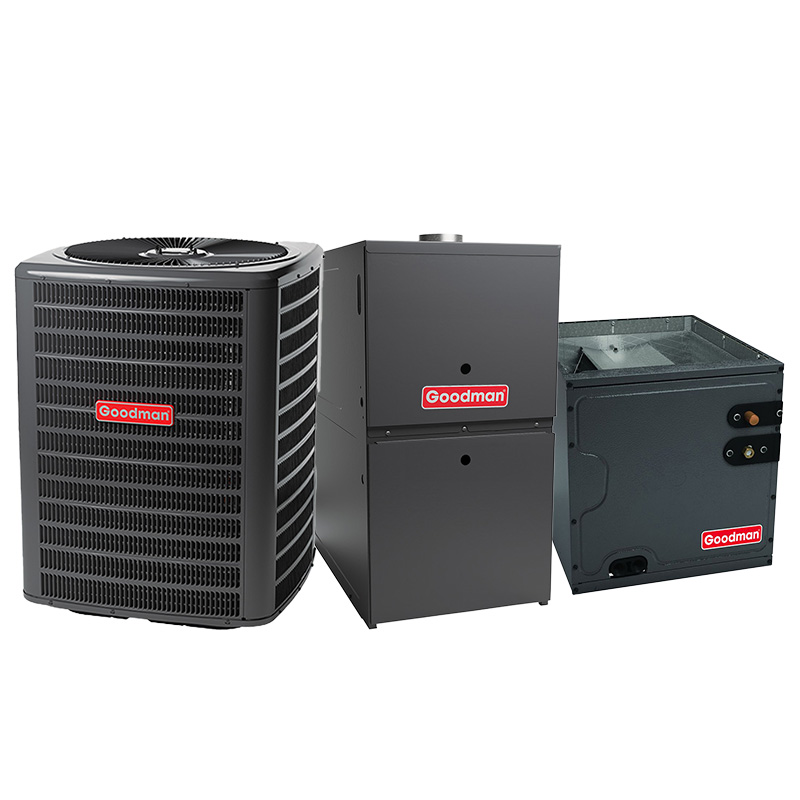
Goodman 3 Ton 15.2 SEER2 AC & Gas Furnace System – Two Stage Variable-Speed 100000 BTU Gas Furnace, 80% AFUE, Upflow, R32
View on AC Direct see your lowest price →Check current price on AC Direct →
Key features
- Two-stage cooling compressor for better humidity control and quieter part-load operation
- Variable-speed ECM blower motor on the furnace for lower operating noise and improved airflow consistency
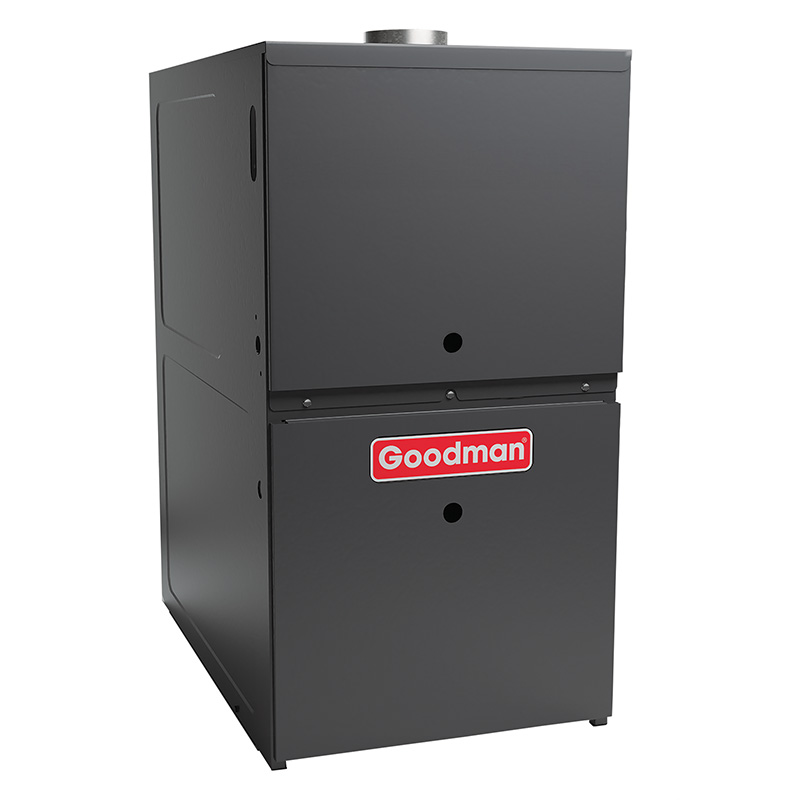
- 100,000 BTU upflow gas furnace rated at 80% AFUE
- R-32 refrigerant: lower global-warming potential than R-410A, aligned with current regulatory direction
- 15.2 SEER2 efficiency rating meets and exceeds the current federal minimum in all U.S. regions
- Matched system design: AC and furnace are factory-engineered to work together, simplifying coil and refrigerant sizing
About this system
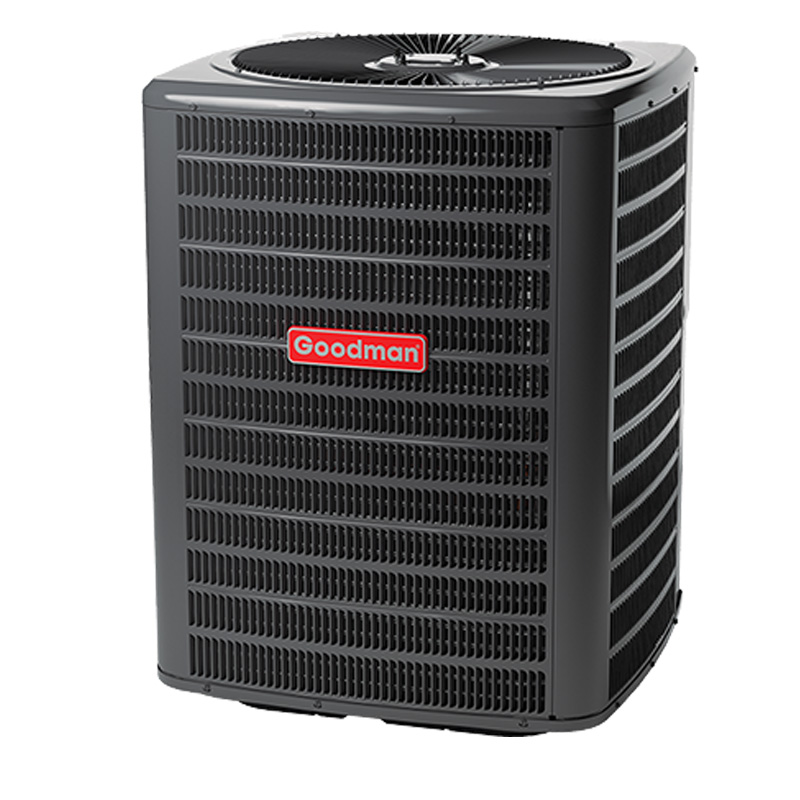
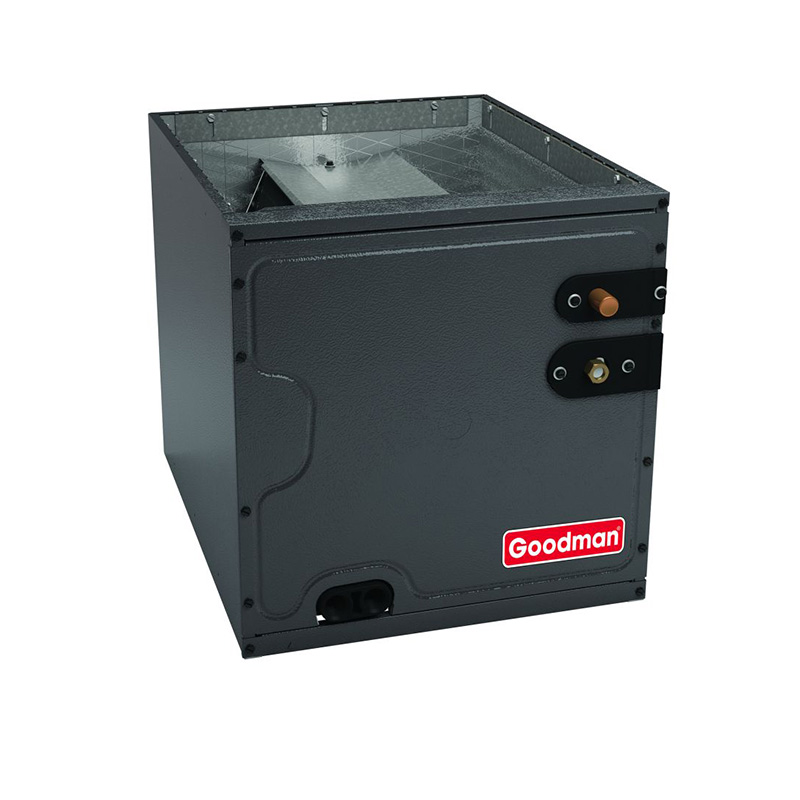
The Goodman 3-ton 15.2 SEER2 system pairs a two-stage central air conditioner with a two-stage, variable-speed 100,000 BTU upflow gas furnace rated at 80% AFUE. The two-stage cooling compressor runs at low capacity most of the time, which reduces short-cycling, keeps indoor humidity in check better than a single-stage unit, and only ramps to full output on the hottest days. The variable-speed air handler motor moves air quietly and efficiently across both heating and cooling cycles. R-32 refrigerant is the newer standard: it has a lower global-warming potential than R-410A and is being adopted industry-wide as R-410A is phased out.
At 80% AFUE, one dollar in five of your gas spend exits the flue as exhaust heat. That is the federal minimum for most northern U.S. climates and is a reasonable baseline for mild-to-moderate heating loads, but homeowners in colder regions with high gas rates may find a 96% AFUE two-stage furnace pays back its price premium within a few years. The upflow configuration means warm or cool air is delivered from the bottom of the air handler up through your duct system, which suits basements, utility closets, and crawl-space installations where the unit sits below the living space. This is a purpose-built configuration, so confirm your duct layout before ordering.
Goodman positions this system squarely in the value tier, typically priced 15 to 25 percent below comparable Trane, Lennox, and Carrier equipment. That gap is real and meaningful for budget-conscious buyers, but it comes with trade-offs in average component longevity that are worth understanding before committing.
This Goodman system delivers real two-stage comfort and a meaningful upfront cost advantage over premium brands, making it a reasonable choice for buyers who prioritize initial price and plan on proactive maintenance. The brand's real-world track record shows solid early-year performance but a pattern of rising repair costs after year seven, and documented failure modes like dual-run capacitor failures and evaporator coil leaks mean budgeting for service calls is sensible. It is a workable system in the right hands, but installation quality and ongoing maintenance will determine whether you land closer to the good or bad end of owner experiences.
Overall score is the average of the five ratings above.
What we like
- Upfront cost is typically 15 to 25 percent below comparable Carrier, Trane, and Lennox systems
- Two-stage compressor reduces short-cycling and helps control indoor humidity better than single-stage alternatives
- Variable-speed ECM blower runs quietly and more efficiently than PSC motors found on entry-level systems
- R-32 refrigerant is future-oriented as R-410A is phased out of new equipment
- Matched system pairing simplifies sizing decisions and can help with warranty compliance
Trade-offs
- 80% AFUE is the federal minimum and leaves meaningful efficiency gains on the table compared to 96% AFUE options, especially in colder climates
- Dual-run capacitor failures are the most commonly reported issue, typically appearing in the first several years and costing $300 to $600 per repair
- Compressor lifespan averages 10 to 14 years versus 15 to 20 years for premium-brand compressors, a real long-term cost consideration
- ConsumerAffairs rating of approximately 2.5 out of 5 reflects a documented pattern of repair costs climbing after roughly year seven
What homeowners and pros say about Goodman
Goodman’s reputation among homeowners is genuinely split. On Google dealer reviews, the brand sits around 3.8 out of 5 across hundreds of location-level reviews, where the most consistent praise is straightforward: the price is lower than the big three, and early-year performance is largely uneventful. Owners of this two-stage configuration specifically tend to note that the reduced short-cycling and variable-speed blower make a noticeable difference in comfort compared to the single-stage budget units they replaced. That part of the story is real. The ConsumerAffairs rating, however, sits at roughly 2.5 out of 5, and that channel skews toward people motivated enough by a problem to leave a review. The recurring complaint is not catastrophic early failure but rather repair costs that climb steadily after about year seven, which lines up with the brand’s documented compressor lifespan of 10 to 14 years versus 15 to 20 for premium alternatives.
HVAC technicians tend to hold a more nuanced view than either the enthusiasts or the critics. The dual-run capacitor failures that show up frequently in owner complaints are a known, low-cost fix, and experienced techs often stock the part. Evaporator coil leaks show up in a meaningful share of owner accounts and are a more expensive repair, sometimes running into the thousands. Technicians also consistently point out that installation quality is the single biggest factor in how long a Goodman system lasts, not the brand badge. A well-installed, well-maintained Goodman in a moderate climate can perform reliably for a decade or more. A rushed install with an improper refrigerant charge, noted by some owners as a source of first-year refrigerant leaks, sets the system up for early problems regardless of what the specs say on paper. For this specific R-32 system, confirm your contractor has current R-32 certification before the first service call ever happens.
Sources: ConsumerAffairs Goodman owner reviews, AHRI Directory of Certified Product Performance, U.S. DOE appliance and equipment efficiency standards, Goodman product specification sheets.
What it costs to run
At 15.2 SEER2, cooling this 3-ton system for a typical 1200-hour cooling season at the U.S. average electricity rate of $0.17/kWh works out to roughly $483 per year in cooling, about $65 less per year than a minimum-efficiency 13.4 SEER2 unit of the same size. Your real cost depends on your climate and local rate.
Method: (36,000 BTU/hr ÷ 15.2 SEER2) × 1200 hours ÷ 1000 × $0.17/kWh. Rate source: U.S. EIA average; cooling hours: moderate-climate estimate.
How it compares
| Brand | Comparable model | SEER2 | Stage | Price position |
|---|---|---|---|---|
| Goodman | GSXH503610 + GMVC8 (this system) | 15.2 | two-stage | Value pick |
| Carrier | Comfort 15 (24ACC6) | 15.2 | single-stage | Typically 15 to 25 percent more than this Goodman system |
| Trane | XR15 (4TTR5) | 15.2 | single-stage | Typically 15 to 25 percent more than this Goodman system |
| Lennox | Merit 14ACX | 15.0 | single-stage | Typically 15 to 25 percent more than this Goodman system |
Competitor rows are comparable single-stage units at similar efficiency; price is relative position, not a quote.
Questions about this system
Is 80% AFUE good enough for my climate, or should I step up to a 96% furnace?
80% AFUE meets the federal minimum standard and works fine in mild-to-moderate heating climates where the furnace runs a limited number of hours per year. In colder regions like the upper Midwest or Northeast, a 96% AFUE furnace can cut heating fuel costs by roughly 16 percent compared to this unit, and the payback period on the price difference is often three to seven years depending on gas rates and run time. If your winters are mild or you heat primarily with the AC side of the system, 80% is a defensible choice.
What does R-32 refrigerant mean for me as an owner, and is it harder to service?
R-32 has a lower global-warming potential than R-410A and is being adopted broadly as R-410A is phased out under EPA regulations. For most homeowners, the practical difference is minimal: R-32 requires technicians to use slightly different handling procedures due to its mild flammability classification (A2L), and not every technician is currently equipped for it. Confirm your local HVAC service providers are R-32 certified before purchasing, since this matters if you ever need a refrigerant top-up or leak repair.
How often do the dual-run capacitors fail, and what does that repair cost?
Dual-run capacitor failure is the most commonly reported service issue on Goodman equipment. It is not unique to Goodman, but owner reviews suggest it appears with some frequency in the first ten years of ownership. The good news is it is one of the cheaper HVAC repairs, typically running $300 to $600 including labor, and a qualified technician can usually complete it in under an hour. Keeping a service contract or scheduling annual tune-ups gives a technician the chance to catch a weakening capacitor before it causes a no-cool call on a hot day.
Does Goodman's warranty actually cover parts and labor, and what are the conditions?
Goodman's registered limited warranty covers parts for ten years when the system is registered within a specific window after installation (typically 60 days). Labor is not covered by the manufacturer's warranty, which is standard across most HVAC brands at this price point. If your installer or a third-party warranty provider does not include labor coverage, a single compressor or coil replacement call can cost $1,000 or more out of pocket even while the part itself is free. Read the full warranty terms and ask your installer about extended labor coverage options.
My current ductwork is designed for a 3-ton system. Will this unit work without duct modifications?
A 3-ton rating is a starting point, but whether your existing ducts are adequate depends on static pressure, duct sizing, and layout, not just nominal tonnage. The variable-speed blower on this furnace can compensate for minor duct restrictions better than a fixed-speed motor, but significantly undersized or leaky ductwork will hurt both comfort and efficiency regardless. Have your installer perform a Manual D duct assessment or at minimum a static pressure test before assuming the existing ductwork is a match.
Specifications
| Cooling capacity | 3 Ton |
| Efficiency | 15.2 SEER2 |
| Furnace output | 100000 BTU |
| Furnace efficiency | 80% AFUE |
| Configuration | Upflow |
| Refrigerant | R-32 |