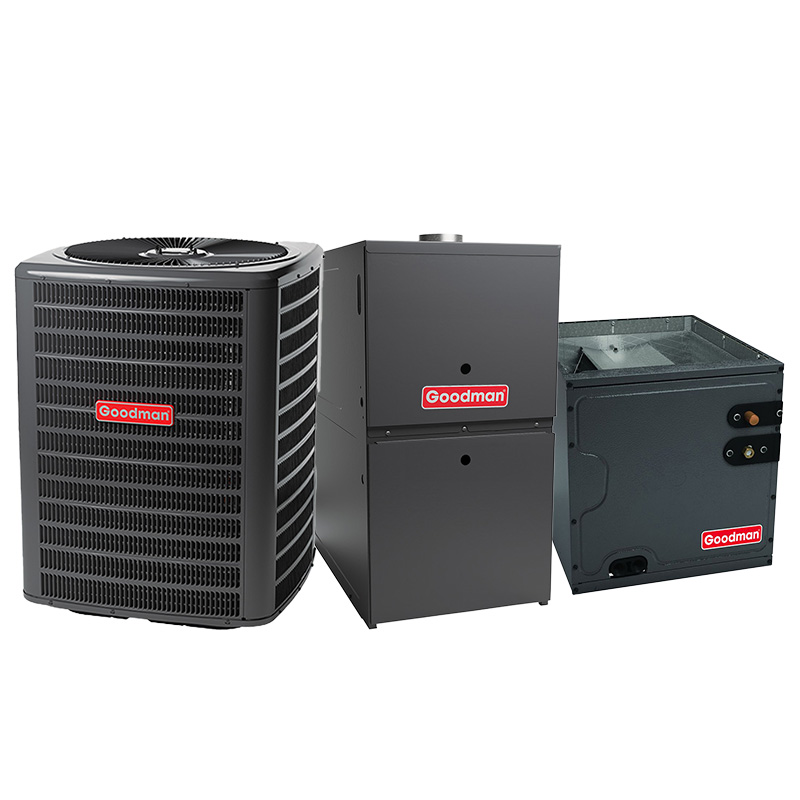
Goodman 3 Ton 15.2 SEER2 AC & Gas Furnace System – Two Stage Variable-Speed 60000 BTU Low NOx Gas Furnace, 80% AFUE, Upflow, R32
View on AC Direct see your lowest price →Check current price on AC Direct →
Key features
- Two-stage cooling compressor reduces short-cycling and improves humidity control on mild days
- Variable-speed ECM blower motor for quieter operation and steadier airflow
- R-32 refrigerant with lower global-warming potential than R-410A
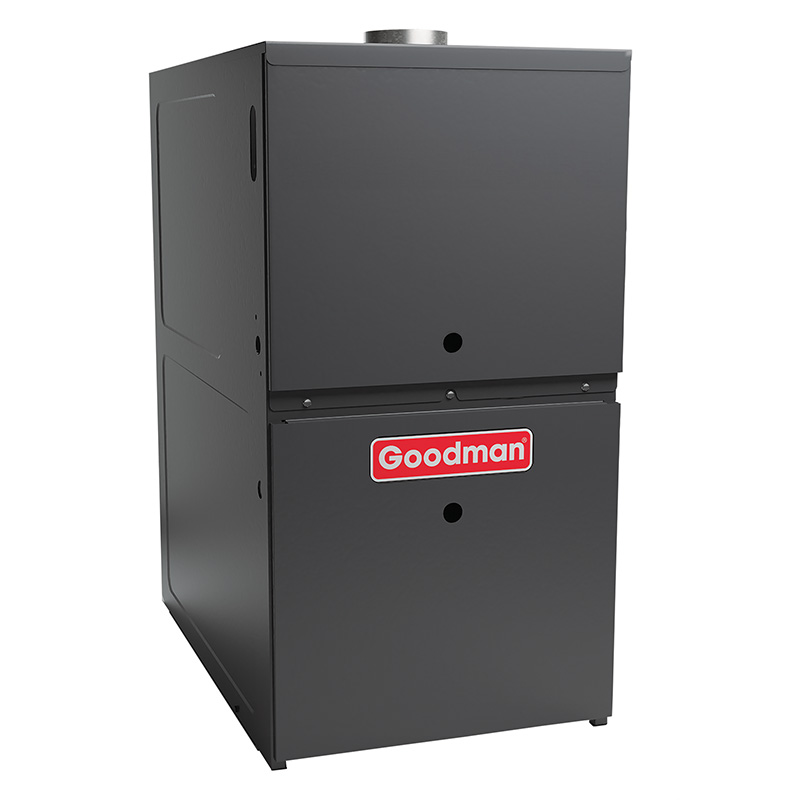
- 60,000 BTU upflow gas furnace, 80% AFUE, sized for basements or ground-level closets
- Low NOx burner design to meet stricter emissions requirements in applicable regions
- Factory-tested refrigerant circuit with a sealed system backed by Goodman's parts warranty
About this system
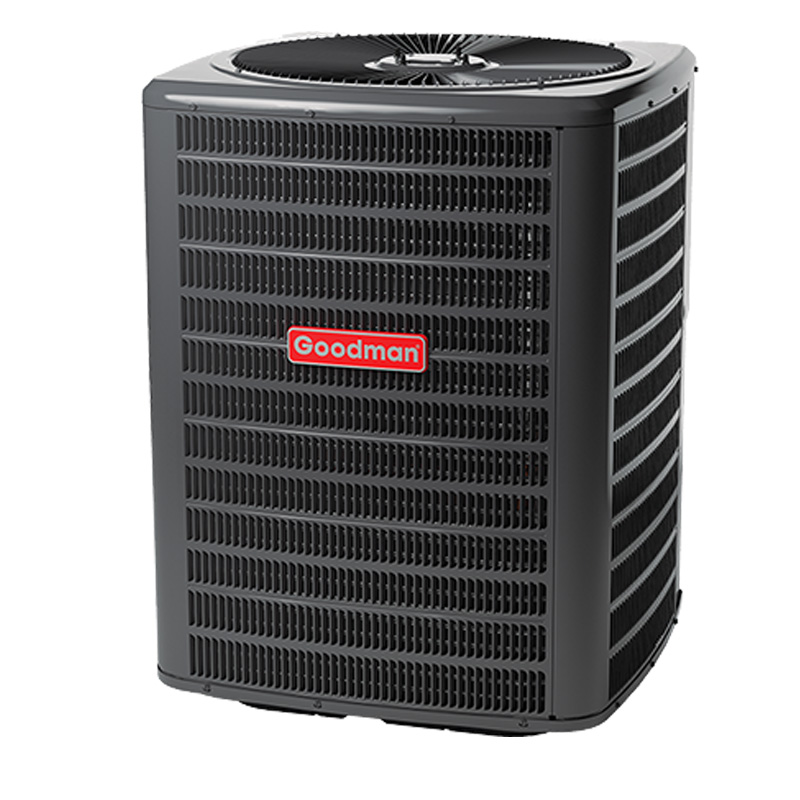
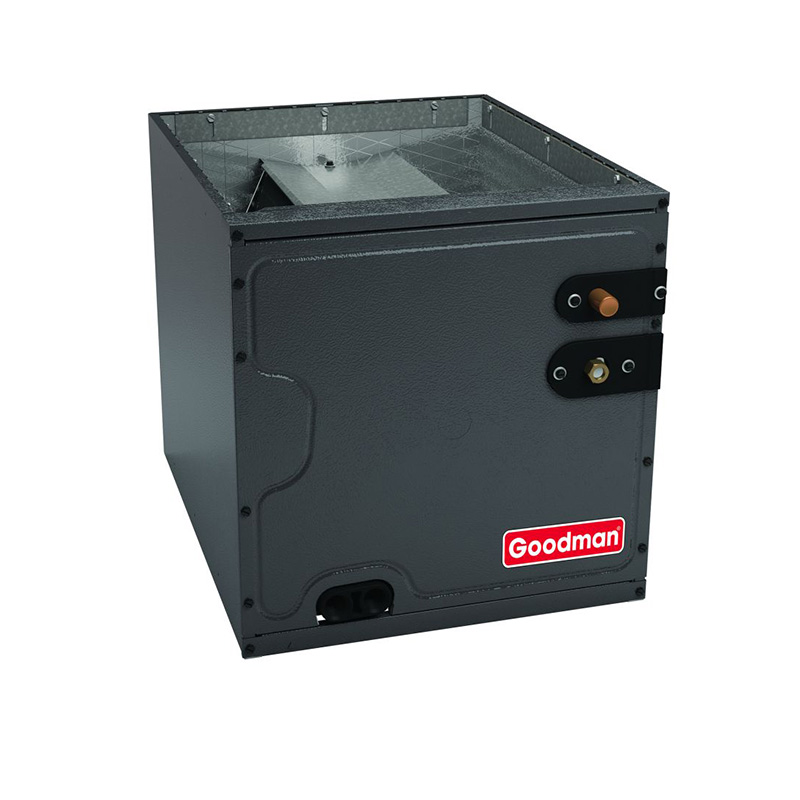
The Goodman 3-ton 15.2 SEER2 system pairs a two-stage, variable-speed air conditioner with a 60,000 BTU upflow gas furnace rated at 80% AFUE. The two-stage cooling compressor runs at a lower capacity on mild days, which reduces short-cycling, keeps indoor humidity more consistently in check, and trims electricity use compared with a single-stage unit. The variable-speed air handler further supports steady airflow and quieter operation. R-32 refrigerant has a lower global-warming potential than the R-410A it replaces and requires a smaller refrigerant charge by weight, though it does require certified technicians familiar with its mildly flammable classification.
The 80% AFUE furnace returns 80 cents in heat for every dollar of gas burned, which is the entry-level efficiency tier for new equipment. Homeowners in climates with long, harsh winters or high gas rates will pay a meaningful heating premium over a 96% AFUE alternative across the furnace’s life. The upflow configuration means warm air rises out of the top of the unit, making this setup well-suited for installations in basements or ground-level utility closets where ductwork runs above the equipment. This system is a practical choice for buyers who want two-stage comfort improvements over a basic single-stage replacement without moving up to the price point of premium brands.
Because Goodman equipment is priced roughly 15 to 25 percent below comparable Trane, Lennox, and Carrier systems, it attracts buyers who are cost-conscious on the equipment purchase itself. That gap can matter at the point of sale, but it is worth understanding that long-term cost depends heavily on installation quality, maintenance intervals, and whether you experience one of the brand’s documented weak points before the warranty period closes.
This Goodman bundle delivers genuine two-stage comfort and ECM airflow at a price point that undercuts most premium brands by a meaningful margin. The trade-off is a compressor and coil track record that lags behind top-tier competitors, and an 80% AFUE furnace that will cost more to run in cold climates than a high-efficiency alternative. It is a reasonable buy when budget is the primary constraint and you are confident in the installing contractor's skill.
Overall score is the average of the five ratings above.
What we like
- Two-stage compressor improves humidity control and comfort compared with single-stage units
- Variable-speed ECM blower reduces noise and operates more efficiently than PSC motors
- R-32 refrigerant is a lower-GWP option that meets current regulatory direction
- Priced 15 to 25 percent below Trane, Lennox, and Carrier equipment at similar efficiency ratings
- Low NOx furnace design allows installation in NOx-regulated markets such as parts of California
Trade-offs
- 80% AFUE is the lowest efficiency tier available; heating costs will be noticeably higher than a 96% AFUE furnace in cold climates
- Compressor lifespan averages 10 to 14 years versus 15 to 20 years typical of premium brands, raising long-term replacement risk
- Evaporator coil leaks and first-year refrigerant leaks appear in a meaningful share of owner reports, often tied to install quality
- ConsumerAffairs satisfaction score sits around 2.5 out of 5, with repair costs after year 7 as a recurring complaint
What homeowners and pros say about Goodman
Homeowners who share feedback about Goodman equipment online tend to cluster at the extremes. Google dealer reviews average around 3.8 out of 5 across locations, and the most common theme in positive feedback is straightforward: the equipment cost less than competing brands and it cooled or heated the home as expected. ConsumerAffairs tells a harder story, with Goodman sitting at roughly 2.5 out of 5, a channel where dissatisfied owners are more likely to post. The recurring complaint there is not early failure in the first few years but rather repair costs that begin climbing around year 7 or 8, which aligns with the documented compressor lifespan averaging 10 to 14 years rather than the 15 to 20 years more common with premium brands. For this specific two-stage R-32 system, buyers should also be aware that a minority of owners across Goodman’s line report refrigerant leaks within the first year, something technicians attribute to install or charge issues rather than a factory defect.
HVAC professionals who work on Goodman equipment frequently echo a consistent point: the install quality matters more with this brand than with some competitors because the equipment leaves less margin for error. Techs note that dual-run capacitor failures are the most routine service call on Goodman units and are inexpensive to resolve, but evaporator coil leaks represent a more significant expense and appear in a notable share of long-term owner reports. Pros who recommend Goodman tend to do so when the homeowner’s budget is firm and the installing contractor is experienced and thorough, treating the lower equipment cost as a reasonable trade-off when those conditions are met rather than a universal recommendation.
Sources: ConsumerAffairs Goodman owner reviews, AHRI Directory of Certified Product Performance, U.S. DOE appliance and equipment efficiency standards, Goodman product specification sheets.
What it costs to run
At 15.2 SEER2, cooling this 3-ton system for a typical 1200-hour cooling season at the U.S. average electricity rate of $0.17/kWh works out to roughly $483 per year in cooling, about $65 less per year than a minimum-efficiency 13.4 SEER2 unit of the same size. Your real cost depends on your climate and local rate.
Method: (36,000 BTU/hr ÷ 15.2 SEER2) × 1200 hours ÷ 1000 × $0.17/kWh. Rate source: U.S. EIA average; cooling hours: moderate-climate estimate.
How it compares
| Brand | Comparable model | SEER2 | Stage | Price position |
|---|---|---|---|---|
| Goodman | GSXH5/GMVC8 Series (this system) | 15.2 | two-stage | Value pick |
| Carrier | Comfort 15 Series (24ACC6) | 15.2 | single-stage | Typically 15 to 25 percent more than this Goodman system |
| Trane | XR15 Series | 15.0 | single-stage | Typically 15 to 25 percent more than this Goodman system |
| Lennox | Merit 14ACX Series | 15.0 | single-stage | Typically 15 to 25 percent more than this Goodman system |
Competitor rows are comparable single-stage units at similar efficiency; price is relative position, not a quote.
Questions about this system
Is R-32 refrigerant safe, and can any HVAC technician work on this system?
R-32 is classified as mildly flammable (A2L) and requires technicians who are trained and certified for A2L refrigerants. Most licensed HVAC contractors are obtaining this certification as R-32 becomes standard, but it is worth confirming before scheduling service or repairs.
Why does this furnace have an 80% AFUE rating when higher options exist, and does that matter for my bill?
80% AFUE means 20% of the heat energy in the gas escapes through the flue rather than entering your home. In climates with mild winters or where this system runs primarily as an air conditioner, the difference versus a 96% AFUE unit may be modest. In colder regions with long heating seasons, the gap compounds into a meaningful annual cost difference over the furnace's life.
What is the most common repair on Goodman systems, and roughly what does it cost?
Dual-run capacitors are the most frequently reported failure point on Goodman equipment. They are a relatively low-cost repair, typically in the $300 to $600 range including labor, and usually straightforward for a technician to replace. Evaporator coil leaks are a more expensive and documented concern, particularly in systems that are several years old.
How long should I expect the compressor to last on this unit?
Goodman compressors have an average service life of roughly 10 to 14 years based on reported owner experience, compared with 15 to 20 years that is more typical of premium brands like Trane and Carrier. Proper installation, correct refrigerant charge, and annual maintenance can influence where in that range your unit lands.
What does 'upflow' configuration mean, and how do I know if it fits my installation?
Upflow means the furnace draws return air in through the bottom and discharges heated or cooled air out the top, where it feeds into overhead ductwork. This configuration is standard for systems installed in a basement or ground-level mechanical closet with ductwork routed through the floor above. If your current system is upflow, this unit should be a compatible replacement; confirm with your installer if you are unsure about your duct configuration.
Specifications
| Cooling capacity | 3 Ton |
| Efficiency | 15.2 SEER2 |
| Furnace output | 60000 BTU |
| Furnace efficiency | 80% AFUE |
| Configuration | Upflow |
| Refrigerant | R-32 |