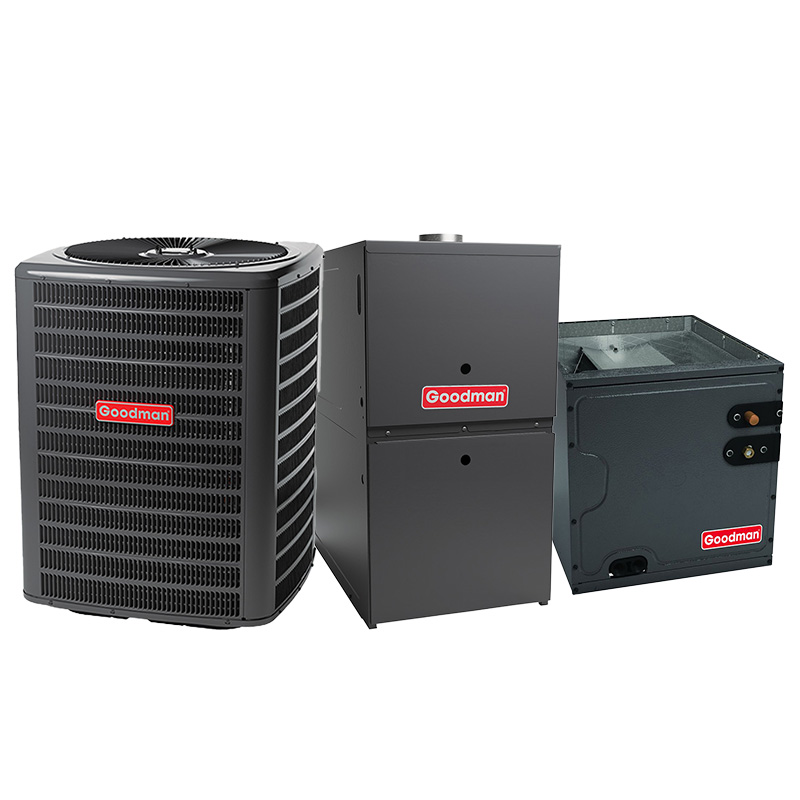
Goodman 3 Ton 15.2 SEER2 AC & Gas Furnace System – Two Stage Variable-Speed 80000 BTU Gas Furnace, 80% AFUE, Upflow, R32
View on AC Direct see your lowest price →Check current price on AC Direct →
Key features
- Two-stage compressor reduces short-cycling and improves humidity control during mild weather
- Variable-speed ECM air handler for quieter operation and more even temperature distribution
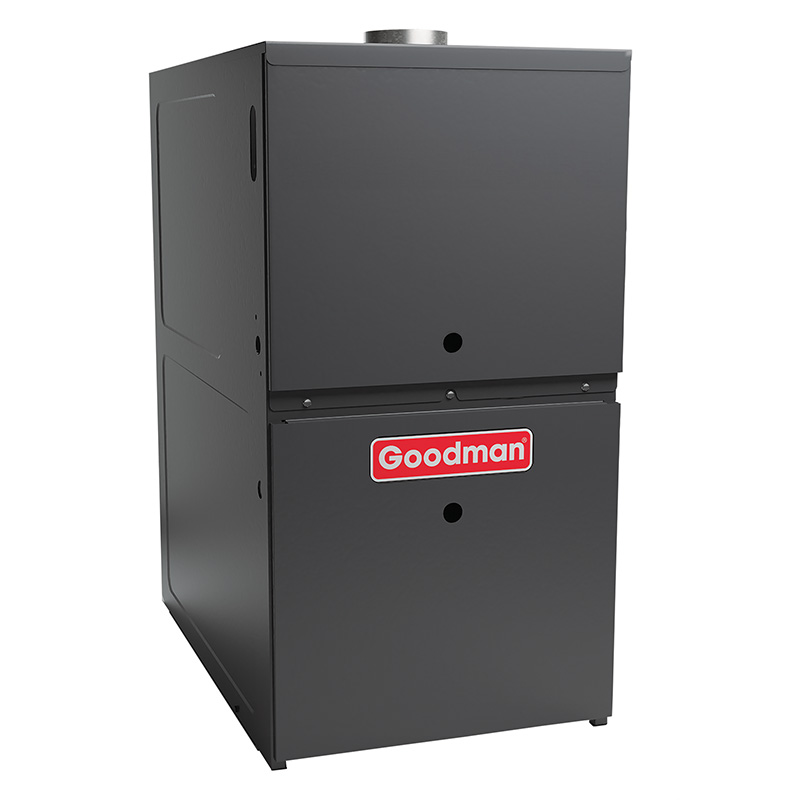
- 80,000 BTU upflow gas furnace rated at 80% AFUE for mid-efficiency heating
- 15.2 SEER2 cooling efficiency meets or exceeds federal minimums across all U.S. climate regions
- R-32 refrigerant with lower global warming potential than legacy R-410A systems
- Goodman factory warranty covers parts for 10 years on registered systems (compressor and heat exchanger included)
About this system
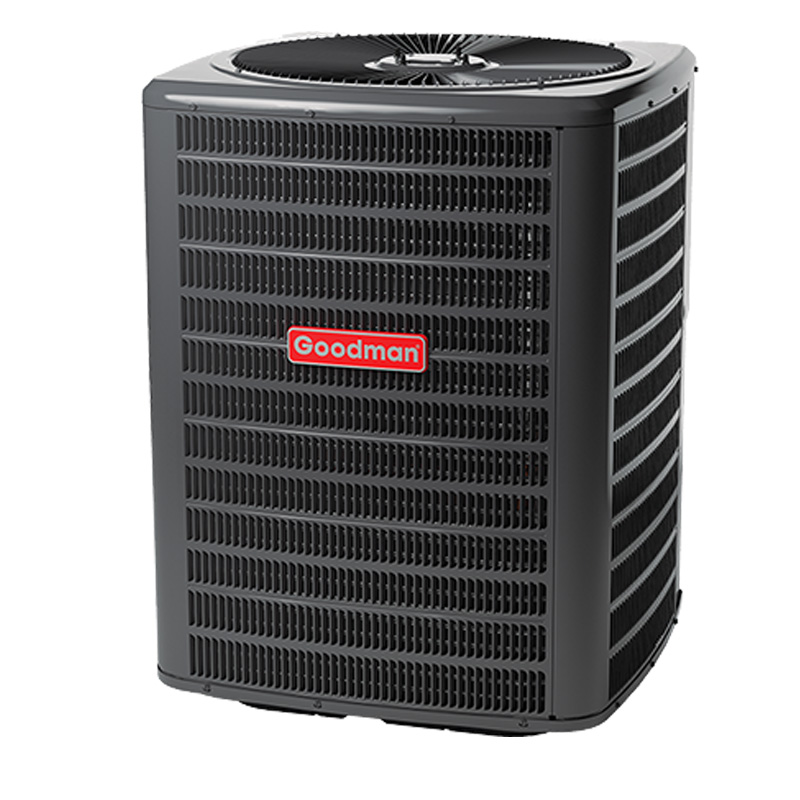
The Goodman 3-Ton 15.2 SEER2 system pairs a two-stage, variable-speed air conditioner with an 80,000 BTU upflow gas furnace rated at 80% AFUE. The two-stage compressor runs at low capacity during mild weather and steps up only when demand rises, which cuts short-cycling, keeps humidity more consistent than a single-stage unit, and trims runtime energy use compared to single-speed equipment. The variable-speed air handler moves air more quietly and precisely, reducing temperature swings from room to room. R-32 refrigerant carries a lower global warming potential than the R-410A it replaces and operates at slightly lower pressures, which can make system handling marginally easier for certified technicians.
At 15.2 SEER2, this system clears the federally mandated minimums for most U.S. climate regions and sits in the mid-efficiency tier, above entry-level single-stage units but well below 18-plus SEER2 premium systems. The 80% AFUE furnace converts eight of every ten units of gas into usable heat, which is adequate for moderate climates but leaves roughly 20% of combustion energy exhausted through the flue. Homeowners in very cold climates or high gas-cost regions may find the long-term fuel savings of a 96% AFUE unit worth the upfront premium. The upflow configuration requires the furnace to sit in a basement, utility closet, or crawlspace with supply air moving upward, so buyers must confirm that matches their home layout before ordering.
This system is a practical fit for budget-conscious homeowners replacing aging equipment in homes between roughly 1,400 and 1,800 square feet (depending on insulation and climate load), who want better-than-basic comfort features without paying the price premium of Trane, Carrier, or Lennox. The trade-off is that Goodman’s long-term reliability depends heavily on who installs it and how well it is maintained after installation.
This Goodman system delivers real comfort upgrades over single-stage equipment at a price point that is hard to match among name-brand competitors. The efficiency and feature set are honest for the money, but buyers should go in knowing that long-term durability leans on installer quality and that repair costs have a documented tendency to climb after year seven.
Overall score is the average of the five ratings above.
What we like
- Priced roughly 15 to 25 percent below comparable Carrier, Trane, and Lennox two-stage systems
- Two-stage operation meaningfully improves comfort and humidity control over single-stage alternatives
- Variable-speed blower reduces noise and temperature swings versus fixed-speed models
- R-32 refrigerant is a forward-looking choice as R-410A is phased out industry-wide
- 10-year registered parts warranty is competitive for the value-brand segment
Trade-offs
- Dual-run capacitors are the most commonly reported failure point, typically needing replacement within the first 7 to 10 years at a cost of $300 to $600
- Compressor lifespan averages 10 to 14 years, noticeably shorter than the 15 to 20 years typical of premium-brand compressors
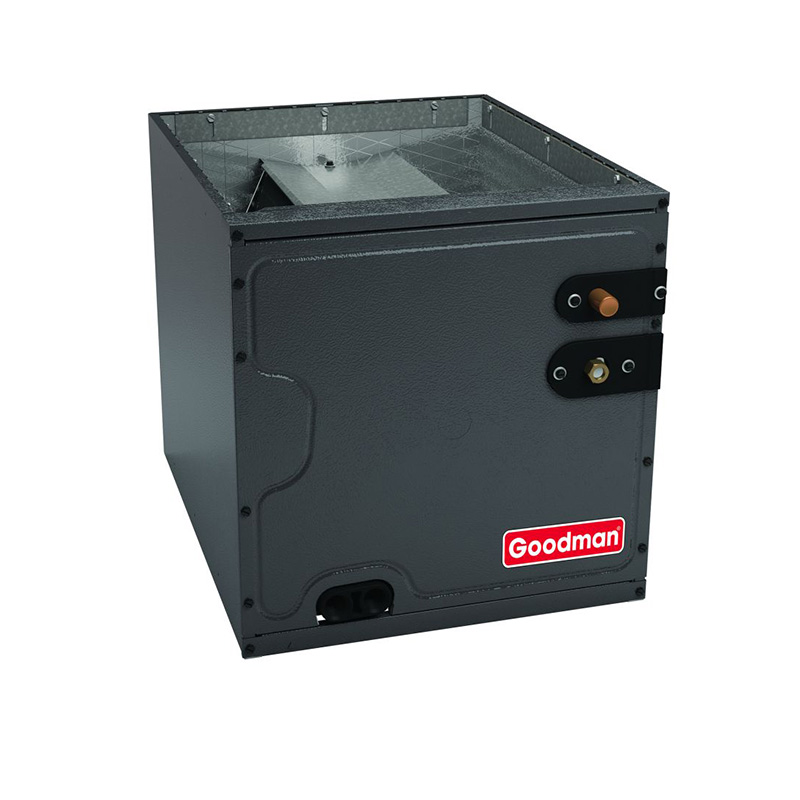
- Evaporator coil leaks appear in a meaningful share of owner reports and can be costly to address
- 80% AFUE furnace wastes about 20% of fuel as flue exhaust, making it a weaker choice for cold climates or markets with high natural gas costs
What homeowners and pros say about Goodman
Homeowners who chose Goodman equipment most often land on the same word: affordable. Google dealer reviews average around 3.8 out of 5 stars across hundreds of reviews per location, and the consistent thread in positive feedback is that buyers got functioning, reasonably capable equipment without the sticker shock of a Lennox or Carrier quote. That said, ConsumerAffairs scores tell a different story, sitting at roughly 2.5 out of 5 on a channel that attracts frustrated owners more than satisfied ones. The recurring pattern in those complaints is not failure out of the box but rather repair costs that climb noticeably after about year seven, which aligns with the documented compressor lifespan of 10 to 14 years compared to 15 to 20 years typical of premium brands.
HVAC technicians who service Goodman equipment regularly point to two specific failure modes worth knowing before you buy this system. Dual-run capacitors are the most frequently reported component failure, and while a capacitor swap typically runs $300 to $600 and is considered a routine repair, it is a cost that tends to show up more than once over a system’s life. Evaporator coil leaks appear in a meaningful share of owner reports and are a more expensive fix. A minority of owners also report refrigerant leaks in the first year, which technicians generally attribute to installation or initial charge issues rather than a factory defect. The takeaway from both professional and owner feedback is consistent: a Goodman system installed carefully by an experienced technician and serviced annually performs respectably for the price, but shortcuts at installation or deferred maintenance accelerate the problems that show up in the negative reviews.
Sources: ConsumerAffairs Goodman owner reviews, AHRI Directory of Certified Product Performance, U.S. DOE appliance and equipment efficiency standards, Goodman product specification sheets.
What it costs to run
At 15.2 SEER2, cooling this 3-ton system for a typical 1200-hour cooling season at the U.S. average electricity rate of $0.17/kWh works out to roughly $483 per year in cooling, about $65 less per year than a minimum-efficiency 13.4 SEER2 unit of the same size. Your real cost depends on your climate and local rate.
Method: (36,000 BTU/hr ÷ 15.2 SEER2) × 1200 hours ÷ 1000 × $0.17/kWh. Rate source: U.S. EIA average; cooling hours: moderate-climate estimate.
How it compares
| Brand | Comparable model | SEER2 | Stage | Price position |
|---|---|---|---|---|
| Goodman | 3-Ton 15.2 SEER2 Two-Stage Variable-Speed with 80K BTU 80% AFUE Furnace | 15.2 | Two-stage | Value pick |
| Carrier | Comfort 15 Series (24ACC6) | 15+ | Single-stage | Typically 15 to 25 percent more than this Goodman system |
| Trane | XR15 Series | 15+ | Single-stage | Typically 15 to 25 percent more than this Goodman system |
| Lennox | Merit ML15 Series | 15+ | Single-stage | Typically 15 to 25 percent more than this Goodman system |
Competitor rows are comparable single-stage units at similar efficiency; price is relative position, not a quote.
Questions about this system
Does this system work with my existing ductwork, or will I need modifications?
That depends on the condition and sizing of your existing ducts. A 3-ton system requires ductwork sized for adequate airflow; undersized or leaky ducts will reduce efficiency and comfort regardless of how good the equipment is. Have your installer do a Manual D load calculation and duct inspection before committing to this size.
Why is R-32 refrigerant being used instead of R-410A, and does it affect service costs?
R-32 is replacing R-410A industry-wide because it has a significantly lower global warming potential and is considered a transitional refrigerant toward longer-term alternatives. Technicians need A2L certification to handle it, so confirm your service provider is certified before scheduling maintenance or repair work.
What does the 10-year warranty actually cover, and what do I need to do to keep it valid?
Goodman's 10-year parts warranty applies to registered systems and covers components including the compressor and heat exchanger. You typically need to register the unit within a set window after installation, and the warranty covers parts only, not labor. Keep all service records because warranty claims can require proof of maintenance.
Is 80% AFUE adequate for my area, or should I consider a higher-efficiency furnace?
80% AFUE is generally considered adequate in mild to moderate climates, but homeowners in the northern U.S. or Canada, or in areas with high natural gas prices, often recover the cost premium of a 95 to 96% AFUE furnace within a few heating seasons through fuel savings. If your winters are consistently cold, it is worth pricing the upgrade.
How does the two-stage compressor actually affect my monthly energy bills compared to a single-stage unit?
The low-stage setting allows the compressor to run longer at reduced capacity instead of cycling on and off at full power, which tends to lower energy consumption during mild weather and improves dehumidification. Real-world savings vary with climate and usage patterns, but two-stage operation is a genuine efficiency and comfort improvement over single-stage equipment at this price tier.
Specifications
| Cooling capacity | 3 Ton |
| Efficiency | 15.2 SEER2 |
| Furnace output | 80000 BTU |
| Furnace efficiency | 80% AFUE |
| Configuration | Upflow |
| Refrigerant | R-32 |