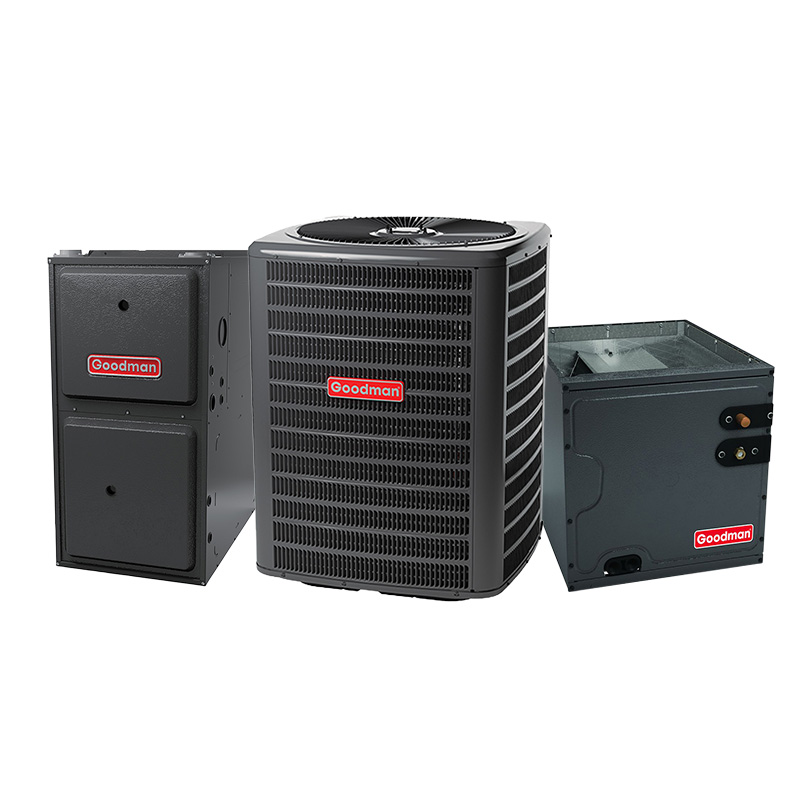
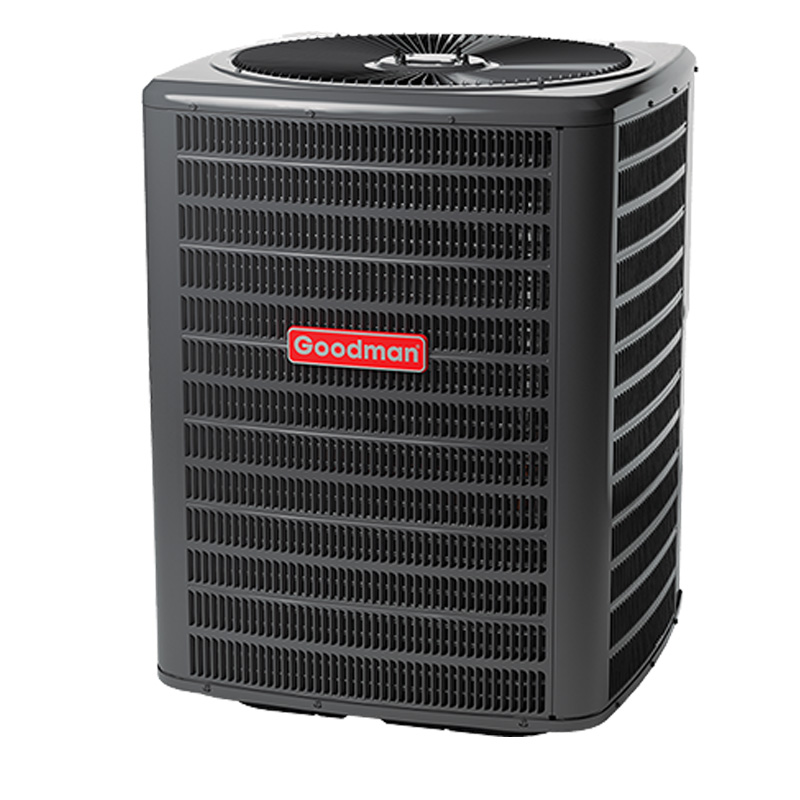
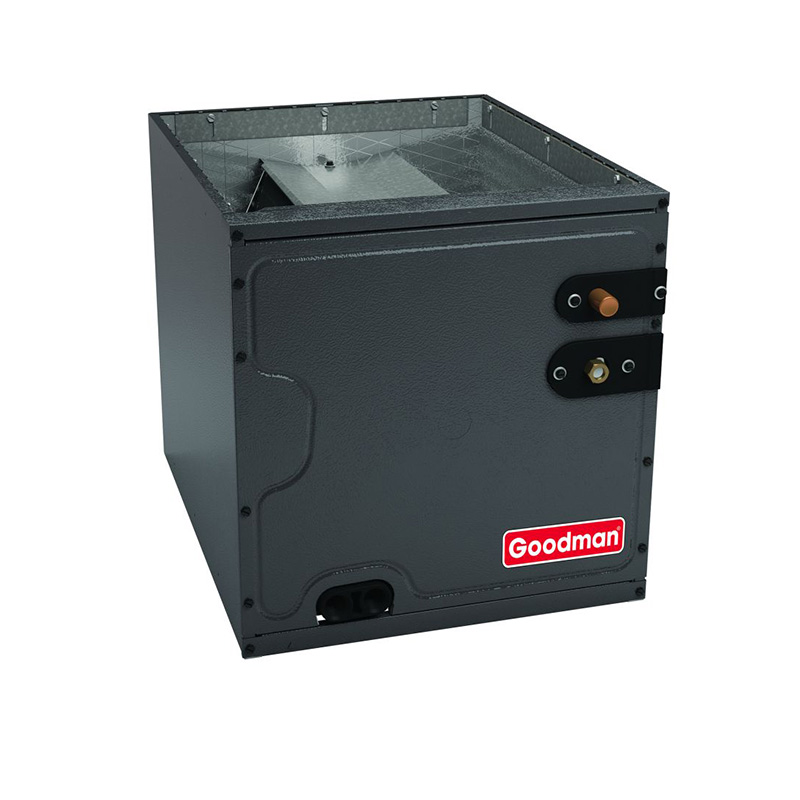
Goodman 3 Ton 15.2 SEER2 Dual Fuel Heat Pump & Gas Furnace Hybrid System – Modulating Variable-Speed, 100000 BTU Gas Furnace, 97% AFUE, Upflow, R32
View on AC Direct see your lowest price →Check current price on AC Direct →
Key features
- 15.2 SEER2 variable-speed heat pump with automatic dual fuel switching to 97% AFUE modulating gas furnace
- 3-ton (36,000 BTU) cooling capacity suited to homes roughly 1,400 to 2,000 square feet depending on climate and insulation
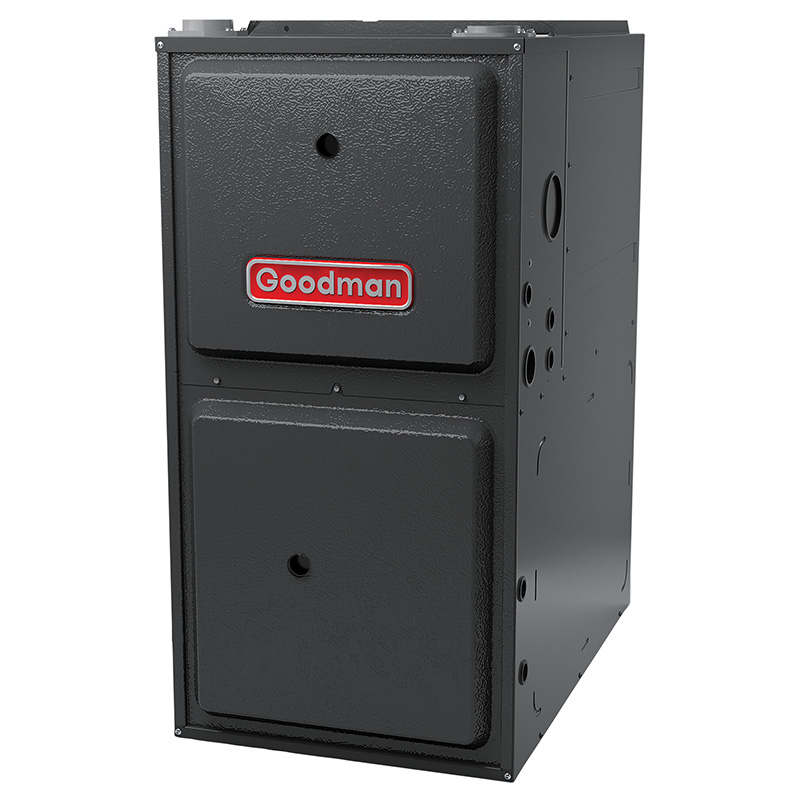
- 100,000 BTU gas furnace with modulating gas valve for incremental output adjustments and reduced temperature swings
- R-32 refrigerant with lower global warming potential and smaller charge volume than legacy R-410A systems
- Upflow cabinet orientation for basement or dedicated closet installations with overhead duct supply
- Variable-speed ECM blower motor improves humidity control during cooling and reduces energy draw at partial load
About this system
The Goodman GLZS4BA3610 is a 3-ton dual fuel hybrid system pairing a 15.2 SEER2 variable-speed heat pump with a 100,000 BTU, 97% AFUE modulating gas furnace in an upflow configuration. Dual fuel means the system automatically switches between the heat pump and gas furnace depending on outdoor temperature, leaning on the more cost-effective energy source at any given moment. That kind of flexibility is particularly useful in climates where winters dip cold enough to outpace a heat pump’s efficiency but do not stay brutal for months on end, think the mid-Atlantic, lower Midwest, or transition-zone Southeast.
The 97% AFUE rating places this furnace in the top efficiency tier for residential gas equipment, meaning 97 cents of every dollar of gas burned converts to usable heat. The variable-speed blower and modulating gas valve let the system ramp output up or down in small increments rather than cycling on and off at full blast, which generally means steadier indoor temperatures, quieter operation, and better humidity management during cooling season. R-32 refrigerant is the newer-generation choice, carrying a lower global warming potential than the R-410A it is gradually replacing, and it also charges at a lower volume, which can reduce refrigerant costs if a recharge is ever needed. The upflow configuration suits a basement or closet installation where supply air exits the top of the unit.
The Goodman GLZS4BA3610 delivers genuine top-tier efficiency at a price point that undercuts Carrier, Trane, and Lennox by a meaningful margin, and the dual fuel setup is a legitimately smart configuration for mixed-climate homeowners who want to optimize fuel costs. The trade-off is a brand track record that shows shorter compressor longevity and a higher rate of component issues after year seven than premium competitors, so the long-term value calculation depends heavily on install quality and your tolerance for potential repair costs down the road.
Overall score is the average of the five ratings above.
What we like
- 97% AFUE furnace and 15.2 SEER2 heat pump put this system in the high-efficiency tier for both heating and cooling
- Dual fuel logic automatically selects the cheaper energy source, which can meaningfully lower monthly utility bills in climates with cold but not extreme winters
- Modulating gas valve and variable-speed blower produce steadier room temperatures and noticeably quieter part-load operation compared to single-stage systems
- R-32 refrigerant is a future-forward choice with lower environmental impact and potentially lower recharge costs than R-410A
- Street price runs roughly 15 to 25 percent below comparable Carrier, Trane, and Lennox dual fuel systems, leaving budget for a quality installation
Trade-offs
- Goodman compressors average 10 to 14 years in real-world use versus 15 to 20 years commonly cited for premium brand equipment, which matters on a system this complex
- Dual capacitor failures are the most frequently reported repair, typically costing $300 to $600, and tend to surface as the system ages past the early warranty years
- Evaporator coil leaks appear in a meaningful share of owner accounts, and a refrigerant leak in the first year is a documented minority occurrence often tied to installation or initial charge quality
- A dual fuel hybrid system has more components and switching logic than a straight heat pump or furnace, so installation complexity is higher and performance is more sensitive to whether the contractor sets the balance point correctly
What homeowners and pros say about Goodman
Owner and dealer feedback on Goodman equipment follows a consistent pattern that holds for this dual fuel system. On Google dealer review pages, where ratings cluster around 3.8 out of 5 across several hundred reviews per location, the most repeated positive is affordability and the ability to get more efficiency features for less money upfront. That sentiment fits this product well: a modulating furnace at 97% AFUE paired with a variable-speed heat pump is a configuration that typically costs significantly more from Carrier, Trane, or Lennox. The concern that surfaces in dealer reviews and in the complaint-weighted ConsumerAffairs channel, where Goodman scores around 2.5 out of 5, is what happens after year seven. Repair costs climbing in the second half of a system’s life is the recurring thread on ConsumerAffairs, and dual capacitor failures are the most commonly cited specific repair, generally landing in the $300 to $600 range and showing up across multiple product lines.
HVAC technicians who work on Goodman equipment frequently note that install quality is the single biggest variable in how long a unit lasts, a point that matters more with a dual fuel system than with a straight single-stage unit because the balance point setup, refrigerant charge, and controls integration all have to be done correctly for the system to operate as designed. Evaporator coil leaks appear in a meaningful share of owner accounts over the system’s life, and a smaller number of owners report refrigerant issues in the first year, a pattern that technicians often attribute to the initial installation rather than the equipment itself. Compressor longevity averaging 10 to 14 years versus the 15 to 20 years seen with premium brands is the most significant long-term trade-off, and it is worth factoring into any cost comparison that extends beyond the warranty period.
Sources: ConsumerAffairs Goodman owner reviews, AHRI Directory of Certified Product Performance, U.S. DOE appliance and equipment efficiency standards, Goodman product specification sheets.
What it costs to run
At 15.2 SEER2, cooling this 3-ton system for a typical 1200-hour cooling season at the U.S. average electricity rate of $0.17/kWh works out to roughly $483 per year in cooling, about $65 less per year than a minimum-efficiency 13.4 SEER2 unit of the same size. Your real cost depends on your climate and local rate.
Method: (36,000 BTU/hr ÷ 15.2 SEER2) × 1200 hours ÷ 1000 × $0.17/kWh. Rate source: U.S. EIA average; cooling hours: moderate-climate estimate.
How it compares
| Brand | Comparable model | SEER2 | Stage | Price position |
|---|---|---|---|---|
| Goodman | GLZS4BA3610 Dual Fuel Hybrid | 15.2 | Variable / Modulating | Value pick |
| Carrier | Infinity 16 Dual Fuel (25HCE6 series) | 16+ | Variable | Typically 15 to 25 percent more than this Goodman |
| Trane | XV17 Dual Fuel System | 17+ | Variable | Typically 15 to 25 percent more than this Goodman |
| Lennox | XP16 Dual Fuel System | 15.2 to 16 | Two-stage | Typically 15 to 25 percent more than this Goodman |
Competitor rows are comparable single-stage units at similar efficiency; price is relative position, not a quote.
Questions about this system
What outdoor temperature should I set as the balance point for switching between the heat pump and the gas furnace?
The balance point is typically set between 35 and 45 degrees Fahrenheit for most climates, representing the temperature at which the heat pump's efficiency drops enough that gas heat becomes cheaper to run. Your installer should calculate this based on your local utility rates and the specific efficiency curves of this equipment, not just use a default setting, because the wrong balance point can erase much of the fuel-cost advantage of a dual fuel system.
Does R-32 refrigerant require a specially certified technician to service?
Any EPA 608-certified HVAC technician can handle R-32, but not every technician has hands-on experience with it yet since it is still rolling out across the residential market. It is mildly flammable (A2L classification), which means service requires specific handling practices and the right recovery equipment. Ask any service technician before they work on the system whether they have dealt with A2L refrigerants previously.
What does the Goodman warranty cover on this dual fuel system, and are there conditions I need to meet?
Goodman's standard warranty on this class of equipment is typically 10 years on covered components including the compressor, heat exchanger, and parts, but that coverage generally requires registering the product with Goodman within a set window after installation. Failing to register usually drops coverage to a shorter base period. Confirm registration requirements at the time of installation and keep your contractor's paperwork because warranty claims may require proof of professional installation.
How likely am I to need a capacitor replacement, and is that something I should budget for?
Capacitor failure is the most commonly reported repair across Goodman heat pump systems, and it is worth treating as a probable rather than a possible future expense. The fix itself runs roughly $300 to $600 depending on your market and when you catch it. Signing up for an annual maintenance contract that includes a capacitor check each season is a reasonable way to catch a weakening capacitor before it causes a no-cool or no-heat call.
My home is around 1,800 square feet in a mixed climate. Is 3 tons the right size, or should I get a load calculation done first?
Square footage alone is not enough to size HVAC equipment correctly. Ceiling height, insulation levels, window area and orientation, local design temperatures, and duct condition all factor into the correct load calculation. A Manual J calculation by your contractor is the right tool, and oversizing this system will cause the modulating features to operate mostly at low stage while producing short cycles that hurt humidity control and accelerate wear. Do not skip the load calculation.
Specifications
| Cooling capacity | 3 Ton |
| Efficiency | 15.2 SEER2 |
| Furnace output | 100000 BTU |
| Furnace efficiency | 97% AFUE |
| Configuration | Upflow |
| Refrigerant | R-32 |
| Model | GLZS4BA3610 |