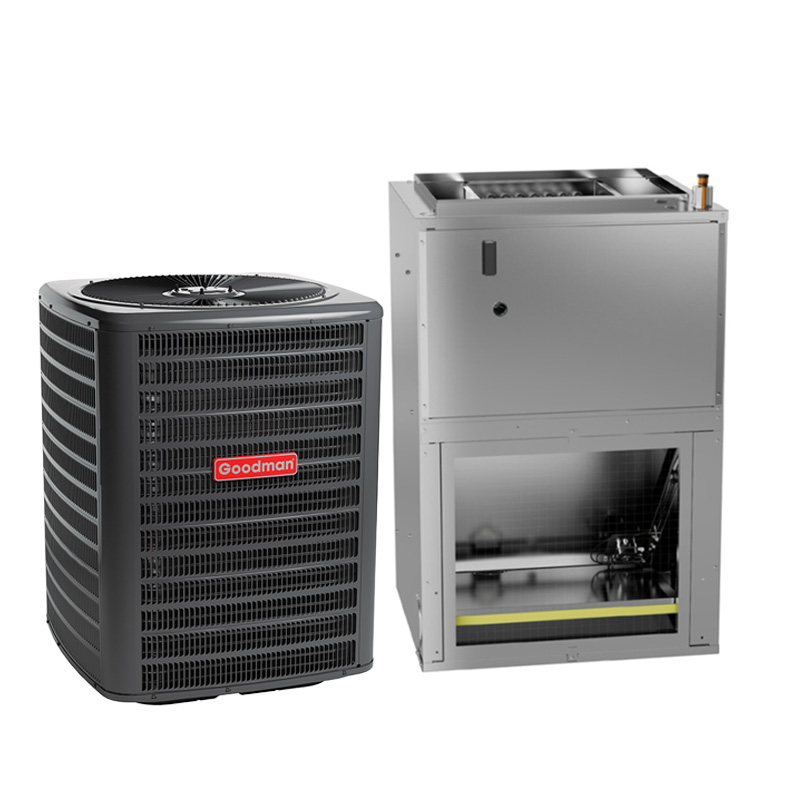
Goodman 3 Ton 15.2 SEER2 R32 Air Conditioner Split System With 8kW Heater Built-In Wall-Mounted Air Handler
View on AC Direct see your lowest price →Check current price on AC Direct →
Key features
- 15.2 SEER2 efficiency rating, meeting current federal standards with moderate energy savings
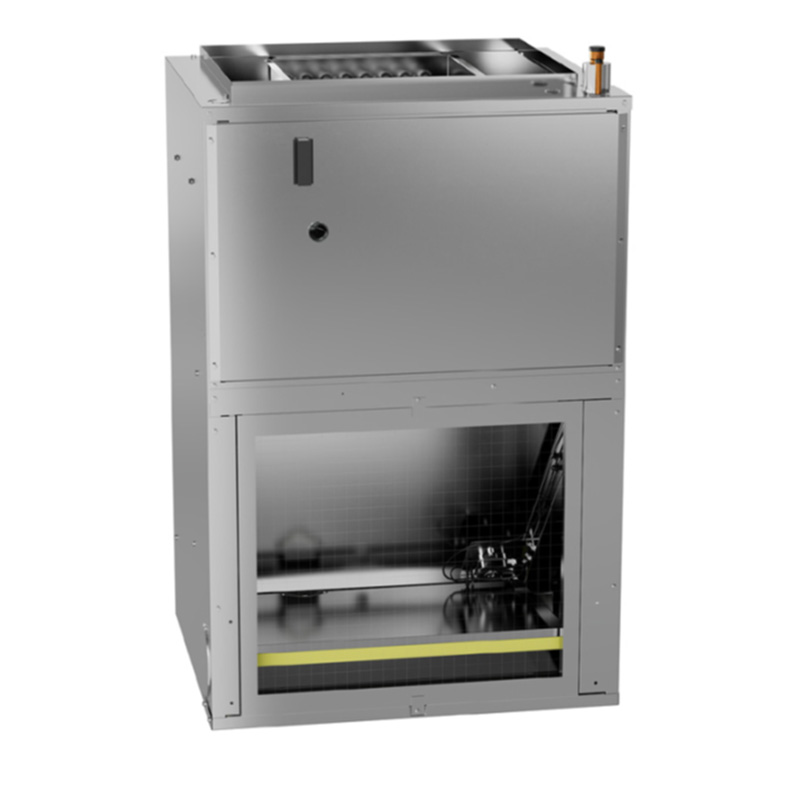
- Wall-mounted air handler suits additions, garages, and spaces without existing ductwork
- Built-in 8 kW electric resistance heater for supplemental or primary heating in mild climates
- R-32 refrigerant with lower global warming potential than R-410A and a smaller required charge
- 3-ton capacity sized for approximately 1,500 to 2,100 square feet depending on load
- Single-stage compressor operation provides straightforward installation and service
About this system
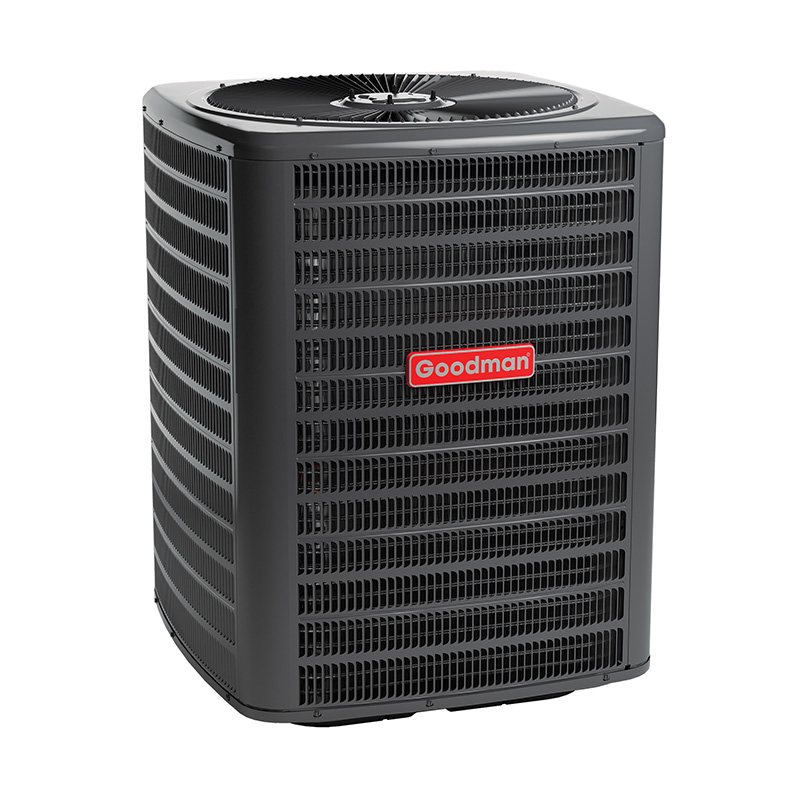
The Goodman 3-Ton 15.2 SEER2 R-32 Split System pairs a standard outdoor condensing unit with a wall-mounted air handler that has an 8 kW electric heater built in, making it a reasonable fit for homes in mild-winter climates where a gas furnace is not practical or wanted. The wall-mount configuration is particularly useful in spaces where a ceiling-mounted or closet-based air handler is not an option, such as a garage conversion, a home addition, a workshop, or a single-zone room that sits outside the main duct system. Because the heater is electric resistance rather than a heat pump, it supplies reliable warmth without defrost cycles, though operating costs will be higher than a heat pump in colder weather.
At 15.2 SEER2, this system sits just above the current federal minimum efficiency floor for many regions. That is not a knock on the unit, it means cooling bills will be noticeably lower than an older 13 or 14 SEER system, while stopping short of the bigger efficiency gains you see at 17 SEER2 and above. R-32 refrigerant is a step forward from R-410A: it has a lower global warming potential, requires a smaller refrigerant charge to do the same work, and is likely to remain widely available as the industry moves away from older blends. Sizing at 3 tons covers roughly 1,500 to 2,100 square feet under typical conditions, though actual sizing should always be confirmed with a Manual J load calculation.
This Goodman system delivers solid entry-level efficiency in a practical wall-mount format at a price that undercuts premium brands by 15 to 25 percent. The trade-off is a brand track record that shows more repair frequency after year seven and a compressor lifespan that tends to average shorter than Trane or Carrier equivalents. It is a reasonable choice for budget-conscious buyers who understand the odds and hire a skilled installer.
Overall score is the average of the five ratings above.
What we like
- Price point is consistently 15 to 25 percent below comparable Carrier, Trane, and Lennox systems
- Wall-mount air handler expands installation options in non-standard spaces
- R-32 refrigerant is future-friendly and requires a smaller charge for the same capacity
- 8 kW built-in heater eliminates the need for a separate heating appliance in mild climates
- Single-stage system is straightforward for most qualified HVAC technicians to service
Trade-offs
- Compressor lifespan averages 10 to 14 years versus 15 to 20 years for premium-brand compressors
- Dual-run capacitor failures are the most commonly reported issue, typically surfacing within the first several years
- A minority of owners have reported refrigerant leaks within the first year, most often linked to installation quality
- Evaporator coil leaks appear in a meaningful share of long-term owner reviews, adding potential repair costs after year seven
What homeowners and pros say about Goodman
Homeowners who buy Goodman equipment most often point to the upfront price as the deciding factor, and dealer Google reviews averaging around 3.8 out of 5 suggest that a meaningful share of those buyers walk away satisfied, particularly when the installer is experienced and attentive. The picture gets more complicated over time. ConsumerAffairs, a channel that skews toward owners who had problems, gives Goodman roughly 2.5 out of 5, and the recurring complaint pattern is repair costs that begin climbing after about year seven. The two failure modes that appear most consistently in those accounts are evaporator coil leaks and, more frequently, dual-run capacitor failures, the latter being a relatively inexpensive fix in the 300 to 600 dollar range but a recurring one for some owners.
HVAC technicians who work on Goodman equipment regularly tend to hold a nuanced view. Many will note that the brand’s compressors average 10 to 14 years of service life, which is a real gap compared to the 15 to 20 years more commonly seen with premium-brand compressors. They also point out that a small but documented share of new Goodman systems develop refrigerant leaks within the first year, and in most of those cases the root cause is the installation rather than the equipment itself. That framing matters for this particular system: a wall-mount configuration is less common than a standard air handler install, and it demands a technician who is comfortable with the specific requirements of that setup. Get that right, and this system can deliver solid years of service at a price that leaves room in the budget for the occasional capacitor swap.
Sources: ConsumerAffairs Goodman owner reviews, AHRI Directory of Certified Product Performance, U.S. DOE appliance and equipment efficiency standards, Goodman product specification sheets.
What it costs to run
At 15.2 SEER2, cooling this 3-ton system for a typical 1200-hour cooling season at the U.S. average electricity rate of $0.17/kWh works out to roughly $483 per year in cooling, about $65 less per year than a minimum-efficiency 13.4 SEER2 unit of the same size. Your real cost depends on your climate and local rate.
Method: (36,000 BTU/hr ÷ 15.2 SEER2) × 1200 hours ÷ 1000 × $0.17/kWh. Rate source: U.S. EIA average; cooling hours: moderate-climate estimate.
How it compares
| Brand | Comparable model | SEER2 | Stage | Price position |
|---|---|---|---|---|
| Goodman | 3-Ton 15.2 SEER2 R-32 Wall-Mount Split with 8 kW Heater | 15.2 | Single-stage | Value pick |
| Carrier | Comfort 24ACC6 Series | 15.2 | Single-stage | Typically 15 to 25 percent more than this Goodman |
| Trane | XR15 Series | 15.0 to 16.0 | Single-stage | Typically 15 to 25 percent more than this Goodman |
| Lennox | Merit ML14XC1 Series | 15.0 to 16.0 | Single-stage | Typically 15 to 25 percent more than this Goodman |
Competitor rows are comparable single-stage units at similar efficiency; price is relative position, not a quote.
Questions about this system
Is the 8 kW heater enough to heat a 3-ton zone through a cold winter?
Eight kilowatts of electric resistance heat produces roughly 27,000 BTU per hour, which can maintain comfortable temperatures in a well-insulated space during moderately cold weather. In climates where temperatures regularly drop below 20 degrees Fahrenheit, you may find it undersized for the full 3-ton coverage area, and heating costs will be higher than a heat pump alternative.
Why does Goodman score so low on ConsumerAffairs if it sells so many units?
ConsumerAffairs draws a complaint-heavy audience, so its roughly 2.5 out of 5 score reflects dissatisfied owners more than the average buyer experience. Google dealer reviews, which capture a broader mix of customers, average around 3.8 out of 5, with affordability cited most often as a positive. The honest picture sits somewhere between those two numbers.
Can I install this system myself to save money?
Legally, the refrigerant side requires an EPA 608-certified technician, and most localities require a licensed HVAC contractor for the full installation. Beyond compliance, Goodman's own performance record shows that install quality is the single biggest factor in how long the system lasts, so cutting corners on installation is a false economy.
What does switching to R-32 refrigerant mean for future service calls?
R-32 has a lower global warming potential than R-410A and is increasingly common in new equipment, so availability is not a concern. One practical note: R-32 is mildly flammable, so technicians need to follow specific handling procedures, which most modern HVAC shops are already equipped for.
What are the most likely repairs I should budget for over the life of this system?
Dual-run capacitor replacement is the most commonly reported failure and typically costs 300 to 600 dollars including labor. Evaporator coil leaks show up in a meaningful share of long-term owner reviews and can cost considerably more. The compressor averaging 10 to 14 years means a possible compressor replacement or full system swap before the 15-year mark that premium-brand owners often avoid.
Specifications
| Cooling capacity | 3 Ton |
| Efficiency | 15.2 SEER2 |
| Refrigerant | R-32 |