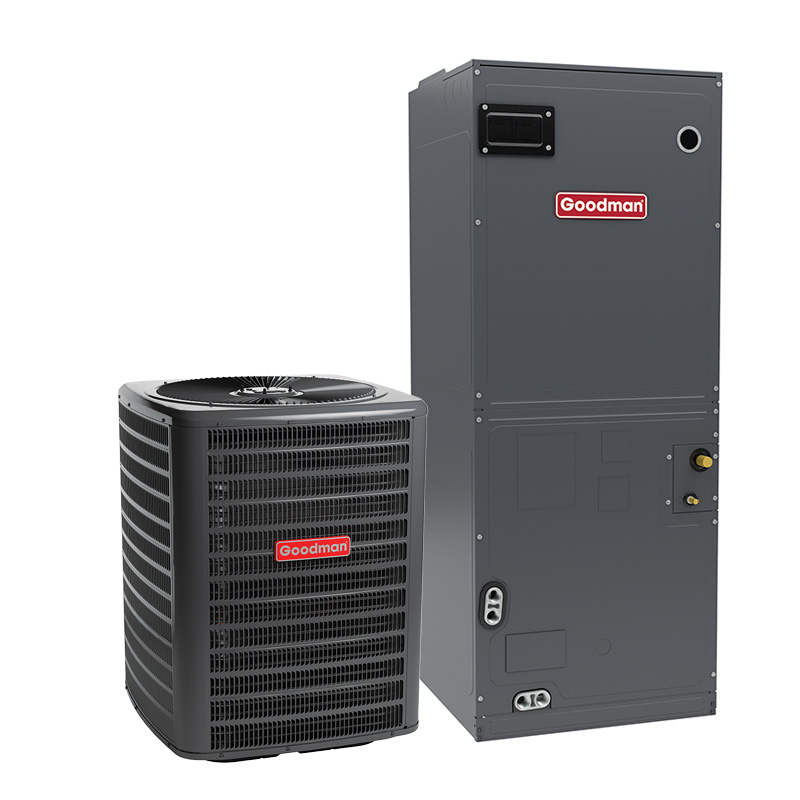
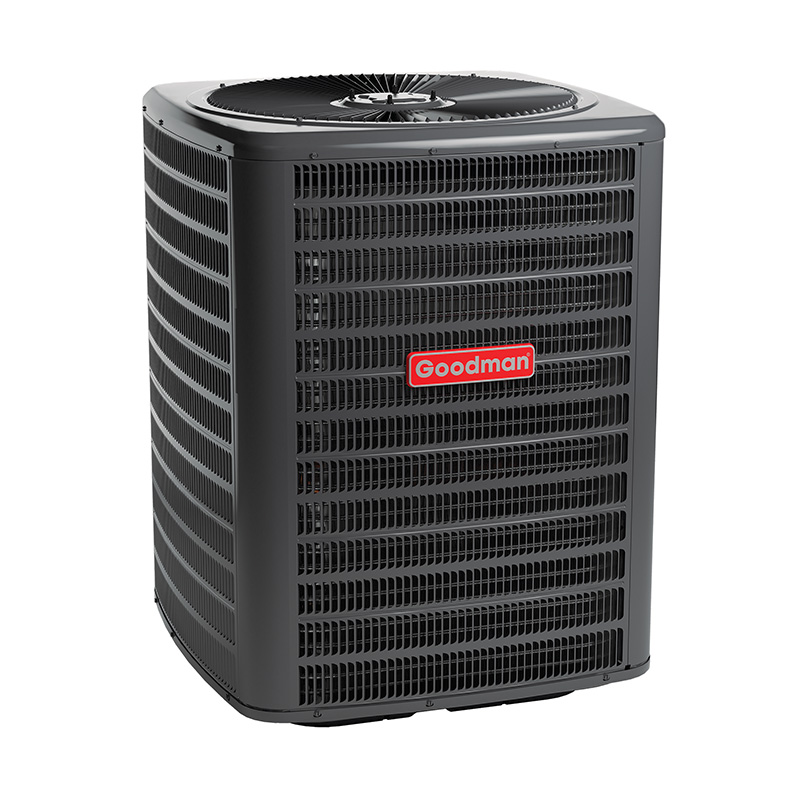
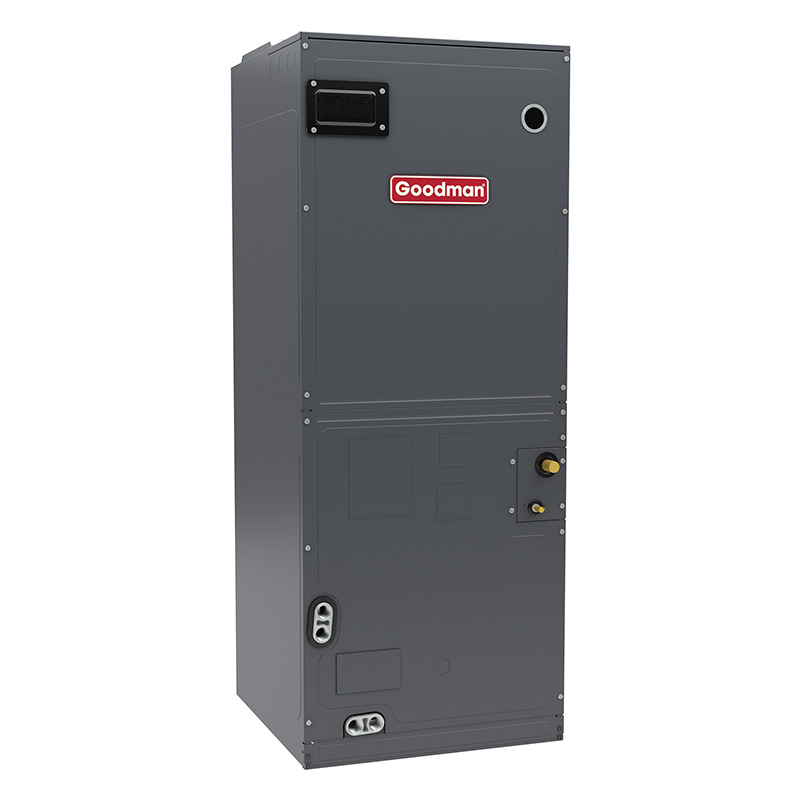
Goodman 3 Ton 15.2 SEER2 R32 Cooling Only Split System
View on AC Direct see your lowest price →Check current price on AC Direct →
Key features
- 3-ton cooling capacity suited to mid-size homes in moderate to hot climates
- 15.2 SEER2 efficiency rating meets 2023 federal minimum standards for most regions
- R-32 refrigerant with lower global warming potential than R-410A
- Cooling-only configuration pairs with a separate furnace or air handler
- Single-stage operation provides consistent on/off cooling cycles
- Priced roughly 15 to 25 percent below comparable Trane, Lennox, and Carrier units
About this system
The Goodman 3 Ton 15.2 SEER2 Cooling Only Split System is a straightforward air conditioner designed for homeowners who want reliable warm-season comfort without the premium price tag of top-tier brands. At 3 tons, it is sized for homes roughly in the 1,500 to 2,100 square foot range depending on climate zone, insulation quality, and local heat gain. The 15.2 SEER2 rating sits just above the federal minimum efficiency threshold that took effect in 2023, which means it meets current regulations and delivers a modest improvement over older low-efficiency equipment, though it does not approach the upper efficiency tiers that variable-speed or two-stage systems can reach.
This is a cooling-only system, so it pairs with an existing gas furnace or air handler rather than functioning as a heat pump. The use of R-32 refrigerant is a meaningful forward-looking choice: R-32 has a lower global warming potential than the R-410A it is replacing across the industry, and it is becoming the standard charge for new residential equipment. Practically speaking, it also tends to run at lower operating pressures than R-410A, which can reduce stress on components over time. If you are replacing an older R-22 or R-410A system, confirm your air handler or coil is compatible with R-32 before purchasing, since not all existing indoor coils are rated for it.
For budget-conscious homeowners who have a competent installer lined up and are not chasing maximum efficiency, this Goodman unit fills a practical role. It will not match the long-term reliability ceiling of a Trane or Carrier at the same tonnage, but it enters the market at a noticeably lower installed cost, which matters when the savings can fund a service contract or cover the occasional capacitor replacement down the road.
This Goodman unit is a competent entry-level air conditioner that makes the most sense when installed cost is the deciding factor and a qualified technician handles the job. It delivers adequate efficiency for the current regulatory era, though its single-stage design and Goodman's documented reliability history mean owners should plan for maintenance costs starting around year seven. It is not the system to buy if you want a set-it-and-forget-it two decades of ownership, but it is a reasonable choice when budget discipline matters more than longevity headroom.
Overall score is the average of the five ratings above.
What we like
- Upfront cost is significantly lower than premium-brand equivalents at the same tonnage and efficiency tier
- R-32 refrigerant is the emerging industry standard, positioning this unit well for future service availability
- 15.2 SEER2 surpasses the federal minimum, offering a modest efficiency gain over older replaced equipment
- Capacitor failures, the most common documented repair, are typically low-cost fixes in the $300 to $600 range
- Single-stage simplicity means fewer electronic components to diagnose or replace during routine service
Trade-offs
- Compressor lifespan averages 10 to 14 years, shorter than the 15 to 20 years documented for premium brands
- Evaporator coil leaks appear in a meaningful share of owner reviews and can be a costly mid-life repair
- A minority of owners report refrigerant leaks in the first year, most often traced to installation or initial charge issues
- Single-stage operation is less efficient at managing humidity in shoulder-season conditions compared to variable-speed alternatives
What homeowners and pros say about Goodman
Homeowners who track down Goodman on consumer review platforms encounter a mixed picture. On ConsumerAffairs, Goodman scores around 2.5 out of 5, but that channel skews heavily toward frustrated owners who seek out a place to vent, and the recurring pattern in those reviews is repair costs that climb noticeably after year seven or so. Dealer-level Google reviews tell a somewhat different story, landing around 3.8 out of 5 across hundreds of location-based reviews, with affordability cited most often as the reason buyers chose Goodman in the first place. The gap between those two scores is not a contradiction. It reflects the reality that Goodman units often perform adequately for the first several years and then begin to accumulate costs that owners who paid a lower price upfront did not fully anticipate.
HVAC technicians who work on Goodman equipment regularly point to dual-run capacitors as the unit they expect to replace, usually a manageable low-cost service call. More consequential are the evaporator coil leaks that show up in a meaningful share of owner accounts, which can require refrigerant recovery, coil replacement, and a full recharge. Compressor longevity is the other honest conversation to have: Goodman compressors tend to average 10 to 14 years in the field, a shorter window than the 15 to 20 years more commonly associated with premium brands. A small but documented minority of owners also report refrigerant leaks within the first year, and technicians generally attribute those to installation or initial charge errors rather than factory defects. For this 3 Ton 15.2 SEER2 R-32 unit specifically, the R-32 charge adds one more reason to make sure the installer has current training on the refrigerant, since improper handling of R-32 during commissioning is the kind of first-year issue that shows up in the complaint data.
Sources: ConsumerAffairs Goodman owner reviews, AHRI Directory of Certified Product Performance, U.S. DOE appliance and equipment efficiency standards, Goodman product specification sheets.
What it costs to run
At 15.2 SEER2, cooling this 3-ton system for a typical 1200-hour cooling season at the U.S. average electricity rate of $0.17/kWh works out to roughly $483 per year in cooling, about $65 less per year than a minimum-efficiency 13.4 SEER2 unit of the same size. Your real cost depends on your climate and local rate.
Method: (36,000 BTU/hr ÷ 15.2 SEER2) × 1200 hours ÷ 1000 × $0.17/kWh. Rate source: U.S. EIA average; cooling hours: moderate-climate estimate.
How it compares
| Brand | Comparable model | SEER2 | Stage | Price position |
|---|---|---|---|---|
| Goodman | 3 Ton 15.2 SEER2 R-32 Cooling Only Split System | 15.2 | Single-stage | Value pick |
| Carrier | Comfort 24ACC6 Series | 15.2 | Single-stage | Typically 15 to 25 percent more than Goodman |
| Trane | XR15 Series | 15.0–16.0 | Single-stage | Typically 15 to 25 percent more than Goodman |
| Lennox | Merit ML14XC1 Series | 15.2 | Single-stage | Typically 15 to 25 percent more than Goodman |
Competitor rows are comparable single-stage units at similar efficiency; price is relative position, not a quote.
Questions about this system
Will this system work with my existing air handler or evaporator coil?
Not automatically. This unit uses R-32 refrigerant, and not all existing indoor coils are rated for R-32. You need to confirm with your installer that your air handler or coil is compatible before purchasing, and in many cases a new matching coil will be required as part of the installation.
What is the most likely repair I should budget for over the life of this system?
Dual-run capacitors are the most commonly reported failure point on Goodman equipment and typically cost between $300 and $600 to replace. Evaporator coil leaks are the next most documented issue and carry a higher repair cost. Setting aside a small annual service reserve is a practical approach.
How long should I realistically expect this compressor to last?
Based on documented owner experience with Goodman equipment, compressors in this tier tend to average 10 to 14 years, compared to 15 to 20 years for premium-brand compressors. Good installation quality and annual maintenance can help push toward the higher end of that range.
Is 15.2 SEER2 enough efficiency to qualify for federal or utility rebates?
The federal Inflation Reduction Act tax credit for central air conditioners currently requires at least 16 SEER2 for split systems, so this unit does not qualify for that credit. Some utility rebate programs have lower thresholds, so check with your local utility to see whether this system qualifies in your area.
Why does install quality matter so much with Goodman specifically?
Technicians consistently cite proper installation as the single biggest factor in how long a Goodman unit lasts, more so than with premium brands that carry tighter factory tolerances and more robust warranty programs. A minority of first-year refrigerant leak reports on Goodman units are traced to installation errors rather than product defects, which reinforces why choosing a licensed, experienced contractor matters as much as the equipment itself.
Specifications
| Cooling capacity | 3 Ton |
| Efficiency | 15.2 SEER2 |
| Refrigerant | R-32 |