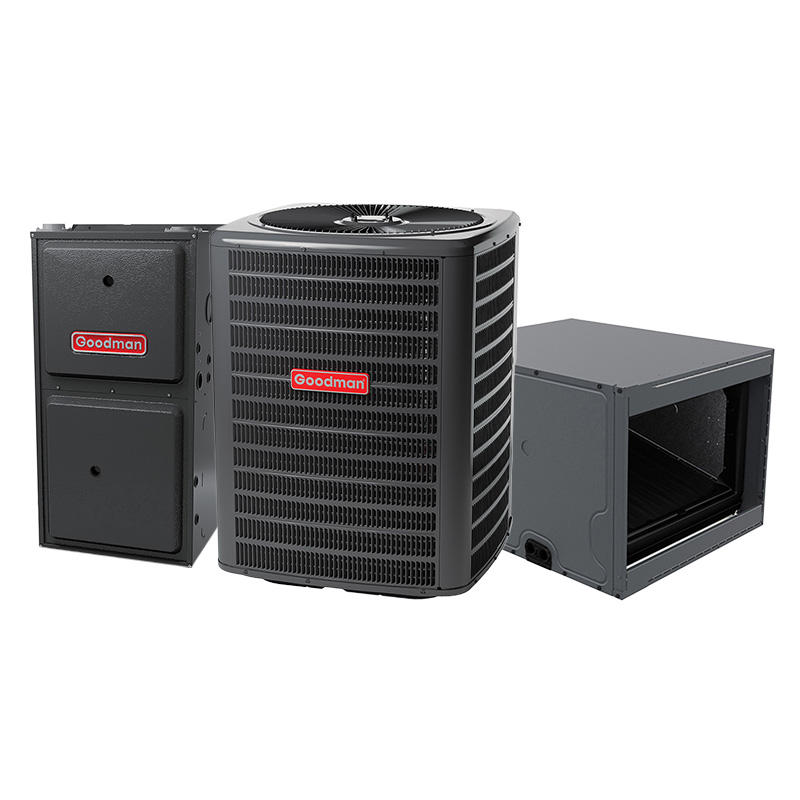
Goodman 3 Ton 15.5 SEER2 AC & Gas Furnace System – Modulating Variable-Speed, 100000 BTU Gas Furnace, 97% AFUE, Horizontal, R32
View on AC Direct see your lowest price →Check current price on AC Direct →
Key features
- 97% AFUE modulating gas furnace reduces fuel waste to roughly 3 cents per dollar of gas burned
- Variable-speed blower motor adjusts airflow continuously for more even temperatures and quieter low-demand operation
- 15.5 SEER2 efficiency rating meets or exceeds current federal regional minimums in most U.S. climate zones
- Horizontal configuration designed for attic, crawl space, or side-exit duct applications where vertical units cannot fit
- R-32 refrigerant with lower global-warming potential than R-410A and a smaller required refrigerant charge
- 3-ton (36,000 BTU/hr) cooling capacity sized for roughly 1,500 to 2,000 square feet depending on climate and insulation
About this system
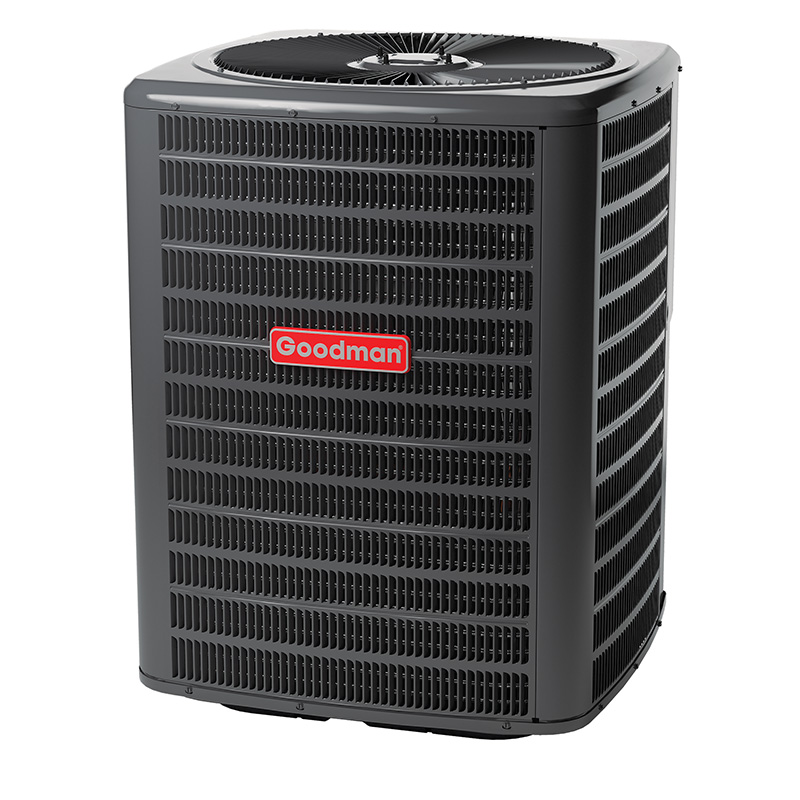
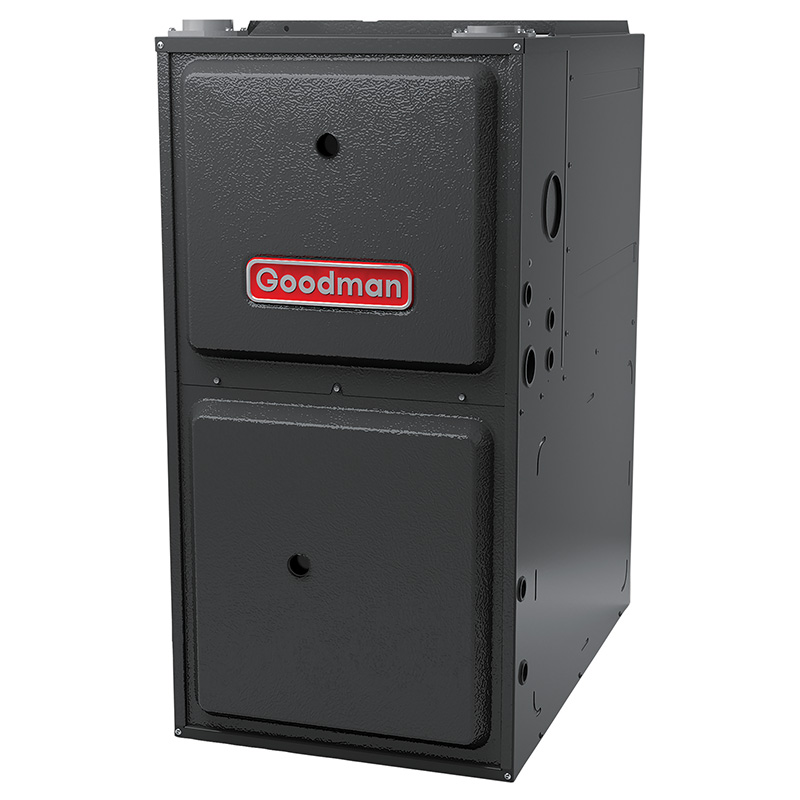
The Goodman GLXS5BA3610D pairs a 3-ton, 15.5 SEER2 variable-speed air conditioner with a 100,000 BTU modulating gas furnace rated at 97% AFUE. That furnace efficiency sits near the top of what residential gas equipment can deliver, meaning roughly 97 cents of every dollar spent on gas goes toward heat rather than flue exhaust. The modulating burner adjusts output in small steps rather than snapping fully on or off, which smooths out temperature swings and reduces the short-cycling that wears components faster. R-32 refrigerant carries a lower global-warming potential than the R-410A it replaces and requires a smaller refrigerant charge by weight, which matters both for the environment and for recharge costs if a leak ever occurs.
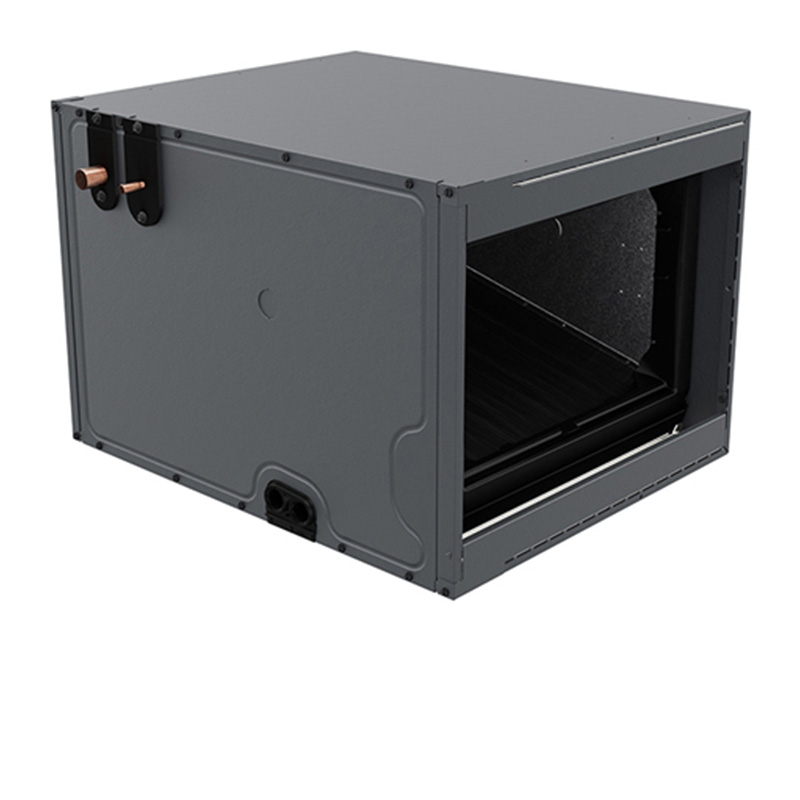
The horizontal configuration is the distinguishing factor here. Most residential split systems ship for upflow or downflow installation, so if your air handler lives in a crawl space, an attic with limited headroom, or a closet where the ductwork exits from the side, a horizontal-configured unit is often the only practical fit. Buyers who do not specifically need a horizontal layout should confirm this orientation matches their installation before ordering, since retrofitting an upflow coil into a horizontal application creates efficiency and condensate-drainage problems. This system suits homeowners replacing aging equipment in constrained spaces who want high furnace efficiency without stepping up to a premium-brand price point.
The GLXS5BA3610D delivers genuinely high furnace efficiency and a practical horizontal configuration at a price point well below comparable Carrier, Trane, or Lennox equipment. The trade-off is a brand track record that shows shorter average compressor lifespan and a real pattern of capacitor failures and coil leaks after the mid-warranty years, so buyers should budget for possible repair costs and factor installer quality heavily into their decision.
Overall score is the average of the five ratings above.
What we like
- 97% AFUE is near the ceiling for residential gas furnaces and will produce meaningful savings over an 80% or 90% AFUE unit
- Modulating burner and variable-speed blower improve comfort and reduce temperature swings compared to single-stage systems
- Horizontal-specific design avoids the condensate and airflow compromises of forcing an upflow unit sideways
- R-32 refrigerant lowers environmental impact and typically reduces recharge costs compared to R-410A systems
- Purchase price runs roughly 15 to 25 percent below comparable Carrier, Trane, and Lennox configurations
Trade-offs
- Compressor life averages 10 to 14 years versus 15 to 20 years for premium-brand counterparts, shortening the window before a major repair or replacement
- Evaporator coil leaks appear in a meaningful share of owner reviews, a potential mid-life cost even on a well-installed system
- Dual-run capacitor failures are the most commonly reported service call, typically arising after year 5 to 7 and costing $300 to $600 per incident
- Performance is heavily dependent on installer quality; a rushed or inexperienced installation raises the odds of refrigerant charge problems and early failures
What homeowners and pros say about Goodman
Homeowners who choose Goodman most often point to the lower upfront cost as the deciding factor, and that sentiment shows up clearly in Google dealer reviews, where the brand averages around 3.8 out of 5 stars across hundreds of location-level reviews and affordability is the most repeated compliment. The picture gets more complicated in longer-term feedback. On ConsumerAffairs, where the audience skews toward people who already have a complaint to file, Goodman sits at roughly 2.5 out of 5, and the recurring theme is repair bills that start climbing after about year 7. The two failure modes that come up most consistently are dual-run capacitor failures and evaporator coil leaks, both of which can appear well within the warranty window on unlucky units. Capacitor replacements are relatively affordable at $300 to $600, but coil leaks can be a more involved and costly repair depending on refrigerant pricing and labor rates at the time.
HVAC technicians who work on Goodman equipment regularly tend to land in one of two camps. Some appreciate the straightforward parts availability and the fact that capacitors and contactors are easy to source quickly. Others note that compressor longevity is a real gap compared to premium brands, with Goodman compressors averaging roughly 10 to 14 years versus 15 to 20 years for Carrier or Trane units under similar conditions. Nearly every experienced installer emphasizes the same point: Goodman’s outcome variance is wider than that of premium brands, meaning a carefully installed, properly charged unit can perform reliably for over a decade, while a rushed installation tends to reveal itself in refrigerant charge problems and early component wear. For a modulating variable-speed system like this one, commissioning quality is not optional, it is the single biggest factor in whether the warranty math ultimately works in your favor.
Sources: ConsumerAffairs Goodman owner reviews, AHRI Directory of Certified Product Performance, U.S. DOE appliance and equipment efficiency standards, Goodman product specification sheets.
What it costs to run
At 15.5 SEER2, cooling this 3-ton system for a typical 1200-hour cooling season at the U.S. average electricity rate of $0.17/kWh works out to roughly $474 per year in cooling, about $74 less per year than a minimum-efficiency 13.4 SEER2 unit of the same size. Your real cost depends on your climate and local rate.
Method: (36,000 BTU/hr ÷ 15.5 SEER2) × 1200 hours ÷ 1000 × $0.17/kWh. Rate source: U.S. EIA average; cooling hours: moderate-climate estimate.
How it compares
| Brand | Comparable model | SEER2 | Stage | Price position |
|---|---|---|---|---|
| Goodman | GLXS5BA3610D | 15.5 | Variable | Value pick |
| Carrier | Infinity 16 (24VNA6) with 59MN7 Modulating Furnace | 16+ | Variable | Typically 15 to 25 percent more than Goodman |
| Trane | XV18 / S9X2 series matched system | 16+ | Variable | Typically 15 to 25 percent more than Goodman |
| Lennox | XC16 / SLP99V series matched system | 15.5-16 | Variable | Typically 15 to 25 percent more than Goodman |
Competitor rows are comparable single-stage units at similar efficiency; price is relative position, not a quote.
Questions about this system
Does the horizontal configuration mean it can only be installed horizontally, or can it also go upflow or downflow?
This unit is configured specifically for horizontal installation. Using it in an upflow or downflow orientation would create condensate drainage problems and is not recommended by Goodman. If your installation is vertical, you need a different model.
How does R-32 refrigerant affect service and recharge costs compared to R-410A?
R-32 requires a smaller charge by weight than R-410A and is increasingly stocked by HVAC wholesalers, so recharge costs are generally comparable and may decrease as supply grows. Your technician must be certified to handle mildly flammable A2L refrigerants, which R-32 is classified as, so confirm that before scheduling service.
What does the Goodman warranty actually cover on this system, and are there registration requirements?
Goodman typically offers a 10-year parts warranty when the unit is registered within a set window after installation, dropping to a shorter period for unregistered units. The compressor usually carries its own limited warranty term within that 10-year envelope. Read the warranty document for this specific model number, because coverage details vary by component and registration is required to get the full term.
The brand has a reputation for capacitor failures. How worried should I be, and what does that repair cost?
Dual-run capacitor failure is the most commonly reported service issue on Goodman equipment and tends to show up after roughly year 5 to 7. It is also one of the least expensive AC repairs, typically $300 to $600 including labor. Keeping a service contract or scheduling annual tune-ups usually catches a weakening capacitor before it causes a no-cool call in peak summer heat.
Will a modulating 97% AFUE furnace actually save enough on gas bills to justify this system over an 80% AFUE option?
At 97% AFUE versus 80% AFUE, you are converting roughly 17 percent more of each gas dollar into usable heat. On a 100,000 BTU furnace running in a cold climate, that gap can represent hundreds of dollars per heating season depending on local gas rates and how many hours the system runs. In mild climates with short heating seasons the payback period stretches, so it is worth running the numbers against your local gas rate and estimated annual runtime.
Specifications
| Cooling capacity | 3 Ton |
| Efficiency | 15.5 SEER2 |
| Furnace output | 100000 BTU |
| Furnace efficiency | 97% AFUE |
| Configuration | Horizontal |
| Refrigerant | R-32 |
| Model | GLXS5BA3610D |