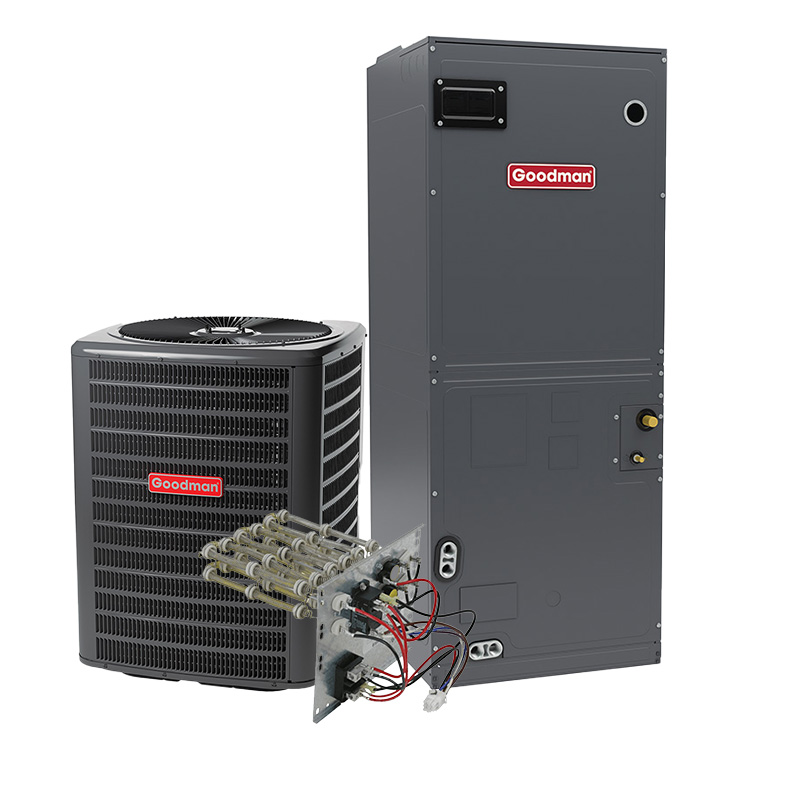
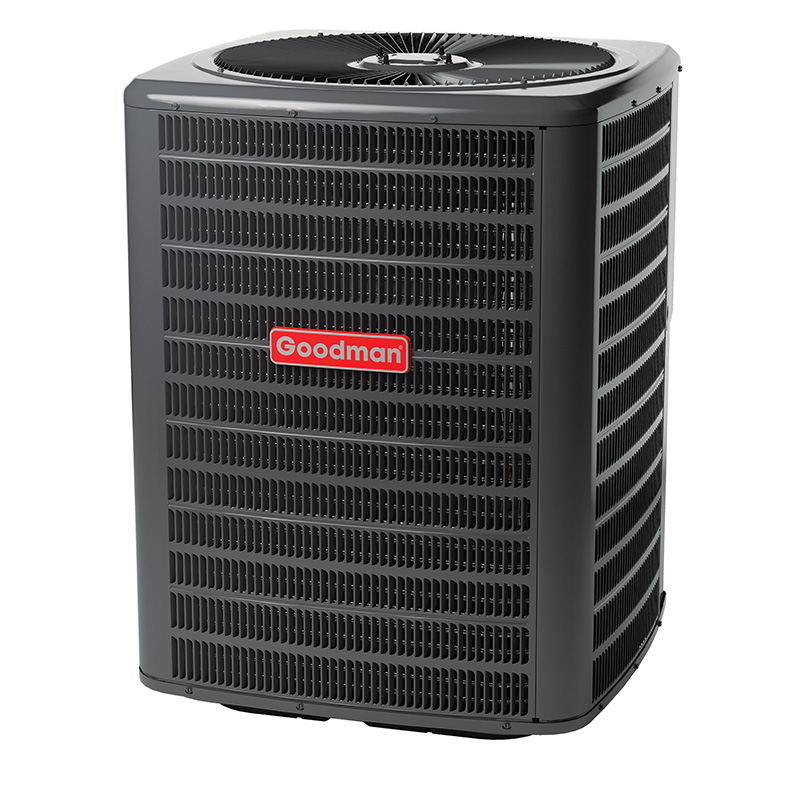
Goodman 3 Ton 15 SEER2 R32 Air Conditioner Split System With Electric Heat
View on AC Direct see your lowest price →Check current price on AC Direct →
Key features
- 3-ton cooling capacity suits most 1,500 to 2,100 sq ft homes (load calculation required)
- 15 SEER2 efficiency meets current federal minimums for most U.S. climate zones
- R-32 refrigerant with roughly 68% lower global warming potential than R-410A
- Single-stage scroll compressor with factory-installed low-ambient controls
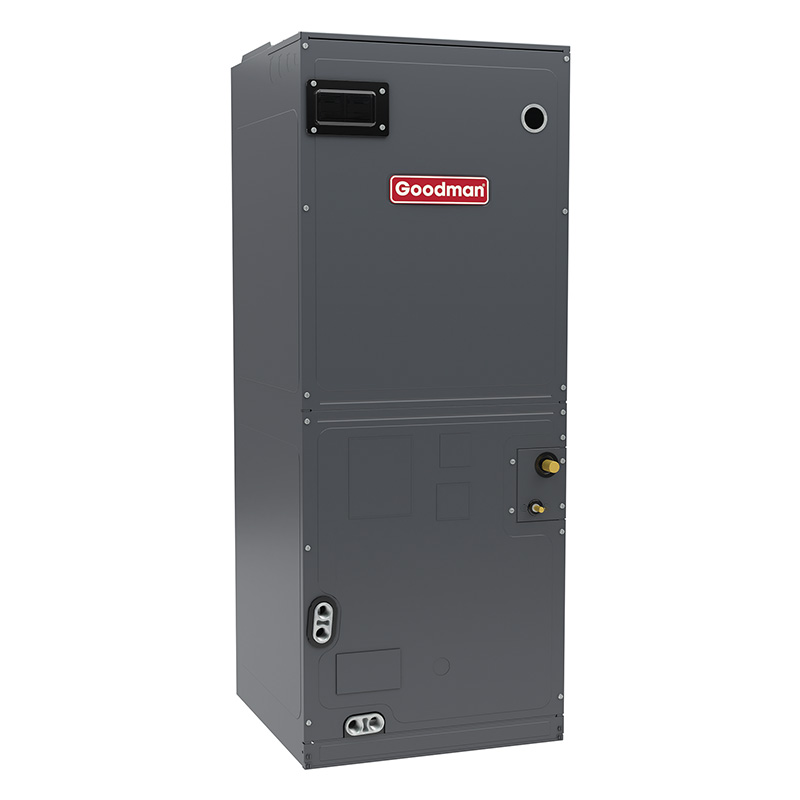
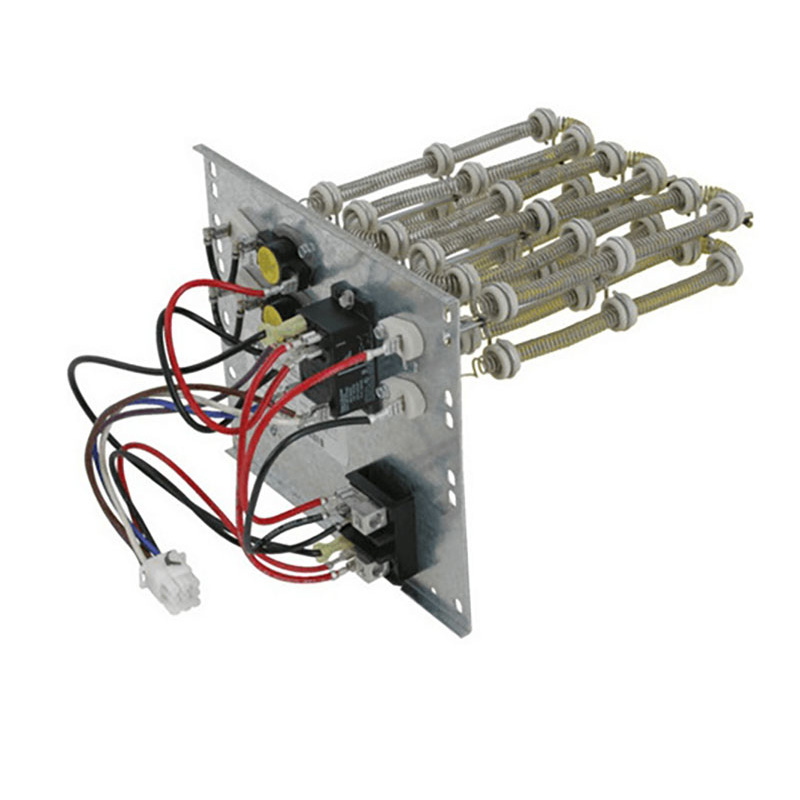
- Electric heat configuration pairs with air handler and electric strip heat package
- Goodman's 10-year parts warranty available with product registration
About this system
The Goodman 3-ton 15 SEER2 split system with electric heat is a straightforward, single-stage cooling unit aimed at homeowners who want reliable air conditioning without paying a premium brand markup. At 3 tons, it targets homes in the 1,500 to 2,100 square foot range, though your actual sizing need depends on insulation, climate, ceiling height, and window exposure. The 15 SEER2 rating sits right at the current federal minimum for most of the country, meaning it meets code but leaves headroom for more efficient options if lower operating costs are a priority over upfront price.
The switch to R-32 refrigerant is a genuine step forward. R-32 has a global warming potential about two-thirds lower than the R-410A it replaces, and it operates at slightly higher efficiency under real-world conditions. The electric heat configuration means this system pairs with electric strip heat rather than a gas furnace, making it a common choice for all-electric homes, warmer climates where heating loads are modest, or retrofit situations where adding gas lines is not practical. Single-stage operation means the compressor runs at full capacity or not at all, which is effective but less precise for humidity control on mild days compared to two-stage or variable-speed equipment.
The Goodman 3-ton 15 SEER2 R-32 system delivers solid baseline cooling at a price that undercuts Carrier, Trane, and Lennox by a meaningful margin, and the R-32 refrigerant is a forward-looking choice. The trade-offs are real: compressor longevity tends to fall short of premium brands, a few documented failure modes require watching, and overall satisfaction leans heavily on who installs it.
Overall score is the average of the five ratings above.
What we like
- Upfront cost typically 15 to 25 percent below comparable Carrier, Trane, or Lennox units
- R-32 refrigerant is more environmentally responsible and increasingly service-friendly as the industry transitions
- 10-year parts warranty with registration is competitive for a value-tier brand
- Dual-run capacitor failures, the most common reported issue, are generally a quick and affordable repair
- Wide installer network means parts and service availability is rarely a problem
Trade-offs
- Compressor lifespan averages 10 to 14 years versus 15 to 20 years seen with premium brands, raising long-term replacement risk
- Evaporator coil leaks appear in a notable share of owner reviews and can become a costly repair outside warranty
- Single-stage operation provides less humidity control on mild days compared to two-stage or variable-speed systems
- A minority of owners report refrigerant leaks in the first year, typically tied to install quality rather than the unit itself
What homeowners and pros say about Goodman
Homeowners discussing Goodman equipment online tend to split along familiar lines. Those who got a careful install from an experienced technician often report years of uneventful service and are quick to point to the lower purchase price as a win. The frustration surfaces most clearly on complaint-oriented platforms: Goodman’s ConsumerAffairs score sits at roughly 2.5 out of 5, and the recurring pattern in those reviews is repair costs climbing after about year seven, with capacitor replacements being the most frequent early call and compressor failures drawing the biggest complaints in the second decade of ownership. Google dealer reviews tell a more balanced story, averaging around 3.8 out of 5 across hundreds of reviews per location, where affordability is the praise homeowners reach for most often.
HVAC pros hold a similarly mixed but informed view. Many contractors install Goodman regularly and find the parts easy to source, the units predictable to work on, and the price point helpful for clients with tight budgets. Where experienced installers push back is on the documented failure modes: dual-run capacitor failures are common enough that some technicians check and preemptively replace them at the first service visit, and evaporator coil leaks appear often enough in owner accounts to warrant attention during any warranty period. Compressor longevity averaging 10 to 14 years versus the 15 to 20 years associated with Trane, Carrier, or Lennox compressors is the most cited reason pros steer long-term homeowners toward a premium unit, even knowing the upfront gap is real.
Sources: ConsumerAffairs Goodman owner reviews, AHRI Directory of Certified Product Performance, U.S. DOE appliance and equipment efficiency standards, Goodman product specification sheets.
What it costs to run
At 15 SEER2, cooling this 3-ton system for a typical 1200-hour cooling season at the U.S. average electricity rate of $0.17/kWh works out to roughly $490 per year in cooling, about $58 less per year than a minimum-efficiency 13.4 SEER2 unit of the same size. Your real cost depends on your climate and local rate.
Method: (36,000 BTU/hr ÷ 15 SEER2) × 1200 hours ÷ 1000 × $0.17/kWh. Rate source: U.S. EIA average; cooling hours: moderate-climate estimate.
How it compares
| Brand | Comparable model | SEER2 | Stage | Price position |
|---|---|---|---|---|
| Goodman | 3-Ton 15 SEER2 R-32 Split System with Electric Heat | 15 | Single-stage | Value pick |
| Carrier | Comfort Series (24ACC6) | 15-16 | Single-stage | Typically 15 to 25 percent more than Goodman |
| Trane | XR15 | 15-16 | Single-stage | Typically 15 to 25 percent more than Goodman |
| Lennox | Merit Series (ML15XC1) | 15 | Single-stage | Typically 15 to 25 percent more than Goodman |
Competitor rows are comparable single-stage units at similar efficiency; price is relative position, not a quote.
Questions about this system
Is 15 SEER2 still legal to install in my region, and is it worth upgrading to a higher efficiency unit?
15 SEER2 meets the current federal minimum for most northern U.S. climate zones and some southern ones, but check your specific region since some southern zones now require higher minimums. If your cooling season is long or electricity rates are high, a 17 to 18 SEER2 unit can pay back the price difference within a few years, so run the numbers before defaulting to the minimum.
What does the R-32 refrigerant change mean for service and future repairs?
R-32 is replacing R-410A across the industry, so availability and technician familiarity will only improve over time. It does require equipment and gauges rated for R-32 service, so confirm your installer has the right tools before they show up, since not every technician has updated their kit yet.
How important is installer quality with a Goodman system specifically?
Critically important. Technicians consistently identify install quality as the single biggest factor in how long a Goodman unit lasts, and the documented first-year refrigerant leaks on some units are typically traced to charge or connection issues at installation rather than factory defects. Getting a properly sized, carefully commissioned install matters more here than with some premium brands that have tighter factory tolerances.
What is the 10-year warranty, and what does it actually cover?
Goodman offers a 10-year parts warranty when you register the product within a specified window after installation, covering components including the compressor and coil. It does not cover labor, refrigerant, or diagnostic costs, which can easily exceed the part cost itself, so budgeting for labor on any warranty repair is wise.
Should I budget for any near-term maintenance knowing the documented failure modes for this brand?
Yes. The dual-run capacitor is the most commonly reported failure on Goodman equipment and typically runs 300 to 600 dollars to replace, usually showing up after several years of use. Having your technician check capacitor health at each annual tune-up and keeping a small repair fund set aside for years 5 through 10 is a practical approach given the brand's track record.
Specifications
| Cooling capacity | 3 Ton |
| Efficiency | 15 SEER2 |
| Refrigerant | R-32 |