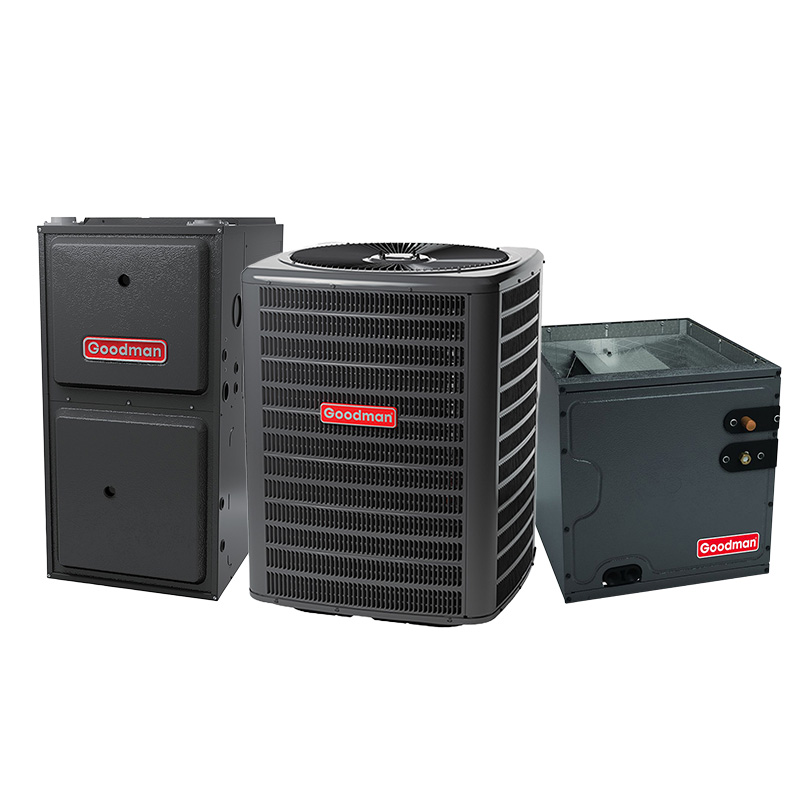
Goodman 3 Ton 16 SEER2 AC & Gas Furnace System – Modulating Variable-Speed, 80000 BTU Gas Furnace, 97% AFUE, Upflow, R32
View on AC Direct see your lowest price →Check current price on AC Direct →
Key features
- 16 SEER2 variable-speed cooling for improved humidity control and efficiency
- 97% AFUE modulating gas furnace, near-top-tier fuel efficiency for gas heat
- R-32 refrigerant, lower global warming potential than R-410A
- Upflow configuration for overhead duct systems in basements or utility rooms
- 80,000 BTU heating capacity suitable for mid-sized homes in cold climates
- Modulating burner maintains steadier indoor temps versus single- or two-stage units
About this system
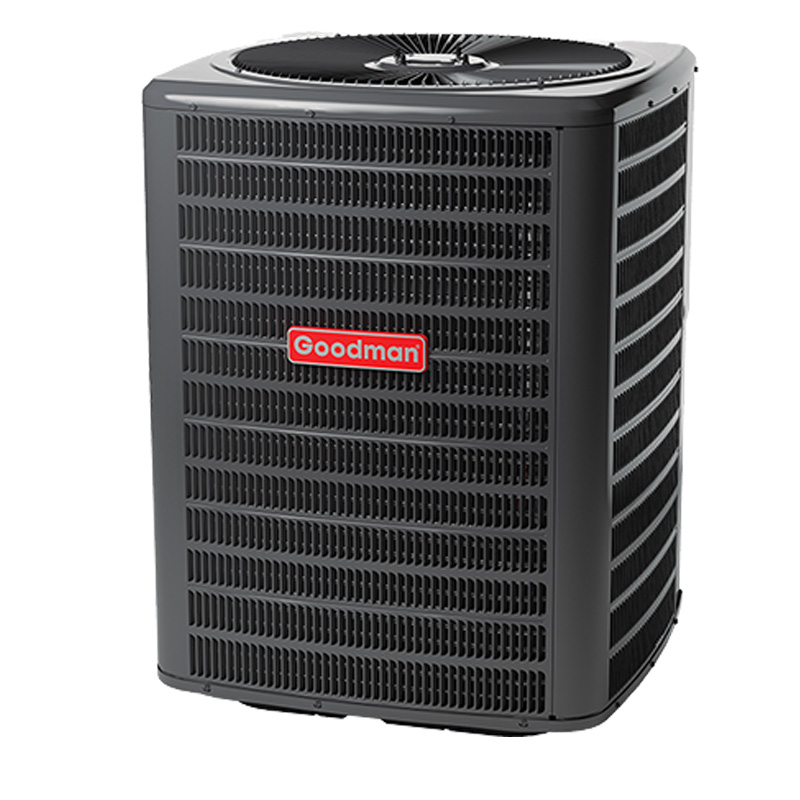
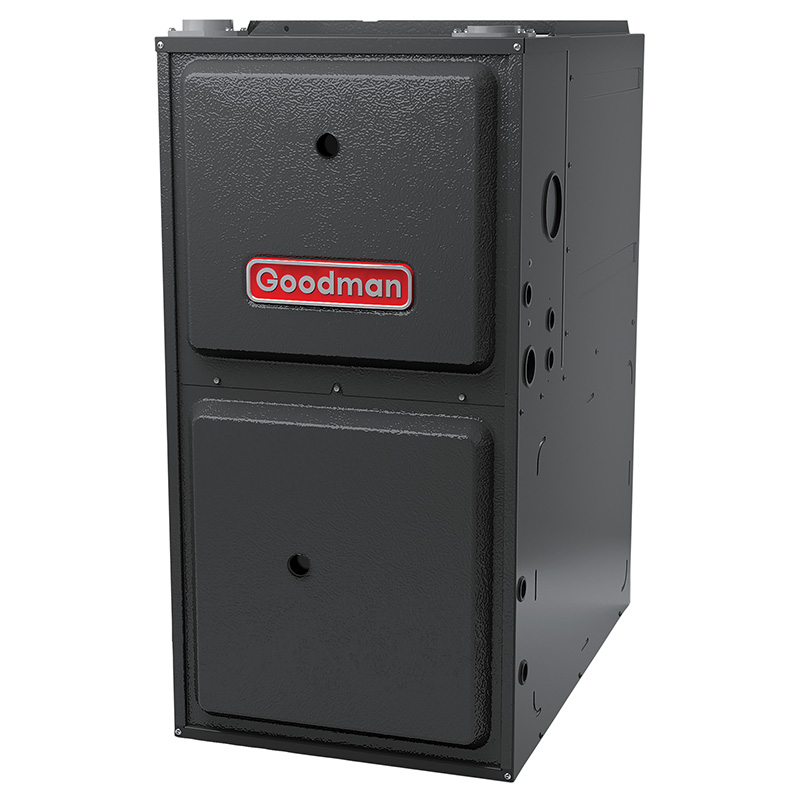
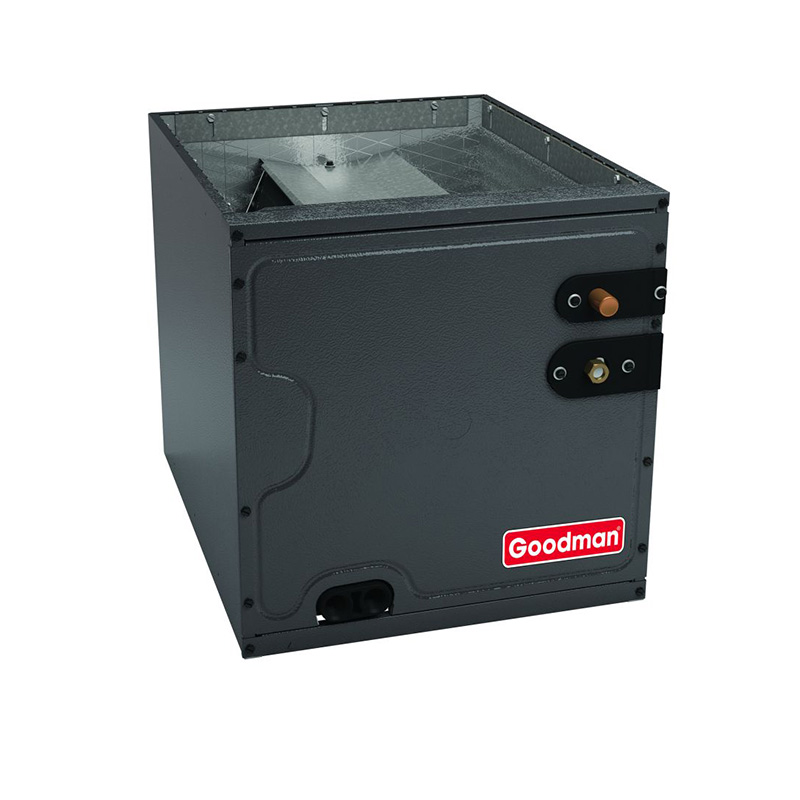
The Goodman GLXS5BA3610D pairs a 3-ton, 16 SEER2 variable-speed air conditioner with an 80,000 BTU, 97% AFUE modulating gas furnace in an upflow configuration. That furnace efficiency rating sits near the top of what residential gas equipment can deliver, meaning roughly 97 cents of every dollar of gas burned becomes usable heat. The modulating burner adjusts output in small increments rather than simply cycling on and off, which keeps indoor temperatures more consistent and reduces the cold-blast feeling common with single-stage equipment. The variable-speed air handler compounds that comfort benefit by running longer at lower speeds, which also does a better job pulling humidity out of the air on mild days.
R-32 refrigerant is a meaningful spec change from the older R-410A standard. It carries a lower global warming potential and slightly better thermodynamic efficiency, and it is the direction the industry is moving following federal refrigerant regulations. Homeowners should confirm that any service technician they hire is certified to handle R-32, since not every shop has updated their equipment yet. The upflow configuration means conditioned air exits the top of the air handler and feeds supply ductwork above, making this the correct choice for basements, utility rooms, or first-floor mechanical closets where ductwork runs overhead. This system suits mid-sized homes, roughly 1,400 to 2,000 square feet depending on insulation and climate, that want near-premium comfort features at a lower entry price than Trane, Carrier, or Lennox equivalent systems.
This Goodman bundle delivers a genuinely high-spec combination of variable-speed cooling and modulating high-efficiency heating at a price point well below comparable Carrier, Trane, or Lennox systems. The trade-off is a documented history of mid-life component failures and a compressor lifespan that runs shorter than premium brands, so the upfront savings need to be weighed against potential out-of-pocket repair costs after year seven. Buyers who prioritize the purchase price, plan to have it professionally installed, and keep up with maintenance will get solid value here.
Overall score is the average of the five ratings above.
What we like
- 97% AFUE furnace is among the most efficient available for residential gas heat
- Variable-speed blower and modulating burner improve comfort and dehumidification noticeably over single-stage systems
- R-32 refrigerant is future-ready as industry transitions away from R-410A
- Priced roughly 15 to 25 percent below comparable Carrier, Trane, and Lennox bundles
- Upflow design integrates cleanly into existing basement or closet mechanical rooms with overhead duct runs
Trade-offs
- Dual-run capacitors are the most frequently reported failure point, typically requiring a 300 to 600 dollar repair, often appearing before year ten
- Evaporator coil leaks are noted in a meaningful share of long-term owner reviews
- Compressor longevity averages 10 to 14 years versus 15 to 20 for premium-brand compressors, affecting total cost of ownership
- A minority of first-year owners have reported refrigerant leaks, usually traced to install or charge issues rather than the equipment itself
What homeowners and pros say about Goodman
Goodman’s reputation among homeowners and HVAC professionals sits in a well-defined middle ground. On ConsumerAffairs, where dissatisfied customers are more likely to post than happy ones, Goodman scores around 2.5 out of 5, and the recurring theme in those reviews is repair costs that begin climbing after roughly year seven. Google dealer reviews paint a more moderate picture at around 3.8 out of 5 across hundreds of reviews per location, with affordability being the single most common point of praise. Technicians in the field tend to agree that Goodman equipment is competent when installed correctly, and that installation quality is the single largest variable in how long any given unit lasts.
The specific failure modes that come up most consistently in owner and technician accounts are worth knowing before you buy this system. Dual-run capacitors are the most commonly reported breakdown, and the good news is that a capacitor swap is typically a 300 to 600 dollar repair, not a major event. Evaporator coil leaks appear in a meaningful share of longer-term reviews and carry a higher repair cost. The compressor lifespan concern is real: documented averages of 10 to 14 years versus 15 to 20 for premium brands matters if you plan to stay in the home long-term. A minority of owners have also reported refrigerant leaks in the first year, which professionals generally attribute to installation or initial charge issues rather than a manufacturing defect. For a buyer who prices out the system honestly, uses a thorough installer, and registers the warranty, this Goodman bundle represents a legitimate option rather than simply the cheapest one on the shelf.
Sources: ConsumerAffairs Goodman owner reviews, AHRI Directory of Certified Product Performance, U.S. DOE appliance and equipment efficiency standards, Goodman product specification sheets.
What it costs to run
At 16 SEER2, cooling this 3-ton system for a typical 1200-hour cooling season at the U.S. average electricity rate of $0.17/kWh works out to roughly $459 per year in cooling, about $89 less per year than a minimum-efficiency 13.4 SEER2 unit of the same size. Your real cost depends on your climate and local rate.
Method: (36,000 BTU/hr ÷ 16 SEER2) × 1200 hours ÷ 1000 × $0.17/kWh. Rate source: U.S. EIA average; cooling hours: moderate-climate estimate.
How it compares
| Brand | Comparable model | SEER2 | Stage | Price position |
|---|---|---|---|---|
| Goodman | GLXS5BA3610D | 16 | Variable | Value pick |
| Carrier | Comfort 16 (24ACC6) | 16 | Single-stage | Typically 15 to 25 percent more than Goodman |
| Trane | XR16 Series | 16 | Single-stage | Typically 15 to 25 percent more than Goodman |
| Lennox | Merit ML16XC1 | 16 | Single-stage | Typically 15 to 25 percent more than Goodman |
Competitor rows are comparable single-stage units at similar efficiency; price is relative position, not a quote.
Questions about this system
Is R-32 refrigerant going to be hard to service in my area?
R-32 is newer than R-410A and not every HVAC technician has the certified equipment to handle it yet, though adoption is growing quickly. Before committing to this system, confirm your preferred service company already works with R-32. This is especially worth checking in rural areas where fewer technicians operate.
How long should I realistically expect the compressor to last?
Based on documented Goodman owner experience, compressors on these systems tend to average 10 to 14 years, compared with 15 to 20 years commonly reported for Carrier, Trane, and Lennox equipment. Good maintenance, a proper refrigerant charge at installation, and clean coils all push that number toward the higher end.
What does the modulating furnace actually do differently in day-to-day use?
A modulating furnace can fire at varying output levels rather than just full-on or off. The practical result is smaller, more frequent temperature swings, quieter operation overall, and fewer cold drafts when the furnace first starts. Combined with the variable-speed blower, it tends to feel noticeably more even than single- or two-stage systems.
What warranty comes with this system, and are there conditions I need to meet?
Goodman typically offers a 10-year parts warranty on registered systems, but registration usually must be completed within a set window after installation. The compressor often carries its own separate coverage term. Read the registration requirements carefully, because missing the registration deadline typically drops coverage to a shorter base period.
The upflow configuration is listed, but my furnace sits in a crawlspace with ducts below. Will this work?
No, an upflow furnace discharges conditioned air from the top and requires ductwork above the unit. A crawlspace installation with ducts running below the unit would need a downflow or horizontal configuration instead. Confirm your duct layout with your installer before ordering, since swapping configurations after purchase is not practical.
Specifications
| Cooling capacity | 3 Ton |
| Efficiency | 16 SEER2 |
| Furnace output | 80000 BTU |
| Furnace efficiency | 97% AFUE |
| Configuration | Upflow |
| Refrigerant | R-32 |
| Model | GLXS5BA3610D |