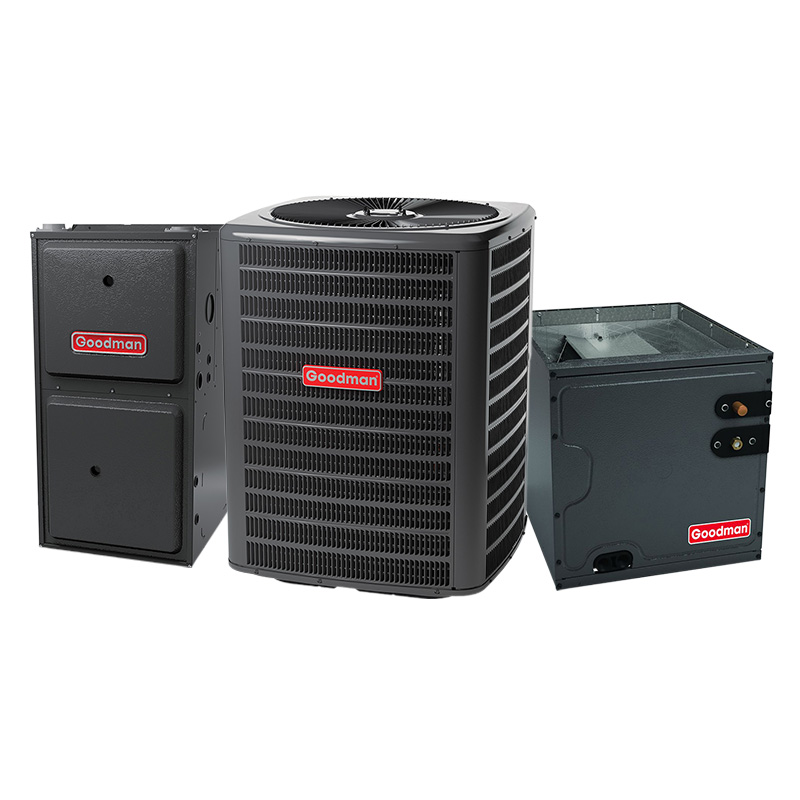
Goodman 3 Ton 16 SEER2 AC & Gas Furnace System – Multi-Speed, 100000 BTU Gas Furnace, 92% AFUE, Upflow, R32
View on AC Direct see your lowest price →Check current price on AC Direct →
Key features
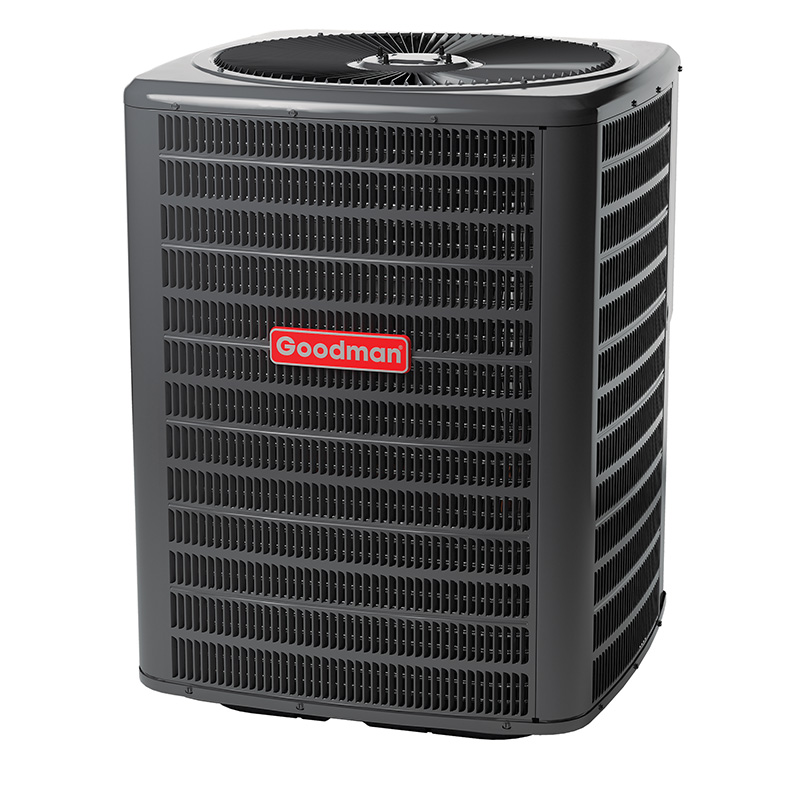
- 3-ton single-stage AC rated 16 SEER2 with R-32 refrigerant
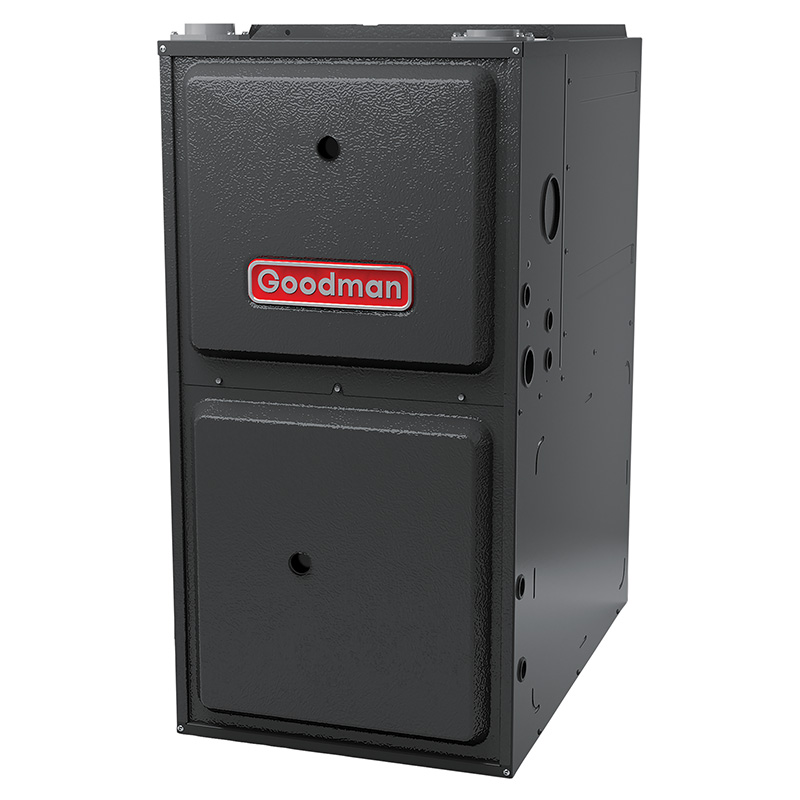
- 100,000 BTU upflow gas furnace at 92% AFUE
- Multi-speed blower motor for quieter, more even airflow
- Upflow configuration for basement or lower-level utility closet installs
- Factory-matched system designed to meet AHRI certified efficiency ratings together
- 10-year parts warranty with registration requirement within 60 days of install
About this system
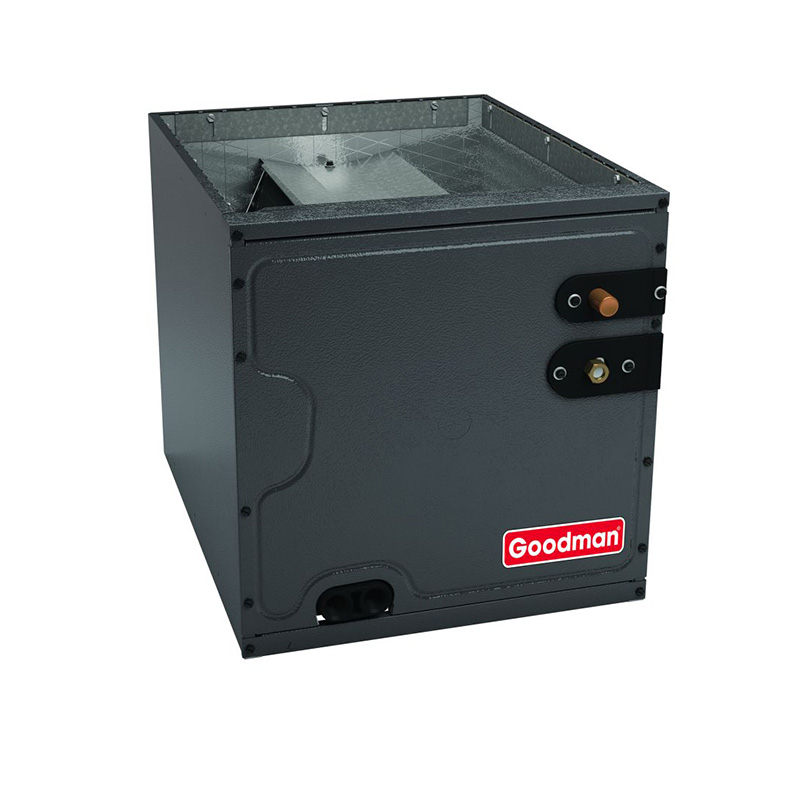
The Goodman GLXS5BA3610D pairs a 3-ton, 16 SEER2 single-stage air conditioner with a 100,000 BTU upflow gas furnace rated at 92% AFUE. Together they cover a broad range of climates: the AC handles cooling loads up to roughly 1,800 to 2,200 square feet depending on insulation and local design temperatures, while the furnace sits in the mid-efficiency tier, converting 92 cents of every dollar of gas into usable heat. The R-32 refrigerant used in the outdoor unit has a lower global warming potential than the older R-410A it replaces, and it tends to operate at slightly higher efficiency per pound of charge, which is part of how Goodman hits the 16 SEER2 rating in this class.
This configuration is an upflow unit, meaning the furnace draws return air from the bottom and discharges conditioned air upward into a duct system above it. That suits homes with a basement or utility closet where the air handler sits below the living space. The multi-speed furnace blower is a meaningful upgrade over fixed-speed motors: it adjusts airflow to match the load, which reduces temperature swings, lowers blower noise during steady-state operation, and improves humidity removal during the AC season. Buyers who want the lowest first-cost path to a complete, matched system and are comfortable with Goodman’s well-documented trade-off between upfront savings and longer-term reliability will find this bundle a competitive starting point.
The Goodman GLXS5BA3610D delivers a complete heating and cooling system at a price point 15 to 25 percent below comparable equipment from Carrier, Trane, or Lennox, making it genuinely attractive for budget-conscious buyers who hire a skilled installer. The trade-off is a documented pattern of component failures, particularly capacitors and evaporator coil leaks, that can erode the upfront savings after the first decade of ownership.
Overall score is the average of the five ratings above.
What we like
- Significant upfront cost savings versus premium brands at the same efficiency tier
- 16 SEER2 meets current federal efficiency standards with room above minimum compliance
- Multi-speed blower improves comfort and humidity control compared to single-speed alternatives
- R-32 refrigerant is lower-impact and widely available among certified technicians
- Factory-matched system simplifies equipment selection and supports AHRI efficiency certification
Trade-offs
- Compressor lifespan averages 10 to 14 years versus 15 to 20 years in premium brands, meaning earlier replacement costs
- Evaporator coil leaks appear in a meaningful share of owner reports, a failure mode worth budgeting for after year 7
- Dual-run capacitor failures are the most common service call, though the fix typically runs $300 to $600
- A minority of owners report refrigerant leaks within year one, often linked to install or initial charge quality rather than the equipment itself
What homeowners and pros say about Goodman
Homeowners who have installed Goodman equipment and left reviews online paint a split picture. On Google dealer pages, where ratings average around 3.8 out of 5 across hundreds of reviews per location, the most consistent praise centers on affordability: buyers report paying meaningfully less than competing quotes for Carrier or Trane equipment at the same efficiency tier. The frustrations tend to come later. On ConsumerAffairs, where the rating sits at roughly 2.5 out of 5 and the audience skews toward people motivated enough by a problem to write about it, the recurring theme is repair costs rising after roughly year seven. The two failure modes that show up most often in owner accounts are dual-run capacitor failures, a relatively low-cost fix in the $300 to $600 range but an annoying one in summer heat, and evaporator coil leaks, which are more expensive and more disruptive to address.
HVAC technicians who work on Goodman equipment regularly tend to say the same thing: the install matters more with this brand than with premium alternatives. A well-commissioned Goodman system, properly charged, correctly matched to the duct system, and registered for its full warranty, will perform reliably through its expected lifespan. The concern they raise is compressor longevity, where Goodman units average 10 to 14 years versus the 15 to 20 years more commonly seen in Trane, Lennox, or Carrier compressors. For this specific bundle, which adds a 92% AFUE multi-speed furnace to the mix, pros note that the multi-speed blower is a genuine comfort upgrade and that R-32 is the right direction for new installs. The honest summary from the field is that Goodman delivers real value upfront, and whether that value holds over time depends heavily on who puts it in and how consistently it gets serviced afterward.
Sources: ConsumerAffairs Goodman owner reviews, AHRI Directory of Certified Product Performance, U.S. DOE appliance and equipment efficiency standards, Goodman product specification sheets.
What it costs to run
At 16 SEER2, cooling this 3-ton system for a typical 1200-hour cooling season at the U.S. average electricity rate of $0.17/kWh works out to roughly $459 per year in cooling, about $89 less per year than a minimum-efficiency 13.4 SEER2 unit of the same size. Your real cost depends on your climate and local rate.
Method: (36,000 BTU/hr ÷ 16 SEER2) × 1200 hours ÷ 1000 × $0.17/kWh. Rate source: U.S. EIA average; cooling hours: moderate-climate estimate.
How it compares
| Brand | Comparable model | SEER2 | Stage | Price position |
|---|---|---|---|---|
| Goodman | GLXS5BA3610D | 16 | Single-stage | Value pick |
| Carrier | Comfort 24ACC636 / 58CVA series | 16 | Single-stage | Typically 15 to 25 percent more than Goodman |
| Trane | XR16 / S9V2 series | 16 | Single-stage | Typically 15 to 25 percent more than Goodman |
| Lennox | Merit ML16XC1 / ML196 series | 16 | Single-stage | Typically 15 to 25 percent more than Goodman |
Competitor rows are comparable single-stage units at similar efficiency; price is relative position, not a quote.
Questions about this system
Does the 10-year parts warranty require anything from me after installation?
Yes. Goodman requires you to register the equipment at goodmanmfg.com within 60 days of the installation date. If you miss that window, the warranty typically defaults to a shorter five-year term, so registration is a step worth completing immediately after the installer finishes.
This system uses R-32 refrigerant. Is that hard to find a technician for?
R-32 is becoming standard as manufacturers phase out R-410A, and most licensed HVAC technicians in the US are already certified to handle it. That said, it is mildly flammable and requires specific recovery equipment, so it is worth confirming your service tech has R-32 experience before scheduling any work.
My house has a slab foundation with no basement. Can I still use this furnace?
The GLXS5BA3610D is configured for upflow only, which assumes return air enters from the bottom and supply air exits the top. A slab home with horizontal or downflow ductwork would need a different furnace configuration. Confirm your duct layout with your installer before purchasing.
How worried should I be about the evaporator coil leak issue reported by some owners?
Evaporator coil leaks appear in a meaningful share of Goodman owner reports, generally surfacing after several years of use rather than immediately. Setting aside a maintenance fund and scheduling annual refrigerant and coil inspections starting around year five is a practical way to catch a developing leak before it becomes a costly repair or system loss.
Is 100,000 BTU more furnace than a 3-ton AC system typically needs?
Possibly. A proper Manual J heat load calculation is the only reliable way to confirm. In colder climates or larger, poorly insulated homes, 100,000 BTU is appropriate; in a well-sealed 1,800 square foot home in a mild climate, it may be oversized. An oversized furnace will short-cycle, reducing comfort and efficiency, so ask your installer to run the load calculation before committing to this model.
Specifications
| Cooling capacity | 3 Ton |
| Efficiency | 16 SEER2 |
| Furnace output | 100000 BTU |
| Furnace efficiency | 92% AFUE |
| Configuration | Upflow |
| Refrigerant | R-32 |
| Model | GLXS5BA3610D |