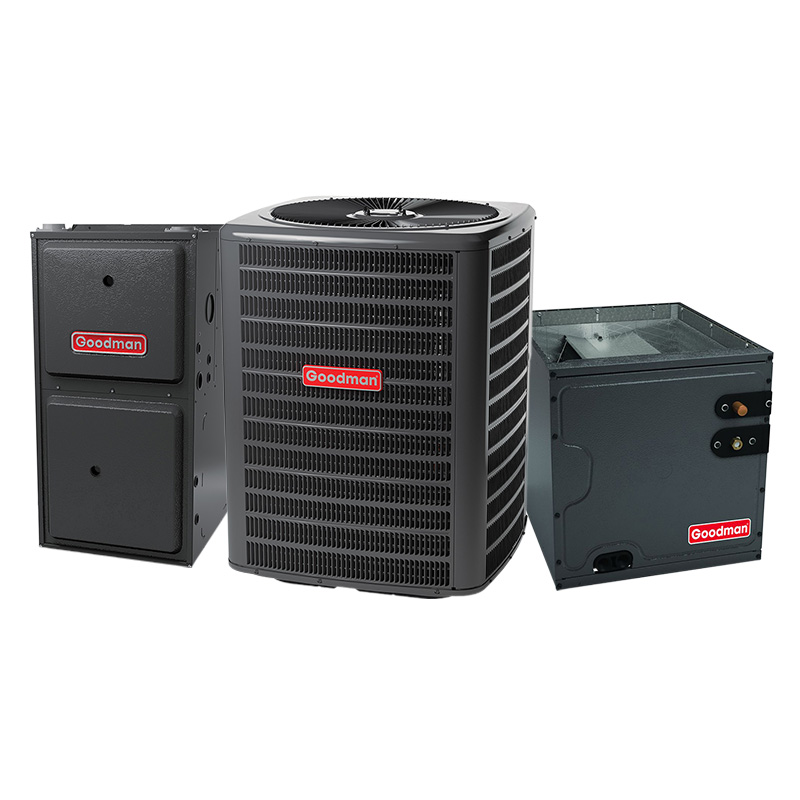
Goodman 3 Ton 16 SEER2 AC & Gas Furnace System – Multi-Speed, 80000 BTU Gas Furnace, 92% AFUE, Upflow, R32
View on AC Direct see your lowest price →Check current price on AC Direct →
Key features
- 3-ton cooling capacity, 16 SEER2 efficiency rating
- 80,000 BTU gas furnace with 92% AFUE heating efficiency
- Multi-speed ECM blower motor for improved comfort and humidity control
- Upflow configuration for basement or closet installations
- R-32 refrigerant with lower global-warming potential than R-410A
- 10-year parts and limited lifetime heat exchanger warranty when registered
About this system
The Goodman GLXS5BA3610D pairs a 3-ton, 16 SEER2 air conditioner with an 80,000 BTU, 92% AFUE upflow gas furnace in an R-32 refrigerant configuration. That efficiency tier sits comfortably above the federal minimums and will satisfy most utility rebate thresholds, though it stops short of the 18 SEER2-plus territory where premium variable-speed systems operate. R-32 is a lower global-warming-potential refrigerant now appearing in residential equipment, and its higher energy density means a smaller refrigerant charge is needed compared to R-410A, which can modestly reduce operating costs over the system’s life.
This setup is best suited to homeowners replacing aging equipment in a mid-size home, roughly 1,400 to 2,000 square feet depending on climate and insulation, who want a straightforward single-stage cooling system without the upfront cost of premium brands. The upflow furnace configuration requires a basement or utility closet installation where air is drawn in from the bottom and discharged upward into the duct system, so it is not interchangeable with horizontal or downflow applications. Multi-speed furnace blower operation improves comfort and humidity control compared to single-speed-only units, and 92% AFUE means eight cents of every dollar spent on gas does useful work heating the home.
Buyers should understand this is a value-tier product. The lower purchase price reflects real trade-offs in expected component lifespan and build tolerances compared to Trane, Carrier, or Lennox at equivalent efficiency. Installation quality is not a cliche here; Goodman equipment in particular is documented to perform very differently depending on the technician who installs and commissions it. Vetting your installer matters as much as choosing the unit itself.
The GLXS5BA3610D delivers honest mid-tier efficiency at a price 15 to 25 percent below comparable Carrier, Trane, and Lennox systems, making it a reasonable choice for budget-conscious buyers who hire a skilled installer and treat preventive maintenance seriously. Component longevity, especially compressor lifespan and coil integrity, trails premium brands, and repair frequency tends to climb after year seven. If you are planning to stay in your home for 15 or more years and want the lowest total cost of ownership, spending more upfront on a premium brand is worth considering.
Overall score is the average of the five ratings above.
What we like
- Purchase price is meaningfully lower than Carrier, Trane, and Lennox at the same efficiency tier
- 16 SEER2 qualifies for many utility rebate programs and beats federal minimums by a solid margin
- 92% AFUE furnace reduces gas waste compared to standard 80% AFUE units
- Multi-speed blower improves dehumidification and reduces temperature swings compared to single-speed blowers
- R-32 refrigerant charge is smaller than R-410A systems, which can lower refrigerant costs if a leak occurs
Trade-offs
- Dual-run capacitors are the most commonly reported failure component, typically requiring a 300 to 600 dollar service call
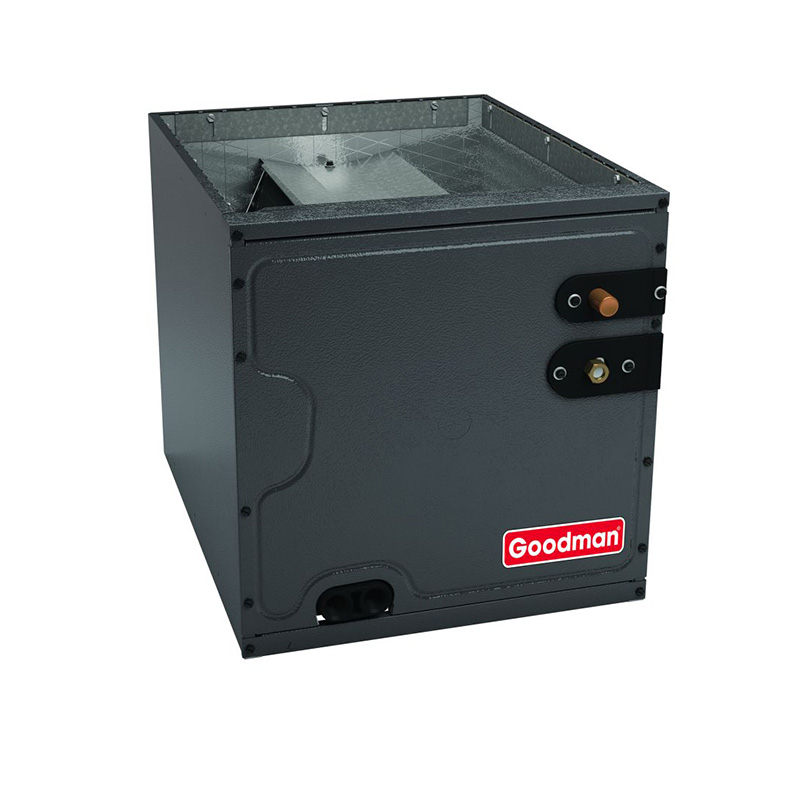
- Evaporator coil leaks appear in a meaningful share of owner reviews, a problem that is expensive to diagnose and repair
- Compressor lifespan averages 10 to 14 years versus 15 to 20 years for premium-brand compressors at the same efficiency tier
- A minority of owners report refrigerant leaks in the first year, most often traced to install or initial charge issues rather than the equipment itself
What homeowners and pros say about Goodman
Goodman sits at roughly 2.5 out of 5 on ConsumerAffairs, a channel that attracts frustrated owners more than satisfied ones, so that number reflects a real but skewed signal. The recurring pattern in those complaints is repair costs rising after year seven, consistent with the documented failure modes: dual-run capacitors going out, evaporator coil leaks developing, and compressors averaging 10 to 14 years rather than the 15 to 20 years typical of premium brands. Across Google dealer reviews the picture brightens to around 3.8 out of 5, where the most common praise is affordability and the most common criticism is inconsistent service experiences that often trace back to installer quality rather than the equipment itself.
HVAC technicians who work on Goodman regularly tend to describe it as competent equipment that rewards careful commissioning and annual maintenance. The capacitor failures are well known in the trade and considered routine, but coil leaks are a more expensive problem that some pros note appears with enough frequency to factor into the ownership math. For the GLXS5BA3610D specifically, the R-32 refrigerant is a newer variable that means a smaller charge on an already value-priced system, which is sensible engineering, but it adds one more reason to confirm your service provider is equipped to handle it. The honest consensus is that this system delivers on its price point for buyers who go in with realistic expectations about component life and who treat installer selection as seriously as equipment selection.
Sources: ConsumerAffairs Goodman owner reviews, AHRI Directory of Certified Product Performance, U.S. DOE appliance and equipment efficiency standards, Goodman product specification sheets.
What it costs to run
At 16 SEER2, cooling this 3-ton system for a typical 1200-hour cooling season at the U.S. average electricity rate of $0.17/kWh works out to roughly $459 per year in cooling, about $89 less per year than a minimum-efficiency 13.4 SEER2 unit of the same size. Your real cost depends on your climate and local rate.
Method: (36,000 BTU/hr ÷ 16 SEER2) × 1200 hours ÷ 1000 × $0.17/kWh. Rate source: U.S. EIA average; cooling hours: moderate-climate estimate.
How it compares
| Brand | Comparable model | SEER2 | Stage | Price position |
|---|---|---|---|---|
| Goodman | GLXS5BA3610D | 16 | Single-stage | Value pick |
| Carrier | Comfort 16 (24ACC6) | 16 | Single-stage | Typically 15 to 25 percent more than Goodman |
| Trane | XR16 (4TTR6) | 16 | Single-stage | Typically 15 to 25 percent more than Goodman |
| Lennox | Merit 16 (14ACX / ML14XC1 series) | 16 | Single-stage | Typically 15 to 25 percent more than Goodman |
Competitor rows are comparable single-stage units at similar efficiency; price is relative position, not a quote.
Questions about this system
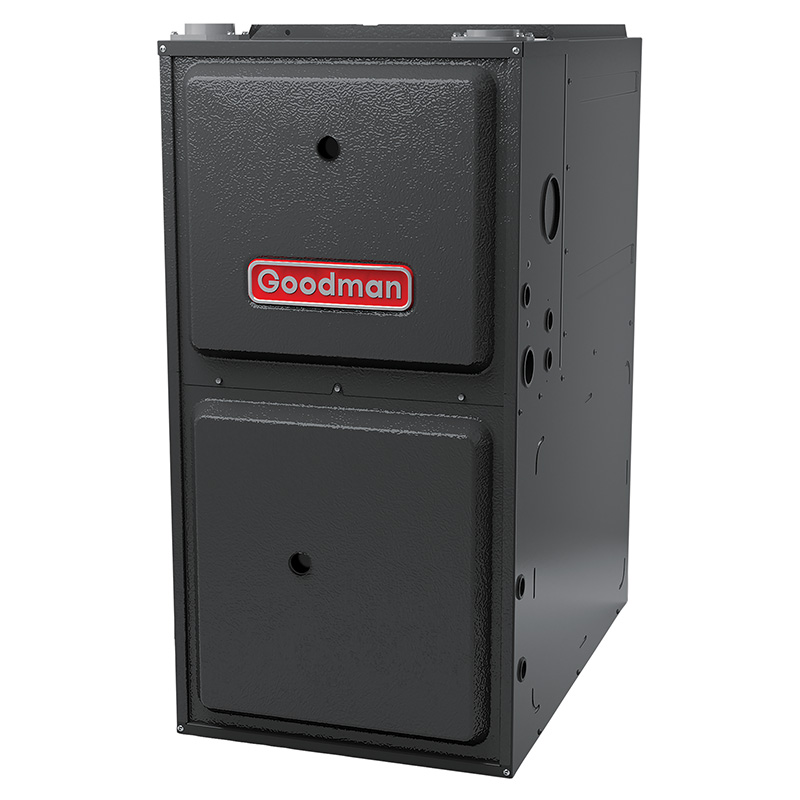
Can this upflow furnace be installed on its side or in a horizontal position?
No. The GLXS5BA3610D is designed exclusively for upflow applications where return air enters the bottom of the cabinet and conditioned air exits the top. Installing it in any other orientation is not rated and voids the warranty. If your installation requires horizontal or counterflow placement, you will need a different model.
Does the 10-year parts warranty require registration, and what does it actually cover?
Yes, the 10-year parts warranty requires product registration within a window after installation, typically 60 days. Without registration it drops to a 5-year parts warranty. It covers parts replacement costs but does not cover labor, refrigerant, or diagnostic fees, so a compressor replacement under warranty can still cost 700 to 1,500 dollars in labor alone depending on your market.
R-32 is newer to residential use. Will local HVAC technicians know how to work on it?
R-32 requires a standard EPA 608 certification to handle, which any licensed HVAC technician already holds. However, R-32 is mildly flammable and some older service equipment is not rated for it, so it is worth confirming your service provider has R-32-compatible recovery and charging equipment before scheduling work. Availability is growing but is not yet as universal as R-410A was at its peak.
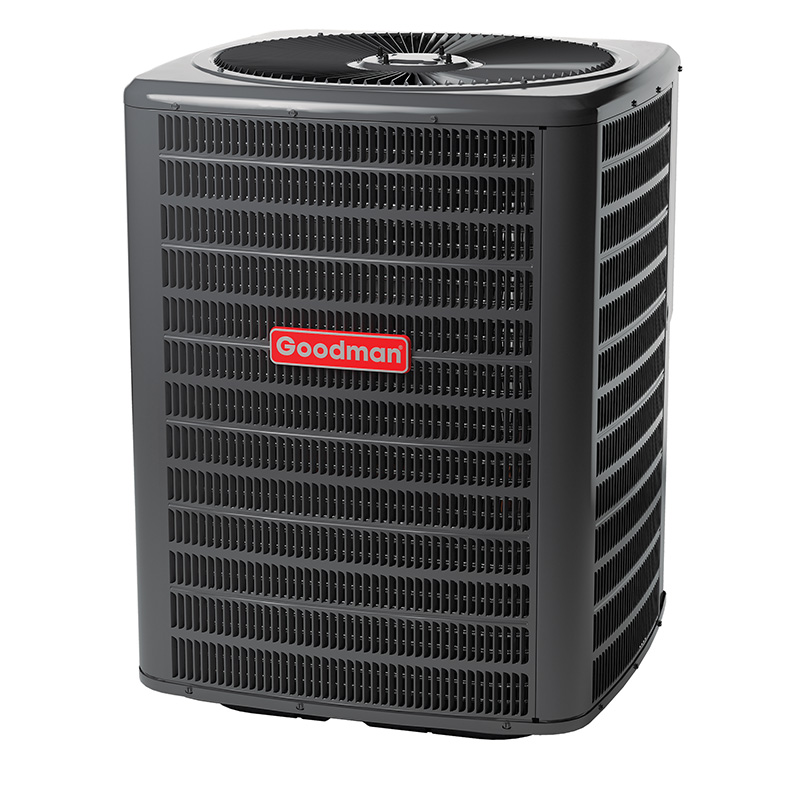
What size breaker and electrical service does the outdoor condenser unit require?
The specific breaker size depends on the condenser unit's minimum circuit ampacity, which is listed on the unit's nameplate and in the installation manual. For a 3-ton R-32 unit in this class, a 30 to 40 amp double-pole breaker is typical, but always confirm the exact MCA and MOCP values on the equipment label before rough-in. Your installer should size and pull the electrical permit.
How often do the capacitors actually fail, and is it something to budget for?
Dual-run capacitors are the most commonly reported failure point in Goodman condensing units, and it is reasonable to expect at least one replacement over a 10 to 14-year ownership period. The repair itself is straightforward and inexpensive, typically 300 to 600 dollars including labor, but it is worth budgeting for and scheduling annual tune-ups where a technician tests capacitor health before it fails on the hottest day of summer.
Specifications
| Cooling capacity | 3 Ton |
| Efficiency | 16 SEER2 |
| Furnace output | 80000 BTU |
| Furnace efficiency | 92% AFUE |
| Configuration | Upflow |
| Refrigerant | R-32 |
| Model | GLXS5BA3610D |