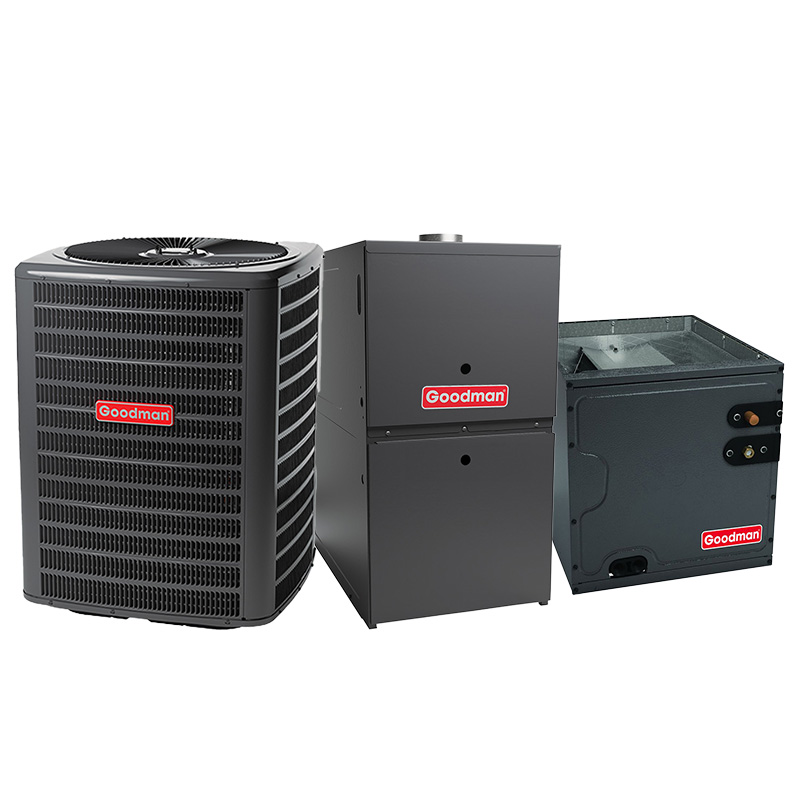
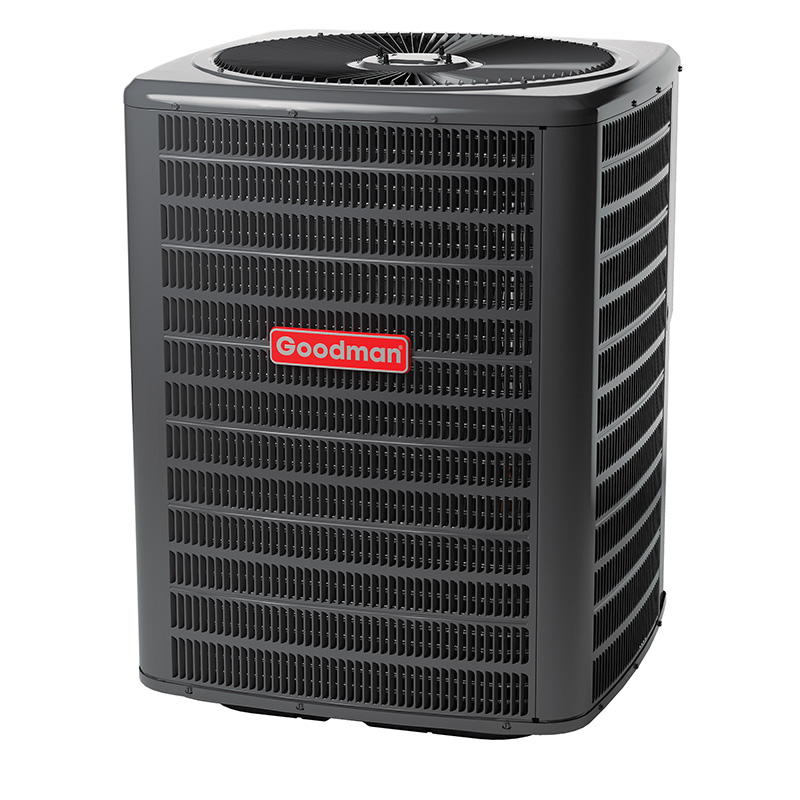
Goodman 3 Ton 16 SEER2 AC & Gas Furnace System – Two Stage Variable-Speed, 100000 BTU Gas Furnace, 80% AFUE, Upflow, R32
View on AC Direct see your lowest price →Check current price on AC Direct →
Key features
- Two-stage compressor for steadier cooling and reduced humidity on partial-load days
- Variable-speed ECM blower motor for quiet, efficient airflow control
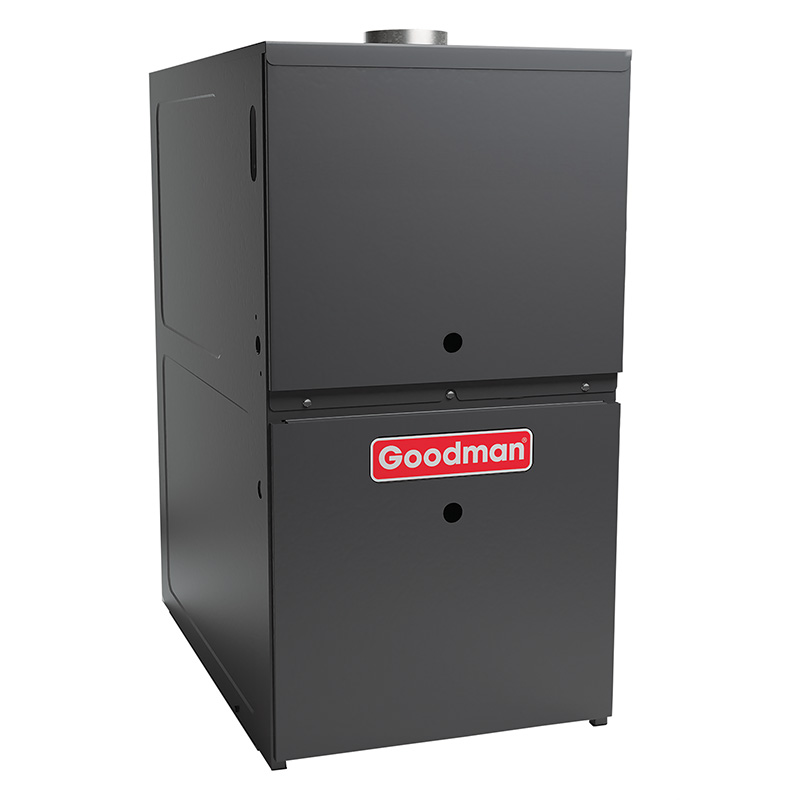
- 100,000 BTU upflow gas furnace at 80% AFUE, single-stage heat output
- R-32 refrigerant with lower global warming potential than outgoing R-410A
- 16 SEER2 efficiency rating meets or exceeds current federal minimums in most regions
- Upflow cabinet design suited to basement or ground-level mechanical room installations
About this system
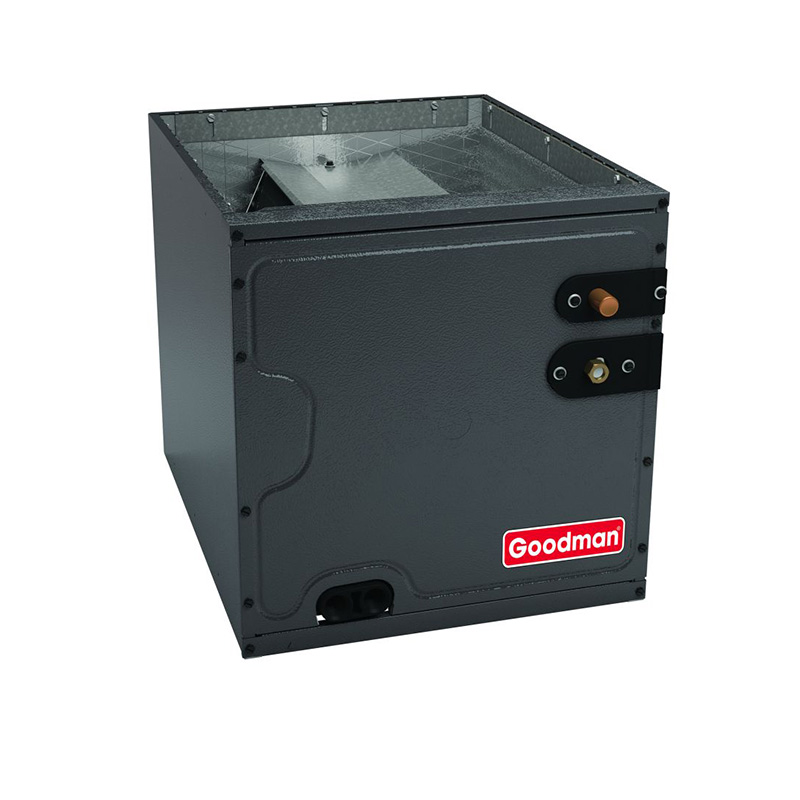
The Goodman 3-Ton 16 SEER2 two-stage, variable-speed system pairs a mid-efficiency central air conditioner with a 100,000 BTU upflow gas furnace rated at 80% AFUE. The two-stage compressor runs at a lower capacity most of the time, only stepping up to full output on the hottest days, which means steadier indoor temperatures and lower humidity compared to a single-stage unit. The variable-speed air handler blower fine-tunes airflow continuously, adding another layer of comfort and helping the system squeeze more efficiency out of every cooling and heating cycle.
The 80% AFUE furnace sits at the entry level of efficiency tiers, meaning one-fifth of every fuel dollar goes up the flue. Homeowners in mild-to-moderate heating climates or those on tighter upfront budgets will find this a reasonable trade-off, while those in cold northern regions may want to weigh a 96% AFUE upgrade. R-32 refrigerant is a newer, lower-GWP alternative to R-410A, which is being phased out, so this system is reasonably future-proofed on the refrigerant side. The upflow configuration fits homes with a basement or mechanical room installation where conditioned air rises into the duct system above the unit.
This Goodman system delivers real two-stage comfort and a future-ready refrigerant at a price point that undercuts comparable Carrier, Trane, and Lennox equipment by 15 to 25 percent. The trade-off is a brand with a middling reliability track record and compressor longevity that trails premium competitors, so long-term value depends heavily on install quality and how well you maintain it. For budget-focused buyers in moderate climates who plan to stay on top of maintenance, it is a sensible choice with eyes open.
Overall score is the average of the five ratings above.
What we like
- Two-stage cooling reduces humidity and temperature swings more effectively than single-stage alternatives at this price
- Variable-speed blower improves comfort, lowers operating noise, and helps efficiency
- R-32 refrigerant positions the system well for regulatory changes as R-410A is phased out
- Priced roughly 15 to 25 percent below comparable Trane, Lennox, and Carrier configurations
- Dual-run capacitor failures, the most common documented issue, are generally a low-cost repair in the $300 to $600 range
Trade-offs
- 80% AFUE furnace loses 20% of fuel as exhaust heat, a meaningful ongoing cost in colder climates
- Compressor lifespan averages 10 to 14 years versus 15 to 20 years typical for premium brands
- Evaporator coil leaks appear in a meaningful share of owner reviews and can be a costly mid-life repair
- A minority of owners report refrigerant leaks within the first year, typically tied to install or charge quality rather than the equipment itself
What homeowners and pros say about Goodman
Homeowners who share feedback on Goodman equipment tend to split along two lines. Those who had a skilled installer and kept up with annual tune-ups often report solid performance and appreciate the lower purchase price. Those who ran into trouble tend to point to repair costs that mount after roughly year 7, a pattern reflected in Goodman’s ConsumerAffairs rating of approximately 2.5 out of 5, a channel that skews toward frustrated owners. The specific failure modes that come up most consistently are dual-run capacitor failures, evaporator coil leaks, and compressor longevity that trails premium brands — averaging 10 to 14 years versus 15 to 20 years for higher-tier equipment. A small share of owners also report refrigerant leaks in the first year, which technicians typically attribute to install or initial charge quality rather than a factory defect.
HVAC professionals tend to give Goodman a more measured assessment than either its defenders or critics. Across dealer locations, Google reviews average around 3.8 out of 5, and affordability is the most consistent praise from buyers. Pros who install Goodman regularly note that the brand is not forgiving of sloppy work — undersized ductwork, improper refrigerant charge, or skipped commissioning steps will shorten the life of any system, but the effect is more visible with a value-tier brand. For this specific two-stage, variable-speed configuration, technicians point out that the more complex controls and variable-speed motor add service considerations that are less common on simpler single-stage setups, making an experienced installer even more important than usual.
Sources: ConsumerAffairs Goodman owner reviews, AHRI Directory of Certified Product Performance, U.S. DOE appliance and equipment efficiency standards, Goodman product specification sheets.
What it costs to run
At 16 SEER2, cooling this 3-ton system for a typical 1200-hour cooling season at the U.S. average electricity rate of $0.17/kWh works out to roughly $459 per year in cooling, about $89 less per year than a minimum-efficiency 13.4 SEER2 unit of the same size. Your real cost depends on your climate and local rate.
Method: (36,000 BTU/hr ÷ 16 SEER2) × 1200 hours ÷ 1000 × $0.17/kWh. Rate source: U.S. EIA average; cooling hours: moderate-climate estimate.
How it compares
| Brand | Comparable model | SEER2 | Stage | Price position |
|---|---|---|---|---|
| Goodman | GSXH5/GMVC8 Series (this system) | 16 | Two-stage / Variable-speed | Value pick |
| Carrier | Comfort 16 (24ACC6 Series) | 16 | Single-stage | Typically 15 to 25 percent more than this Goodman system |
| Trane | XR16 Series | 16 | Single-stage | Typically 15 to 25 percent more than this Goodman system |
| Lennox | Merit 16ACX Series | 16 | Single-stage | Typically 15 to 25 percent more than this Goodman system |
Competitor rows are comparable single-stage units at similar efficiency; price is relative position, not a quote.
Questions about this system
Is 80% AFUE good enough for my climate, or should I upgrade to a higher-efficiency furnace?
In mild to moderate heating climates — roughly IECC zones 1 through 3 — 80% AFUE is a reasonable fit, and the upfront savings can offset the efficiency gap. In colder zones (4 and above), a 96% or higher AFUE furnace will typically recover its price premium through lower gas bills within a few heating seasons.
What does the two-stage compressor actually do differently compared to a single-stage unit?
A two-stage compressor runs at a lower capacity (usually around 65 to 70 percent) during typical cooling demand and ramps to full output only on the hottest days. This longer, lower-intensity runtime removes more moisture from indoor air, reduces temperature swings, and is quieter than a system that cycles fully on and off repeatedly.
Why is R-32 refrigerant being used here, and does it affect service costs?
R-32 has a lower global warming potential than R-410A, which is being phased down under EPA regulations, so this system is better positioned for long-term parts availability. R-32 does require technicians to use compatible recovery and charging equipment, so confirm your installer has the right tools before scheduling service.
What are the most likely repair costs I should budget for over the first 10 years?
Dual-run capacitor replacement is the most commonly reported failure on Goodman equipment and typically runs $300 to $600 including labor. Evaporator coil leaks show up in a meaningful share of owner reviews and are a more substantial repair, so verifying that your coil is properly installed and leak-checked at startup is worthwhile. Setting aside a small annual maintenance reserve is a practical approach.
Does the upflow configuration work if my furnace is in a crawl space or attic?
No. An upflow furnace is designed to pull return air from the bottom and discharge conditioned air upward into ductwork above it, which suits a basement or ground-floor mechanical room. Crawl space installations typically need a downflow or horizontal unit, and attic installations generally require a horizontal or downflow configuration — using an upflow unit in the wrong orientation voids the warranty and creates safety hazards.
Specifications
| Cooling capacity | 3 Ton |
| Efficiency | 16 SEER2 |
| Furnace output | 100000 BTU |
| Furnace efficiency | 80% AFUE |
| Configuration | Upflow |
| Refrigerant | R-32 |