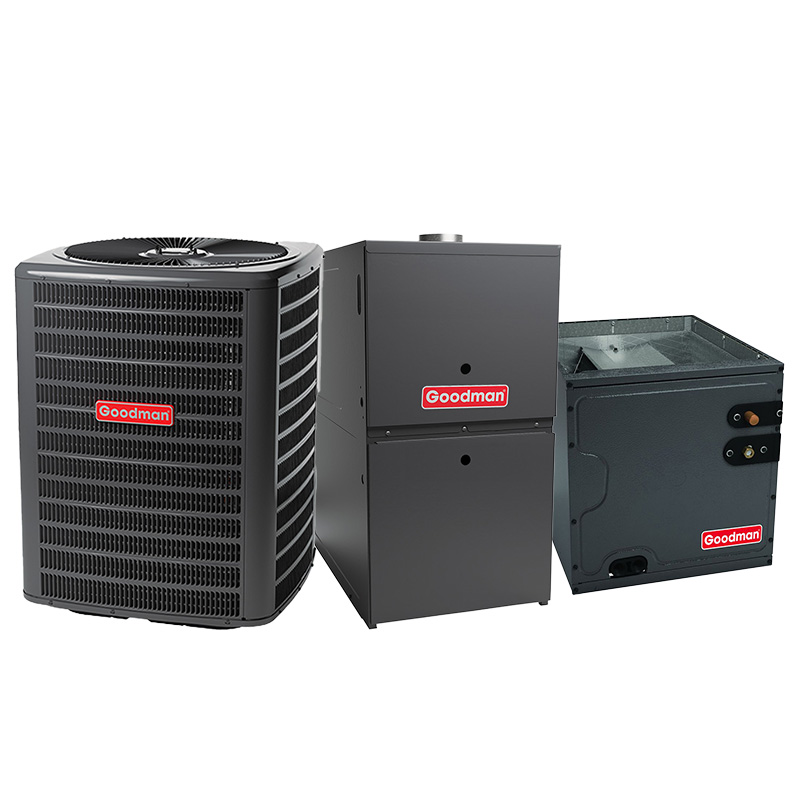
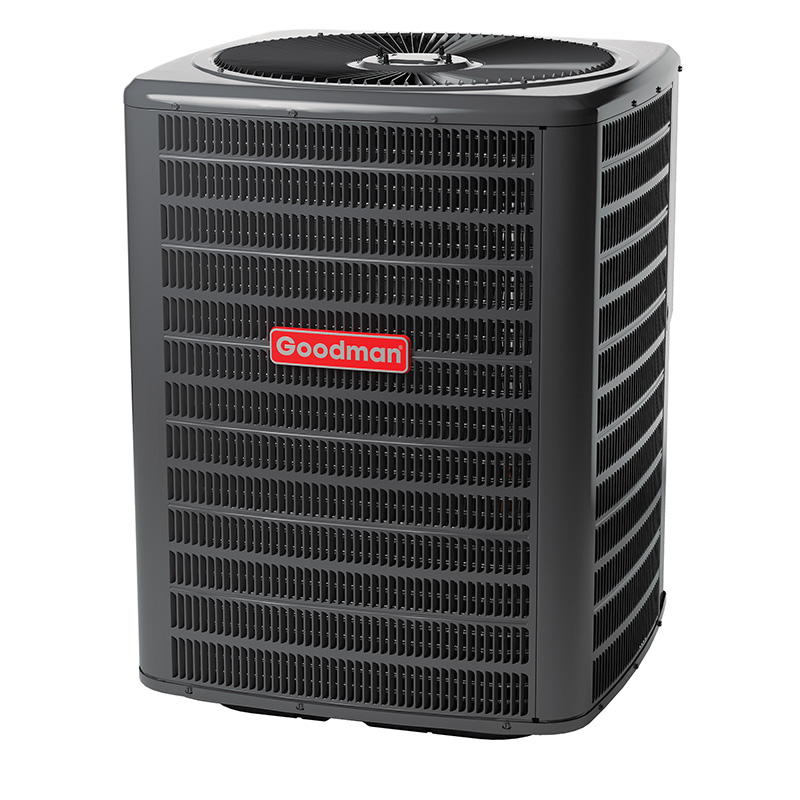
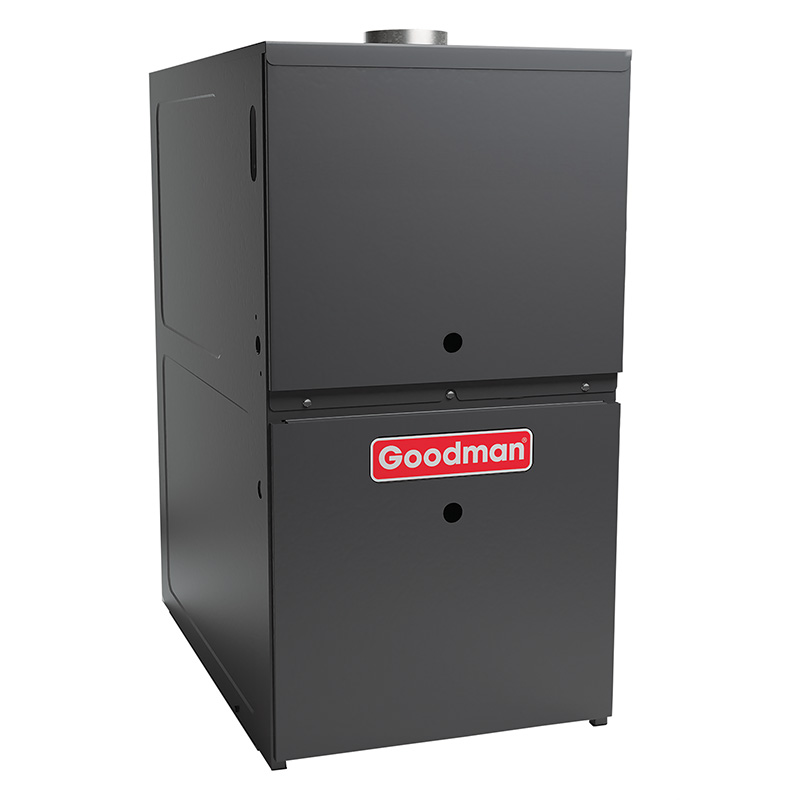
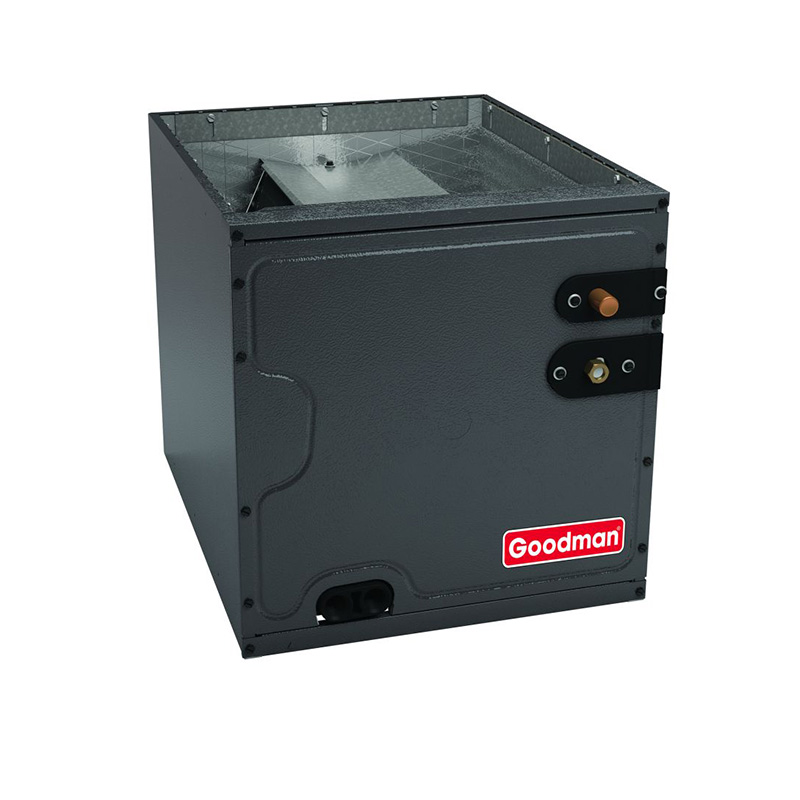
Goodman 3 Ton 16 SEER2 AC & Gas Furnace System – Two Stage Variable-Speed, 80000 BTU Gas Furnace, 80% AFUE, Upflow, R32
View on AC Direct see your lowest price →Check current price on AC Direct →
Key features
- Two-stage compressor runs at reduced capacity on mild days for steadier temperatures and quieter operation
- Variable-speed air handler improves humidity control and airflow consistency
- 16 SEER2 efficiency meets current federal minimums with moderate energy savings over baseline equipment
- 80,000 BTU, 80% AFUE upflow gas furnace suits mild-to-moderate heating climates
- R-32 refrigerant has lower global warming potential than R-410A and is increasingly serviceable nationwide
- Factory-matched bundle simplifies coil compatibility and may support full warranty coverage
About this system
The Goodman 3-ton 16 SEER2 two-stage, variable-speed system pairs a mid-efficiency air conditioner with an 80,000 BTU, 80% AFUE upflow gas furnace in a single matched bundle. At 3 tons, it targets homes in roughly the 1,400 to 2,000 square foot range, though proper Manual J load calculation should always confirm that sizing. The two-stage compressor is a genuine comfort upgrade over single-stage equipment: it runs at a lower capacity on mild days, reducing temperature swings and cycling noise, and only ramps to full output when conditions demand it. The variable-speed air handler complements that behavior by modulating airflow, which also improves dehumidification in humid climates.
The 16 SEER2 rating sits at the lower edge of what qualifies as a mid-efficiency system under current DOE standards, clearing federal minimums for most U.S. regions with modest room to spare. The 80% AFUE furnace is the entry point for gas heating efficiency, meaning 20 cents of every dollar in gas escapes through the flue. That is adequate for mild-to-moderate heating climates but costs more to operate over time than a 96% AFUE condensing unit would in a cold-winter region. R-32 refrigerant has a lower global warming potential than R-410A and is becoming the industry standard, which is a practical long-term serviceability advantage. The upflow configuration suits most homes with a basement or closet installation where ductwork runs overhead.
This bundle suits buyers who want genuine two-stage comfort without the price premium of a Trane, Carrier, or Lennox system, and who are working with a qualified installer. Goodman’s performance track record correlates closely with installation quality, so choosing a licensed, experienced contractor matters more here than with some premium brands that have tighter factory tolerances. Buyers willing to accept some long-term reliability trade-offs in exchange for a lower purchase price are the natural fit.
This system delivers real two-stage comfort at a price point 15 to 25 percent below comparable Trane, Carrier, and Lennox equipment, making it a credible value pick for budget-conscious buyers who secure a skilled installer. The 80% AFUE furnace and 16 SEER2 rating are adequate but not impressive on efficiency, and Goodman's documented repair history after year 7 means long-term costs deserve a place in the buying decision. It is a reasonable trade-off, not a hidden gem.
Overall score is the average of the five ratings above.
What we like
- Two-stage operation reduces temperature swings and short-cycling compared to single-stage equipment
- Variable-speed blower improves dehumidification and comfort in humid climates
- R-32 refrigerant is forward-looking and has growing technician familiarity
- Priced 15 to 25 percent below equivalent systems from Trane, Lennox, and Carrier
- Factory-matched coil and furnace pairing simplifies installation and warranty compliance
Trade-offs
- 80% AFUE furnace wastes 20% of fuel, raising operating costs in cold climates versus 90-plus percent alternatives
- Dual-run capacitors are the most frequently reported failure point, typically starting around year 5 to 7
- Compressor lifespan averages 10 to 14 years, shorter than the 15 to 20 years common in premium brands
- A minority of owners have reported refrigerant leaks in the first year, often tied to installation or initial charge issues
What homeowners and pros say about Goodman
Homeowners who look up Goodman online encounter a split picture. On ConsumerAffairs, where the format draws complaints more than compliments, Goodman sits at roughly 2.5 out of 5, and the recurring story in those reviews involves repair bills that start climbing after about year 7. The specific failure modes named most often are dual-run capacitors, evaporator coil leaks, and compressor replacements arriving earlier than owners hoped, with compressor lifespan averaging 10 to 14 years against 15 to 20 for premium brands. Google dealer reviews tell a different story, averaging around 3.8 out of 5, where the most common praise is straightforward: the price was lower and the system cools and heats the house. That gap between platforms reflects who is motivated to write a review rather than a full picture of the ownership experience.
HVAC technicians generally describe Goodman as serviceable equipment whose longevity depends heavily on who installs it and how well it is maintained. A properly charged system with clean coils and a functioning capacitor runs predictably for most of its expected service life. The caution they raise most often is the first-year refrigerant leak risk, which they attribute not to factory defects but to installation or initial charge issues, and which reinforces why installer selection matters as much as brand choice with this equipment. For buyers who get a qualified installer, register the warranty, and budget for a capacitor swap somewhere in years 5 to 8, this system can deliver solid value. For buyers who treat installation as an afterthought or expect premium-brand durability at a value-brand price, the realistic ownership experience is likely to fall short of expectations.
Sources: ConsumerAffairs Goodman owner reviews, AHRI Directory of Certified Product Performance, U.S. DOE appliance and equipment efficiency standards, Goodman product specification sheets.
What it costs to run
At 16 SEER2, cooling this 3-ton system for a typical 1200-hour cooling season at the U.S. average electricity rate of $0.17/kWh works out to roughly $459 per year in cooling, about $89 less per year than a minimum-efficiency 13.4 SEER2 unit of the same size. Your real cost depends on your climate and local rate.
Method: (36,000 BTU/hr ÷ 16 SEER2) × 1200 hours ÷ 1000 × $0.17/kWh. Rate source: U.S. EIA average; cooling hours: moderate-climate estimate.
How it compares
| Brand | Comparable model | SEER2 | Stage | Price position |
|---|---|---|---|---|
| Goodman | GSXH503610 / GMVC8 Series | 16 | Two-stage / Variable-speed | Value pick |
| Carrier | Comfort 16 (24ACC6) | 16 | Single-stage | Typically 15 to 25 percent more than this Goodman bundle |
| Trane | XR16 Series | 16 | Single-stage | Typically 15 to 25 percent more than this Goodman bundle |
| Lennox | Merit 16 (ML16XC1) | 16 | Single-stage | Typically 15 to 25 percent more than this Goodman bundle |
Competitor rows are comparable single-stage units at similar efficiency; price is relative position, not a quote.
Questions about this system
Is 80% AFUE good enough, or should I upgrade to a 96% furnace in this bundle?
For homeowners in the South or mild mid-Atlantic climates with shorter heating seasons, 80% AFUE is defensible since the payback period on a higher-efficiency furnace stretches to many years. In the Midwest, Mountain West, or Northeast where the furnace runs hard for five or more months, a 96% AFUE unit will typically recover its price premium through gas savings within five to eight years and is worth the upgrade.
How often do the dual-run capacitors actually fail, and what does it cost to fix?
Capacitor failure is the single most commonly reported repair on Goodman equipment and tends to surface after year 5 to 7 of operation. The part itself is inexpensive and a qualified technician can usually complete the repair for $300 to $600 including labor, making it an annoying but not catastrophic issue.
Will switching to R-32 refrigerant cause any service problems?
R-32 is increasingly stocked by HVAC distributors and familiar to most technicians as of 2024 and beyond, so service availability is not a practical concern for most buyers. One note: R-32 is mildly flammable, which requires EPA-certified technicians and slightly different handling procedures, but this is a standard part of current HVAC training.
Does Goodman's warranty require professional installation, and what does it actually cover?
Yes, Goodman's full parts warranty is contingent on installation by a licensed HVAC contractor and product registration within a set window after installation, typically 60 days. Failure to register or using an unlicensed installer can reduce coverage to a limited baseline, so confirming registration with your contractor after the job is complete is worth the five minutes it takes.
How much of this system's performance depends on the installer versus the equipment itself?
A great deal. HVAC technicians consistently cite installation quality as the primary driver of how long a Goodman system lasts and how efficiently it runs. Proper refrigerant charge, correct duct sizing, accurate airflow balancing, and a clean drain line setup all have more day-to-day impact than brand alone, which is why spending time vetting contractors is as important as comparing equipment specs.
Specifications
| Cooling capacity | 3 Ton |
| Efficiency | 16 SEER2 |
| Furnace output | 80000 BTU |
| Furnace efficiency | 80% AFUE |
| Configuration | Upflow |
| Refrigerant | R-32 |