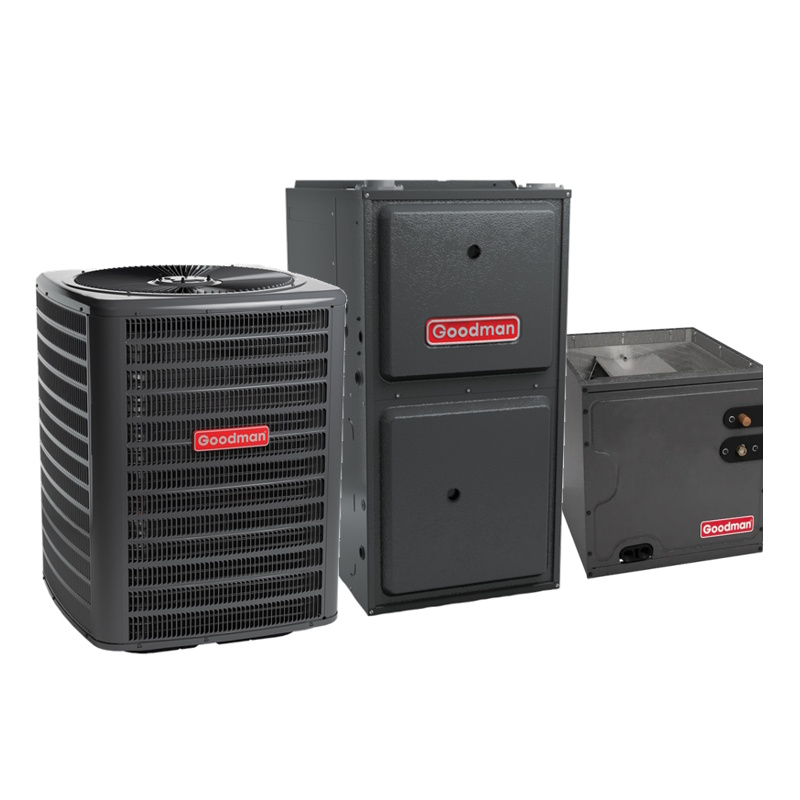
Goodman 3 Ton 17.2 SEER2 80000 BTU 96% Two Stage Variable Speed Gas Hybrid Heat Pump Dual System Upflow
View on AC Direct see your lowest price →Check current price on AC Direct →
Key features
- 17.2 SEER2 two-stage heat pump compressor for part-load efficiency
- Hybrid dual-fuel design automatically selects gas or electric heat by outdoor temperature
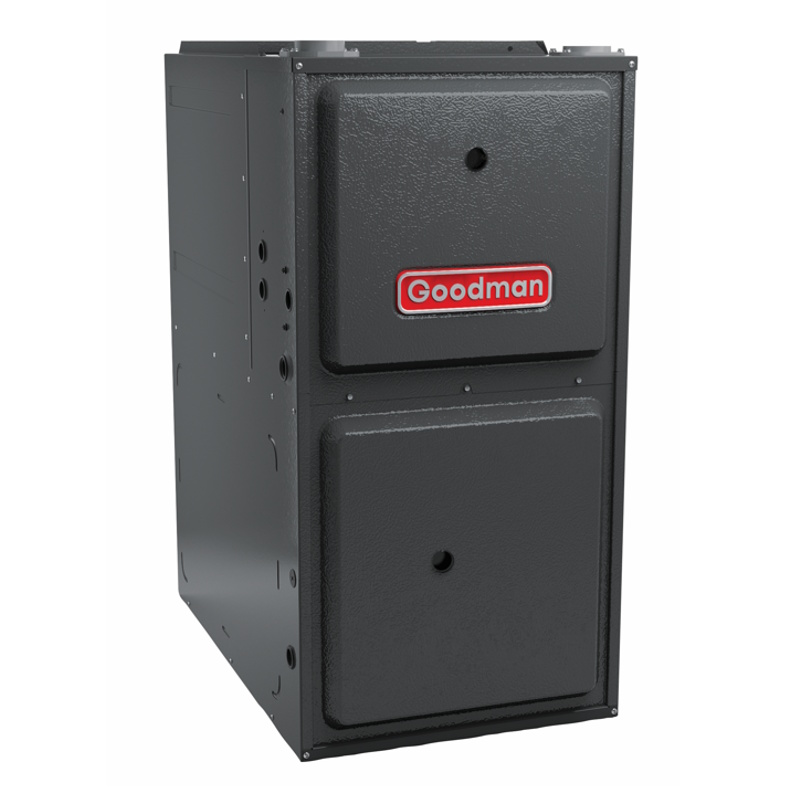
- 80,000 BTU gas furnace at 96% AFUE for high-efficiency cold-weather backup heating
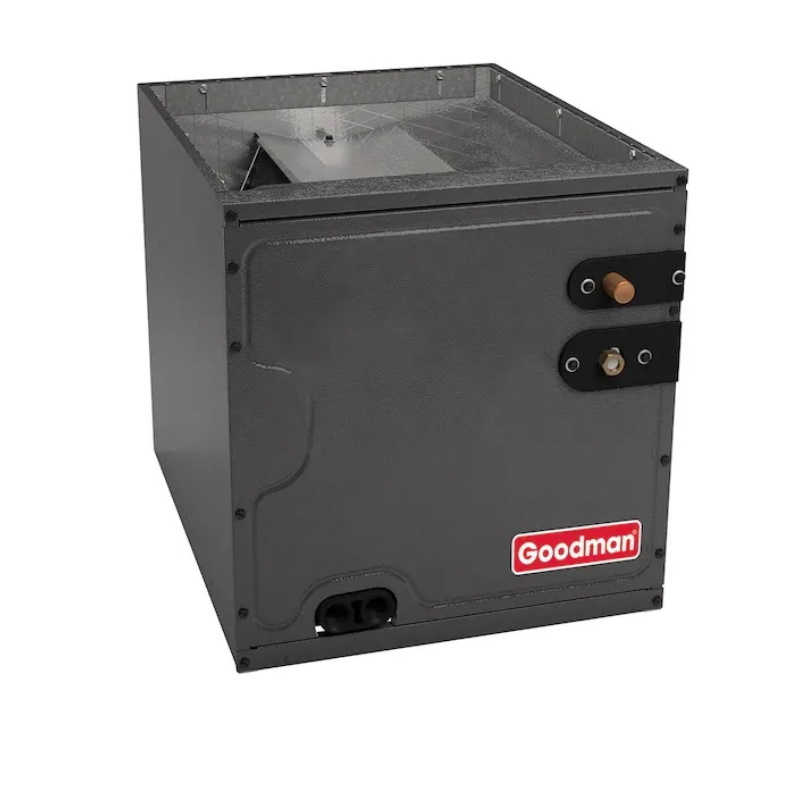
- Variable-speed ECM air handler for quiet operation and improved dehumidification
- Upflow configuration for basement or ground-level mechanical room installations
- ComfortBridge communicating technology supports system diagnostics and optimization
About this system
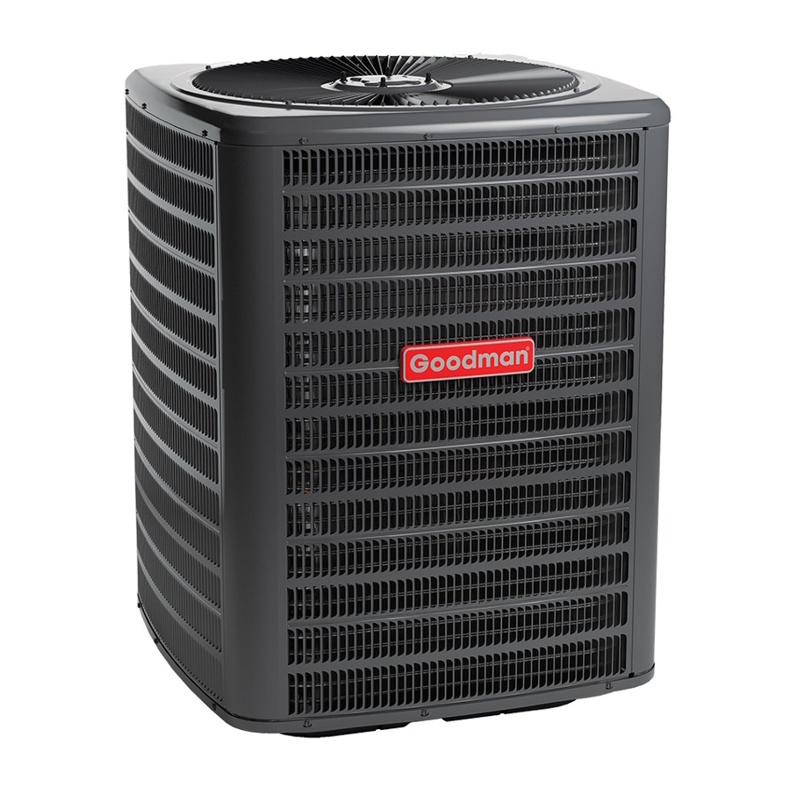
The Goodman GSZC703610 is a 3-ton, 17.2 SEER2 hybrid heat pump dual fuel system paired with an 80,000 BTU gas furnace running at 96% AFUE in an upflow configuration. The hybrid setup means the system automatically switches between the heat pump and gas heat depending on outdoor temperatures and operating costs, which makes it well suited to climates with cold winters where a heat pump alone loses efficiency. The two-stage compressor reduces short-cycling, keeps humidity in check during shoulder seasons, and cuts energy consumption during part-load hours compared to a single-stage unit.
The variable-speed air handler moves air quietly and precisely, contributing to more even temperatures from room to room and better dehumidification in summer. At 17.2 SEER2, this system sits comfortably in the upper-efficiency tier without reaching the premium stratosphere, making it a reasonable choice for homeowners who want meaningful energy savings and a lower utility bill but are not willing to pay Carrier or Lennox prices to get there. The upflow configuration assumes a basement or ground-level mechanical room installation where conditioned air rises through the duct system, so confirm your home layout supports that before purchasing.
The GSZC703610 delivers a genuinely capable hybrid system at a price point that undercuts major premium brands by 15 to 25 percent, and the 17.2 SEER2 rating earns its efficiency claims. The trade-off is a documented history of component reliability concerns past year 7 and a brand reputation that depends heavily on who installs it and how carefully.
Overall score is the average of the five ratings above.
What we like
- 17.2 SEER2 efficiency is meaningfully above minimum standards and reduces summer operating costs
- Hybrid dual-fuel logic maximizes comfort and cost savings across all seasons
- Two-stage compressor reduces short-cycling and handles humidity better than single-stage units
- Variable-speed ECM blower improves air distribution and lowers blower motor energy use
- Priced 15 to 25 percent below comparable Trane, Lennox, and Carrier systems
Trade-offs
- Dual-run capacitors are the most frequently reported failure point, typically requiring a 300 to 600 dollar repair
- Evaporator coil leaks appear in a meaningful share of owner reviews and can be costly to address
- Compressor lifespan averages 10 to 14 years versus 15 to 20 years for premium brands
- A minority of owners report refrigerant leaks within the first year, usually tied to install quality rather than the equipment itself
What homeowners and pros say about Goodman
Homeowners who have installed this Goodman hybrid system most often point to the lower upfront price as the deciding factor, and that tracks with Goodman’s broader Google dealer review score of around 3.8 out of 5 across hundreds of locations. When the installation goes well, owners report noticeably lower heating bills during cold stretches thanks to the dual-fuel switching, and the variable-speed blower draws consistent praise for quiet operation. The ConsumerAffairs score of about 2.5 out of 5 tells a different story for a subset of owners, where the recurring complaint is maintenance costs that climb after roughly year 7, driven mainly by dual-run capacitor failures and, in a meaningful share of cases, evaporator coil leaks that are more expensive to resolve.
HVAC technicians who work on Goodman equipment regularly note that the brand’s performance is unusually sensitive to install quality. A properly charged, correctly commissioned system running on a well-designed duct layout tends to hold up reasonably well through the first several years. The compressor longevity data tells a more cautious story over the long run, with an average lifespan of 10 to 14 years compared to 15 to 20 years for premium brands. Technicians also flag that a small number of refrigerant leak reports within the first year are nearly always traced back to install or charge issues rather than factory defects, which reinforces the message that contractor selection matters as much as equipment selection with this brand.
Sources: ConsumerAffairs Goodman owner reviews, AHRI Directory of Certified Product Performance, U.S. DOE appliance and equipment efficiency standards, Goodman product specification sheets.
What it costs to run
At 17.2 SEER2, cooling this 3-ton system for a typical 1200-hour cooling season at the U.S. average electricity rate of $0.17/kWh works out to roughly $427 per year in cooling, about $121 less per year than a minimum-efficiency 13.4 SEER2 unit of the same size. Your real cost depends on your climate and local rate.
Method: (36,000 BTU/hr ÷ 17.2 SEER2) × 1200 hours ÷ 1000 × $0.17/kWh. Rate source: U.S. EIA average; cooling hours: moderate-climate estimate.
How it compares
| Brand | Comparable model | SEER2 | Stage | Price position |
|---|---|---|---|---|
| Goodman | GSZC703610 | 17.2 | Two-stage | Value pick |
| Carrier | Infinity 17 Heat Pump (25HCB6) | 17+ | Two-stage | Typically 15 to 25 percent more than Goodman |
| Trane | XR17 Heat Pump (4TWR7) | 17+ | Two-stage | Typically 15 to 25 percent more than Goodman |
| Lennox | Merit ML17XP1 Heat Pump | 17+ | Two-stage | Typically 15 to 25 percent more than Goodman |
Competitor rows are comparable single-stage units at similar efficiency; price is relative position, not a quote.
Questions about this system
How does the hybrid system decide when to run the heat pump versus the gas furnace?
The system uses a balance point temperature, typically set during commissioning, below which gas heat is more cost-effective or the heat pump cannot maintain capacity. Your installer should program this balance point based on your local utility rates and climate so the switchover happens at the economically optimal outdoor temperature.
What does the upflow configuration actually mean for my installation?
Upflow means the furnace pulls return air in from the bottom and discharges conditioned air upward into the duct system. This works well in basements or utility closets on the ground floor where ductwork runs up through the home. If your mechanical room is in an attic or your ducts feed downward, you would need a downflow or horizontal configuration instead.
Goodman has mixed reviews online. Should I be worried about this system lasting?
Goodman scores around 2.5 out of 5 on ConsumerAffairs, which is a complaint-heavy channel, and around 3.8 out of 5 on Google dealer reviews. The pattern in negative feedback is repair costs rising after about year 7, with dual-run capacitors and evaporator coil leaks being the most documented issues. Choosing an experienced installer and budgeting for a service agreement after the warranty period are the most practical ways to manage that risk.
What is covered under the warranty and for how long?
Goodman offers a 10-year parts limited warranty when the unit is registered within 60 days of installation, dropping to 5 years if registration is missed. The compressor typically carries its own 10-year coverage under the same registration terms. Labor is not covered by the manufacturer, so factor in service contract costs separately.
Can this system work with a smart thermostat like an Ecobee or Nest?
The GSZC703610 uses Goodman's ComfortBridge communicating technology, which works best with a compatible communicating thermostat to unlock full diagnostics and optimized staging. Some smart thermostats including Ecobee can be wired to work with this system in a conventional mode, but you may lose some of the communicating features. Confirm thermostat compatibility with your installer before purchase.
Specifications
| Cooling capacity | 3 Ton |
| Efficiency | 17.2 SEER2 |
| Furnace output | 80000 BTU |
| Configuration | Upflow |
| Model | GSZC703610 |