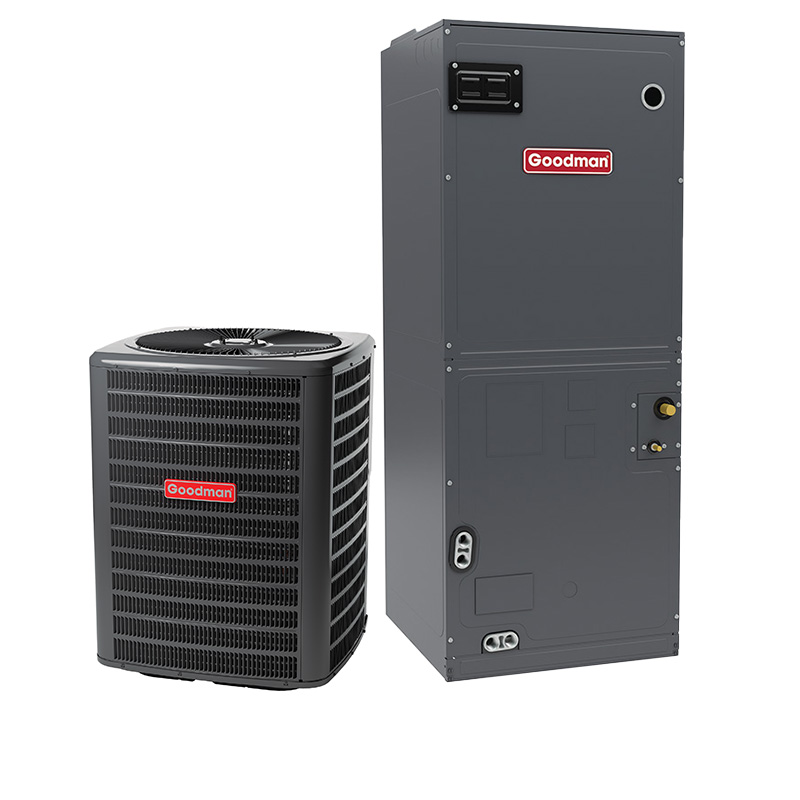
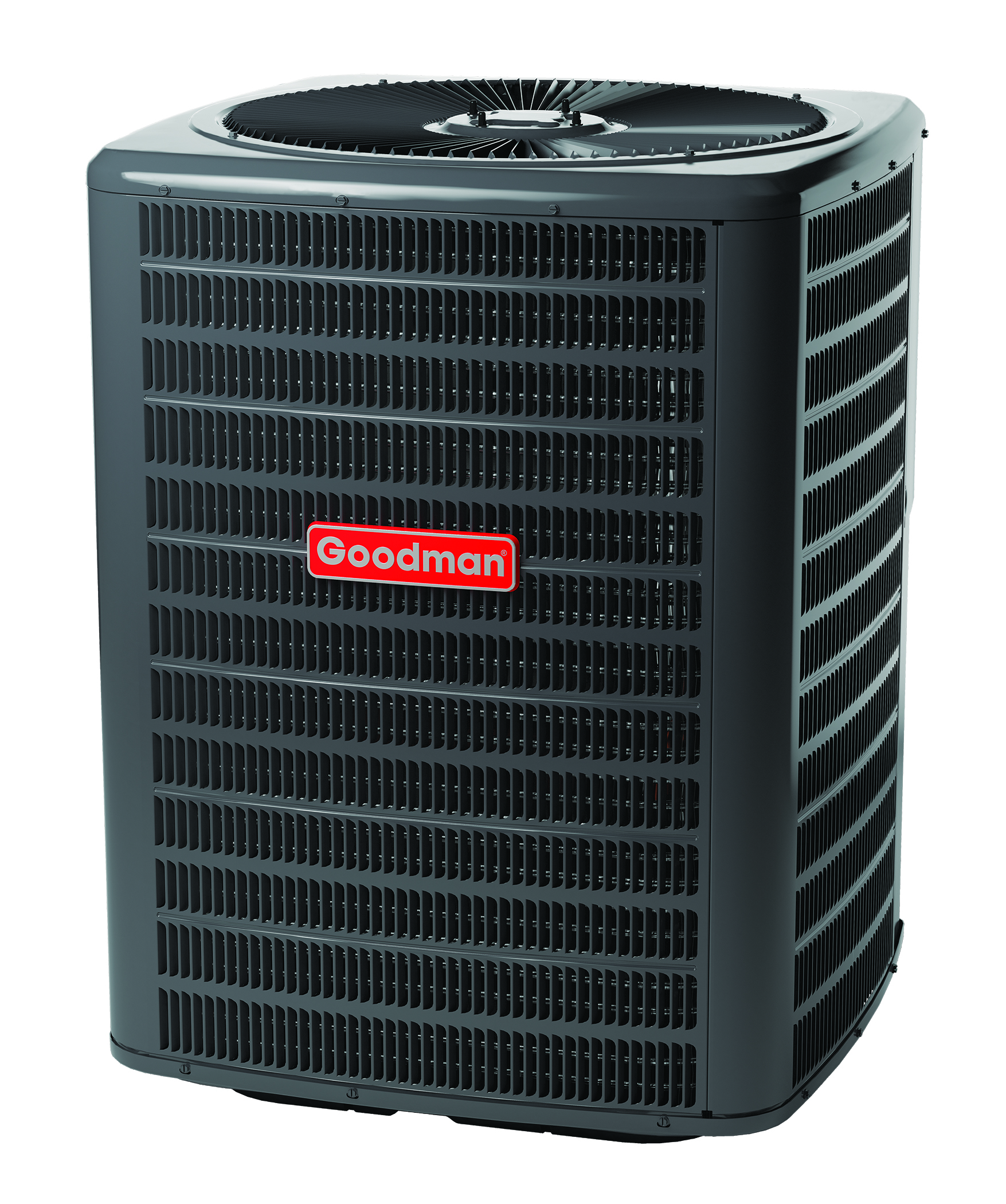
Goodman 3 Ton 17.2 SEER2 R32 High-Efficiency Two Stage Cooling Only System
View on AC Direct see your lowest price →Check current price on AC Direct →
Key features
- 17.2 SEER2 two-stage cooling for improved humidity control on mild days
- R-32 refrigerant with lower global-warming potential than R-410A
- Cooling-only condenser designed to pair with a compatible air handler and evaporator coil
- Two-stage compressor reduces on/off cycling and associated wear
- Priced roughly 15 to 25 percent below comparable Trane, Carrier, and Lennox units
- Qualifies for federal energy efficiency tax credits (verify eligibility annually)
About this system
The Goodman 3-ton 17.2 SEER2 two-stage cooling-only system is built around a condenser that runs at two capacity levels rather than one. On mild days it operates at the lower stage, running longer cycles that strip more humidity from the air before the compressor cuts off. On the hottest days it steps up to full output. For a 1,400- to 2,000-square-foot home in a climate with long cooling seasons, that humidity control often matters as much as raw efficiency numbers.
The 17.2 SEER2 rating puts this system in the high-efficiency tier, comfortably clearing federal minimums and qualifying for federal tax credits under the Inflation Reduction Act (verify current thresholds with your tax advisor). R-32 refrigerant has a lower global-warming potential than the R-410A it replaces and operates at slightly different pressures, so any servicing technician needs R-32 certification and compatible recovery equipment. That is a real consideration when shopping for ongoing service in areas where R-32 is still less common.
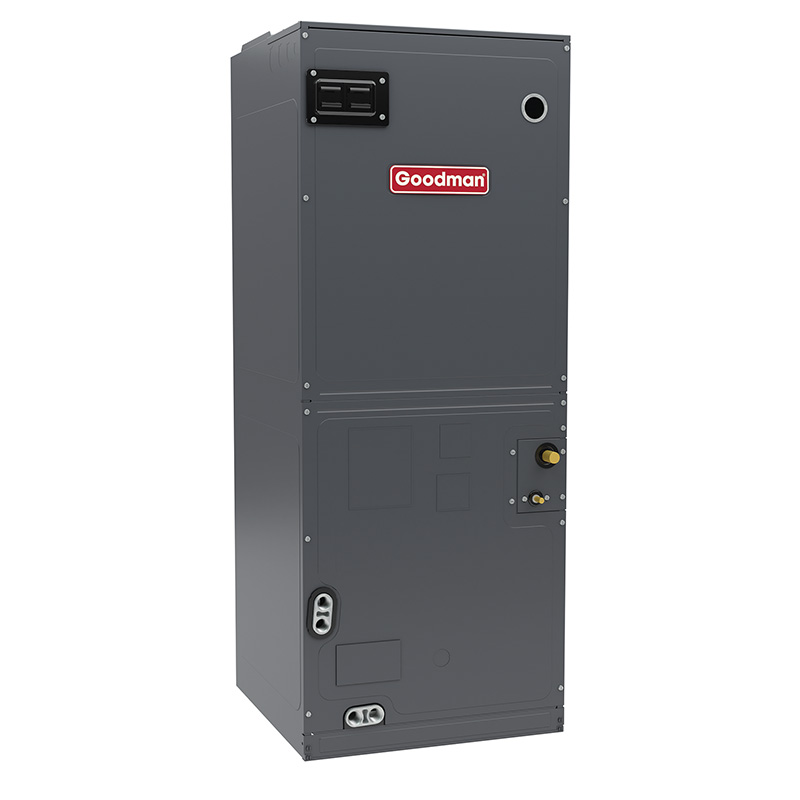
Goodman positions this unit as a cooling-only condenser, meaning you pair it with a separately purchased air handler or furnace and a compatible R-32 evaporator coil. Proper sizing, refrigerant charging, and coil matching by a licensed installer are critical. Goodman equipment in particular gets more out of a careful install than almost any other brand in its price range.
This system delivers genuine high-efficiency two-stage performance at a price point few competitors match, making it a reasonable choice for budget-conscious homeowners who hire a skilled installer. The trade-off is a shorter expected compressor lifespan than premium brands and a documented history of capacitor failures and occasional coil leaks that require budgeting for repairs after year seven. It earns its place in the market but asks more from the installer and the owner than a Trane or Lennox of similar efficiency.
Overall score is the average of the five ratings above.
What we like
- 17.2 SEER2 rating reaches the high-efficiency tier at a value-brand price
- Two-stage operation improves humidity control and comfort during partial-load conditions
- R-32 refrigerant has a lower environmental impact than legacy R-410A systems
- Dual-run capacitor failures, the most common repair, are typically a low-cost fix in the $300 to $600 range
- Widely available through dealer networks, making parts and service reasonably accessible
Trade-offs
- Compressor lifespan averages 10 to 14 years versus 15 to 20 years for premium-brand compressors
- Evaporator coil leaks appear in a meaningful share of owner reports, a cost that can be significant
- R-32 servicing requires a certified technician with compatible equipment, which limits your service options in some markets
- A minority of owners report refrigerant leaks within the first year, typically tied to installation quality rather than the equipment itself
What homeowners and pros say about Goodman
Homeowners who post about Goodman equipment tend to split along install-quality lines. On Google dealer review pages, where ratings average around 3.8 out of 5 across hundreds of reviews per location, the most common praise is straightforward: the system did what it was supposed to do at a price that made the project feasible. On ConsumerAffairs, which skews heavily toward complaint-motivated reviews and scores Goodman at roughly 2.5 out of 5, the recurring frustration is repair costs that start climbing around year seven. The two accounts are not necessarily contradictory. A Goodman unit that is properly sized, correctly charged, and matched to a compatible coil tends to run without drama for years. One that is rushed through installation is more likely to surface the brand’s known weak points.
HVAC technicians who work on Goodman equipment regularly point to the dual-run capacitor as the component most likely to bring them out on a service call. It is also the least alarming failure on the list: parts and labor typically land in the $300 to $600 range and the repair takes under an hour for an experienced tech. More consequential are evaporator coil leaks, which show up in a notable share of long-term owner accounts and carry a higher repair bill. Compressor longevity is the other honest conversation to have. Goodman compressors tend to average 10 to 14 years of service, which is a real gap compared to the 15 to 20 years owners of Trane or Carrier equipment often report. For this specific two-stage R-32 system, technicians also flag that R-32 certification and compatible recovery equipment are non-negotiable for any future service call, so confirming your local service options before buying is worth the ten-minute phone call.
Sources: ConsumerAffairs Goodman owner reviews, AHRI Directory of Certified Product Performance, U.S. DOE appliance and equipment efficiency standards, Goodman product specification sheets.
What it costs to run
At 17.2 SEER2, cooling this 3-ton system for a typical 1200-hour cooling season at the U.S. average electricity rate of $0.17/kWh works out to roughly $427 per year in cooling, about $121 less per year than a minimum-efficiency 13.4 SEER2 unit of the same size. Your real cost depends on your climate and local rate.
Method: (36,000 BTU/hr ÷ 17.2 SEER2) × 1200 hours ÷ 1000 × $0.17/kWh. Rate source: U.S. EIA average; cooling hours: moderate-climate estimate.
How it compares
| Brand | Comparable model | SEER2 | Stage | Price position |
|---|---|---|---|---|
| Goodman | 3-Ton 17.2 SEER2 Two-Stage Cooling-Only | 17.2 | Two-stage | Value pick |
| Carrier | Performance 17 (24ACC7) | 17 | Two-stage | Typically 15 to 25 percent more than Goodman |
| Trane | XR17 | 17 | Two-stage | Typically 15 to 25 percent more than Goodman |
| Lennox | Merit 17ACX | 17 | Two-stage | Typically 15 to 25 percent more than Goodman |
Competitor rows are comparable single-stage units at similar efficiency; price is relative position, not a quote.
Questions about this system
Does this system come with an evaporator coil and air handler, or do I have to buy those separately?
This is a cooling-only condenser and does not include an evaporator coil or air handler. You will need to purchase a compatible R-32 evaporator coil and either an air handler or a furnace separately. Your installer should confirm coil compatibility before ordering to protect the warranty.
My area is newer to R-32 equipment. Will I have trouble finding a technician who can service it?
R-32 servicing requires EPA Section 608 certification and R-32-rated recovery equipment. In most metro areas technicians are already equipped, but in rural markets availability can be spottier. Ask two or three local HVAC companies whether they stock R-32 recovery equipment before you buy.
What is the most likely repair I will face in the first ten years, and what will it cost?
The most commonly reported failure on Goodman condensers is the dual-run capacitor, which typically runs $300 to $600 including labor and is a straightforward repair. Evaporator coil leaks are the next most cited issue and can cost significantly more depending on whether the coil needs replacement. Budgeting a service fund after year seven is advisable.
Does this system qualify for the federal energy efficiency tax credit?
At 17.2 SEER2, this unit is in the efficiency range that has qualified for the federal 25C tax credit, which can offset up to $600 on qualifying central air equipment. Eligibility rules can change annually, so confirm the current thresholds with your tax advisor or at energystar.gov before filing.
How much does the two-stage design actually matter compared to a single-stage unit at similar SEER2?
Two-stage operation runs the compressor at a lower capacity during mild weather, which extends each cooling cycle and gives the indoor coil more time to pull moisture out of the air. In humid climates this translates to noticeably lower indoor humidity levels and more consistent comfort, not just energy savings. In dry climates the comfort difference is less pronounced, and a good single-stage unit at similar efficiency may be adequate.
Specifications
| Cooling capacity | 3 Ton |
| Efficiency | 17.2 SEER2 |
| Refrigerant | R-32 |