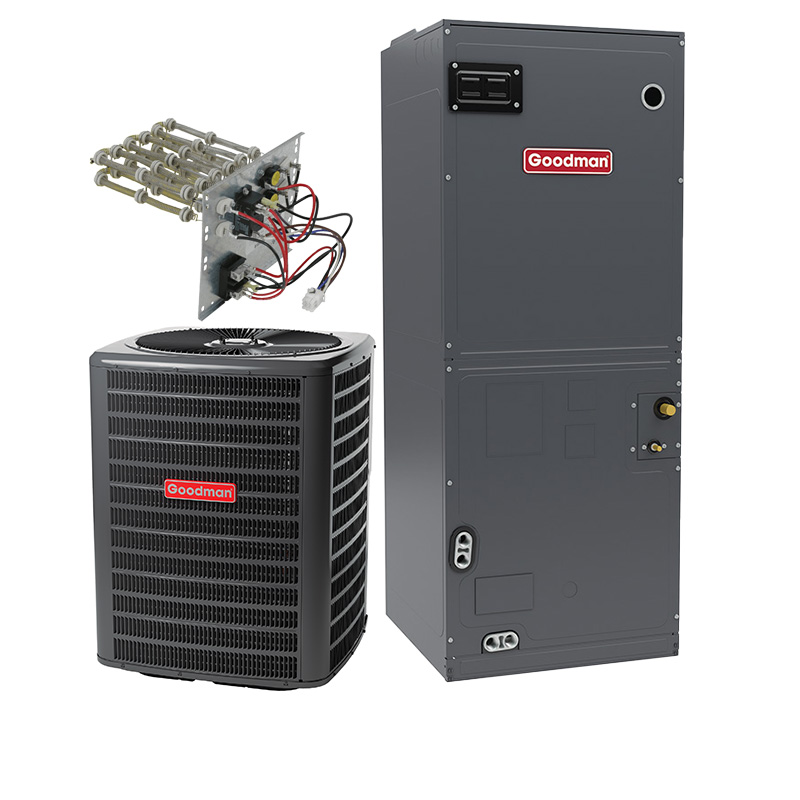
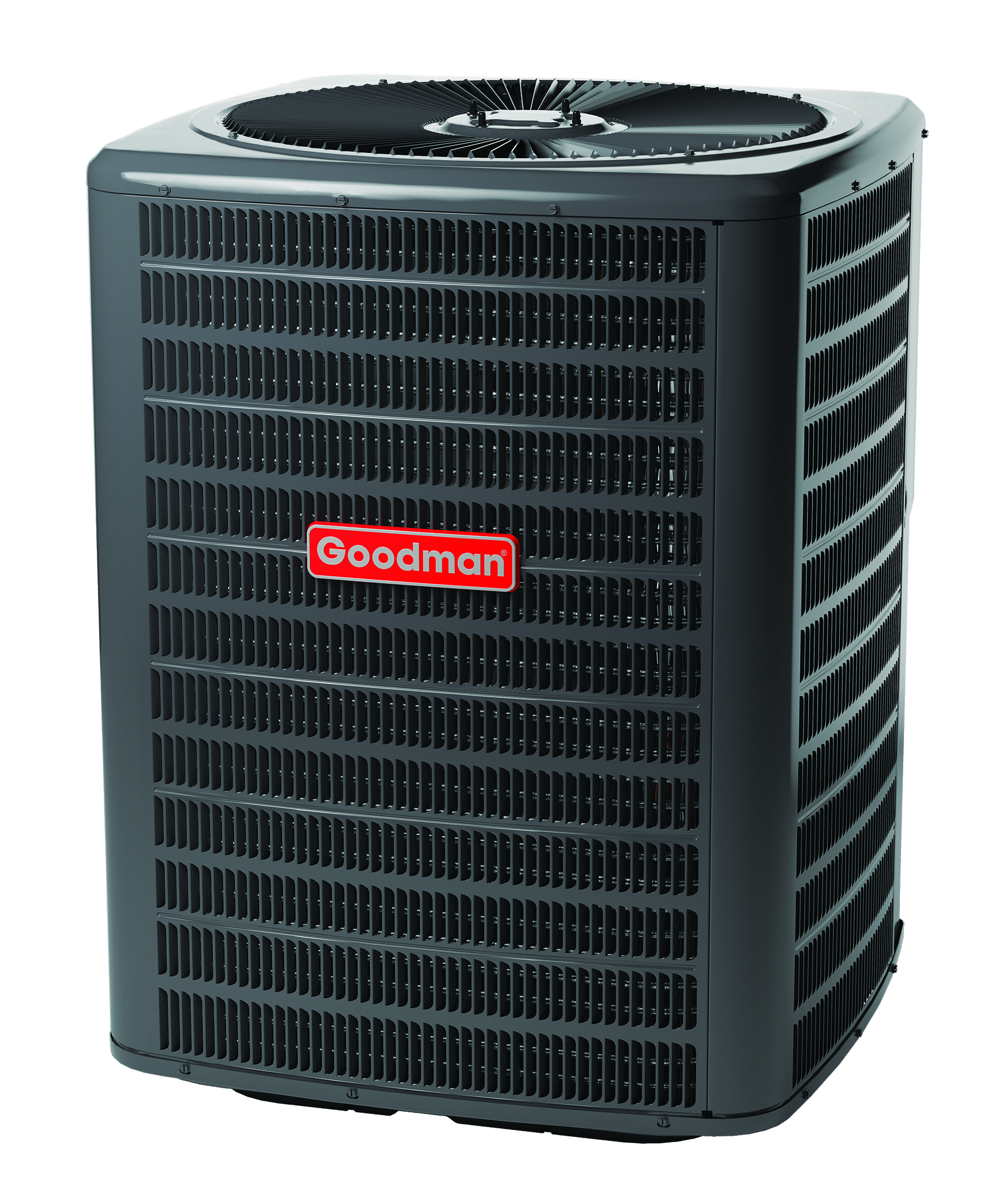
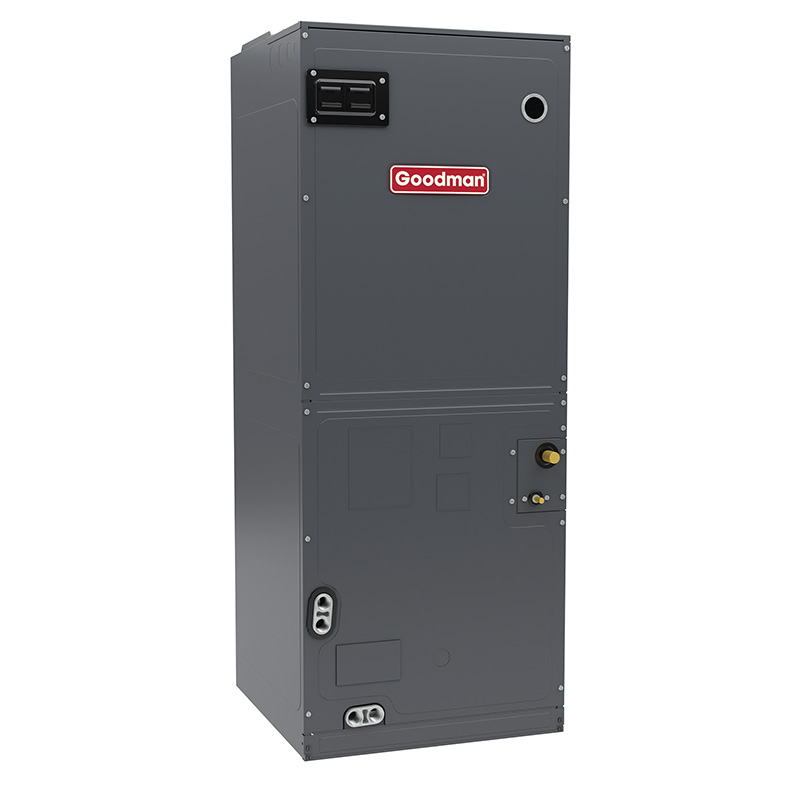
Goodman 3 Ton 17.2 SEER2 R32 Two Stage Cooling Only System With Electric Heat
View on AC Direct see your lowest price →Check current price on AC Direct →
Key features
- 17.2 SEER2 two-stage cooling for improved efficiency and humidity control over single-stage units
- R-32 refrigerant with lower global warming potential than R-410A
- Two-stage compressor reduces short-cycling and extends equipment run time at partial load
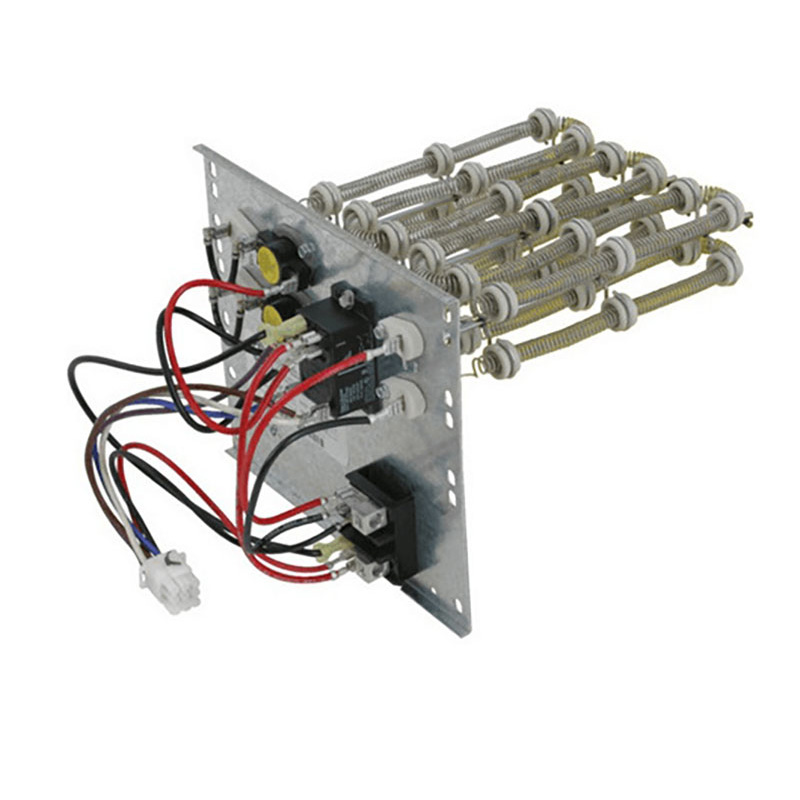
- Electric heat included, making this a complete system for non-gas applications
- 3-ton capacity suited to roughly 1,400 to 1,900 sq ft depending on load conditions
- Priced 15 to 25 percent below comparable Carrier, Trane, and Lennox models
About this system
The Goodman 3-Ton 17.2 SEER2 Two-Stage Cooling-Only System with Electric Heat is built for homeowners who want a meaningfully efficient cooling setup without paying premium-brand prices. At 17.2 SEER2, this unit sits comfortably in the upper-mid efficiency tier, clearing the federal minimums by a solid margin and delivering real monthly savings over entry-level 14 or 15 SEER2 equipment. The two-stage compressor is the headline mechanical feature: it runs at a lower capacity on mild days, reducing short-cycling, keeping humidity in check, and putting less wear on the system than a single-stage unit that hammers on and off at full blast.
The R-32 refrigerant charge is worth noting. R-32 has a lower global warming potential than the R-410A it replaces and is increasingly common in new residential equipment. Technicians who have trained on it handle it routinely, but it is mildly flammable (A2L classification), so the install must meet current code requirements, and not every older shop will have the updated recovery equipment. The electric heat component makes this a complete comfort solution for climates where supplemental heating is needed but gas is not available or practical. At 3 tons, this system fits homes roughly in the 1,400 to 1,900 square foot range, depending on insulation, ceiling height, and local climate, though a proper Manual J load calculation is the only reliable way to confirm sizing.
Goodman targets the cost-conscious buyer, and that positioning shows up in both the price tag and the component choices. The brand runs 15 to 25 percent below comparable Trane, Lennox, and Carrier units, which makes it attractive for budget-driven replacements or new construction where margins are tight. The trade-off is a compressor lifespan that typically runs 10 to 14 years versus 15 to 20 for top-tier brands, and a reliability profile that hinges heavily on who installs it and how carefully the refrigerant charge is set.
This Goodman system delivers legitimate upper-mid efficiency at a price that undercuts the major premium brands by a meaningful margin, and the two-stage compressor is a real functional upgrade over single-stage equipment at this tonnage. The value math works if you hire an experienced installer and budget for potential capacitor or coil service after year seven or eight. If long-term reliability and a shorter list of service calls matter more than upfront cost, the premium brands are worth the extra spend.
Overall score is the average of the five ratings above.
What we like
- 17.2 SEER2 rating puts it well above minimum standards, reducing cooling season energy bills
- Two-stage operation improves dehumidification and comfort on mild days
- R-32 refrigerant is more environmentally responsible than outgoing R-410A
- Priced 15 to 25 percent below Trane, Carrier, and Lennox equivalents, lowering total project cost
- Electric heat integration simplifies the system for all-electric homes or those without gas service
Trade-offs
- Compressor lifespan averages 10 to 14 years, shorter than the 15 to 20 years seen with premium brands
- Dual-run capacitors are the most commonly reported failure point, typically needing replacement every several years
- Evaporator coil leaks appear in a meaningful share of owner reviews and can be costly to address
- R-32 is an A2L mildly flammable refrigerant that requires up-to-date installer equipment and code-compliant installation
What homeowners and pros say about Goodman
Homeowners rating Goodman on ConsumerAffairs give the brand roughly 2.5 out of 5, though that platform draws a disproportionate share of frustrated owners rather than satisfied ones. The recurring complaint pattern points to repair costs that climb after roughly year seven, with dual-run capacitor failures and evaporator coil leaks cited most often. On Google dealer review pages, the picture is somewhat more balanced, with scores averaging around 3.8 out of 5 across locations where affordability comes up as the most consistent praise. Neither score tells the whole story, but taken together they suggest a brand that delivers on price and adequate early-years performance while carrying a higher service frequency risk in the back half of its lifespan compared to Trane, Carrier, or Lennox.
HVAC technicians tend to hold a nuanced view of Goodman. Many will note that a properly installed and charged Goodman unit performs reliably for years, and that a poorly installed premium unit will fail just as fast. That said, the documented weak points for this brand are specific and worth knowing before you buy: dual-run capacitors are the most frequently replaced component and usually a straightforward low-cost fix, while evaporator coil leaks carry heavier labor and parts costs and appear in enough owner accounts to warrant attention. The compressor lifespan averaging 10 to 14 years, versus 15 to 20 for top-tier brands, is the clearest long-term trade-off that comes with the lower purchase price. For this two-stage R-32 system specifically, the added complexity of the two-stage valve and the A2L refrigerant handling requirements make installer competence even more consequential than it is on a simpler single-stage Goodman unit.
Sources: ConsumerAffairs Goodman owner reviews, AHRI Directory of Certified Product Performance, U.S. DOE appliance and equipment efficiency standards, Goodman product specification sheets.
What it costs to run
At 17.2 SEER2, cooling this 3-ton system for a typical 1200-hour cooling season at the U.S. average electricity rate of $0.17/kWh works out to roughly $427 per year in cooling, about $121 less per year than a minimum-efficiency 13.4 SEER2 unit of the same size. Your real cost depends on your climate and local rate.
Method: (36,000 BTU/hr ÷ 17.2 SEER2) × 1200 hours ÷ 1000 × $0.17/kWh. Rate source: U.S. EIA average; cooling hours: moderate-climate estimate.
How it compares
| Brand | Comparable model | SEER2 | Stage | Price position |
|---|---|---|---|---|
| Goodman | 3-Ton 17.2 SEER2 R-32 Two-Stage with Electric Heat | 17.2 | Two-stage | Value pick |
| Carrier | Comfort 24ACC636 / CA16 | 16-17 | Single-stage | Moderately higher than Goodman |
| Trane | XR17 | 17 | Two-stage | Notably higher than Goodman |
| Lennox | XC17 | 17 | Two-stage | Notably higher than Goodman |
Competitor rows are comparable single-stage units at similar efficiency; price is relative position, not a quote.
Questions about this system
Does the R-32 refrigerant make it harder or more expensive to find a service tech?
R-32 is increasingly standard in new residential equipment, and most established HVAC contractors have the required recovery and handling tools. That said, a few older or smaller shops may not be fully equipped yet, so it is worth confirming with your service provider before committing. In the near term, R-32 service availability is less universal than R-410A but improving quickly.
What does two-stage cooling actually do for my home compared to a single-stage unit?
A two-stage compressor runs at a lower capacity on cooler or less demanding days, meaning longer, gentler cycles instead of short, aggressive blasts of cold air. This tends to remove more moisture from the air, reduce temperature swings room to room, and puts less mechanical stress on the compressor over time. The efficiency gain at partial load is also part of how the system earns its 17.2 SEER2 rating.
What is the most common repair I should budget for over the life of this system?
Dual-run capacitors are the most frequently reported failure point on Goodman equipment and typically cost between 300 and 600 dollars to replace, including labor. Evaporator coil leaks are a second notable concern and carry a higher repair cost. Budgeting a few hundred dollars every several years for routine service and the occasional capacitor swap is realistic.
Is this system the right size for my 1,800 square foot home?
A 3-ton unit is a common starting point for homes in that range, but square footage alone is not a reliable sizing method. Insulation levels, ceiling height, window area, local climate zone, and duct condition all affect the correct load calculation. Ask your installer to run a Manual J load calculation before finalizing the equipment size, since an oversized unit will short-cycle and underperform regardless of its SEER2 rating.
How does the warranty on this Goodman system compare to Trane or Carrier?
Goodman typically offers a 10-year parts warranty when the unit is registered within a set window after installation, which is competitive on paper with many premium brands. The practical difference is that Trane and Carrier tend to have stronger dealer networks and more straightforward warranty claim experiences based on industry feedback. Registration deadlines and contractor labor warranties vary, so confirm the exact terms with your installer before purchase.
Specifications
| Cooling capacity | 3 Ton |
| Efficiency | 17.2 SEER2 |
| Refrigerant | R-32 |