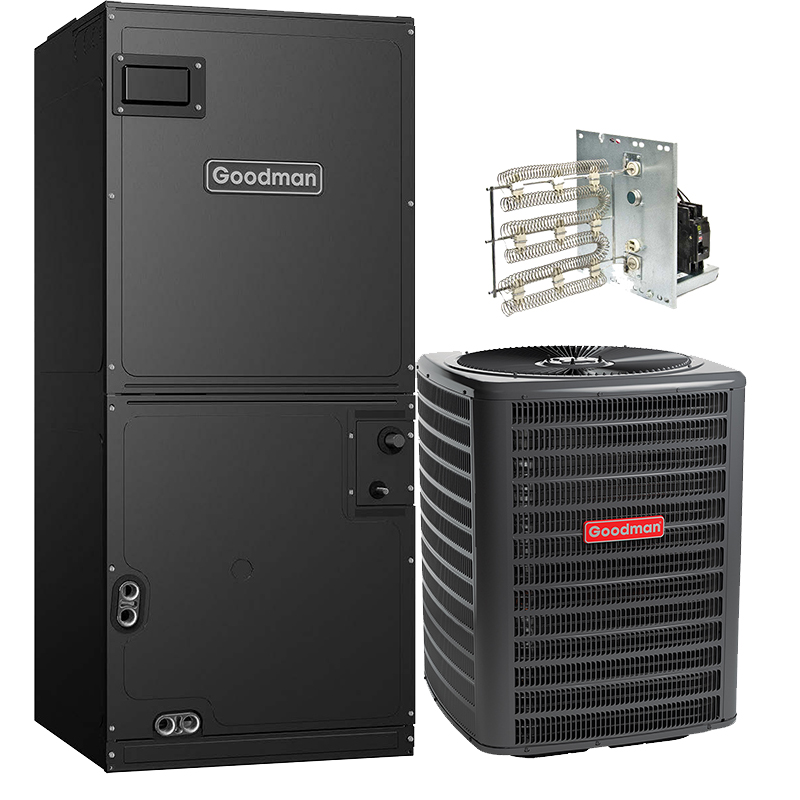
Goodman 3 Ton 17.2 SEER2 Two Stage Variable Speed Heat Pump Split System
View on AC Direct see your lowest price →Check current price on AC Direct →
Key features
- 17.2 SEER2 two-stage heat pump rated for 3-ton (approximately 36,000 BTU) applications
- Two-stage compressor reduces runtime noise and improves humidity removal versus single-stage units
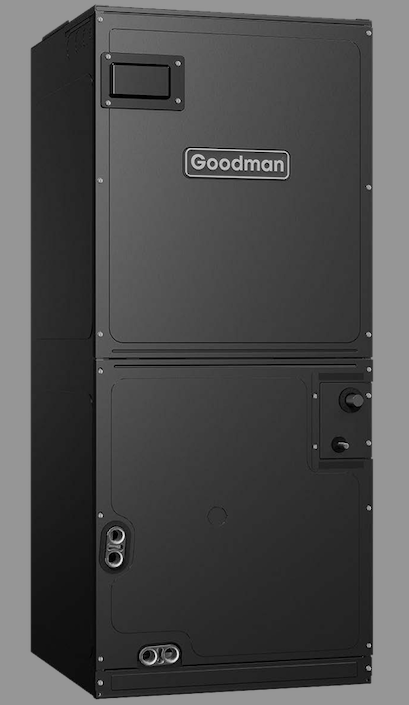
- Variable-speed air handler compatibility for precise airflow and improved filtration performance
- Goodman ComfortBridge technology supports communicating system diagnostics when paired with compatible controls
- Designed for R-410A refrigerant (verify refrigerant spec with installer before purchase given ongoing industry transitions)
- 10-year parts limited warranty and lifetime compressor limited warranty when registered within 60 days of installation
About this system
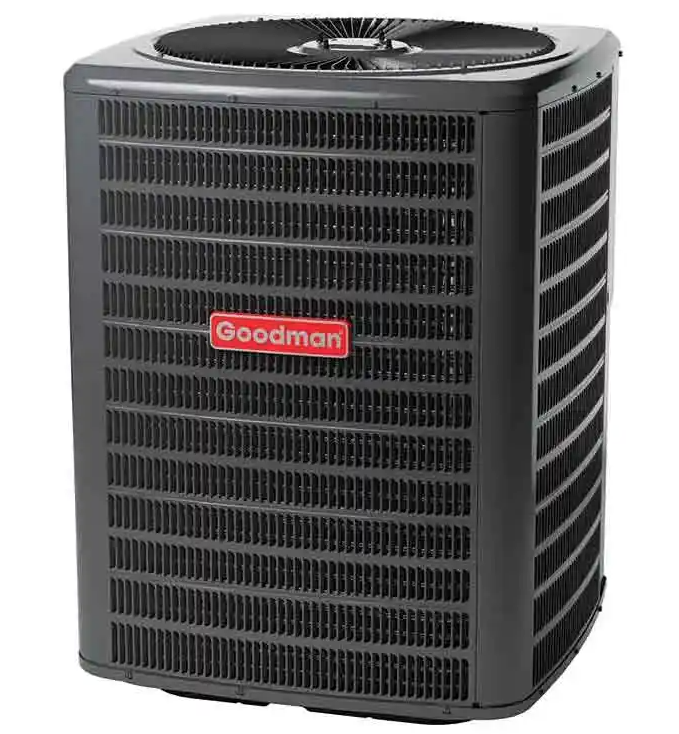
The Goodman GSZC703610 is a 3-ton, 17.2 SEER2 two-stage heat pump split system designed for homeowners who want genuine efficiency gains over baseline equipment without paying premium-brand prices. Two-stage operation means the compressor runs at a lower capacity most of the time, cycling to full output only when outdoor temperatures demand it. That translates to longer, steadier run cycles, better humidity control, and quieter operation compared to a single-stage unit of the same tonnage. A variable-speed air handler works in tandem to fine-tune airflow, which also helps with comfort and filtration effectiveness.
At 17.2 SEER2, this system sits in the upper-mid efficiency tier. It will qualify for federal tax credits under the Inflation Reduction Act (verify current thresholds with a tax professional), and it should deliver meaningful savings over a standard 14 SEER2 replacement in climates with long cooling seasons or moderate heating needs. Heat pump operation is most cost-effective where winter temperatures stay above roughly 30 to 35 degrees Fahrenheit; in colder climates an electric or gas backup strip or furnace is still needed. This system is well suited to homes in the Southeast, Mid-Atlantic, and Pacific Coast regions where a heat pump carries most of the seasonal load.
The Goodman GSZC703610 delivers real two-stage comfort and solid efficiency at a price point 15 to 25 percent below comparable Trane, Carrier, and Lennox units, making it one of the stronger value propositions in the upper-mid efficiency heat pump category. The trade-off is a documented history of component-level failures around year 7 and beyond, and compressor longevity that tends to lag premium brands. If you invest in a quality installation and keep up with maintenance, this system can perform well for a decade or more; if you cut corners on either, those savings can erode quickly.
Overall score is the average of the five ratings above.
What we like
- Purchase price is typically 15 to 25 percent lower than Trane, Carrier, or Lennox equivalents at similar efficiency
- Two-stage operation provides noticeably better humidity control and steadier indoor temperatures than single-stage alternatives
- 17.2 SEER2 rating positions it for federal tax credit eligibility and lower monthly energy bills in appropriate climates
- Lifetime compressor limited warranty (when registered) is a meaningful coverage commitment for a value-tier brand
- Parts availability is broad nationwide, and most independent technicians are familiar with Goodman equipment
Trade-offs
- Compressor lifespan averages 10 to 14 years versus 15 to 20 years for premium-brand compressors, according to documented failure patterns
- Dual-run capacitors are the most commonly reported failure point, typically surfacing in years 5 to 10 and costing $300 to $600 to repair
- Evaporator coil leaks appear in a meaningful share of owner reviews, potentially adding significant repair costs outside the warranty window
- A minority of owners have reported refrigerant leaks within the first year, most often traced to install or factory charge issues, underscoring how heavily performance depends on installation quality
What homeowners and pros say about Goodman
Homeowners who post about the Goodman GSZC703610 and similar two-stage units tend to split along a familiar line: those who had a careful installation and kept up with maintenance report solid comfort and reasonable energy bills through the first several years, while those who ran into problems often point to issues that emerged around year 7 or later. On ConsumerAffairs, where the format attracts complaint-heavy feedback, Goodman scores roughly 2.5 out of 5, with recurring mentions of repair costs climbing after the initial warranty period. Google dealer reviews land higher, around 3.8 out of 5 across multiple locations, where affordability is the most commonly praised attribute. That gap between the two scores is telling: owners who got competitive pricing and a solid install tend to be satisfied; those who faced component failures without a strong service relationship are less so.
HVAC technicians who work on Goodman equipment regularly describe a straightforward picture. Dual-run capacitors are the most commonly replaced part, typically a low-cost fix in the $300 to $600 range, but one that comes up with some regularity in older units. Evaporator coil leaks are a more serious documented concern, noted in a meaningful share of reviews, and compressor longevity on Goodman two-stage units tends to average 10 to 14 years rather than the 15 to 20 years that premium-brand compressors can reach. A minority of owners have also reported refrigerant leaks within the first year, which technicians attribute almost universally to installation or factory charge problems rather than a manufacturing defect in the unit itself. The consistent professional advice is that this system can deliver genuine value, but only when the installation is done right from the start.
Sources: ConsumerAffairs Goodman owner reviews, AHRI Directory of Certified Product Performance, U.S. DOE appliance and equipment efficiency standards, Goodman product specification sheets.
What it costs to run
At 17.2 SEER2, cooling this 3-ton system for a typical 1200-hour cooling season at the U.S. average electricity rate of $0.17/kWh works out to roughly $427 per year in cooling, about $121 less per year than a minimum-efficiency 13.4 SEER2 unit of the same size. Your real cost depends on your climate and local rate.
Method: (36,000 BTU/hr ÷ 17.2 SEER2) × 1200 hours ÷ 1000 × $0.17/kWh. Rate source: U.S. EIA average; cooling hours: moderate-climate estimate.
How it compares
| Brand | Comparable model | SEER2 | Stage | Price position |
|---|---|---|---|---|
| Goodman | GSZC703610 | 17.2 | two-stage | Value pick |
| Carrier | Infinity 18VS (25VNA8) | 18+ | variable | Typically 15 to 25 percent more than the Goodman |
| Trane | XV18 (4TWV8) | 18+ | variable | Typically 15 to 25 percent more than the Goodman |
| Lennox | XP17 series | 17+ | two-stage | Typically 15 to 25 percent more than the Goodman |
Competitor rows are comparable single-stage units at similar efficiency; price is relative position, not a quote.
Questions about this system
Does this system qualify for the federal heat pump tax credit?
At 17.2 SEER2, the GSZC703610 is positioned to meet the efficiency thresholds for the federal Inflation Reduction Act tax credit, which can be up to $2,000 for qualifying heat pumps. You should confirm current IRS requirements and your specific tax situation with a qualified tax professional before purchasing, as rules and income limits can change.
How important is installer quality with a Goodman system?
Critically important. Technicians consistently cite installation as the single biggest factor in how long a Goodman unit lasts and how reliably it performs. Documented first-year refrigerant leaks in some units are most often traced back to improper charging or line set connections during installation, so choosing a licensed, experienced HVAC contractor is not optional with this brand.
What should I expect from the warranty, and do I need to register it?
Goodman offers a 10-year parts limited warranty and a lifetime compressor limited warranty on this unit, but both require registration within 60 days of installation. Without registration, coverage typically drops to a 5-year parts warranty and a 5-year compressor warranty, so completing the online registration promptly is essential.
What are the most likely repairs I should budget for over the life of this system?
Based on documented failure patterns, dual-run capacitors are the most common repair, usually running $300 to $600 and often showing up in years 5 through 10. Evaporator coil leaks are a secondary concern that can be more costly. The compressor itself tends to average 10 to 14 years on Goodman equipment, so planning for a potential compressor replacement or full system swap around that window is prudent.
Will this heat pump handle heating alone in cold climates, or do I need backup heat?
Heat pumps become progressively less efficient below about 35 degrees Fahrenheit, and most lose meaningful capacity below 25 degrees. In climates with sustained cold winters, this system should be paired with an electric auxiliary heat strip or a gas furnace in a dual-fuel configuration. In the Southeast, Mid-Atlantic, and Pacific Coast regions with milder winters, it can handle most of the heating load on its own.
Specifications
| Cooling capacity | 3 Ton |
| Efficiency | 17.2 SEER2 |
| Model | GSZC703610 |