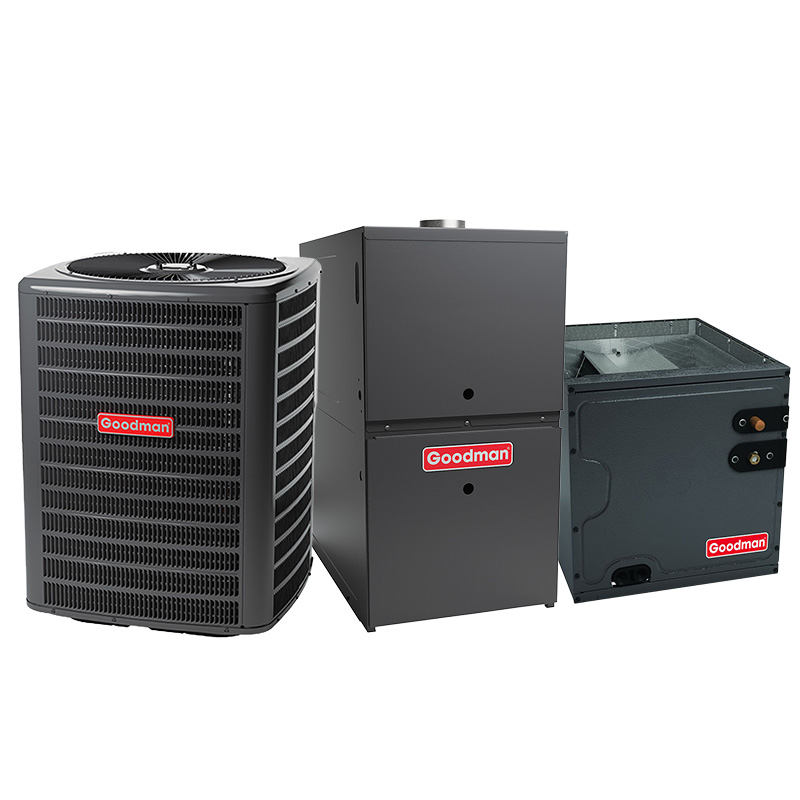
Goodman 3 Ton 17 SEER2 Dual Fuel Hybrid Heat Pump System – Two Stage Heat Pump & Two Stage Variable Speed 60000 BTU Gas Furnace, 80% AFUE, Upflow, R32
View on AC Direct see your lowest price →Check current price on AC Direct →
Key features
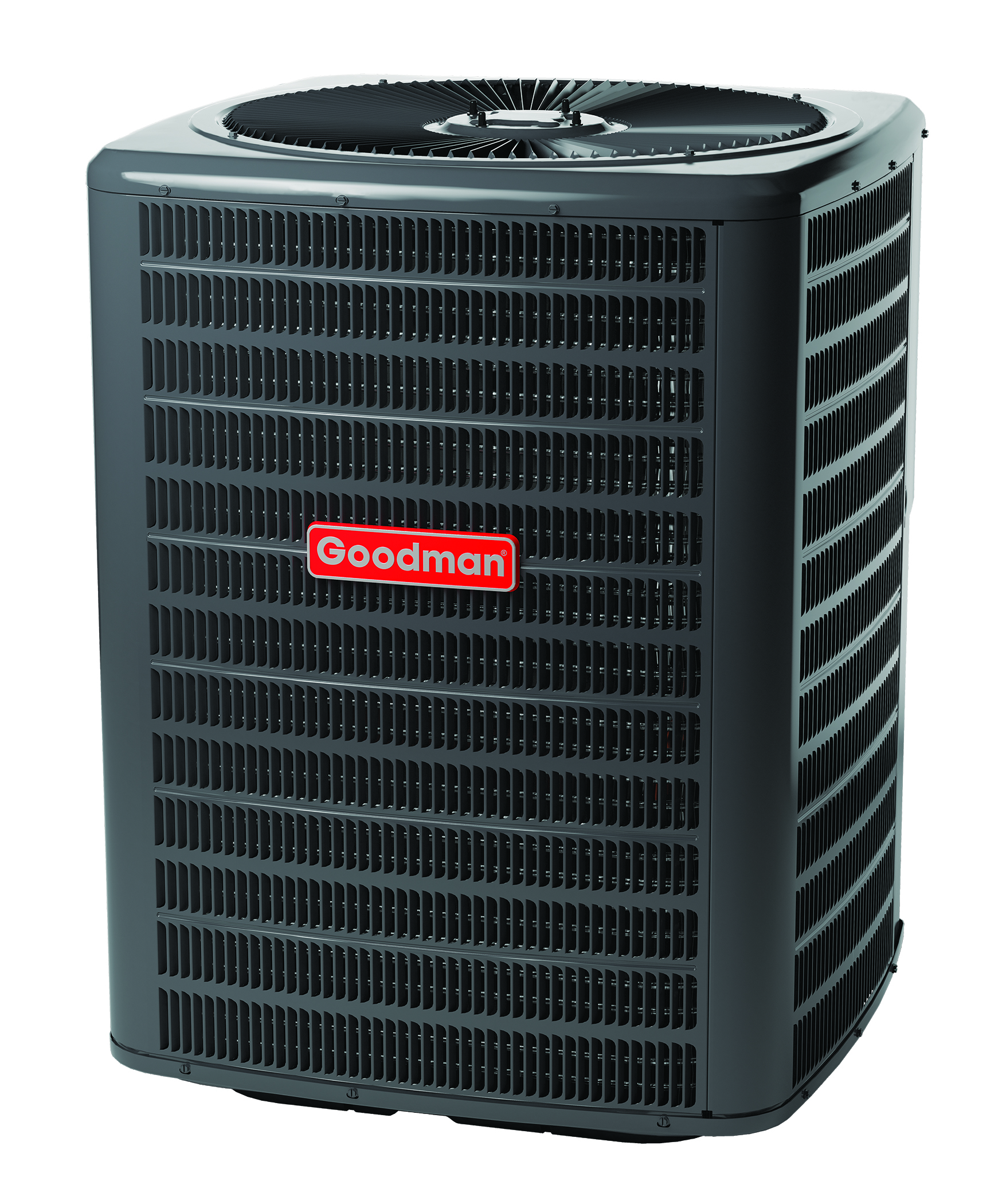
- 17 SEER2 two-stage R-32 heat pump with automatic dual-fuel switchover to gas
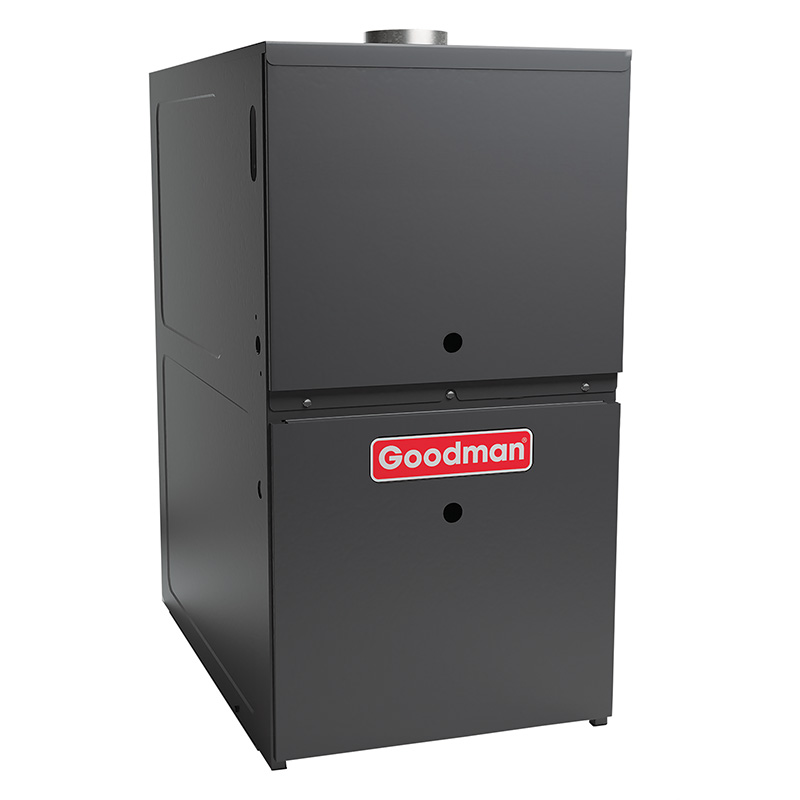
- 60,000 BTU upflow gas furnace, 80% AFUE, two-stage variable-speed operation
- R-32 refrigerant: lower global warming potential than R-410A, requires certified technician handling
- Variable-speed ECM blower for quieter operation and improved humidity removal
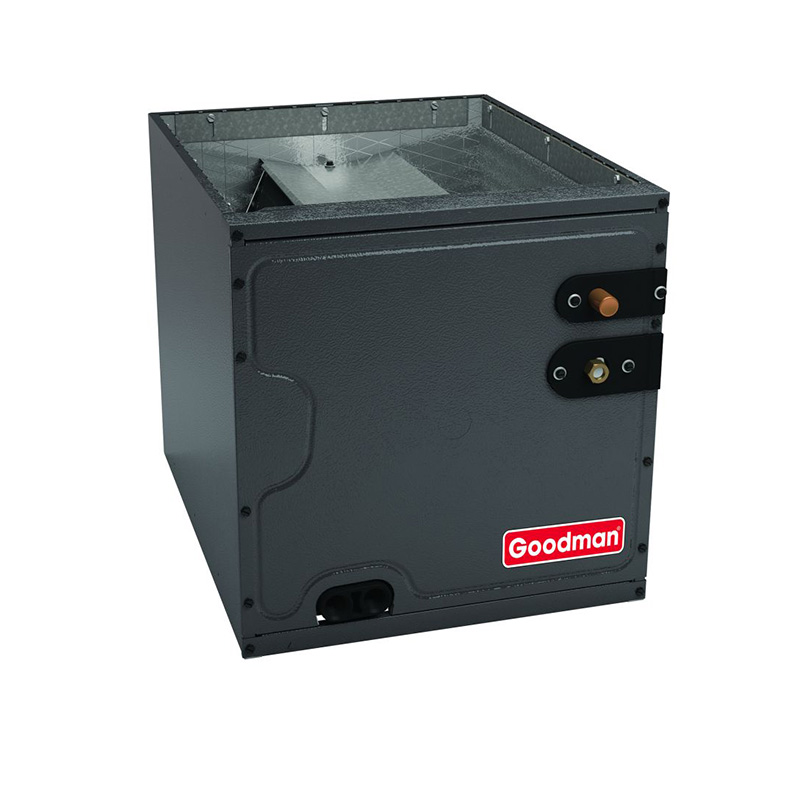
- Upflow configuration designed for basement or lower-level mechanical closet installations
- Priced approximately 15 to 25 percent below comparable Carrier, Trane, and Lennox dual-fuel systems
About this system
The Goodman 3-Ton 17 SEER2 Dual Fuel Hybrid Heat Pump system pairs a two-stage R-32 heat pump with a two-stage, variable-speed 60,000 BTU upflow gas furnace rated at 80% AFUE. The hybrid setup is the defining feature here: the system automatically switches between electric heat pump operation and gas furnace heat depending on outdoor temperatures and fuel costs, which is particularly useful in climates that see genuine cold stretches but also mild shoulder seasons. At 17 SEER2, this unit clears the federal minimum with meaningful headroom, though it falls short of the 18-plus SEER2 tier where the most dramatic utility bill reductions begin.
Two-stage compression on both the heat pump and furnace means the system runs at a lower capacity most of the time, cycling less aggressively than a single-stage unit and producing more consistent indoor temperatures. The variable-speed indoor blower adds another layer of comfort control, moving air more quietly and extracting more humidity on low speed. R-32 refrigerant carries a lower global warming potential than the R-410A it replaces and is increasingly standard in new equipment, though it does require technicians who are certified to handle it. The upflow configuration suits homes with a basement or mechanical closet where the air handler sits below the living space and discharges upward into overhead ductwork.
This system is a reasonable fit for homeowners in mixed-fuel markets who want the efficiency advantages of a heat pump without surrendering the reliability of gas backup on very cold days, and who are working with a budget that rules out premium-brand alternatives at similar specs. The trade-off is accepting Goodman’s known quality variability and a compressor that, on average, has a shorter service life than comparable Carrier, Trane, or Lennox compressors.
This Goodman dual-fuel system delivers a real efficiency and comfort step up over single-stage equipment at a price that undercuts the major premium brands by a measurable margin. The hybrid heat pump concept is genuinely well suited to mixed-climate homeowners, but Goodman's documented issues with coil leaks, capacitor failures, and shorter-than-premium compressor lifespans mean the installed cost savings can erode if you draw unlucky components or a rushed installation. It earns its place in the market as a budget-conscious choice, not an heirloom purchase.
Overall score is the average of the five ratings above.
What we like
- Hybrid dual-fuel logic reduces heating costs by favoring the heat pump during moderate cold and switching to gas only when needed
- Two-stage operation on both heat pump and furnace delivers more even temperatures and quieter cycling than single-stage alternatives
- R-32 refrigerant is forward-looking, already compliant with tightening environmental standards
- Variable-speed ECM blower improves dehumidification and reduces fan noise on low-demand days
- Factory price point 15 to 25 percent below Carrier, Trane, and Lennox equivalents, leaving room in budget for quality installation
Trade-offs
- Compressor longevity averages 10 to 14 years versus 15 to 20 years for premium-brand compressors, so total ownership cost gap narrows over time
- Dual-run capacitors are the most frequently reported failure point, typically requiring a service call within the first decade
- Evaporator coil leaks appear in a meaningful share of owner reviews and can be costly to address out of warranty
- A minority of owners report refrigerant leaks within the first year, usually tied to installation quality rather than the unit itself, underlining how heavily performance depends on the installing contractor
What homeowners and pros say about Goodman
Homeowners who leave reviews for Goodman equipment in channels like ConsumerAffairs tend to be those with complaints, which helps explain that platform’s roughly 2.5 out of 5 score for the brand. The recurring frustration there is repair costs that climb after around year seven, with capacitor failures and evaporator coil leaks appearing as the most common grievances. Google dealer reviews tell a more balanced story, averaging around 3.8 out of 5 across hundreds of location-level reviews, where the most consistent praise is that Goodman equipment costs meaningfully less than comparable Carrier, Trane, or Lennox systems without a proportional drop in day-one performance. The gap in perception between those two channels reflects who is motivated to post: buyers who paid less upfront and got years of trouble-free service rarely write reviews, while those facing a $500 capacitor call in year eight often do.
HVAC technicians who work on Goodman units regularly will point out that dual-run capacitors are the single most common service item across the brand’s line, typically a low-cost fix but one that needs prompt attention to avoid secondary compressor stress. Coil leaks are a real concern in a subset of units, and technicians note that Goodman compressors tend to reach end of life in the 10-to-14-year range rather than the 15-to-20-year range associated with premium brands. On this specific dual-fuel system, pros also emphasize that proper commissioning of the switchover logic and refrigerant charge on the R-32 circuit is critical: the brand’s reputation for performance variability is tied more to inconsistent installation than to the equipment itself. A careful installer makes a measurable difference in how this unit performs and how long it lasts.
Sources: ConsumerAffairs Goodman owner reviews, AHRI Directory of Certified Product Performance, U.S. DOE appliance and equipment efficiency standards, Goodman product specification sheets.
What it costs to run
At 17 SEER2, cooling this 3-ton system for a typical 1200-hour cooling season at the U.S. average electricity rate of $0.17/kWh works out to roughly $432 per year in cooling, about $116 less per year than a minimum-efficiency 13.4 SEER2 unit of the same size. Your real cost depends on your climate and local rate.
Method: (36,000 BTU/hr ÷ 17 SEER2) × 1200 hours ÷ 1000 × $0.17/kWh. Rate source: U.S. EIA average; cooling hours: moderate-climate estimate.
How it compares
| Brand | Comparable model | SEER2 | Stage | Price position |
|---|---|---|---|---|
| Goodman | 3-Ton 17 SEER2 Dual Fuel Hybrid Two-Stage R-32 (this system) | 17 | Two-stage heat pump, two-stage variable-speed furnace | Value pick |
| Carrier | Performance Series Dual Fuel (25HPB6 heat pump with 59TP6 furnace) | 16-17 | Two-stage | Typically 15 to 25 percent more than this Goodman system |
| Trane | XR17 Dual Fuel System (XR17 heat pump with S9X2 furnace) | 17 | Two-stage | Typically 15 to 25 percent more than this Goodman system |
| Lennox | Merit Series Dual Fuel (14HPX heat pump with ML196 furnace) | 16-17 | Two-stage | Typically 15 to 25 percent more than this Goodman system |
Competitor rows are comparable single-stage units at similar efficiency; price is relative position, not a quote.
Questions about this system
At what outdoor temperature does this system switch from heat pump to the gas furnace?
The switchover point is configurable during commissioning, but most installers set it somewhere between 30 and 35 degrees Fahrenheit, where the heat pump's efficiency advantage over gas begins to shrink. Your installing technician should program this threshold based on your local utility rates and climate to maximize savings.
Does R-32 refrigerant require anything special from my HVAC technician?
Yes. R-32 is mildly flammable (A2L classification), so technicians need specific certification and appropriate equipment to service it safely. Most established HVAC companies in major markets are already equipped, but it is worth confirming before scheduling service in rural areas.
What does Goodman's warranty actually cover on this system, and are there conditions I need to meet?
Goodman typically offers a 10-year parts warranty when the equipment is registered within a specified window after installation, dropping to a shorter term if you miss registration. The warranty covers parts, not labor, so a compressor replacement under warranty still involves a potentially significant service bill. Confirm the exact terms on Goodman's current warranty documentation, as coverage details can change.
My house has an existing upflow gas furnace in the basement. Can this system use the same ductwork?
In many cases yes, provided the existing duct system was properly sized for 3-ton airflow, which is roughly 1,200 CFM. A load calculation and duct assessment by your installer is worth doing before assuming compatibility, since undersized ductwork will reduce comfort and efficiency regardless of how capable the equipment is.
How does the 80% AFUE furnace compare to high-efficiency options, and should I upgrade?
An 80% AFUE furnace converts 80 cents of every dollar of gas into usable heat. High-efficiency alternatives at 96 to 98% AFUE would save an additional 16 to 18 percent on gas heating costs, but because this is a hybrid system that relies on the furnace primarily during the coldest days, the annual furnace runtime is lower than in a gas-only system. The payback period for upgrading to a higher AFUE furnace in a hybrid setup is therefore longer, making 80% a reasonable choice for many buyers in this configuration.
Specifications
| Cooling capacity | 3 Ton |
| Efficiency | 17 SEER2 |
| Furnace output | 60000 BTU |
| Furnace efficiency | 80% AFUE |
| Configuration | Upflow |
| Refrigerant | R-32 |