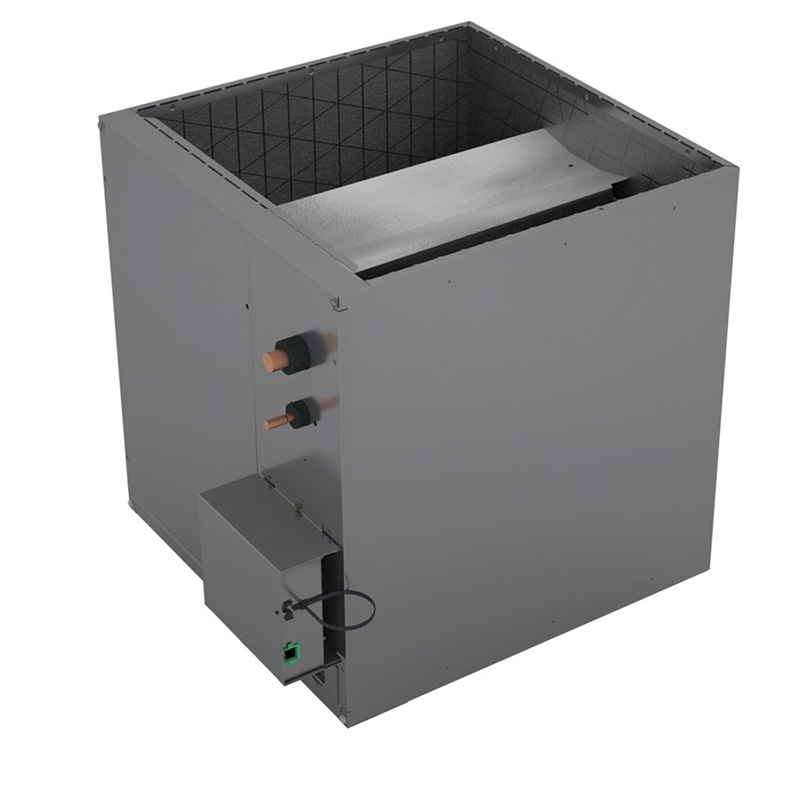
Goodman 3 Ton 24-1/2" Wide Cased R32 Evaporator Coil With Internal EEV (CAPEA3626D3)
View on AC Direct see your lowest price →Check current price on AC Direct →
Key features
- 3-ton capacity in a 24-1/2" wide cased cabinet for standard air handler fitment
- R-32 refrigerant compatible, supporting lower global warming potential versus R-410A systems
- Internal electronic expansion valve (EEV) for precise refrigerant flow control without a field-installed TXV
- Cased design with pre-installed insulation for faster, cleaner installation
- Designed to pair with compatible Goodman R-32 condensing units as part of a matched system
- Suitable for both new installations and direct replacement of same-footprint evaporator coils
About this system
The Goodman CAPEA3626D3 is a 3-ton cased evaporator coil designed for use with R-32 refrigerant systems. At 24-1/2 inches wide, it fits standard air handler cabinets and pairs with compatible Goodman and select other-brand condensing units that run R-32. The internal electronic expansion valve (EEV) is a meaningful feature at this price point: it modulates refrigerant flow more precisely than a fixed orifice or TXV, supporting better part-load efficiency and more consistent dehumidification. That said, the coil itself carries no standalone SEER2 rating since it is a component, not a complete system.
This coil suits homeowners who are upgrading an existing air handler to R-32 compatibility, replacing a failed evaporator coil in a matching cabinet size, or building out a new split system around an R-32 condenser. R-32 has a lower global warming potential than R-410A and is increasingly the refrigerant of choice for new residential equipment, so this coil positions the system for regulatory compliance going forward. The cased design simplifies installation compared to uncased coils, and the internal EEV eliminates the need for a field-installed expansion device.
Goodman positions this as a value-tier component, priced noticeably below comparable coils from Carrier, Trane, and Lennox. That pricing is attractive, but the brand’s track record makes installation quality especially important: a poorly charged or poorly sealed coil is one of the documented failure modes in owner feedback, and a well-executed installation will do more for long-term performance than any single spec on the sheet.
The CAPEA3626D3 is a competitively priced R-32 evaporator coil that delivers a useful feature set, including an internal EEV, at a cost well below premium-brand equivalents. Its value case is real, but Goodman's documented history of evaporator coil leaks and above-average repair frequency after year 7 means buyers should weigh the upfront savings against the possibility of higher long-term maintenance costs. Professional installation and a careful leak check at startup are not optional extras with this coil.
Overall score is the average of the five ratings above.
What we like
- Priced 15 to 25 percent below comparable Carrier, Trane, and Lennox evaporator coils
- Internal EEV provides more precise refrigerant metering than fixed-orifice alternatives at this price tier
- R-32 refrigerant compatibility future-proofs the system against anticipated R-410A phase-down
- Cased construction simplifies installation and reduces the chance of duct bypass leaks
- Designed as part of a matched Goodman system, reducing compatibility guesswork when pairing with a Goodman condenser
Trade-offs
- Evaporator coil leaks appear as a documented failure mode in a meaningful share of Goodman owner reports
- A minority of owners report refrigerant leaks in the first year, typically linked to installation or initial charge issues
- No standalone efficiency rating available for this coil; system SEER2 depends on the paired condenser and air handler
- Goodman's overall repair frequency climbs after roughly year 7, which is a relevant consideration for a coil that is expensive to access and replace
What homeowners and pros say about Goodman
Homeowners who post about Goodman equipment tend to split into two camps. Those who had a clean installation at a fair price and have stayed on top of maintenance often rate their experience around the 3.8 out of 5 range seen across Google dealer reviews, where affordability is the praise that comes up most often. Those who have run into problems, particularly repair bills that pile up after year 7, are heavily represented on ConsumerAffairs, which averages closer to 2.5 out of 5. That gap is worth understanding: ConsumerAffairs skews toward frustrated owners, but the volume and consistency of complaints about rising repair costs in the second half of a system’s life are hard to dismiss.
For an evaporator coil specifically, two Goodman failure modes carry direct relevance. Evaporator coil leaks show up in a meaningful share of owner reviews, making this the component where Goodman’s quality control concerns are most pointed. A separate but related issue is refrigerant leaks in the first year, which technicians and owners both attribute primarily to installation quality rather than the coil itself. HVAC professionals who work with Goodman regularly note that the brand performs closest to its potential when the installer is meticulous about leak testing, refrigerant charge, and airflow setup. The internal EEV on this coil is a genuine value-add at the price, and R-32 compatibility keeps the system current, but neither feature changes the underlying reality that installation quality is the single biggest variable in how this coil performs and how long it lasts.
Sources: ConsumerAffairs Goodman owner reviews, AHRI Directory of Certified Product Performance, U.S. DOE appliance and equipment efficiency standards, Goodman product specification sheets.
How it compares
| Brand | Comparable model | SEER2 | Stage | Price position |
|---|---|---|---|---|
| Goodman | CAPEA3626D3 | N/A (component) | Compatible with single, two-stage, and variable systems depending on paired condenser | Value pick |
| Carrier | Infinity Series CNPVP3617ALA evaporator coil | N/A (component) | Compatible with variable-speed Infinity systems | Notably higher than Goodman, reflecting Carrier's premium brand positioning and stronger coil reliability record |
| Trane | Trane 4TXCB003DS3 Coil (XR/XL series compatible) | N/A (component) | Compatible with single and two-stage Trane condensers | Higher than Goodman, mid-to-upper tier for residential evaporator coils |
| Lennox | Lennox C33 Series evaporator coil | N/A (component) | Compatible with Merit and Elite series condensers | Higher than Goodman, with Lennox commanding a moderate premium over value-tier brands |
Competitor rows are comparable single-stage units at similar efficiency; price is relative position, not a quote.
Questions about this system
Will this coil work with my existing non-Goodman air handler if the cabinet size matches?
Possibly, but it is not guaranteed. The CAPEA3626D3 is designed and warranted as part of a matched Goodman system, and using it with a non-Goodman air handler can void the warranty and may cause compatibility issues with the EEV control wiring. Confirm with a licensed technician before mixing brands.
Why does R-32 matter, and is it harder to work with than R-410A?
R-32 has roughly one-third the global warming potential of R-410A and is being adopted widely as regulators tighten refrigerant standards. It is mildly flammable (A2L classification), which means technicians need to follow specific handling procedures, but standard EPA 608 certification covers it and most experienced technicians are already familiar with A2L protocols.
What condenser unit does this coil pair with?
Goodman specifies matched condensing units for R-32 coils in their product literature, and this coil is intended for use with compatible Goodman R-32 condensers. Check Goodman's current matchup guide or ARI certificate directory to confirm the specific condenser and air handler combinations that qualify for rated efficiency.
How concerned should I be about evaporator coil leaks with Goodman equipment?
Coil leaks appear frequently enough in owner reviews to be a genuine concern rather than an isolated complaint. The risk is highest when installation quality is poor, particularly if refrigerant charge is off or if coil connections are not properly sealed. Insisting on a nitrogen pressure test and a careful leak check at startup reduces, though does not eliminate, this risk.
What does the internal EEV do, and does it replace a TXV?
An electronic expansion valve modulates refrigerant flow in response to real-time system conditions, typically delivering more precise control than a thermostatic expansion valve and certainly more than a fixed orifice. For this coil, the EEV is factory-installed, so no separate field-installed TXV is needed, which saves parts cost and reduces one more potential leak point.
Specifications
| Cooling capacity | 3 Ton |
| Refrigerant | R-32 |
| Model | GXV6SS2410 |