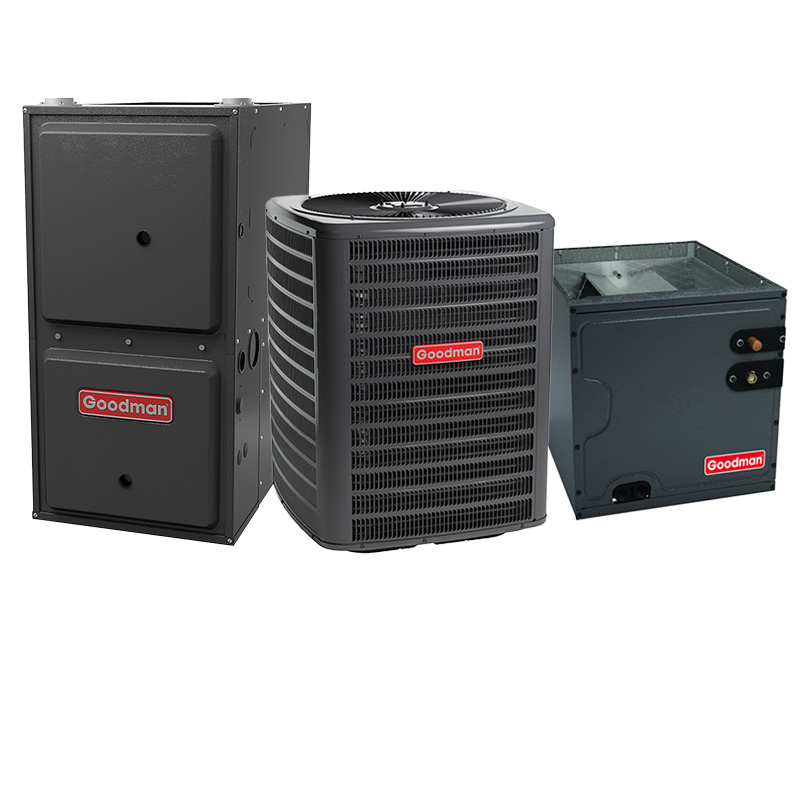
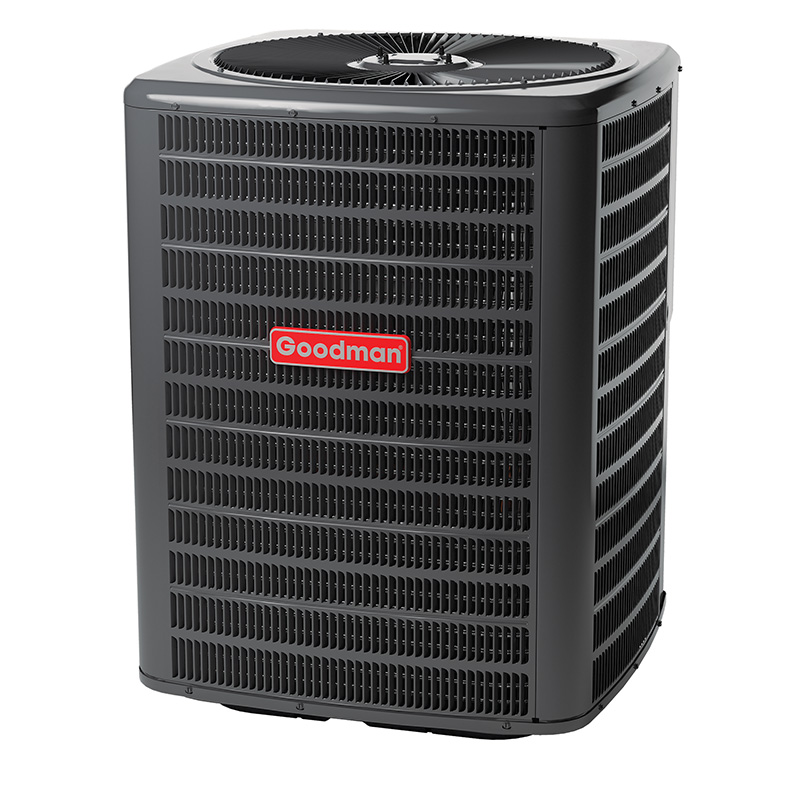
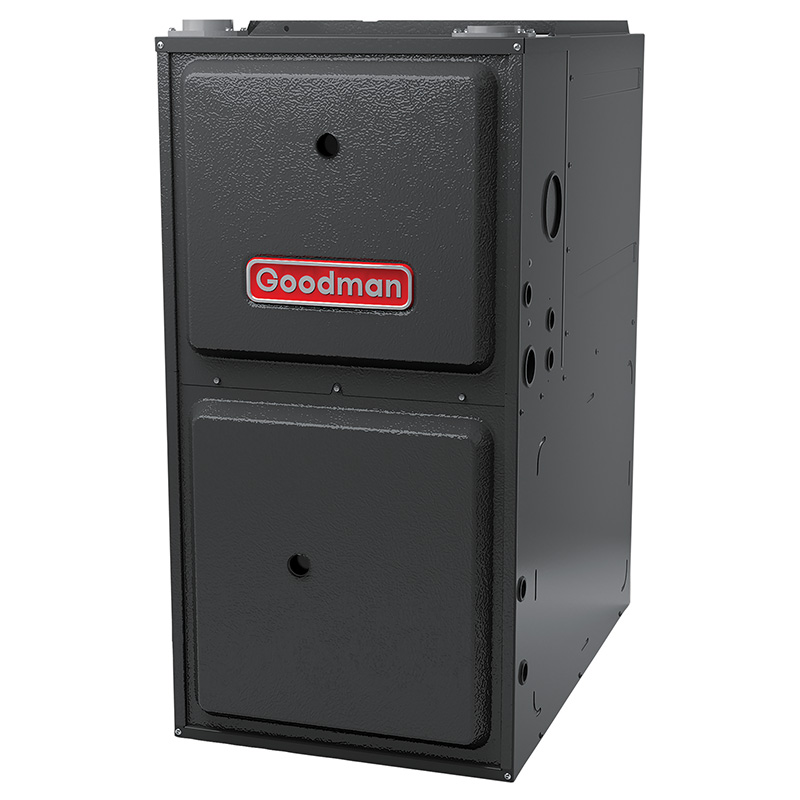
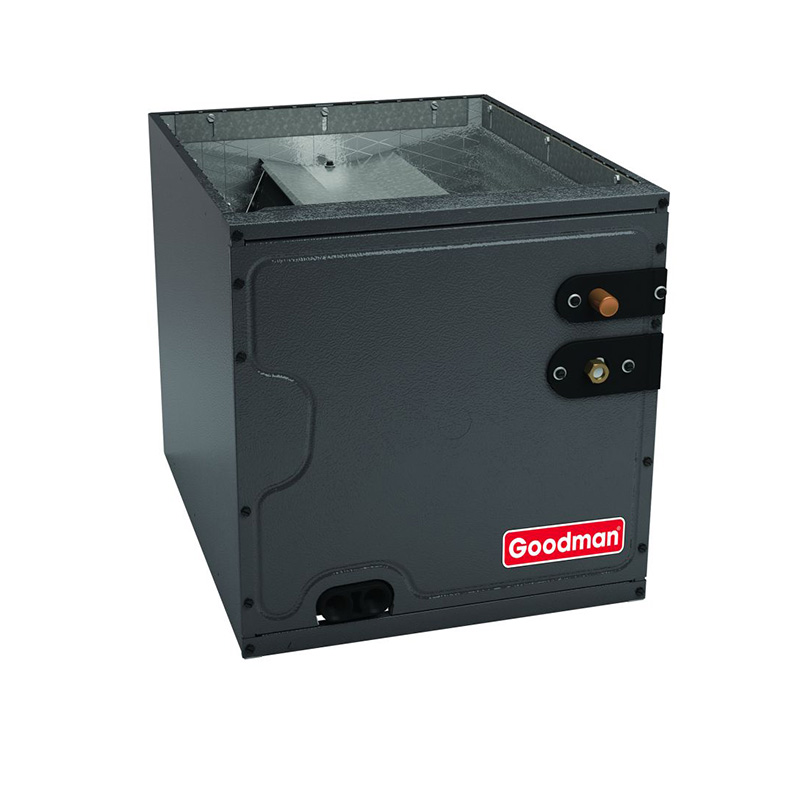
Goodman 3 Ton 15.2 SEER2 R32 AC System with 80,000 BTU 96% AFUE Gas Furnace – California & Colorado Ultra Low NOx, Upflow, Multi-Speed ECM
View on AC Direct see your lowest price →Check current price on AC Direct →
Key features
- 15.2 SEER2 cooling efficiency meets 2023 federal minimum standards for most northern regions
- 96% AFUE gas furnace with Ultra Low NOx burner certified for California and Colorado
- R-32 refrigerant with roughly 68% lower global warming potential than R-410A
- Multi-speed ECM blower motor improves part-load efficiency and dehumidification
- Upflow configuration designed for basement or ground-level utility closet installs
- Factory-matched system ensures rated efficiency and simplifies equipment selection
About this system
The Goodman 3-ton, 15.2 SEER2 air conditioner paired with an 80,000 BTU, 96% AFUE gas furnace is a factory-matched split system built for homes in the 1,500 to 2,200 square foot range that need solid year-round comfort without the premium pricing of Trane, Lennox, or Carrier. The upflow configuration suits installations where the furnace sits in a basement or utility closet and pushes conditioned air upward into the duct system. The multi-speed ECM (electronically commutated motor) blower is a genuine upgrade over single-speed PSC motors, running at lower speeds during part-load conditions to reduce electricity use and humidity better than a system that cycles fully on or off.
R-32 refrigerant is a meaningful spec worth understanding. It has a global warming potential roughly 68 percent lower than the R-410A it replaces, and its single-component makeup makes it easier to recover and recharge in the field. The California and Colorado Ultra Low NOx compliance means the furnace meets the strictest nitrogen oxide emission limits in the country, a legal requirement in those states and a sign of a cleaner combustion design. At 96% AFUE, almost all of the fuel burned converts to usable heat, which matters most in climates where the furnace runs hard from November through March. The 15.2 SEER2 rating sits at the federal minimum efficiency tier for most northern climate zones, so it meets code but leaves headroom on the table compared to 17 or 18 SEER2 systems if long-term energy savings are the priority.
This system gives budget-conscious homeowners a code-compliant, reasonably efficient matched set at a price point meaningfully below comparable Carrier, Trane, or Lennox configurations. The 96% AFUE furnace and ECM blower are genuine value additions, but buyers should go in knowing that Goodman's compressor longevity and coil reliability lag behind premium brands, and that install quality will determine more than almost anything else how long this system performs well.
Overall score is the average of the five ratings above.
What we like
- Priced 15 to 25 percent below comparable Carrier, Trane, and Lennox matched systems
- 96% AFUE furnace converts nearly all fuel to usable heat, reducing monthly gas bills in cold climates
- ECM multi-speed blower runs more quietly and efficiently than single-speed PSC alternatives
- R-32 refrigerant is lower-GWP and single-component, making future service simpler
- Ultra Low NOx certification means the furnace is legal and ready for California and Colorado air quality rules
Trade-offs
- Compressors average 10 to 14 years versus 15 to 20 years on premium brands, meaning earlier replacement costs are realistic
- Dual-run capacitor failures are the most documented issue, typically appearing after several years and costing $300 to $600 to fix
- A meaningful share of owner reviews cite evaporator coil leaks, which are a more expensive and disruptive repair than capacitor swaps
- 15.2 SEER2 is the efficiency floor for many regions, so energy savings versus a 17 or 18 SEER2 system will never materialize
What homeowners and pros say about Goodman
Homeowners who shop Goodman tend to split into two camps once they have lived with the equipment for a few years. Those who had a careful, experienced installer often report years of trouble-free operation and point to the lower upfront cost as money well spent. Those who ran into problems frequently trace them back to installation shortcuts or to one of the brand’s known weak points. Goodman scores around 3.8 out of 5 on Google dealer reviews, where affordability is consistently the most praised attribute. On ConsumerAffairs, the score drops to roughly 2.5 out of 5, though that platform skews toward dissatisfied owners who are motivated to write. The recurring theme in the negative ConsumerAffairs reviews is repair costs climbing noticeably after year seven, which aligns with what HVAC technicians say about the brand’s component lifespan relative to Carrier, Trane, or Lennox.
Among documented failure modes, dual-run capacitor failures are the most commonly reported issue with Goodman equipment and are generally a quick, low-cost fix in the $300 to $600 range when caught early. More consequential are evaporator coil leaks, which show up in a meaningful share of long-term owner reviews and carry a higher repair cost. Compressor longevity is the other honest conversation to have: Goodman compressors average roughly 10 to 14 years in service, compared to 15 to 20 years that premium-brand compressors often achieve. For this specific system, which adds a California and Colorado Ultra Low NOx furnace and an ECM blower motor, HVAC technicians generally view the furnace as the more durable half of the pairing, with the outdoor condensing unit carrying more of the long-term risk.
Sources: ConsumerAffairs Goodman owner reviews, AHRI Directory of Certified Product Performance, U.S. DOE appliance and equipment efficiency standards, Goodman product specification sheets.
What it costs to run
At 15.2 SEER2, cooling this 3-ton system for a typical 1200-hour cooling season at the U.S. average electricity rate of $0.17/kWh works out to roughly $483 per year in cooling, about $65 less per year than a minimum-efficiency 13.4 SEER2 unit of the same size. Your real cost depends on your climate and local rate.
Method: (36,000 BTU/hr ÷ 15.2 SEER2) × 1200 hours ÷ 1000 × $0.17/kWh. Rate source: U.S. EIA average; cooling hours: moderate-climate estimate.
How it compares
| Brand | Comparable model | SEER2 | Stage | Price position |
|---|---|---|---|---|
| Goodman | GSXH503610 + GMVC960804CN (this system) | 15.2 | Single-stage / Multi-speed ECM | Value pick |
| Carrier | Comfort 15 (24ACC636A003 + 59SC5) | 15.2 | Single-stage | Typically 15 to 20 percent higher than this Goodman system |
| Trane | XR15 (4TTR5036J1 + S9X2) | 15.2 | Single-stage | Typically 20 to 25 percent higher than this Goodman system |
| Lennox | Merit 16 (14ACX + ML196E) | 15.2 | Single-stage | Typically 20 to 25 percent higher than this Goodman system |
Competitor rows are comparable single-stage units at similar efficiency; price is relative position, not a quote.
Questions about this system
Is this system actually legal to install in California and Colorado, or do I need to verify that separately?
The Ultra Low NOx designation on the furnace confirms it meets California Air Resources Board and Colorado air quality standards for nitrogen oxide emissions, which are among the strictest in the country. You should still verify local permit requirements with your contractor, but the equipment itself is certified for both states.
What does the R-32 refrigerant change for me as a homeowner?
Day-to-day, very little. R-32 operates similarly to R-410A in a properly installed system. The practical difference shows up during service calls: because R-32 is a single-component refrigerant, a technician can top off a charge without fully recovering the system, which can reduce service labor time and cost compared to blended refrigerants.
How serious are the evaporator coil leak reports I keep seeing in Goodman reviews?
Evaporator coil leaks are a documented failure mode in a meaningful number of Goodman owner reviews, and they are a more involved repair than a capacitor swap, often running into the low thousands of dollars depending on labor rates. Goodman's parts warranty covers the coil if the system is registered, but labor costs are on the homeowner unless a labor warranty is purchased through the installer.
The upflow configuration is listed, but my air handler space might work differently. Can this furnace be converted?
This unit is configured for upflow only, meaning the blower draws air in from the bottom and discharges heated or cooled air upward. It is not convertible to horizontal or downflow without a different furnace model. Confirm your duct layout and equipment closet orientation with your installer before ordering.
Is 15.2 SEER2 going to cost me more on my electric bill compared to a higher-efficiency option?
Compared to a 17 or 18 SEER2 system of the same tonnage, yes, you will use more electricity per hour of cooling. How much that matters depends on how many hours per year your AC actually runs in your climate. In mild northern climates with shorter cooling seasons, the payback period on a higher-efficiency system can stretch to 10 or more years, which may not justify the upfront premium.
Specifications
| Cooling capacity | 3 Ton |
| Efficiency | 15.2 SEER2 |
| Furnace output | 80,000 BTU |
| Furnace efficiency | 96% AFUE |
| Configuration | Upflow |
| Refrigerant | R-32 |