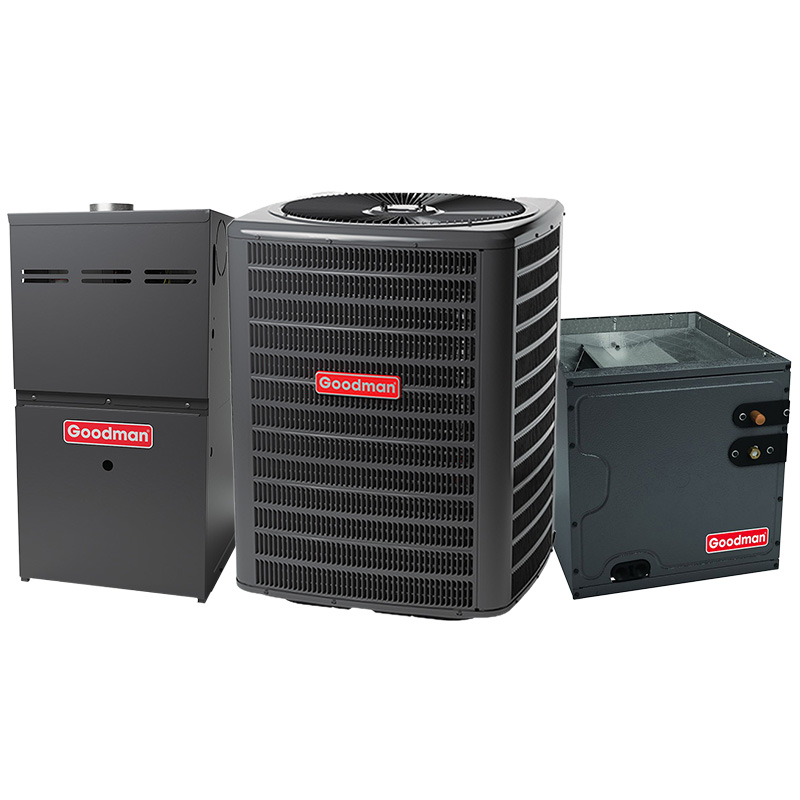
Goodman 3 Ton AC And 100000 BTU 80% AFUE Gas Furnace System | 15.2 SEER2 AC | Multi-Speed ECM Low NOx Furnace | Upflow | R32
View on AC Direct see your lowest price →Check current price on AC Direct →
Key features
- 3-ton AC rated at 15.2 SEER2, meeting current federal minimum efficiency standards
- 100,000 BTU gas furnace at 80% AFUE with multi-speed ECM blower motor
- R-32 refrigerant, a lower-GWP option now widely stocked by HVAC distributors
- Upflow cabinet design for basement and utility-closet installations with overhead duct runs
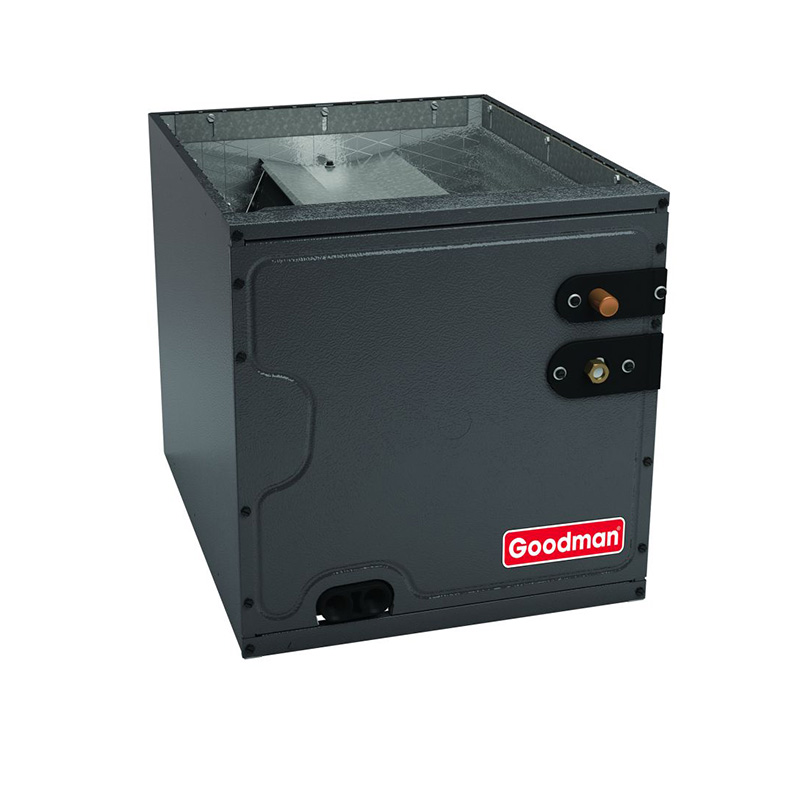
- Factory-matched system helps simplify equipment selection and coil compatibility
- Goodman value-tier pricing, typically 15 to 25 percent below Trane, Lennox, and Carrier equivalents
About this system
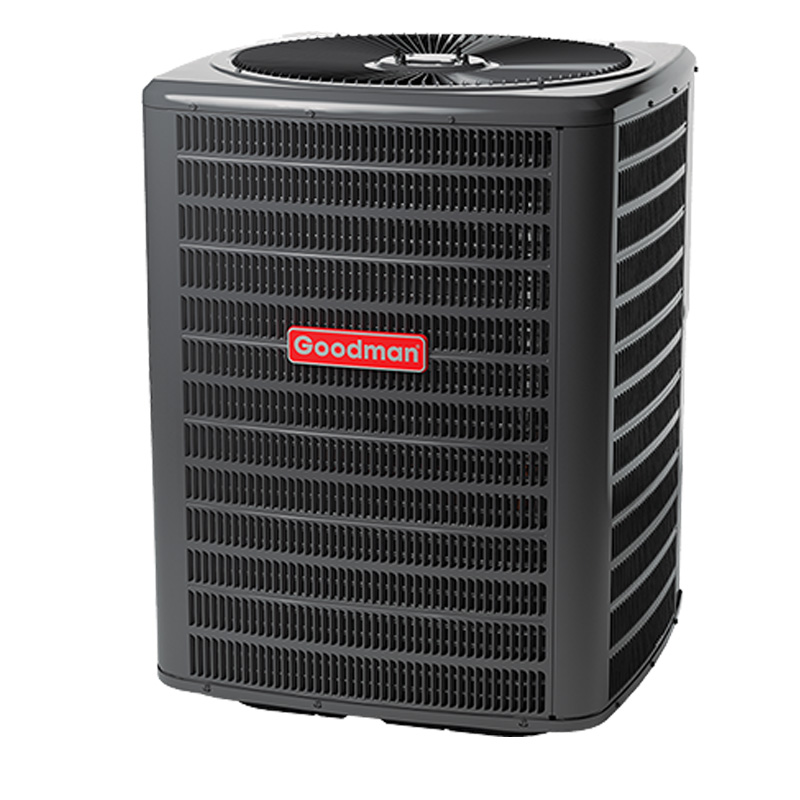
This Goodman bundle pairs a 3-ton, 15.2 SEER2 central air conditioner with a 100,000 BTU, 80% AFUE upflow gas furnace into a single-purchase system sized for homes roughly in the 1,500 to 2,200 square-foot range, depending on climate zone and insulation. The AC side uses R-32 refrigerant, a lower-global-warming-potential option that is becoming the industry standard and is easier for technicians to work with than older blends. At 15.2 SEER2, efficiency sits right at the federal minimum threshold for most U.S. regions, meaning you get compliant, functional cooling without paying a premium for high-efficiency staging.
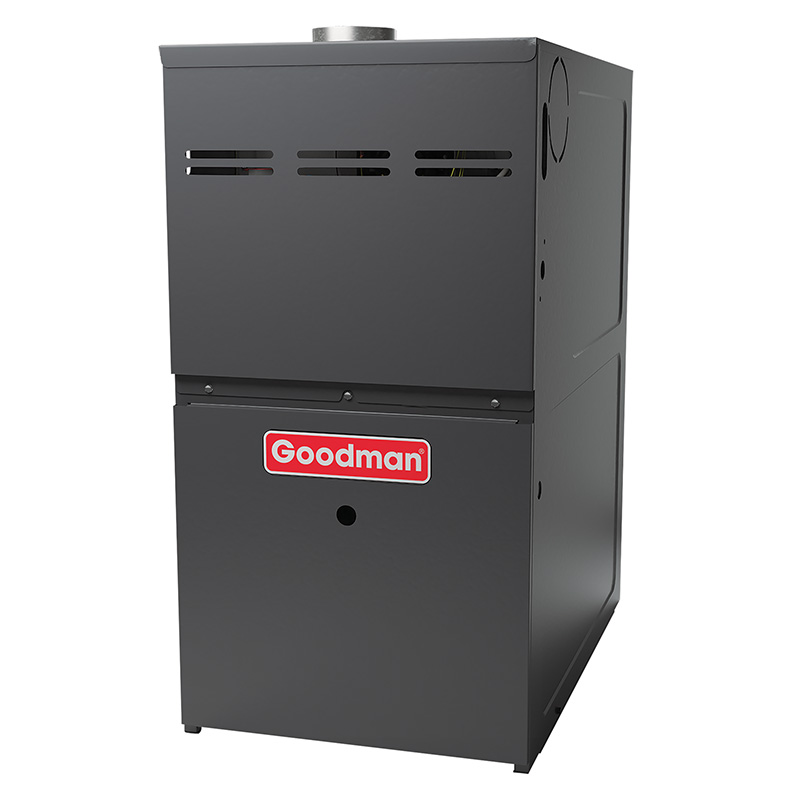
The furnace adds meaningful comfort value: the multi-speed ECM blower motor adjusts airflow more precisely than a single-speed unit, which reduces temperature swings and keeps air moving quietly between heating cycles. At 80% AFUE, roughly one dollar in five of your gas spend goes up the flue, so homeowners in mild-to-moderate heating climates will find the running cost reasonable, while those in very cold regions may eventually wish they had stepped up to a 96% or higher AFUE unit. The upflow configuration means supply air exits the top of the furnace, making it the right fit for basements and utility closets where ductwork runs overhead. This is a practical, budget-conscious system best suited to buyers who want a fully matched set installed and working without stretching their budget toward premium brand pricing.
This Goodman bundle delivers a competent, code-compliant heating and cooling system at a price point that is difficult to match among name-brand options. The trade-off is a shorter expected compressor lifespan and a documented history of capacitor and coil issues past year seven, so buyers should budget for maintenance and consider the extended warranty. It rewards homeowners who invest in a quality installation and keep up with annual service.
Overall score is the average of the five ratings above.
What we like
- Factory-matched AC and furnace reduces compatibility guesswork at purchase
- Multi-speed ECM blower improves airflow consistency and reduces noise versus single-speed units
- R-32 refrigerant is lower-GWP and increasingly well-supported by service technicians
- Purchase price is typically 15 to 25 percent below equivalent Carrier, Trane, or Lennox systems
- Upflow configuration covers a very common residential installation scenario cleanly
Trade-offs
- Compressor lifespan averages 10 to 14 years versus 15 to 20 years for premium brands, increasing long-term replacement risk
- Dual-run capacitors are the most commonly reported failure point, typically appearing after several years of use
- Evaporator coil leaks appear in a meaningful share of owner reports, which can mean refrigerant loss and expensive repairs
- 80% AFUE is the lowest efficiency tier available and will carry higher annual gas costs than 90-plus-percent alternatives in cold climates
What homeowners and pros say about Goodman
Homeowners who research Goodman online encounter a split picture. On ConsumerAffairs, the brand scores around 2.5 out of 5, and that channel skews toward people who had a bad experience, so the recurring theme of repair costs climbing after roughly year seven gets amplified there. On Google dealer reviews, where a broader mix of customers weigh in, the brand sits around 3.8 out of 5, with affordability cited most often as the reason buyers are satisfied. Neither number tells the whole story, but taken together they suggest a brand that delivers acceptable performance when everything goes right and frustrates owners when it does not.
HVAC technicians who work on Goodman equipment regularly point to a few consistent patterns with this type of system. Dual-run capacitors are the most frequently replaced component, a repair that is low-cost but inconvenient in peak summer heat. Evaporator coil leaks show up in owner reviews more than most people expect, and when refrigerant escapes a coil, repair costs rise quickly. Compressor longevity is the other honest conversation: Goodman compressors average 10 to 14 years in real-world use, compared to 15 to 20 years for premium brands, which matters if you are planning a long stay in your home. Pros consistently say that a clean, properly sized installation can stretch those numbers, while a rushed or uncalibrated install tends to bring the low end of that range much closer.
Sources: ConsumerAffairs Goodman owner reviews, AHRI Directory of Certified Product Performance, U.S. DOE appliance and equipment efficiency standards, Goodman product specification sheets.
What it costs to run
At 15.2 SEER2, cooling this 3-ton system for a typical 1200-hour cooling season at the U.S. average electricity rate of $0.17/kWh works out to roughly $483 per year in cooling, about $65 less per year than a minimum-efficiency 13.4 SEER2 unit of the same size. Your real cost depends on your climate and local rate.
Method: (36,000 BTU/hr ÷ 15.2 SEER2) × 1200 hours ÷ 1000 × $0.17/kWh. Rate source: U.S. EIA average; cooling hours: moderate-climate estimate.
How it compares
| Brand | Comparable model | SEER2 | Stage | Price position |
|---|---|---|---|---|
| Goodman | 3-Ton 15.2 SEER2 AC + 100K BTU 80% AFUE Furnace Bundle | 15.2 | Single-stage | Value pick |
| Carrier | Comfort 24ACC6 / 58TP Series | 15.2 | Single-stage | Typically 15 to 25 percent more than Goodman |
| Trane | XR15 / S8X1 Series | 15.2 | Single-stage | Typically 15 to 25 percent more than Goodman |
| Lennox | Merit ML14XC1 / MPB Series | 15.2 | Single-stage | Typically 15 to 25 percent more than Goodman |
Competitor rows are comparable single-stage units at similar efficiency; price is relative position, not a quote.
Questions about this system
Is 15.2 SEER2 going to cost me noticeably more to run than a higher-efficiency unit?
Yes, though how much depends on your climate and utility rates. A 15.2 SEER2 system is the baseline tier, so stepping up to a 17 or 18 SEER2 unit could reduce cooling energy use by 10 to 15 percent annually. In hot climates where the AC runs heavily from May through September, that gap adds up over time. In mild climates with shorter cooling seasons, the payback period for a higher-efficiency unit stretches out considerably.
What does the R-32 refrigerant mean for me as an owner?
R-32 is replacing R-410A across the industry, so parts and service should become easier to find over time, not harder. It has a lower global-warming potential than R-410A and operates at similar pressures, so most certified HVAC technicians can handle it. If you ever need a refrigerant top-off, make sure your technician confirms R-32 compatibility with their equipment, as it is mildly flammable and requires A2L-rated tools.
Should I be worried about the capacitor and coil failure history?
Capacitor failures are worth knowing about because they are one of the most common service calls on Goodman equipment, typically showing up after several years of use. The good news is a capacitor replacement is usually a straightforward repair in the 300 to 600 dollar range. Evaporator coil leaks are more serious and more expensive, so registering the equipment warranty promptly and keeping service records is important if a warranty claim ever becomes necessary.
Why does the upflow configuration matter, and will it work in my home?
Upflow means the furnace pulls return air in at the bottom and pushes conditioned air out the top, so your supply ducts need to run overhead or through an attic. This is the most common residential configuration in the U.S. and fits basements and first-floor utility closets well. If your ductwork runs under the floor or your equipment sits in a crawl space, you would need a downflow or horizontal unit instead, so confirm your existing duct layout before ordering.
How important is installer choice with a Goodman system?
Very important, and this is not unique to Goodman. HVAC technicians consistently identify installation quality as the single biggest factor in how long any system lasts and how efficiently it runs. With Goodman specifically, a poorly sized refrigerant charge, incorrect airflow setup, or loose electrical connections at install can accelerate the failure modes the brand is already known for. Getting at least two quotes from licensed contractors and verifying they will perform a Manual J load calculation for your home is worth the effort.
Specifications
| Cooling capacity | 3 Ton |
| Efficiency | 15.2 SEER2 |
| Furnace output | 100000 BTU |
| Furnace efficiency | 80% AFUE |
| Configuration | Upflow |
| Refrigerant | R-32 |