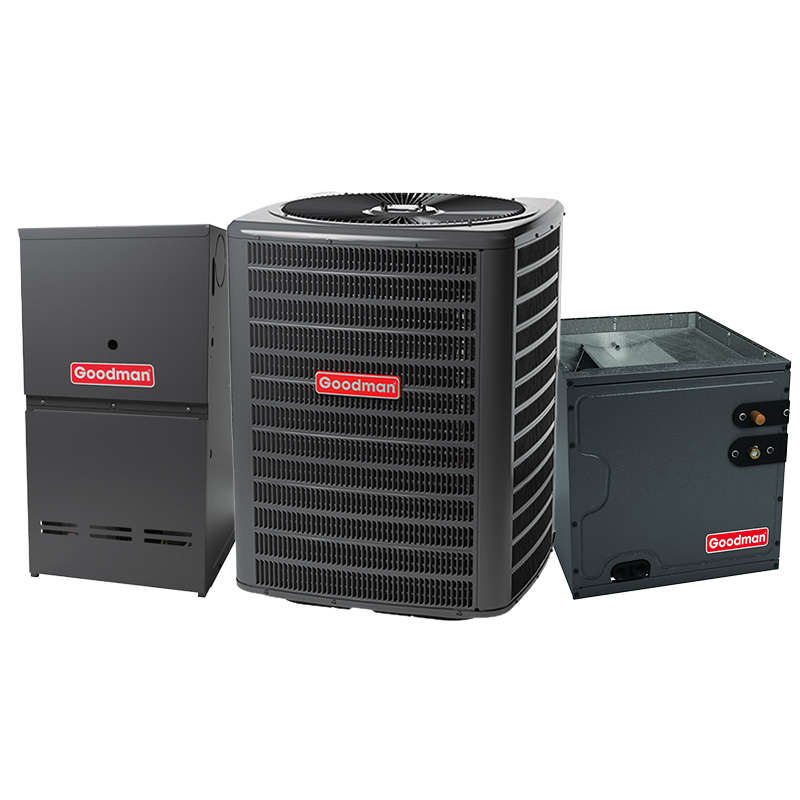
Goodman 3 Ton AC And 100000 BTU 80% AFUE Gas Furnace System | 15.5 SEER2 AC | Multi-Speed ECM Low NOx Furnace | Downflow | R32
View on AC Direct see your lowest price →Check current price on AC Direct →
Key features
- 3-ton cooling capacity, 15.5 SEER2 efficiency rating
- 100,000 BTU heating output at 80% AFUE
- Multi-speed ECM blower motor for quieter, more even airflow
- Downflow configuration for attic or upper-closet installations
- R-32 refrigerant with lower global-warming potential than R-410A
- Low NOx burner design to reduce nitrogen oxide emissions
About this system
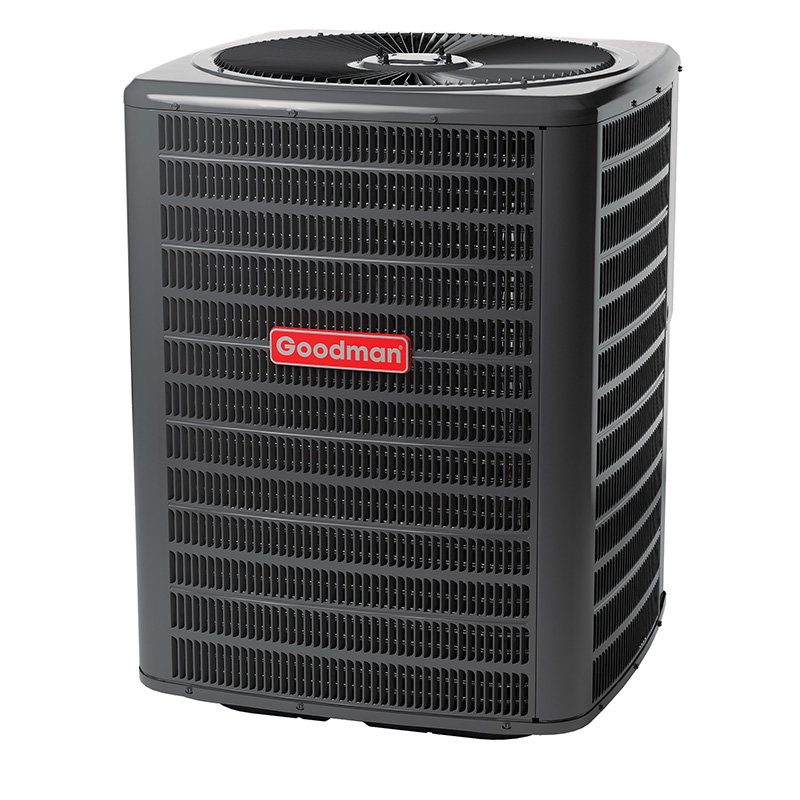
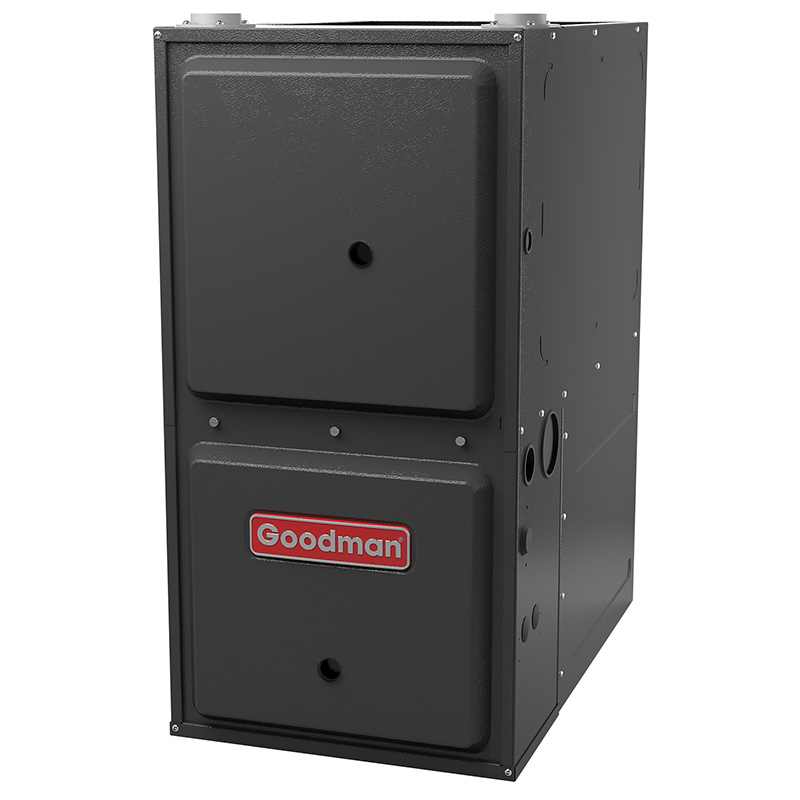
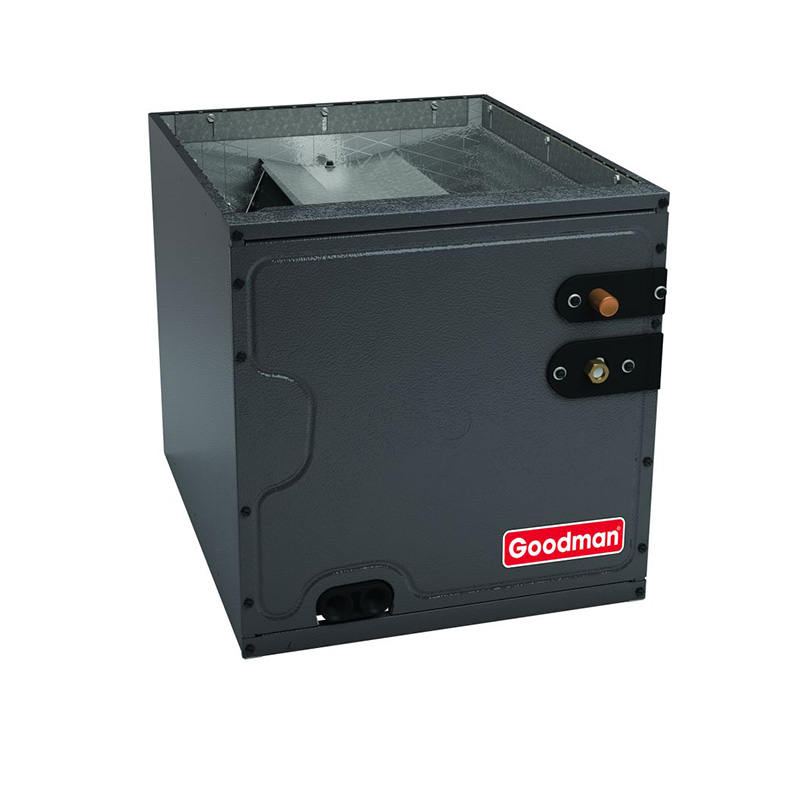
This Goodman bundle pairs a 3-ton, 15.5 SEER2 central air conditioner with a 100,000 BTU, 80% AFUE gas furnace in a downflow configuration, making it a practical choice for homes where the air handler sits in an upper utility closet or attic and conditioned air drops down into the living space. The R-32 refrigerant charge is a forward-looking detail: R-32 has a lower global-warming potential than the older R-410A it replaces, and the slightly higher operating pressures mean your technician will need the right tools and certifications to service it, so factor that into your installer selection.
The furnace side runs a multi-speed ECM blower motor, which ramps fan speed up or down to match heating demand rather than hammering on at full blast every cycle. That translates to quieter operation, more even room temperatures, and modest electricity savings on fan runtime compared to a basic PSC motor. At 80% AFUE, though, one dollar in five still exits the flue as waste heat, so homeowners in cold climates who run their furnace heavily from October through April may find the math tips toward a 96% or higher unit over a long horizon. For moderate-heating climates, or anywhere natural gas prices are lower, 80% AFUE is a reasonable and cost-conscious starting point.
Goodman prices this system 15 to 25 percent below comparable Carrier, Trane, and Lennox equipment, which is genuinely attractive for budget-conscious buyers or rental property owners who need reliable comfort without flagship-brand pricing. The trade-off is that Goodman’s longevity figures, particularly for compressors averaging 10 to 14 years versus 15 to 20 years for premium brands, mean total cost of ownership deserves a hard look alongside the sticker price.
This Goodman combo delivers honest mid-tier efficiency and a lower upfront cost than the major premium brands, making it a solid fit for budget-focused buyers who plan to keep their installation quality high. The 80% AFUE furnace and 15.5 SEER2 AC hit the baseline of modern efficiency standards without reaching for top-tier numbers, and the ECM motor is a genuine upgrade over entry-level offerings. Real-world durability leans heavily on who installs it and how well the R-32 charge is handled.
Overall score is the average of the five ratings above.
What we like
- Priced 15 to 25 percent below comparable Trane, Lennox, and Carrier systems
- Multi-speed ECM motor reduces fan noise and improves temperature consistency
- R-32 refrigerant is more environmentally responsible than R-410A
- 15.5 SEER2 clears federal minimums with room to reduce summer operating costs
- Low NOx burner addresses air-quality requirements in regulated regions
Trade-offs
- 80% AFUE means significant heat loss up the flue, a real cost in cold climates with heavy heating loads
- Compressor lifespan averages 10 to 14 years, shorter than the 15 to 20 years reported for premium brands
- Dual-run capacitor failures and evaporator coil leaks are documented recurring issues in owner reviews
- R-32 requires certified technicians with specific tooling, which can limit service options and raise repair costs in some markets
What homeowners and pros say about Goodman
Homeowners who review Goodman equipment on ConsumerAffairs give the brand roughly 2.5 out of 5, a score shaped by the platform’s tendency to attract frustrated owners more than satisfied ones. The recurring complaint is not that units fail immediately, but that repair costs begin accumulating around year 7, with dual-run capacitor failures cited most often as the first bill, followed in later years by evaporator coil leaks and eventual compressor replacement. On Google, dealer-aggregated reviews land around 3.8 out of 5 across several hundred reviews per location, where the most common praise is straightforward: the price is lower than the competition and the system works as expected when installed correctly. The word “installed correctly” carries real weight here, because HVAC technicians who work on Goodman equipment regularly note that the brand’s performance is unusually dependent on installation quality, from proper refrigerant charge to duct sizing to electrical connections.
For this specific downflow R-32 system, the professional conversation tends to center on two things. First, the R-32 refrigerant requires technicians to carry the right recovery equipment and hold the appropriate certification, and not every shop in every market has made that update yet, which is a practical service-availability concern worth asking about before you buy. Second, the documented compressor lifespan of 10 to 14 years on Goodman units versus 15 to 20 years on premium brands is a real trade-off to weigh against the lower upfront cost, not a dealbreaker, but an honest number that belongs in any total-cost-of-ownership comparison. Buyers who go in with clear eyes on those points and invest in a high-quality installation tend to report satisfactory results; those who cut corners on labor or skip the extended warranty options tend to populate the lower end of the review spectrum.
Sources: ConsumerAffairs Goodman owner reviews, AHRI Directory of Certified Product Performance, U.S. DOE appliance and equipment efficiency standards, Goodman product specification sheets.
What it costs to run
At 15.5 SEER2, cooling this 3-ton system for a typical 1200-hour cooling season at the U.S. average electricity rate of $0.17/kWh works out to roughly $474 per year in cooling, about $74 less per year than a minimum-efficiency 13.4 SEER2 unit of the same size. Your real cost depends on your climate and local rate.
Method: (36,000 BTU/hr ÷ 15.5 SEER2) × 1200 hours ÷ 1000 × $0.17/kWh. Rate source: U.S. EIA average; cooling hours: moderate-climate estimate.
How it compares
| Brand | Comparable model | SEER2 | Stage | Price position |
|---|---|---|---|---|
| Goodman | GSXH503610 + GCVC8 / GDS8 downflow series | 15.5 | Single-stage | Value pick |
| Carrier | Comfort 15 series (24ACC6) | 15.2 to 16.0 | Single-stage | Typically 15 to 25 percent more than Goodman |
| Trane | XR15 series (4TTR5) | 15.0 to 16.0 | Single-stage | Typically 15 to 25 percent more than Goodman |
| Lennox | Merit 14ACX / ML14XC1 series | 15.0 to 16.0 | Single-stage | Typically 15 to 25 percent more than Goodman |
Competitor rows are comparable single-stage units at similar efficiency; price is relative position, not a quote.
Questions about this system
Why does this system use R-32 instead of R-410A, and does that affect service costs?
Goodman transitioned to R-32 because it has a significantly lower global-warming potential than R-410A, in line with evolving environmental regulations. It does require technicians to have R-32 handling certification and compatible recovery equipment, so when scheduling service or repairs, confirm upfront that your HVAC contractor is equipped and certified for R-32 work, as not every shop has made the investment yet.
Is a downflow furnace configuration right for my home?
Downflow means the furnace draws return air in at the top and pushes heated or cooled air downward through the supply plenum, which is designed for installations in an upper-floor closet, attic platform, or similar overhead location where ducts run down into living spaces below. If your current system is already a downflow setup, this is a straightforward replacement; if your existing furnace is upflow or horizontal, a downflow unit will require significant ductwork changes and is not a drop-in swap.
What does the multi-speed ECM blower motor actually do for me day to day?
Unlike a single-speed motor that runs at full blast every cycle, the ECM motor adjusts its speed to match how much airflow the system needs at any given moment. In practice, this means quieter operation, less temperature swing between cycles, and lower electricity consumption on fan runtime compared to a standard PSC motor, particularly during shoulder seasons when the system cycles frequently.
How serious is the 80% AFUE limitation, and when should I upgrade to a higher-efficiency furnace?
At 80% AFUE, 20 cents of every dollar spent on natural gas exits through the flue as waste heat. In mild climates where the furnace runs fewer hours per year, the efficiency gap between an 80% and a 96% unit may take many years to recover in energy savings. In cold climates with long heating seasons, the math shifts, and a high-efficiency condensing furnace often pays back its cost premium in seven to ten years, making 80% AFUE a harder sell for those locations.
What are the most common repair issues I should budget for over the life of this system?
Based on documented owner experience with Goodman equipment, dual-run capacitor failure is the most frequently reported issue and is typically a quick repair in the 300 to 600 dollar range. Evaporator coil leaks appear in a meaningful share of long-term owner reviews and are a more expensive fix. Compressors on Goodman units average 10 to 14 years of service life, so budgeting for a potential compressor replacement or full outdoor unit swap in that window is prudent, especially compared to premium brands where compressors often last 15 to 20 years.
Specifications
| Cooling capacity | 3 Ton |
| Efficiency | 15.5 SEER2 |
| Furnace output | 100000 BTU |
| Furnace efficiency | 80% AFUE |
| Configuration | Downflow |
| Refrigerant | R-32 |