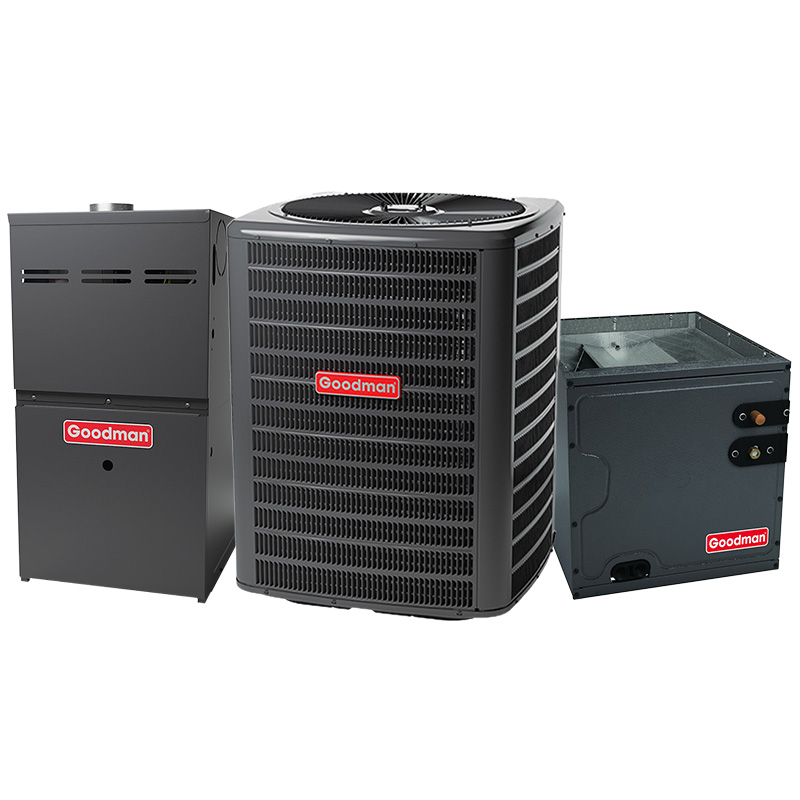
Goodman 3 Ton AC And 100000 BTU 80% AFUE Gas Furnace System | 16 SEER2 AC | Multi-Speed ECM Low NOx Furnace | Upflow | R32
View on AC Direct see your lowest price →Check current price on AC Direct →
Key features
- 3-ton, 16 SEER2 air conditioner with R-32 refrigerant
- 100,000 BTU, 80% AFUE single-stage gas furnace
- Multi-speed ECM blower motor for improved airflow and lower blower energy use
- Low NOx burner design meets California and other strict emissions standards
- Upflow configuration for basement or ground-level installs with overhead ductwork
- Priced 15 to 25 percent below comparable Trane, Lennox, and Carrier systems
About this system
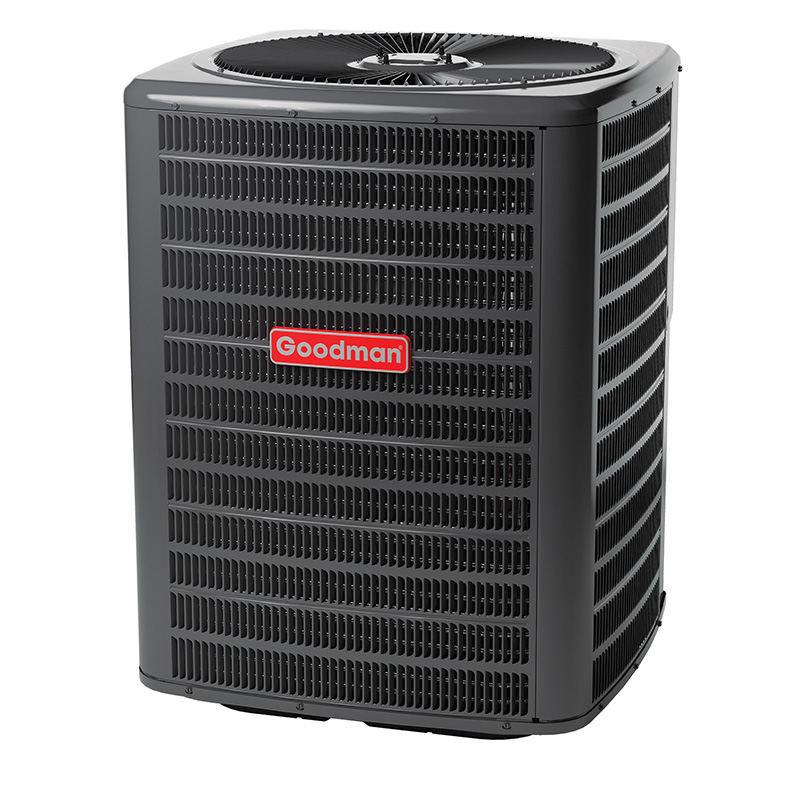
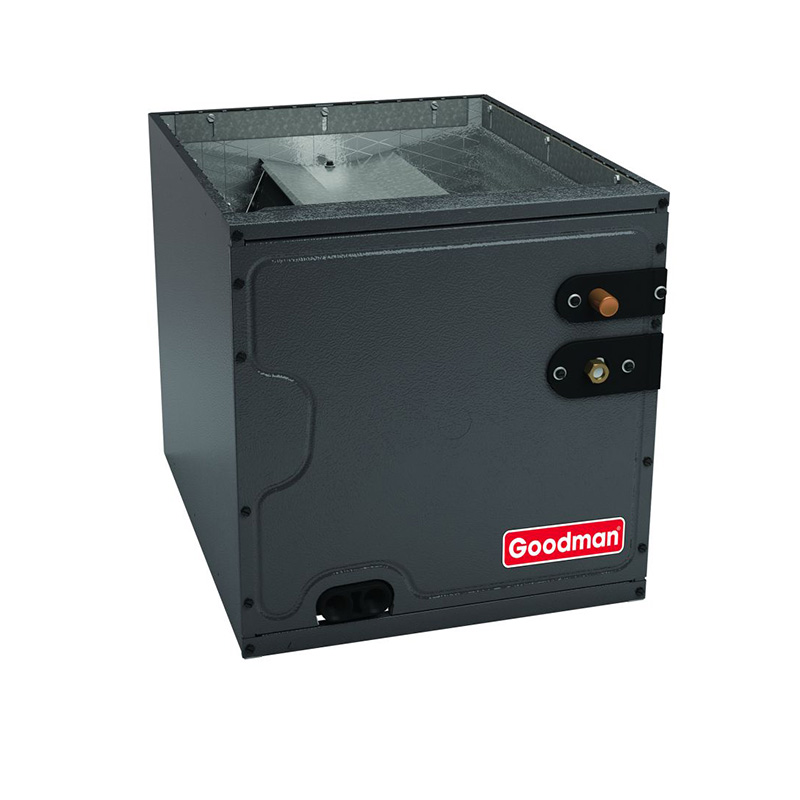
This Goodman bundle pairs a 3-ton, 16 SEER2 air conditioner with a 100,000 BTU, 80% AFUE upflow gas furnace sized for homes roughly in the 1,400 to 2,200 square foot range, depending on climate and insulation. The AC side uses R-32 refrigerant, a lower global-warming-potential option that is becoming more common as the industry moves away from R-410A. At 16 SEER2, the system clears the federal minimum efficiency threshold by a reasonable margin without stepping into the higher price bracket of 18-plus SEER2 variable-speed equipment, making it a workable middle-ground choice for budget-conscious buyers who still want meaningful cooling efficiency.
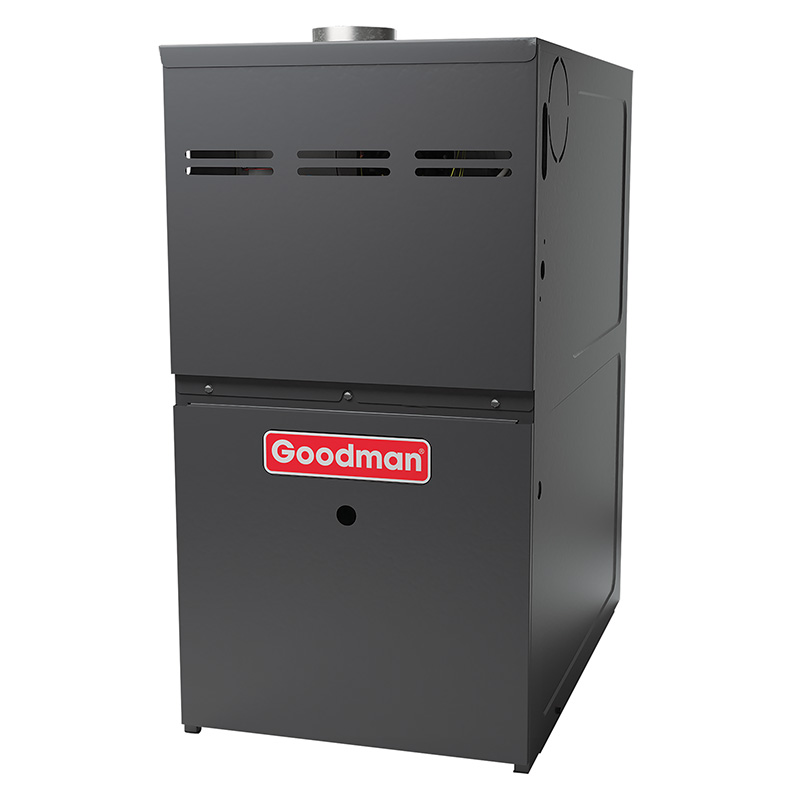
The furnace runs at 80% AFUE, meaning 80 cents of every fuel dollar becomes heat, with the rest lost through the flue. That is the entry-level efficiency tier and carries no condensate drain complexity, which suits simpler installs. The multi-speed ECM blower motor improves airflow consistency and lowers blower electricity use compared to a standard PSC motor. The Low NOx rating matters primarily to homeowners in California and a handful of other air-quality districts with strict emissions rules. Upflow configuration means warm or conditioned air exits the top of the air handler, which works well in a basement or ground-level utility closet with ductwork running upward. If your duct system runs below the unit or your air handler sits in an attic, this configuration does not fit without modification.
This Goodman combo delivers acceptable mid-tier efficiency and a genuinely lower purchase price than the major premium brands, which makes it a reasonable fit for homeowners on a firm budget who plan to get at least 10 solid years from the equipment. The trade-off is a real one: compressor longevity and coil reliability lag behind premium alternatives, and the system's long-term performance depends heavily on getting a careful, experienced installer.
Overall score is the average of the five ratings above.
What we like
- Purchase price is meaningfully lower than equivalent Carrier, Trane, or Lennox bundles
- 16 SEER2 efficiency exceeds federal minimums and reduces cooling operating costs versus lower-rated systems
- ECM multi-speed blower lowers blower motor electricity draw and improves comfort consistency
- Low NOx furnace qualifies for California and other strict air-quality districts
- R-32 refrigerant has a lower global-warming potential than R-410A
Trade-offs
- Compressors average 10 to 14 years versus 15 to 20 years typical of premium brands
- Evaporator coil leaks are a documented recurring complaint in owner reviews
- 80% AFUE furnace loses 20% of fuel energy through the flue, raising heating bills compared to a 96% condensing unit
- ConsumerAffairs scores average around 2.5 out of 5, with repair costs after year 7 as the most common complaint theme
What homeowners and pros say about Goodman
Homeowners who go with Goodman tend to land in one of two camps. Those who got a clean install from a skilled technician often run the equipment for a decade without major trouble and point to the lower upfront cost as a win. Those who had a rushed or low-bid install tell a different story, and that split shows up in the brand’s public ratings: Google dealer reviews sit around 3.8 out of 5 with affordability as the most repeated compliment, while ConsumerAffairs scores land around 2.5 out of 5, a channel where owners who have already had trouble are far more likely to show up. The ConsumerAffairs complaints cluster around repair costs climbing after roughly year 7, which tracks with the documented compressor lifespan of 10 to 14 years compared to 15 to 20 years for premium brands.
HVAC technicians who work on Goodman equipment regularly point to dual-run capacitors as the most routine call they get on these systems, a repair that typically runs between 300 and 600 dollars and is usually resolved quickly. Evaporator coil leaks are a more expensive and more frustrating failure mode that appears in a meaningful share of owner complaints. A smaller number of owners report refrigerant leaks in the first year, which technicians generally attribute to install or initial charge problems rather than a manufacturing defect in the unit itself. For this specific bundle, the ECM multi-speed blower is a genuine step up in comfort and blower efficiency, and the Low NOx furnace opens the door for buyers in California and similar markets where stricter emissions rules would otherwise limit options.
Sources: ConsumerAffairs Goodman owner reviews, AHRI Directory of Certified Product Performance, U.S. DOE appliance and equipment efficiency standards, Goodman product specification sheets.
What it costs to run
At 16 SEER2, cooling this 3-ton system for a typical 1200-hour cooling season at the U.S. average electricity rate of $0.17/kWh works out to roughly $459 per year in cooling, about $89 less per year than a minimum-efficiency 13.4 SEER2 unit of the same size. Your real cost depends on your climate and local rate.
Method: (36,000 BTU/hr ÷ 16 SEER2) × 1200 hours ÷ 1000 × $0.17/kWh. Rate source: U.S. EIA average; cooling hours: moderate-climate estimate.
How it compares
| Brand | Comparable model | SEER2 | Stage | Price position |
|---|---|---|---|---|
| Goodman | This system (3-ton 16 SEER2 AC + 100k BTU 80% AFUE furnace bundle) | 16 | Single-stage | Value pick |
| Carrier | Comfort Series (24ACC6 / 58TP80) | 16 | Single-stage | Typically 15 to 25 percent more than Goodman |
| Trane | XR15 / S8X1 series | 15.2-16 | Single-stage | Typically 15 to 25 percent more than Goodman |
| Lennox | Merit Series (13ACX / ML180) | 16 | Single-stage | Typically 15 to 25 percent more than Goodman |
Competitor rows are comparable single-stage units at similar efficiency; price is relative position, not a quote.
Questions about this system
Is 16 SEER2 enough efficiency for my climate, or should I spend more on a higher-rated unit?
16 SEER2 is a solid baseline that will outperform older equipment and reduce cooling costs noticeably. In very hot climates like the deep South or Southwest where AC runs five or more months a year, moving to 18 or 19 SEER2 can pay back the premium over time, but in moderate climates the payback period on higher-efficiency equipment often stretches beyond 10 years.
What is the warranty on this Goodman system and what does it actually cover?
Goodman offers a 10-year parts limited warranty when the unit is registered within 60 days of installation, dropping to 5 years if you skip registration. The warranty covers parts replacement but does not cover labor, refrigerant, or diagnostic costs, so a repair after year one can still carry a meaningful out-of-pocket expense for the service call and labor.
Will R-32 refrigerant be easy to service and recharge if I have a leak?
R-32 is increasingly stocked by HVAC wholesalers, and most trained technicians can handle it, but it is mildly flammable (A2L classification), which means some older tools and procedures do not apply and some technicians may charge a premium for the handling. Verify that the contractor you hire has experience working with A2L refrigerants before booking the install.
The upflow configuration is listed, but my furnace will go in a closet on the main floor. Does that work?
Upflow works correctly when air is drawn in at the bottom and discharged upward into ductwork above the unit, which suits a main-floor closet as long as the supply ducts run through the ceiling or upper walls. If your supply plenum exits sideways or downward, you need a different configuration, and forcing an upflow unit into the wrong orientation can restrict airflow and cause heat exchanger issues.
How worried should I be about the capacitor and coil failure issues reported with Goodman equipment?
Dual-run capacitor failures are the most commonly reported Goodman repair and typically cost between 300 and 600 dollars including labor, making them an annoying but manageable expense. Evaporator coil leaks are more serious and more expensive to fix; they show up in a meaningful portion of owner complaints, so it is worth budgeting for an extended labor warranty or a service plan to reduce exposure to that specific repair cost.
Specifications
| Cooling capacity | 3 Ton |
| Efficiency | 16 SEER2 |
| Furnace output | 100000 BTU |
| Furnace efficiency | 80% AFUE |
| Configuration | Upflow |
| Refrigerant | R-32 |