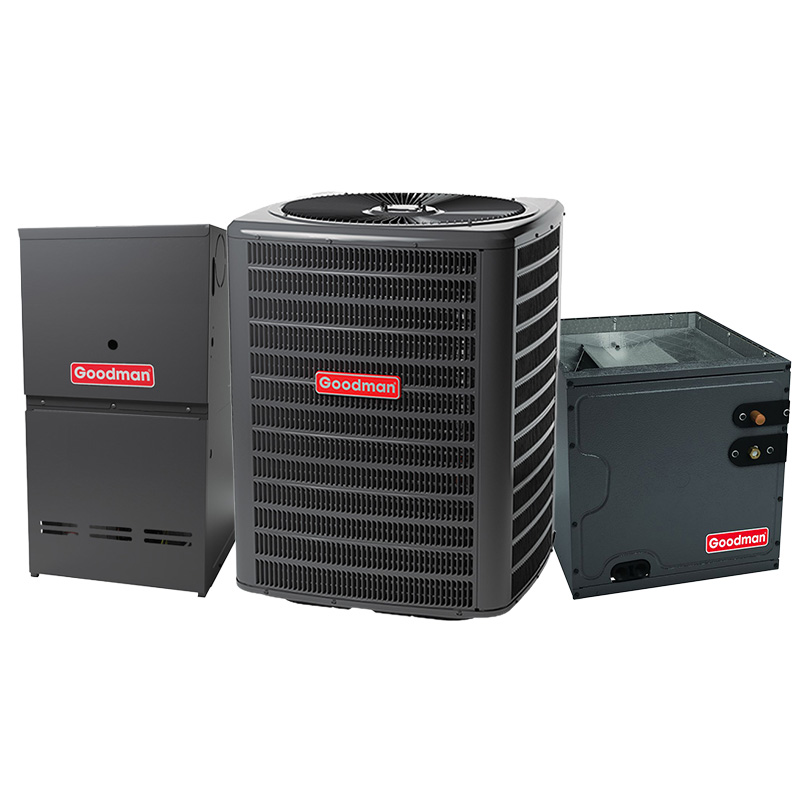
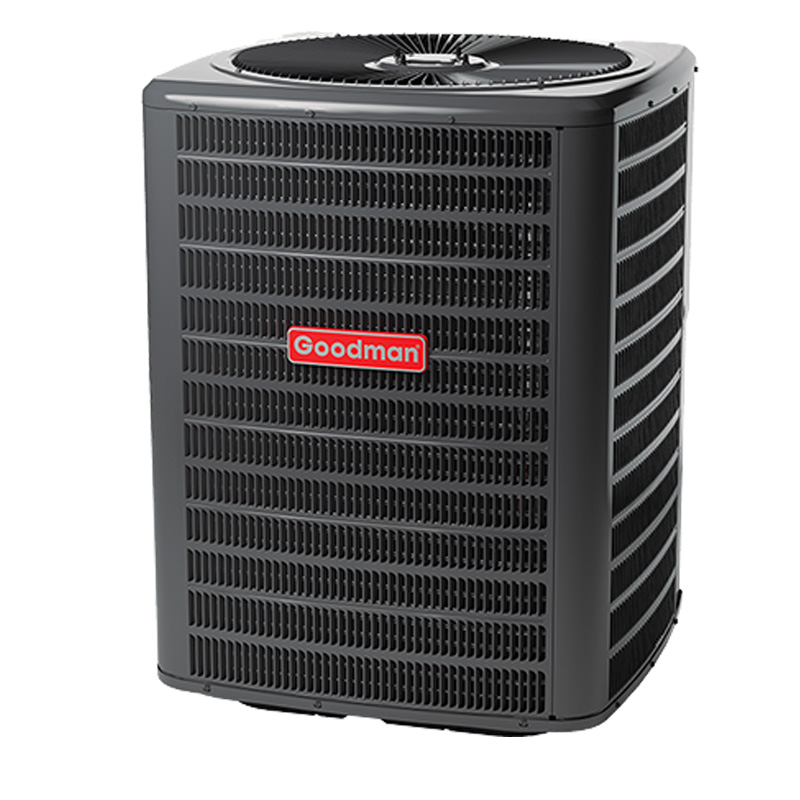
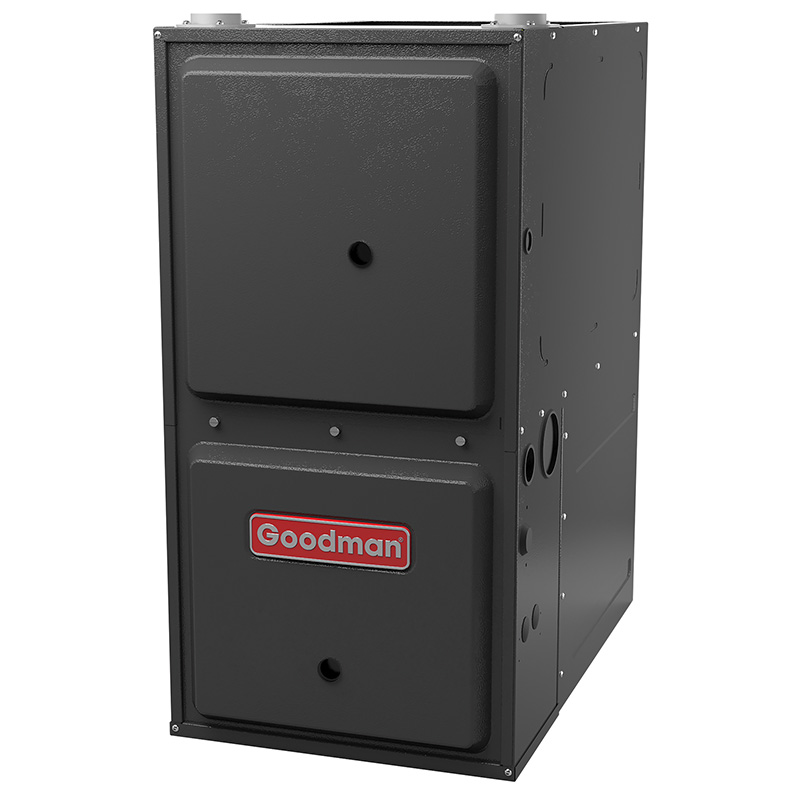
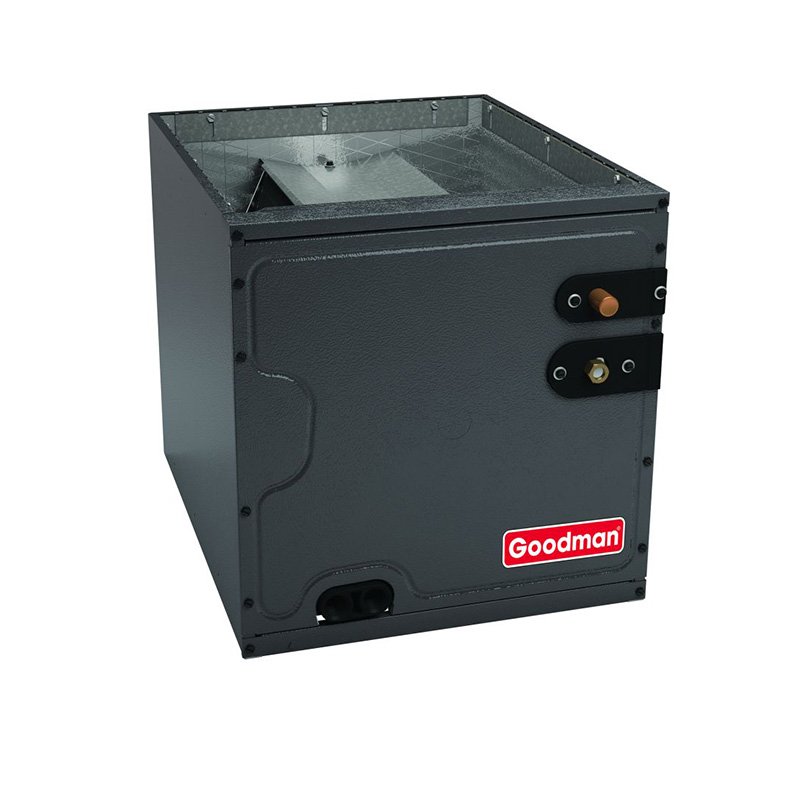
Goodman 3 Ton AC And 100000 BTU 80% AFUE Gas Furnace System | 15.2 SEER2 AC | Multi-Speed ECM Low NOx Furnace | Downflow | R32
View on AC Direct see your lowest price →Check current price on AC Direct →
Key features
- 3-ton cooling capacity, suited for homes roughly 1,500 to 2,200 sq ft depending on climate and load
- 15.2 SEER2 efficiency rating meets current federal minimum standards for most regions
- 100,000 BTU, 80% AFUE downflow gas furnace with multi-speed ECM blower motor
- R-32 refrigerant with lower global-warming potential than outgoing R-410A systems
- Downflow air discharge designed for homes with under-floor or crawlspace duct systems
- Goodman 10-year parts warranty on registered equipment (conditions apply)
About this system
The Goodman 3-ton, 15.2 SEER2 split system pairs a single-stage air conditioner with a 100,000 BTU, 80% AFUE downflow gas furnace to cover homes roughly in the 1,500 to 2,200 square foot range, depending on climate and insulation. The AC side uses R-32 refrigerant, which carries a lower global-warming potential than the R-410A it replaces and is becoming the new standard across the industry. At 15.2 SEER2, efficiency sits right at the federal minimum threshold for most U.S. regions, meaning you meet code but you will not see the utility savings that a 17 or 18 SEER2 system can deliver over a decade of use.
The furnace half of this bundle runs at 80% AFUE, so roughly 20 cents of every heating dollar exits through the flue. That is a reasonable choice for mild-to-moderate heating climates or for homeowners who prefer a simpler, lower-cost system without the condensate management that 90%+ units require. The multi-speed ECM blower motor improves comfort over single-speed units by ramping airflow gradually rather than slamming on full blast, and it draws less electricity in the process. The downflow configuration directs conditioned air downward through the duct system, which is the right fit for homes with ductwork running under the floor or in a crawlspace, but it is not interchangeable with upflow installations, so confirm your existing duct orientation before ordering.
This bundle is a straightforward cost-entry option for homeowners who need both heating and cooling replaced at once and are working within a budget. It is not a premium efficiency or premium reliability purchase, and buyers should weigh the savings up front against the likelihood of higher long-term service costs relative to top-tier brands.
This Goodman bundle delivers a functional, code-compliant heating and cooling system at a price point that is meaningfully lower than comparable Carrier, Trane, or Lennox configurations. The trade-off is honest: efficiency is entry-level, reliability history is mixed after year seven, and long-term ownership costs can erode the upfront savings. For budget-conscious buyers with a skilled installer lined up, it is a reasonable choice; for buyers prioritizing long-term peace of mind, the math deserves a closer look.
Overall score is the average of the five ratings above.
What we like
- Upfront cost runs 15 to 25 percent below comparable premium-brand systems
- Multi-speed ECM blower motor improves comfort and reduces electricity draw versus single-speed
- R-32 refrigerant is lower in global-warming potential and increasingly well-supported by technicians
- Downflow furnace configuration is purpose-built for homes with under-floor duct systems
- 10-year parts warranty on registered equipment provides meaningful coverage on major components
Trade-offs
- 15.2 SEER2 is the minimum efficiency tier; monthly operating costs will be higher than mid- or high-efficiency alternatives over the system's life
- 80% AFUE means roughly 20% of fuel is lost through the flue, a real cost in cold climates with long heating seasons
- Goodman compressors average 10 to 14 years versus 15 to 20 years for premium brands, and dual-run capacitor failures are a well-documented early service call
- Evaporator coil leaks appear in a meaningful share of owner reviews, and a minority of first-year refrigerant leak reports point to sensitivity to install quality
What homeowners and pros say about Goodman
Homeowners who have lived with a Goodman system tend to split into two camps, and that split is reflected in a ConsumerAffairs score of around 2.5 out of 5 alongside Google dealer review averages closer to 3.8 out of 5. The ConsumerAffairs channel skews toward people writing because something went wrong, and the recurring theme there is repair costs climbing after roughly year seven. The dealer review scores are more balanced, and affordability is the most consistent praise across those ratings. Neither number tells the whole story, but together they suggest a brand that starts strong and requires more attention as it ages.
HVAC technicians who service Goodman equipment regularly point to dual-run capacitor failures as the most predictable service call on these systems, usually a manageable 300 to 600 dollar fix but an early sign that the system rewards consistent seasonal checkups. Evaporator coil leaks show up in enough owner accounts to be worth noting, and compressor lifespan averaging 10 to 14 years runs shorter than the 15 to 20 years that premium-brand owners typically report. A minority of first-year refrigerant leak reports in owner reviews tend to trace back to install or initial charge issues rather than the equipment itself, which is why technicians consistently say install quality is the single biggest factor in how long a Goodman system holds up. If your installer is experienced and careful, this system can deliver solid years of service at a price that leaves budget for those eventual capacitor calls.
Sources: ConsumerAffairs Goodman owner reviews, AHRI Directory of Certified Product Performance, U.S. DOE appliance and equipment efficiency standards, Goodman product specification sheets.
What it costs to run
At 15.2 SEER2, cooling this 3-ton system for a typical 1200-hour cooling season at the U.S. average electricity rate of $0.17/kWh works out to roughly $483 per year in cooling, about $65 less per year than a minimum-efficiency 13.4 SEER2 unit of the same size. Your real cost depends on your climate and local rate.
Method: (36,000 BTU/hr ÷ 15.2 SEER2) × 1200 hours ÷ 1000 × $0.17/kWh. Rate source: U.S. EIA average; cooling hours: moderate-climate estimate.
How it compares
| Brand | Comparable model | SEER2 | Stage | Price position |
|---|---|---|---|---|
| Goodman | GLXS3BA36 + GC9S801005CX | 15.2 | Single-stage | Value pick |
| Carrier | Comfort 24ACC636 + 59SC5 | 15.2 | Single-stage | Typically 15 to 25 percent higher than this Goodman bundle |
| Trane | XR15 + S9X1 | 15.5 | Single-stage | Typically 20 to 30 percent higher than this Goodman bundle |
| Lennox | Merit ML14XC1 + ML180 | 15.2 | Single-stage | Typically 20 to 30 percent higher than this Goodman bundle |
Competitor rows are comparable single-stage units at similar efficiency; price is relative position, not a quote.
Questions about this system
Is downflow the right configuration for my house, and can I convert this unit to upflow if needed?
Downflow means conditioned air exits the bottom of the furnace and flows into ductwork below the unit, which is correct for homes with crawlspace or under-floor duct systems. This furnace is not designed to operate in upflow mode, so verify your duct orientation with your installer before purchasing. Using the wrong configuration is a code violation and a comfort problem.
Why does this system use R-32 refrigerant, and will it be harder to find service technicians who can work on it?
R-32 is replacing R-410A across the industry because it has a significantly lower global-warming potential. As of 2025, most licensed HVAC technicians are already working with R-32 or are being trained on it, so service availability is not a significant concern in most markets. Confirm your local contractor has experience with R-32 before booking the install.
How often do Goodman capacitors fail, and what does it cost to fix?
Dual-run capacitor failure is the most commonly documented repair on Goodman AC units, and it is generally a quick service call in the 300 to 600 dollar range when a technician is dispatched. Capacitors can fail at any age but are more likely to show up after several years of summer use. Keeping one spare on hand is something some proactive owners choose to do.
Should I register the product, and what does the warranty actually cover?
Yes, product registration is required to activate the 10-year parts warranty; without it you typically fall back to a shorter base warranty period. The warranty covers parts but not labor, which can still leave a significant out-of-pocket cost if a compressor or coil needs replacement. Confirm the exact terms on Goodman's current warranty documentation, as conditions vary.
Will 80% AFUE be a problem in a cold climate, or should I step up to a 96% furnace?
In climates with mild to moderate winters, 80% AFUE is workable and the lower equipment cost can offset the efficiency gap over several years. In climates with long, cold heating seasons, the 20% flue loss adds up noticeably on gas bills, and a 96% AFUE condensing furnace often pays back the price difference within a few years. A Manual J load calculation and a look at local gas rates will give you the most honest answer for your specific situation.
Specifications
| Cooling capacity | 3 Ton |
| Efficiency | 15.2 SEER2 |
| Furnace output | 100000 BTU |
| Furnace efficiency | 80% AFUE |
| Configuration | Downflow |
| Refrigerant | R-32 |