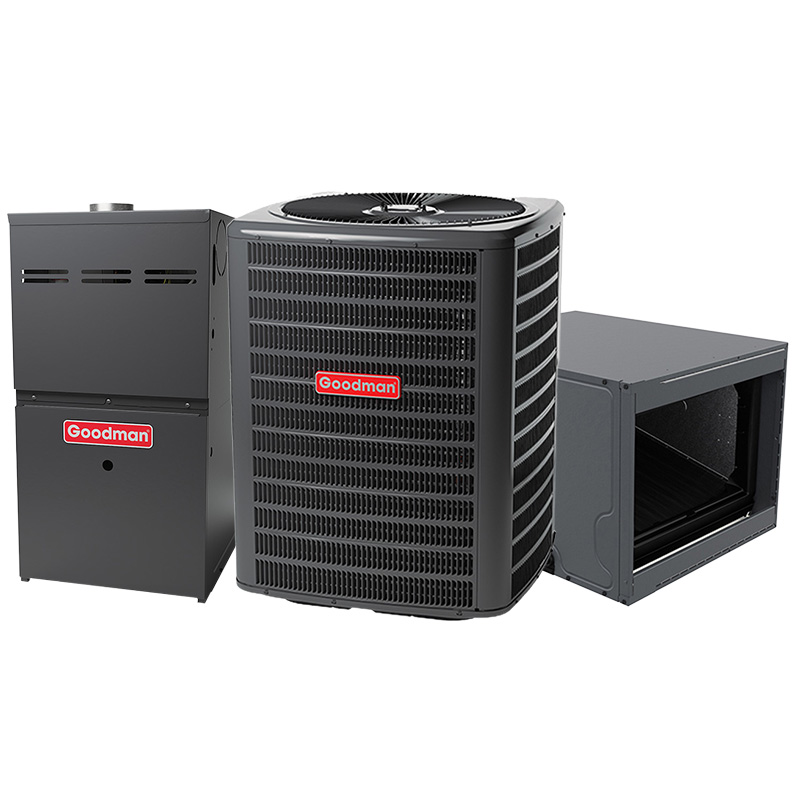
Goodman 3 Ton AC And 100000 BTU 80% AFUE Gas Furnace System | 15.2 SEER2 AC | Multi-Speed ECM Low NOx Furnace | Horizontal | R32
View on AC Direct see your lowest price →Check current price on AC Direct →
Key features
- 3-ton cooling capacity at 15.2 SEER2, meeting federal minimum efficiency thresholds for most regions
- 100,000 BTU output gas furnace rated at 80% AFUE with multi-speed ECM blower motor
- Horizontal configuration for crawl space, attic, or side-mount utility closet installations
- R-32 refrigerant with lower global warming potential and reduced charge weight versus R-410A
- ECM blower motor reduces fan electricity use and improves airflow precision compared to PSC motors
- Low NOx burner design meets stricter emissions standards in California and other regulated states
About this system
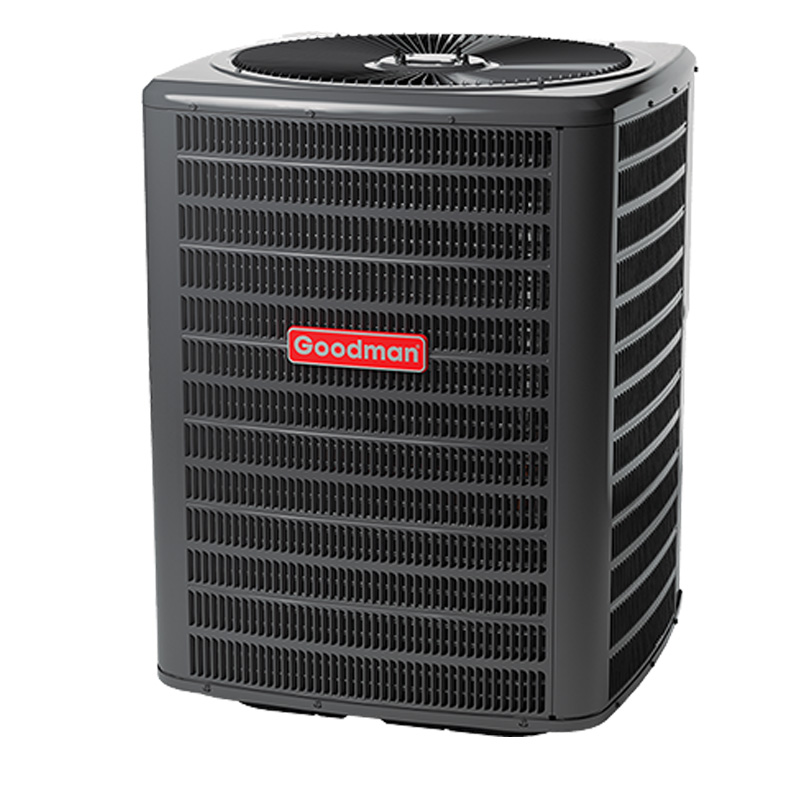
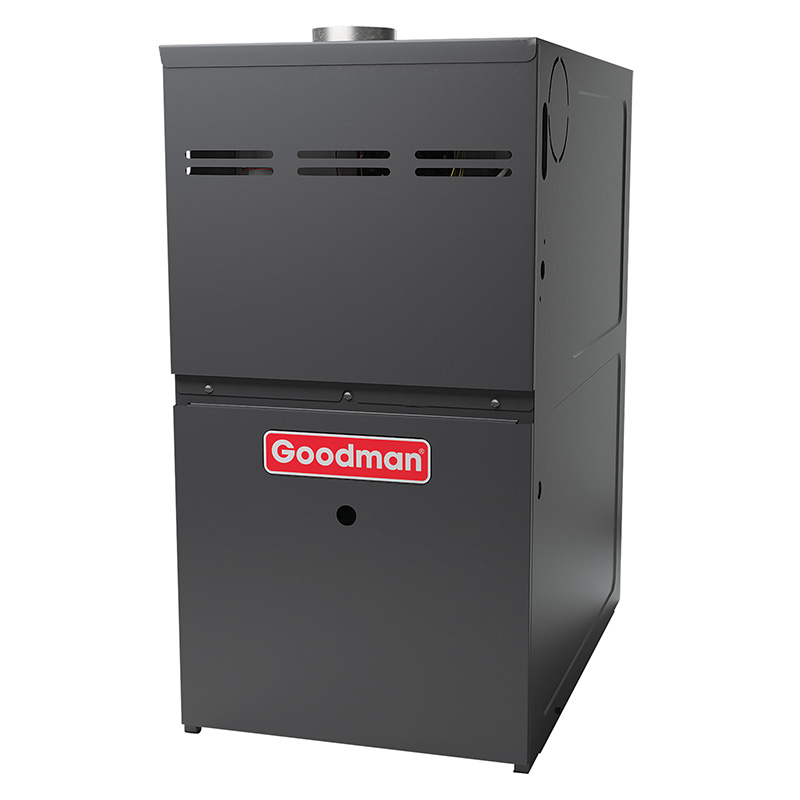
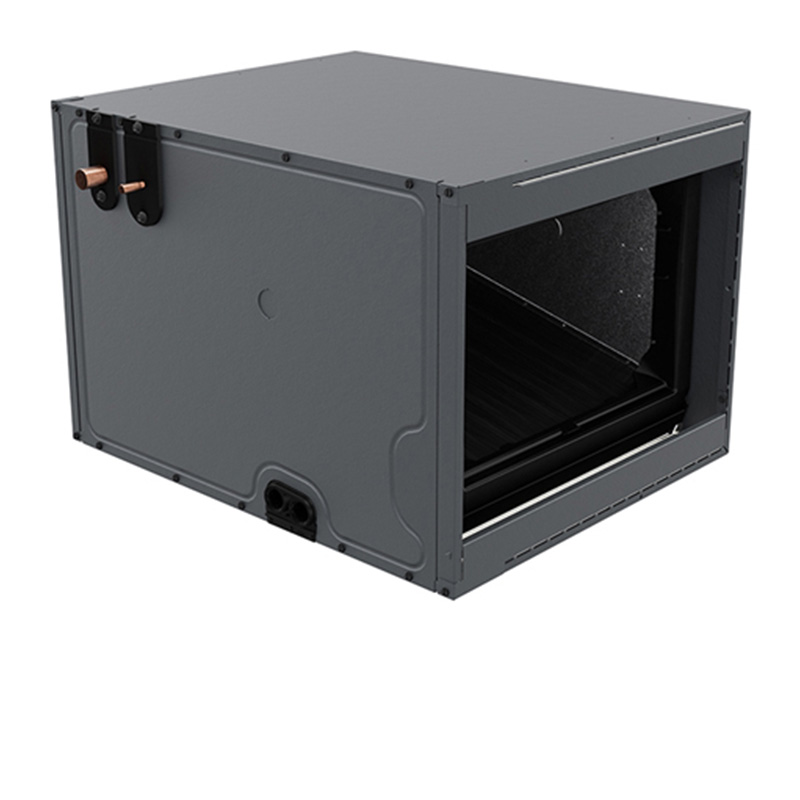
The Goodman 3-ton, 15.2 SEER2 split system pairs a single-speed or multi-speed condensing unit running on R-32 refrigerant with a 100,000 BTU, 80% AFUE multi-speed ECM gas furnace in a horizontal configuration. The horizontal layout is designed for homes where the air handler must sit on its side, typically in a crawl space, attic, or tight utility closet where vertical installation is not practical. At 15.2 SEER2, the system meets the federal minimum efficiency standard for most U.S. climate regions and edges just past the threshold, meaning it is an entry-to-mid efficiency choice rather than a high-efficiency one. R-32 refrigerant runs at a lower global warming potential than the R-410A it replaces, and it requires less refrigerant by charge weight for the same cooling capacity, which can modestly reduce operating costs if there is ever a leak repair.
The ECM blower motor in the furnace is a meaningful upgrade over a standard PSC motor. ECM motors adjust airflow more precisely, consume less electricity during fan-only and heating cycles, and tend to run quieter. The 80% AFUE rating means 20 cents of every gas dollar is lost up the flue, which is acceptable in mild climates or homes with shorter heating seasons but will cost more to operate annually than a 90% or 96% AFUE unit in colder regions. This system suits budget-conscious homeowners replacing aging equipment in moderate climates, landlords managing rental properties, or anyone who needs a functioning, code-compliant system without the premium price of a Trane, Carrier, or Lennox equivalent. It is not the right fit for someone prioritizing the lowest possible utility bills over a long ownership horizon.
This Goodman system delivers a code-compliant, functional heating and cooling solution at a price that is typically 15 to 25 percent below comparable equipment from Trane, Carrier, or Lennox. The ECM motor and R-32 refrigerant are genuine upgrades for the price tier, but the 80% AFUE furnace and entry-level efficiency AC mean ongoing utility costs will be higher than premium alternatives. Long-term ownership costs depend heavily on install quality and whether you budget for likely capacitor and potentially coil maintenance after year seven.
Overall score is the average of the five ratings above.
What we like
- Price is typically 15 to 25 percent below Trane, Carrier, and Lennox systems of similar capacity and efficiency
- ECM blower motor reduces electricity use during heating and fan cycles compared to standard PSC motors
- R-32 refrigerant has lower environmental impact and lower charge weight than R-410A
- Low NOx burner satisfies stricter emissions regulations in California and other restrictive jurisdictions
- Horizontal configuration directly addresses installations where vertical orientation is not possible
Trade-offs
- 80% AFUE furnace loses 20% of fuel up the flue, making it noticeably more expensive to heat with than 90%+ AFUE options in cold climates
- 15.2 SEER2 is at the lower end of available efficiency, so cooling costs will be higher than mid- or high-efficiency alternatives over time
- Compressor lifespan averages 10 to 14 years versus 15 to 20 years typical of premium brands, shortening the effective payback window
- Dual-run capacitor failures and evaporator coil leaks are documented recurring issues that add maintenance costs, particularly after year seven
What homeowners and pros say about Goodman
Homeowners who post about Goodman equipment tend to split along a familiar line: those who got a careful install from an experienced contractor and had few problems in the first several years, and those who dealt with early issues that trace back to how the system was set up rather than the hardware itself. On ConsumerAffairs, Goodman scores around 2.5 out of 5, a channel where dissatisfied owners are far more motivated to write than satisfied ones, and the recurring complaint is repair costs rising noticeably after roughly year seven. Google dealer reviews average closer to 3.8 out of 5 across locations, and affordability is consistently the most common reason buyers say they are glad they chose Goodman. Neither score tells the whole story on its own.
HVAC technicians are candid about this brand in a way that is worth taking seriously. Many will say that a Goodman installed well by a skilled tech runs fine for a decade, but that install quality is the single biggest variable in how long any unit lasts, and corners get cut more often when buyers push for the lowest possible price. The documented failure modes on Goodman cooling equipment include dual-run capacitor failures, which are low-cost fixes typically in the 300 to 600 dollar range, and evaporator coil leaks that show up in owner reviews with enough regularity to budget for. Compressor lifespan on Goodman equipment averages 10 to 14 years, shorter than the 15 to 20 years technicians associate with premium brands. A small share of owners also report refrigerant leaks in the first year, a pattern that points to installation rather than a systemic product flaw. For a horizontal gas furnace bundle at this price point, Goodman is a rational choice if you hire carefully and keep a maintenance fund.
Sources: ConsumerAffairs Goodman owner reviews, AHRI Directory of Certified Product Performance, U.S. DOE appliance and equipment efficiency standards, Goodman product specification sheets.
What it costs to run
At 15.2 SEER2, cooling this 3-ton system for a typical 1200-hour cooling season at the U.S. average electricity rate of $0.17/kWh works out to roughly $483 per year in cooling, about $65 less per year than a minimum-efficiency 13.4 SEER2 unit of the same size. Your real cost depends on your climate and local rate.
Method: (36,000 BTU/hr ÷ 15.2 SEER2) × 1200 hours ÷ 1000 × $0.17/kWh. Rate source: U.S. EIA average; cooling hours: moderate-climate estimate.
How it compares
| Brand | Comparable model | SEER2 | Stage | Price position |
|---|---|---|---|---|
| Goodman | GSZTO-GLH80 3-ton 15.2 SEER2 Horizontal Bundle | 15.2 | Single-stage | Value pick |
| Carrier | Comfort 24ACC6 with 58MCA Furnace | 15.2 | Single-stage | Typically 20 to 25 percent higher than this Goodman system |
| Trane | XR15 with S8X1 Furnace | 15.0-15.5 | Single-stage | Typically 20 to 30 percent higher than this Goodman system |
| Lennox | Merit ML14XC1 with ML180 Furnace | 15.0-15.2 | Single-stage | Typically 25 to 35 percent higher than this Goodman system |
Competitor rows are comparable single-stage units at similar efficiency; price is relative position, not a quote.
Questions about this system
Is 80% AFUE good enough for my climate, or should I pay more for a 90% or 96% furnace?
In mild to moderate climates with short heating seasons, 80% AFUE is often acceptable and the payback on a higher-efficiency unit can stretch beyond 10 years. In cold climates where you run the furnace heavily from October through April, the annual fuel savings from a 96% AFUE unit typically justify the upfront cost difference within five to eight years. Check your average annual gas bill to run the numbers for your specific location.
What does the horizontal configuration actually mean, and does it affect performance?
Horizontal means the furnace is designed to lie on its side, routing airflow in from one end and out through a side discharge rather than vertically up. It is built for attics, crawl spaces, and utility closets where there is not enough height for an upflow unit. Performance is comparable to vertical configurations when properly installed, but horizontal installs are somewhat harder to access for service, which can increase labor costs for future maintenance.
How does R-32 refrigerant affect me as a homeowner compared to older R-410A systems?
R-32 requires a smaller refrigerant charge by weight for the same cooling capacity, which can lower the cost of a recharge if a leak ever occurs. It is mildly flammable, which means technicians need to follow specific handling procedures, but it poses no practical safety concern in a properly installed outdoor unit. Most certified HVAC technicians are already trained and equipped to work with R-32.
What are the most common repairs I should budget for over the life of this system?
Dual-run capacitor failure is the most frequently reported issue with Goodman air conditioners and typically costs between 300 and 600 dollars to repair, including labor. Evaporator coil leaks appear in a notable share of owner reports and can be more expensive to address. A minority of owners have reported refrigerant leaks within the first year, which usually points to an installation or initial charge problem rather than a product defect.
Does Goodman's warranty actually protect me, and what do I need to do to keep it valid?
Goodman's registered limited warranty covers the compressor and other parts, but you must register the equipment within a set window after installation to receive the full term. The warranty also requires installation by a licensed HVAC contractor and does not cover labor costs, which can be a significant out-of-pocket expense even on a covered parts claim. Read the registration requirements carefully and keep a copy of your installation invoice.
Specifications
| Cooling capacity | 3 Ton |
| Efficiency | 15.2 SEER2 |
| Furnace output | 100000 BTU |
| Furnace efficiency | 80% AFUE |
| Configuration | Horizontal |
| Refrigerant | R-32 |