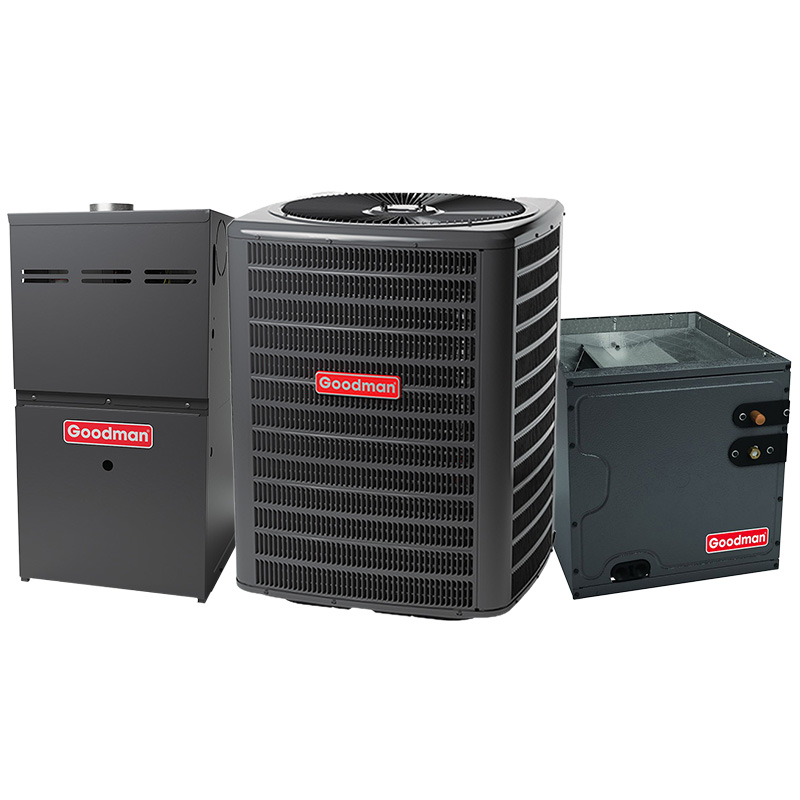
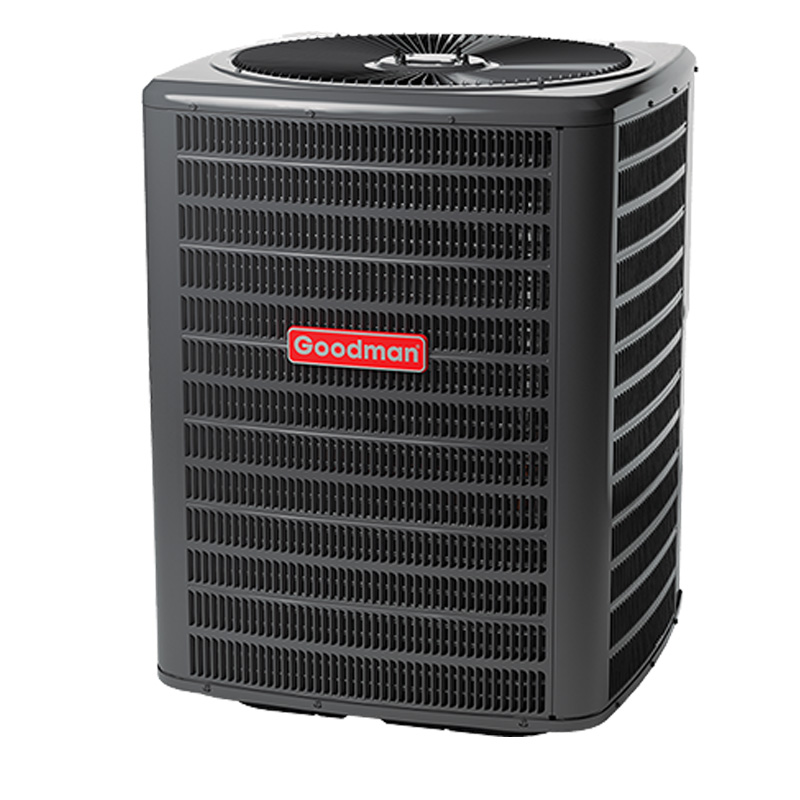
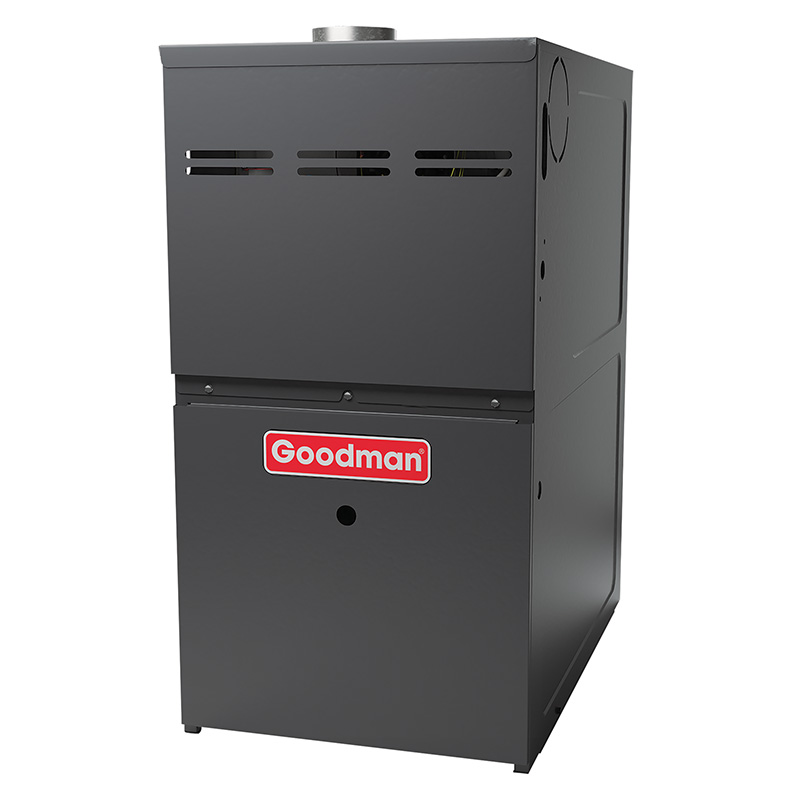
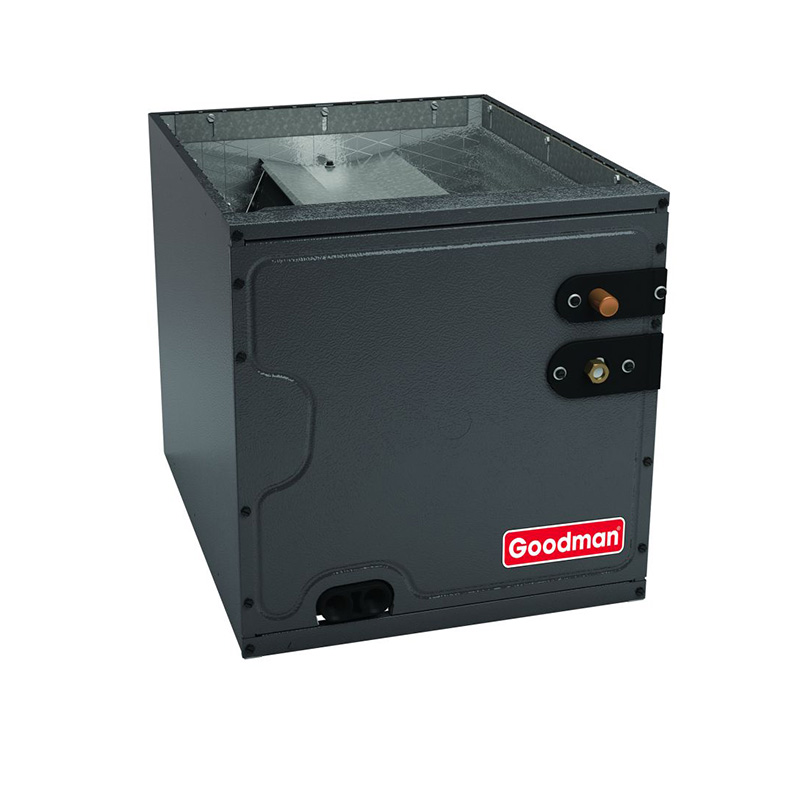
Goodman 3 Ton AC And 60000 BTU 80% AFUE Gas Furnace System | 15.2 SEER2 AC | Multi-Speed ECM Low NOx Furnace | Upflow | R32
View on AC Direct see your lowest price →Check current price on AC Direct →
Key features
- 3-ton cooling capacity, 15.2 SEER2 efficiency rating
- 60,000 BTU output, 80% AFUE upflow gas furnace
- Multi-speed ECM blower motor for more consistent airflow and lower blower energy use
- R-32 refrigerant with lower global warming potential than R-410A
- Low NOx burner design reduces nitrogen oxide emissions
- Matched system configuration supports warranty compliance and airflow optimization
About this system
This Goodman bundle pairs a 3-ton, 15.2 SEER2 central air conditioner with a 60,000 BTU, 80% AFUE upflow gas furnace into a single matched system. The 15.2 SEER2 rating lands just above the federal minimum for most U.S. climate zones, which keeps purchase price accessible without sacrificing meaningful operating efficiency over older, lower-rated equipment. The furnace’s multi-speed ECM blower motor adjusts airflow more precisely than a single-speed unit, which helps even out temperatures across rooms and reduces the blower’s share of your electricity bill. The R-32 refrigerant charge is a step forward environmentally, carrying a lower global warming potential than the R-410A it replaces in much of the industry.
The upflow configuration means conditioned air exits through the top of the air handler and rises into the duct system, making this the right fit for homes where the furnace sits in a basement or main-floor utility closet with ductwork running overhead. It is not suited to attic installations or any application requiring a downflow or horizontal layout. The 80% AFUE rating means one dollar in five of your gas spend exits as exhaust rather than heat, which is the entry tier for gas efficiency. Homeowners in very cold climates who run their furnace heavily all winter may find a 96% AFUE unit pays back the price difference in fuel savings over time, while those in mild heating climates typically will not.
As a matched system, both units share engineering specs designed to work together, which matters for efficiency ratings, warranty eligibility, and airflow balance. Buyers comfortable with basic maintenance and who plan to use a licensed installer with Goodman experience tend to get the best long-term results from this platform.
This Goodman bundle is a competent entry-to-mid-level system that delivers solid cooling efficiency and acceptable heating performance at a price point meaningfully below comparable Trane, Carrier, and Lennox equipment. The ECM blower and R-32 refrigerant are genuine upgrades at this price tier, but 80% AFUE heating efficiency and Goodman's documented history of capacitor failures, coil leaks, and shorter average compressor life are real trade-offs to weigh. It rewards buyers who hire experienced installers and stay current on maintenance; it tends to disappoint those who treat it as a set-and-forget appliance.
Overall score is the average of the five ratings above.
What we like
- Purchase price runs roughly 15 to 25 percent below comparable Carrier, Trane, and Lennox systems
- 15.2 SEER2 meets or clears federal minimums in most regions, reducing operating costs versus older equipment
- Multi-speed ECM motor improves comfort and blower efficiency compared to single-speed alternatives at this price
- R-32 refrigerant is a forward-looking choice with lower environmental impact
- Matched bundle simplifies equipment selection and supports full warranty eligibility
Trade-offs
- 80% AFUE is the lowest efficiency tier for gas furnaces; heavy heating users in cold climates will pay more in fuel than with a 95 or 96% AFUE unit
- Dual-run capacitor failures are the most documented repair issue, typically emerging within the first several years of operation
- Evaporator coil leaks appear in a meaningful share of owner reports and can be a costly mid-life repair
- Average compressor lifespan of roughly 10 to 14 years trails the 15 to 20 years more commonly seen with premium-brand compressors
What homeowners and pros say about Goodman
Homeowners who have lived with Goodman equipment long enough to leave reviews tend to split along a consistent line. Those who had a smooth install and kept up with maintenance often praise the low purchase price and note years of reliable operation. Those who ran into trouble point to repair costs that accumulated after the seven-year mark, a pattern visible in Goodman’s ConsumerAffairs rating of roughly 2.5 out of 5, which skews toward complaint-driven feedback but reflects a real pattern of mid-life cost surprises. Google dealer reviews paint a more balanced picture, averaging around 3.8 out of 5, where affordability is the most common praise. The specific failure modes that come up most in owner accounts are dual-run capacitor failures, which are generally a low-cost fix when addressed quickly, and evaporator coil leaks, which can be considerably more disruptive and expensive. Compressor longevity is another recurring theme: Goodman compressors tend to average 10 to 14 years, compared to the 15 to 20 years more commonly associated with premium-brand compressors.
HVAC technicians who work on Goodman equipment regularly tend to say much the same thing: the brand performs closer to its potential when the installation is done carefully and completely. Refrigerant charge, airflow calibration, and duct sealing matter more with a value-tier brand than with a premium one, because there is less engineering margin built in to compensate for shortcuts. A minority of owners have reported refrigerant leaks within the first year of ownership, and technicians almost universally attribute those to install or initial charge issues rather than factory defects. For this 3-ton, 15.2 SEER2 system with its ECM blower and R-32 charge, the picture is similar: the components are real upgrades at the price point, and the system can perform well, but the installer you choose and the maintenance you commit to will have a larger influence on the long-term outcome than with a Trane, Carrier, or Lennox at a similar efficiency tier.
Sources: ConsumerAffairs Goodman owner reviews, AHRI Directory of Certified Product Performance, U.S. DOE appliance and equipment efficiency standards, Goodman product specification sheets.
What it costs to run
At 15.2 SEER2, cooling this 3-ton system for a typical 1200-hour cooling season at the U.S. average electricity rate of $0.17/kWh works out to roughly $483 per year in cooling, about $65 less per year than a minimum-efficiency 13.4 SEER2 unit of the same size. Your real cost depends on your climate and local rate.
Method: (36,000 BTU/hr ÷ 15.2 SEER2) × 1200 hours ÷ 1000 × $0.17/kWh. Rate source: U.S. EIA average; cooling hours: moderate-climate estimate.
How it compares
| Brand | Comparable model | SEER2 | Stage | Price position |
|---|---|---|---|---|
| Goodman | GSX16 / GMSS960 | 15.2 | Single-stage | Value pick |
| Carrier | Comfort 15 (24ACC6) | 15.2 | Single-stage | Typically 15 to 25 percent more than Goodman |
| Trane | XR15 | 15.0 | Single-stage | Typically 15 to 25 percent more than Goodman |
| Lennox | Merit 14ACX | 15.0 | Single-stage | Typically 15 to 25 percent more than Goodman |
Competitor rows are comparable single-stage units at similar efficiency; price is relative position, not a quote.
Questions about this system
Will a 3-ton unit actually be the right size for my home?
Tonnage should be determined by a Manual J load calculation, not square footage alone. Factors like ceiling height, insulation, window area, and local climate all affect the correct size. An oversized unit will short-cycle, leading to humidity problems and added wear; an undersized one will run constantly on hot days. Ask your installer to run the calculation before ordering.
Is 80% AFUE good enough, or should I upgrade to a higher-efficiency furnace?
80% AFUE is functional and meets code in most regions, but it means 20% of your gas input leaves as exhaust. If you are in a cold climate and run the furnace heavily from November through March, a 95 or 96% AFUE furnace can realistically reduce heating bills enough to close the price gap over five to eight years. In mild climates with short heating seasons, the payback period stretches considerably and 80% AFUE is a reasonable choice.
What is R-32, and does it require any special handling compared to R-410A?
R-32 is a single-component refrigerant with a global warming potential roughly 68% lower than R-410A, and it is becoming a common replacement across the industry. It does require technicians to use R-32-rated equipment and follow slightly different handling procedures, so confirm your installer is trained and equipped for it before scheduling service. Most licensed HVAC contractors in areas where this refrigerant is already common will be familiar with it.
What are the most common repairs I should budget for with this Goodman system?
Dual-run capacitor failures are the most frequently reported issue and are generally an inexpensive fix in the 300 to 600 dollar range when caught promptly. Evaporator coil leaks are a documented concern in owner reports and can be more expensive to address. Keeping the system on a regular maintenance schedule, including coil cleaning and refrigerant checks, is the most practical way to catch these issues early.
Does the upflow configuration affect whether this system works in my home?
Yes. An upflow furnace is designed to draw return air in at the bottom and discharge heated or cooled air from the top into overhead ductwork. It is the correct choice for basement or main-floor closet installations where ducts run through the ceiling or attic above. If your ductwork enters from below or you need a horizontal installation for a crawlspace or attic, this configuration will not work and you would need a downflow or horizontal unit instead.
Specifications
| Cooling capacity | 3 Ton |
| Efficiency | 15.2 SEER2 |
| Furnace output | 60000 BTU |
| Furnace efficiency | 80% AFUE |
| Configuration | Upflow |
| Refrigerant | R-32 |