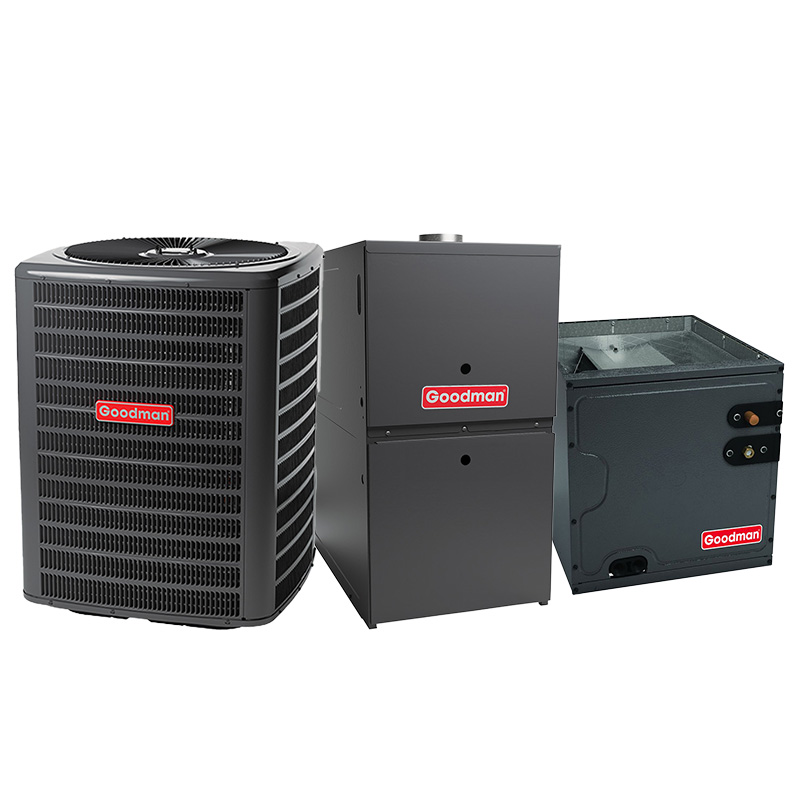
Goodman 3 Ton AC And 60000 BTU 80% AFUE Gas Furnace System | 17 SEER2 Two Stage AC | Variable Speed Two Stage Furnace | Upflow | R32
View on AC Direct see your lowest price →Check current price on AC Direct →
Key features
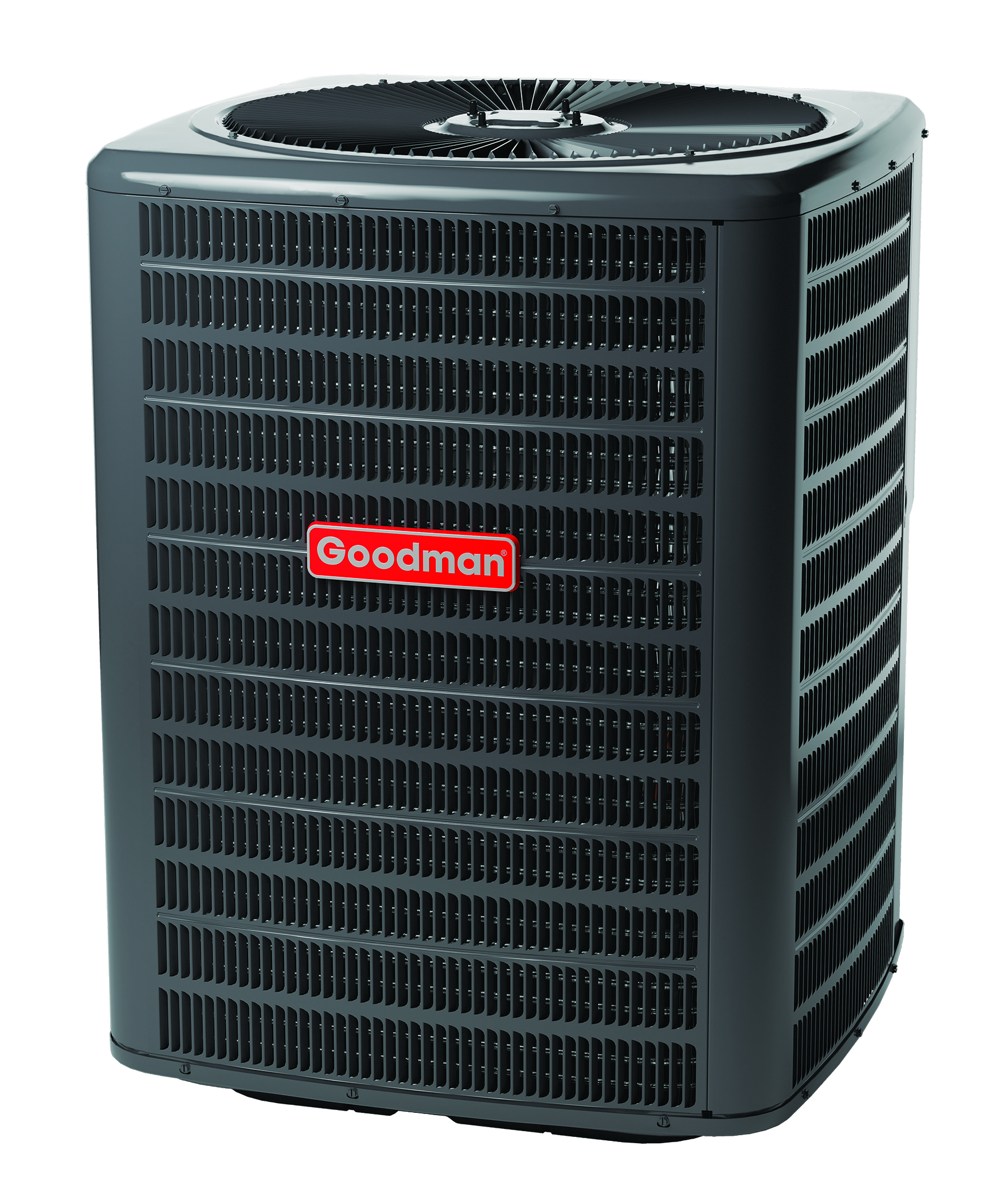
- 17 SEER2 two-stage AC for mid-efficiency cooling with reduced humidity and quieter part-load operation
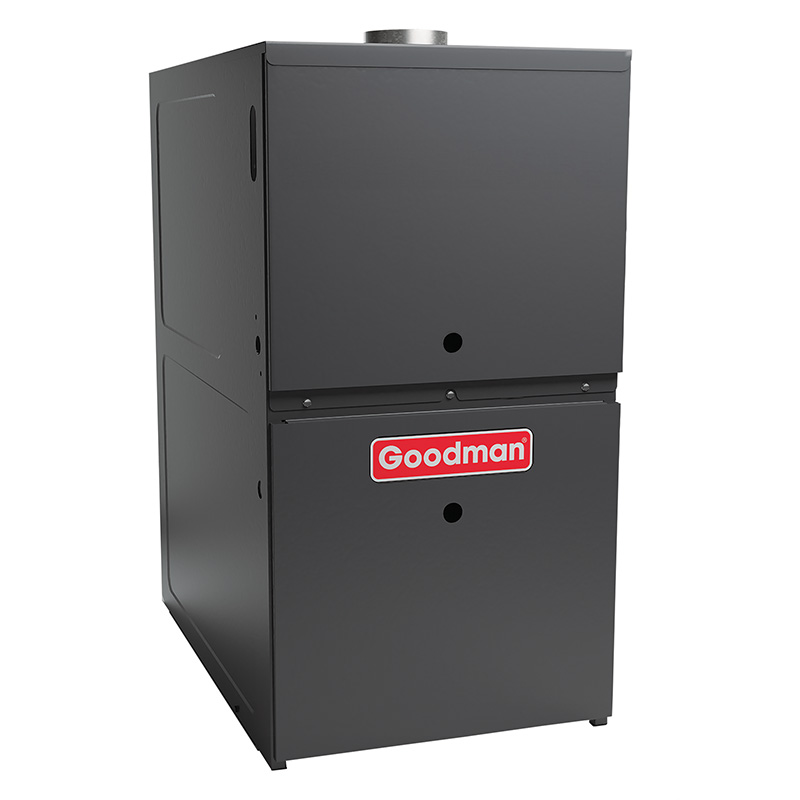
- 60,000 BTU two-stage gas furnace at 80% AFUE with variable-speed blower for even airflow
- R-32 refrigerant: lower global warming potential than R-410A, increasingly standard in new systems
- Upflow configuration suits basements and utility closets with overhead duct systems
- Two-stage compressor cycles at lower capacity during mild weather, reducing wear and energy use
- Variable-speed blower motor adjusts airflow continuously for quieter operation and better air circulation
About this system
The Goodman 3-Ton 17 SEER2 two-stage air conditioner paired with a 60,000 BTU 80% AFUE variable-speed two-stage gas furnace is a mid-efficiency bundle aimed at homeowners who want meaningfully better comfort than entry-level single-stage equipment without paying premium-brand prices. The two-stage compressor runs at a lower capacity the majority of the time, which reduces temperature swings, lowers humidity more effectively than a single-stage unit, and cuts sound levels during mild weather. The variable-speed furnace blower complements this by ramping airflow gradually rather than blasting on at full speed, which helps with even heat distribution and indoor air quality when paired with good filtration.
The 17 SEER2 rating lands this system solidly in the mid-efficiency tier. It clears the federal minimums for most U.S. climate regions by a comfortable margin but stops short of the high-efficiency 18-plus SEER2 range where costs climb sharply. The 80% AFUE furnace means 20 cents of every dollar spent on gas exits through the flue, so homeowners in cold climates who run their furnace heavily may want to weigh a 96% AFUE upgrade. For moderate heating climates or homeowners prioritizing upfront savings, 80% AFUE is a reasonable and widely installed choice. The R-32 refrigerant is lower in global warming potential than the R-410A it replaces and is increasingly the industry standard going forward.
The upflow configuration means conditioned air exits the top of the furnace and travels up through ductwork, making this system a direct fit for homes where the air handler sits in a basement, utility closet, or crawl space with ductwork running overhead. Buyers in homes with attic or horizontal installations will need a different configuration, so confirming duct layout before ordering is important.
This Goodman bundle delivers genuine two-stage comfort and mid-efficiency performance at a price point that undercuts comparable Carrier, Trane, and Lennox systems by 15 to 25 percent. The trade-off is a brand with a documented history of capacitor failures, evaporator coil leaks in a meaningful share of units, and compressors that average 10 to 14 years rather than the 15 to 20 years seen in premium lines. For budget-conscious buyers who use a skilled installer and stay current on maintenance, it represents solid value; for buyers who want to minimize long-term service risk and are willing to pay more upfront, premium brands deserve a look.
Overall score is the average of the five ratings above.
What we like
- Two-stage cooling reduces humidity more effectively and runs quieter than single-stage alternatives
- Variable-speed furnace blower improves airflow consistency and supports better filtration
- R-32 refrigerant is a forward-looking choice with lower environmental impact than R-410A
- Priced 15 to 25 percent below comparable Carrier, Trane, and Lennox systems
- 17 SEER2 clears federal minimums by a meaningful margin, offering real energy savings over entry-level units
Trade-offs
- Dual-run capacitors are the most commonly reported failure, typically at a repair cost of $300 to $600
- Evaporator coil leaks appear in a meaningful share of owner reports, which can be a costly mid-life repair
- Compressor lifespan averages 10 to 14 years versus 15 to 20 years for premium-brand compressors
- 80% AFUE furnace leaves 20% of gas heat unrecovered, a real cost in cold climates with heavy heating loads
What homeowners and pros say about Goodman
Homeowners who post about Goodman equipment tend to land in two camps. Those who had a smooth installation and kept up with annual maintenance often report years of uneventful service and point to the lower purchase price as the deciding factor. Those who ran into problems describe frustration with repair costs that arrive around year 7 or later, a pattern that shows up consistently in Goodman’s ConsumerAffairs score, which sits at roughly 2.5 out of 5. It is worth noting that ConsumerAffairs skews toward complaint-driven reviews, so that number reflects dissatisfied owners more than a true cross-section. Google dealer reviews, which capture a broader mix of customers at the point of service, average around 3.8 out of 5, where affordability is the praise that comes up most often.
HVAC technicians who work on Goodman equipment regularly flag dual-run capacitor failures as the most common service call, a repair that typically runs $300 to $600 and is not unique to Goodman but does show up frequently in owner reports for this brand. Evaporator coil leaks appear in enough reviews to be a real concern rather than an edge case, and compressor longevity tends to average 10 to 14 years on Goodman units compared to the 15 to 20 years technicians see more often with Carrier, Trane, and Lennox compressors. A small number of owners also report refrigerant leaks in the first year, which technicians typically attribute to installation or initial charge errors rather than a product defect. The consistent message from experienced installers is that Goodman performs well when it is set up correctly and maintained, and shows its weaknesses most when shortcuts are taken at installation.
Sources: ConsumerAffairs Goodman owner reviews, AHRI Directory of Certified Product Performance, U.S. DOE appliance and equipment efficiency standards, Goodman product specification sheets.
What it costs to run
At 17 SEER2, cooling this 3-ton system for a typical 1200-hour cooling season at the U.S. average electricity rate of $0.17/kWh works out to roughly $432 per year in cooling, about $116 less per year than a minimum-efficiency 13.4 SEER2 unit of the same size. Your real cost depends on your climate and local rate.
Method: (36,000 BTU/hr ÷ 17 SEER2) × 1200 hours ÷ 1000 × $0.17/kWh. Rate source: U.S. EIA average; cooling hours: moderate-climate estimate.
How it compares
| Brand | Comparable model | SEER2 | Stage | Price position |
|---|---|---|---|---|
| Goodman | GSZ2 / GMVC8 Bundle (this system) | 17 | Two-stage AC / Two-stage variable-speed furnace | Value pick |
| Carrier | Comfort 24ACC636 / 59SC2 | 17 | Two-stage AC / Two-stage furnace | Typically 15 to 25 percent more than this Goodman bundle |
| Trane | XR17 / S9V2 | 17 | Two-stage AC / Two-stage variable-speed furnace | Typically 15 to 25 percent more than this Goodman bundle |
| Lennox | Merit ML17XC2 / ML196V | 17 | Two-stage AC / Two-stage variable-speed furnace | Typically 15 to 25 percent more than this Goodman bundle |
Competitor rows are comparable single-stage units at similar efficiency; price is relative position, not a quote.
Questions about this system
Does the 80% AFUE furnace qualify for any federal or utility efficiency incentives?
The current federal 25C tax credit for gas furnaces requires a minimum of 97% AFUE in most cases, so this 80% AFUE unit generally will not qualify. Some state or utility rebate programs have lower thresholds, so it is worth checking your local utility's current offers before purchasing.
How does R-32 refrigerant affect servicing and future refrigerant availability?
R-32 is mildly flammable, which means technicians need specific training and equipment to handle it safely, though it is widely used globally and increasingly stocked by U.S. distributors. It is not being phased out under current EPA rules and has a lower global warming potential than R-410A, so supply and regulatory risk are lower going forward compared to older refrigerants.
What is the biggest factor in how long this Goodman system will last?
HVAC technicians and owner data consistently point to installation quality as the single largest variable in Goodman system longevity. Proper refrigerant charge, correctly sized ductwork, and a clean startup procedure each have a larger effect on lifespan than the equipment itself, so choosing an experienced installer matters as much as the brand choice.
What should I budget for likely repairs over the first 10 years?
The most commonly reported failure on Goodman AC units is the dual-run capacitor, which typically costs $300 to $600 to replace and is considered a routine repair. Evaporator coil leaks are reported by a meaningful share of owners and are more expensive, often running into the thousands depending on the coil and labor. Building a small maintenance reserve from year one is a practical step.
Can this system be installed in a horizontal or downflow application instead of upflow?
No. This specific furnace is configured for upflow only, meaning it is designed to draw return air from the bottom and discharge conditioned air from the top. Installing it in a horizontal or downflow position would require a furnace explicitly rated for that orientation, so confirm your home's duct layout before ordering.
Specifications
| Cooling capacity | 3 Ton |
| Efficiency | 17 SEER2 |
| Furnace output | 60000 BTU |
| Furnace efficiency | 80% AFUE |
| Configuration | Upflow |
| Refrigerant | R-32 |