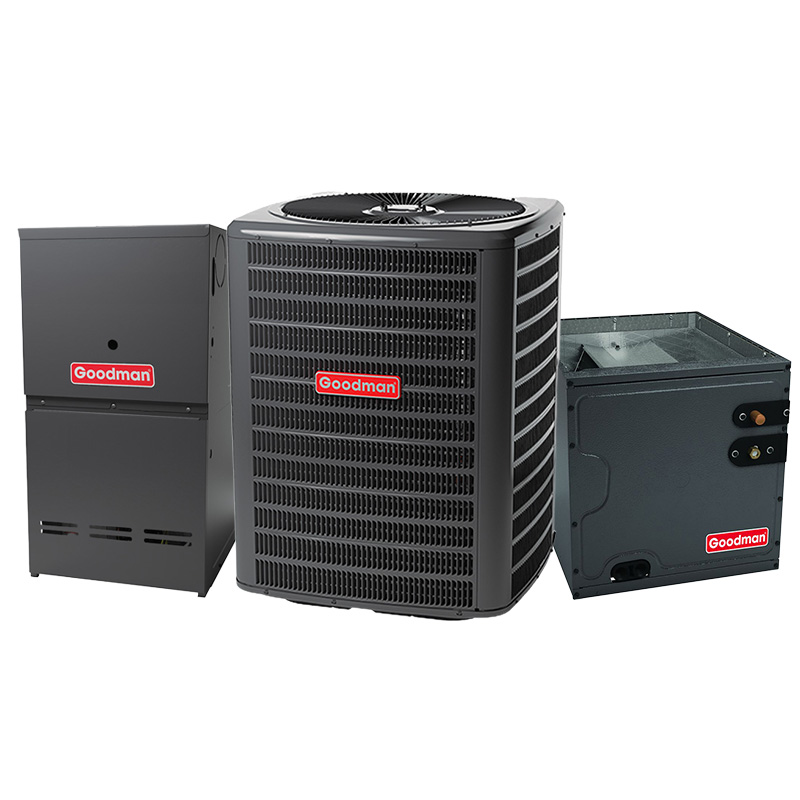
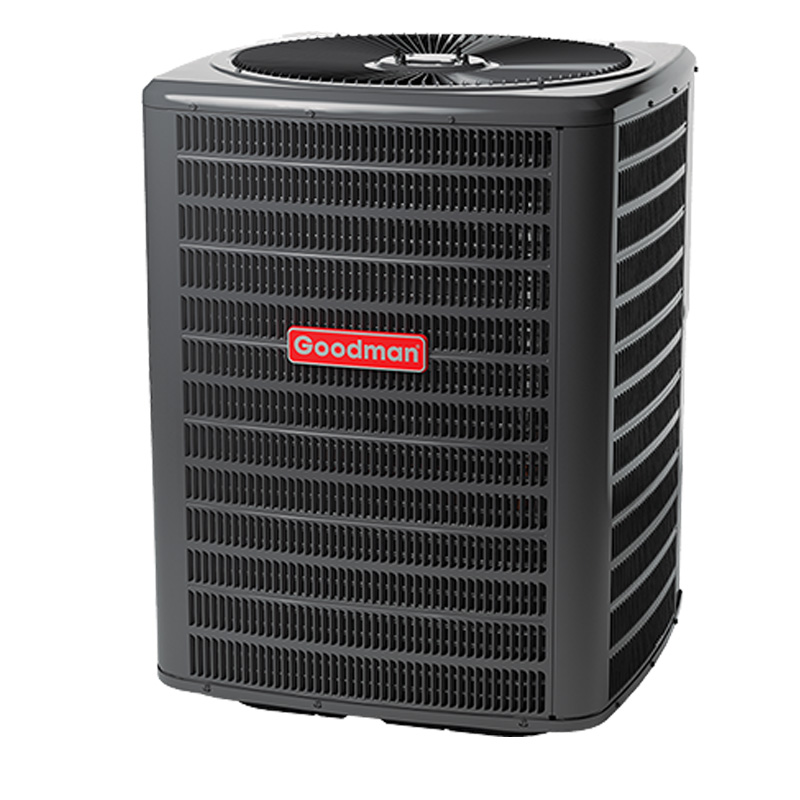
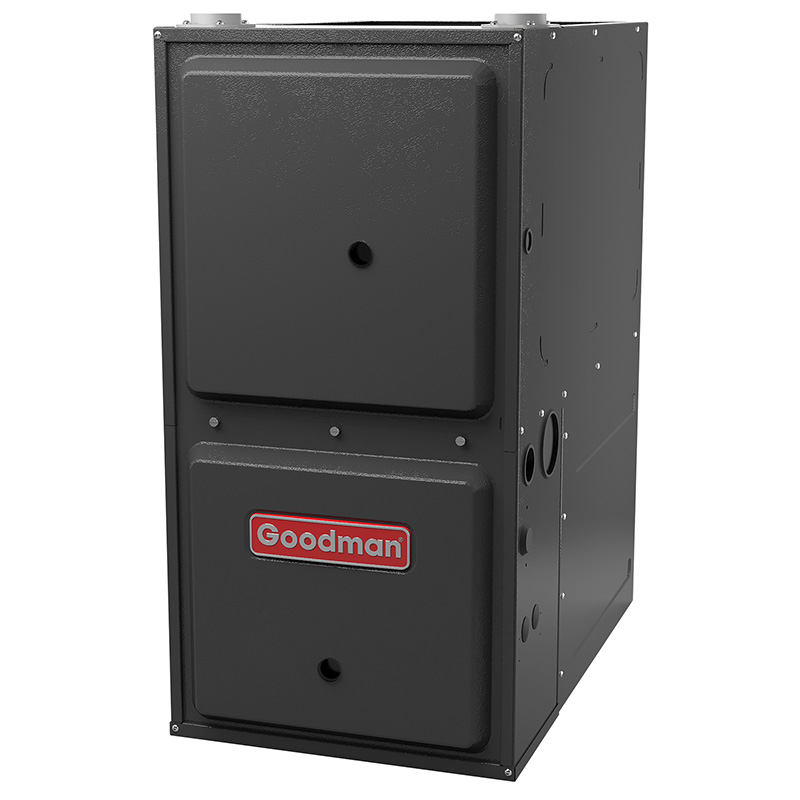
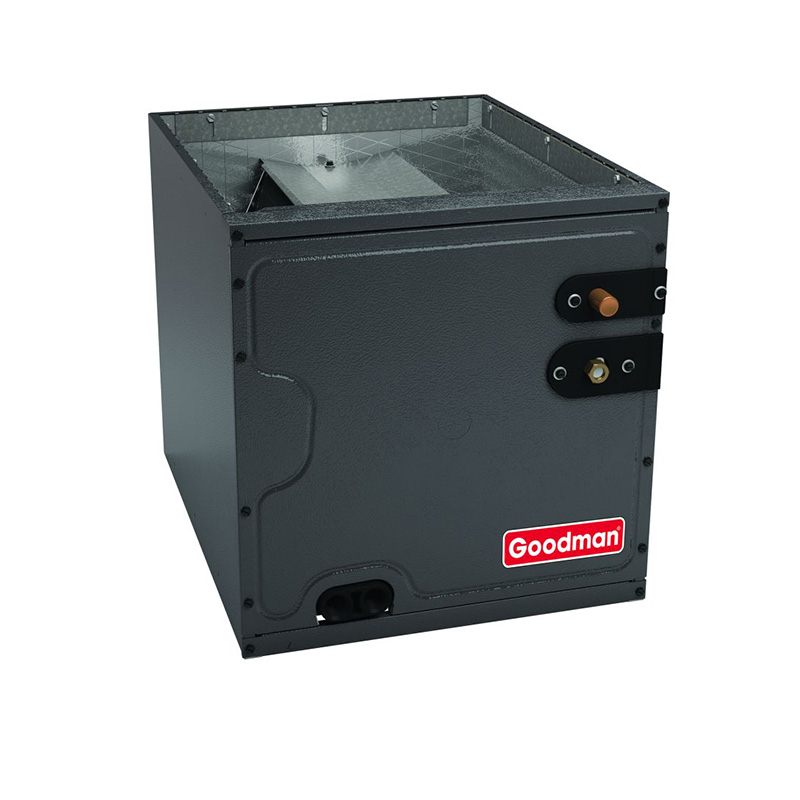
Goodman 3 Ton AC And 80000 BTU 80% AFUE Gas Furnace System | 14.5 SEER2 AC | Multi-Speed ECM Low NOx Furnace | Downflow | R32
View on AC Direct see your lowest price →Check current price on AC Direct →
Key features
- 14.5 SEER2 cooling efficiency meets current federal minimum standards
- 80,000 BTU output, 80% AFUE non-condensing gas furnace
- Multi-speed ECM blower motor reduces fan electricity draw vs. single-speed PSC motors
- Downflow cabinet orientation for installations above living areas with floor registers
- R-32 refrigerant with lower global warming potential than R-410A
- Low NOx burner design for reduced nitrogen oxide emissions
About this system
This Goodman 3-ton bundle pairs a 14.5 SEER2 central air conditioner with an 80,000 BTU, 80% AFUE gas furnace in a downflow configuration, making it a practical choice for homes where the air handler sits above the living space and conditioned air flows down through floor registers. The R-32 refrigerant charge is a step forward environmentally, carrying a lower global warming potential than the R-410A it replaces, and it operates at lower pressures, which can reduce stress on system components over time. At 3 tons, the cooling capacity targets homes in roughly the 1,400 to 1,800 square foot range, though actual sizing depends on your climate zone, insulation, and window load.
The multi-speed ECM blower motor in the furnace is the standout spec here. Unlike a basic single-speed PSC motor, an ECM ramps airflow up and down to match demand, which cuts blower electricity use meaningfully and helps maintain more even temperatures room to room. The 80% AFUE rating means 80 cents of every dollar spent on gas becomes heat, which meets federal minimums for most of the country but lags behind 96% AFUE condensing furnaces if you are in a cold climate and run the heat hard for five or more months a year. This system suits moderate-climate buyers who want a solid, honest-priced replacement without paying for premium-brand sheet metal and marketing costs.
This Goodman bundle delivers honest entry-level performance at a price that is realistically 15 to 25 percent below comparable Carrier, Trane, or Lennox packages, and the ECM blower motor adds genuine value at this tier. The trade-off is a compressor lifespan that tends to average 10 to 14 years versus 15 to 20 for premium brands, and a repair history that steepens after roughly year 7. It is a fair exchange for budget-focused buyers who plan to stay in the home under 10 years or who want to keep upfront costs low.
Overall score is the average of the five ratings above.
What we like
- Priced 15 to 25 percent below comparable Trane, Carrier, and Lennox systems
- ECM blower motor improves humidity control and cuts fan energy use compared to single-speed motors
- R-32 refrigerant is more environmentally responsible and operates at lower working pressures
- Low NOx burner reduces combustion emissions, required in some air quality districts
- Downflow configuration is purpose-built for specific installation types, reducing field modification
Trade-offs
- 80% AFUE is the federal floor, not a standout efficiency figure; in cold climates a 96% AFUE unit pays back the price gap faster
- Dual-run capacitors are the most commonly reported failure point, typically needing replacement within 7 to 10 years
- Compressor longevity averages 10 to 14 years, shorter than the 15 to 20 years owners of premium brands often report
- Evaporator coil leaks and early refrigerant loss show up in a meaningful share of owner reviews, often tied to install quality
What homeowners and pros say about Goodman
Homeowners who chose Goodman equipment most often point to the upfront price as the deciding factor, and that sentiment shows up consistently in dealer Google reviews, which average around 3.8 out of 5 across hundreds of locations. The praise tends to stop at affordability, though. ConsumerAffairs aggregates a complaint-skewed audience and scores Goodman at roughly 2.5 out of 5, where the recurring story is a system that runs fine for the first several years before repair costs begin to climb around year 7. The documented failure modes that come up most often are dual-run capacitor replacements, which are generally inexpensive but annoying, and evaporator coil leaks, which can be a more disruptive fix. A smaller share of owners report refrigerant loss in the first year, which installers typically attribute to improper charging at startup rather than a component defect.
HVAC technicians who work on a lot of Goodman equipment tend to say the same thing: the hardware is adequate for the price, but how long it lasts is heavily shaped by who installed it and how carefully. Compressors on Goodman systems are generally reported to average 10 to 14 years in real-world use, compared to 15 to 20 years that owners of premium brands like Trane and Carrier more commonly report. For this specific system, the ECM blower motor is a meaningful upgrade at the price point, and the R-32 refrigerant is a forward-looking choice. But buyers should go in with clear eyes: this is a budget-tier brand, the warranty requires active registration to be valid, and the long-term cost story depends significantly on the quality of the installation.
Sources: ConsumerAffairs Goodman owner reviews, AHRI Directory of Certified Product Performance, U.S. DOE appliance and equipment efficiency standards, Goodman product specification sheets.
What it costs to run
At 14.5 SEER2, cooling this 3-ton system for a typical 1200-hour cooling season at the U.S. average electricity rate of $0.17/kWh works out to roughly $506 per year in cooling, about $42 less per year than a minimum-efficiency 13.4 SEER2 unit of the same size. Your real cost depends on your climate and local rate.
Method: (36,000 BTU/hr ÷ 14.5 SEER2) × 1200 hours ÷ 1000 × $0.17/kWh. Rate source: U.S. EIA average; cooling hours: moderate-climate estimate.
How it compares
| Brand | Comparable model | SEER2 | Stage | Price position |
|---|---|---|---|---|
| Goodman | GSXH503610 + GCVC800803BX (this system) | 14.5 | Single-stage | Value pick |
| Carrier | Comfort 14 Series (24ACC636) | 14.3-14.5 | Single-stage | Typically 15 to 25 percent more than this Goodman bundle |
| Trane | XR14 Series (4TTR4036) | 14.3-14.5 | Single-stage | Typically 15 to 25 percent more than this Goodman bundle |
| Lennox | Merit 14 Series (ML14XC1) | 14.3-14.5 | Single-stage | Typically 15 to 25 percent more than this Goodman bundle |
Competitor rows are comparable single-stage units at similar efficiency; price is relative position, not a quote.
Questions about this system
Is downflow the right configuration for my home, and can I convert this unit to upflow or horizontal?
Downflow means the furnace pulls return air in at the top and discharges heated or cooled air out the bottom, which is correct for installations where the unit sits in an upper floor or attic closet above floor-level supply ducts. This cabinet is specifically designed for downflow and is not convertible to upflow or horizontal without a different cabinet model, so confirm your duct layout with your installer before ordering.
What does R-32 refrigerant mean for service costs compared to R-410A systems?
R-32 is becoming more widely stocked as manufacturers shift away from R-410A, and because it is a single-component refrigerant it can be topped off without full recovery and recharge in some circumstances, which can simplify service. However, it is classified as mildly flammable (A2L), so technicians need specific certification and equipment to work with it safely, which may limit the pool of qualified service techs in some rural areas.
How likely is the dual-run capacitor to fail, and what does that repair cost?
Dual-run capacitors are the single most commonly reported failure point on Goodman AC units and typically show up after several years of service, particularly in hot climates where the system runs hard. The repair is generally a low-cost fix, with parts and labor commonly landing in the 300 to 600 dollar range, and most HVAC technicians can complete it in under an hour.
The 80% AFUE rating seems low. How much more would a 96% AFUE furnace save me each year?
The efficiency gap means a 96% AFUE furnace converts 16 more cents of every gas dollar into heat versus this unit. In mild to moderate climates with shorter heating seasons the annual savings may be modest, but in cold northern climates running 1,000 or more heating hours a year the payback on a higher-efficiency furnace can realistically happen within 5 to 8 years depending on gas prices.
What warranty comes with this system, and what do I need to do to keep it valid?
Goodman typically offers a 10-year parts limited warranty when the equipment is registered within a set window after installation, and the compressor often carries its own limited warranty term. Registration must usually be completed online within 60 days of installation, and the warranty generally requires installation by a licensed HVAC contractor. Review the specific warranty certificate included with your unit because terms can vary by model and registration date.
Specifications
| Cooling capacity | 3 Ton |
| Efficiency | 14.5 SEER2 |
| Furnace output | 80000 BTU |
| Furnace efficiency | 80% AFUE |
| Configuration | Downflow |
| Refrigerant | R-32 |