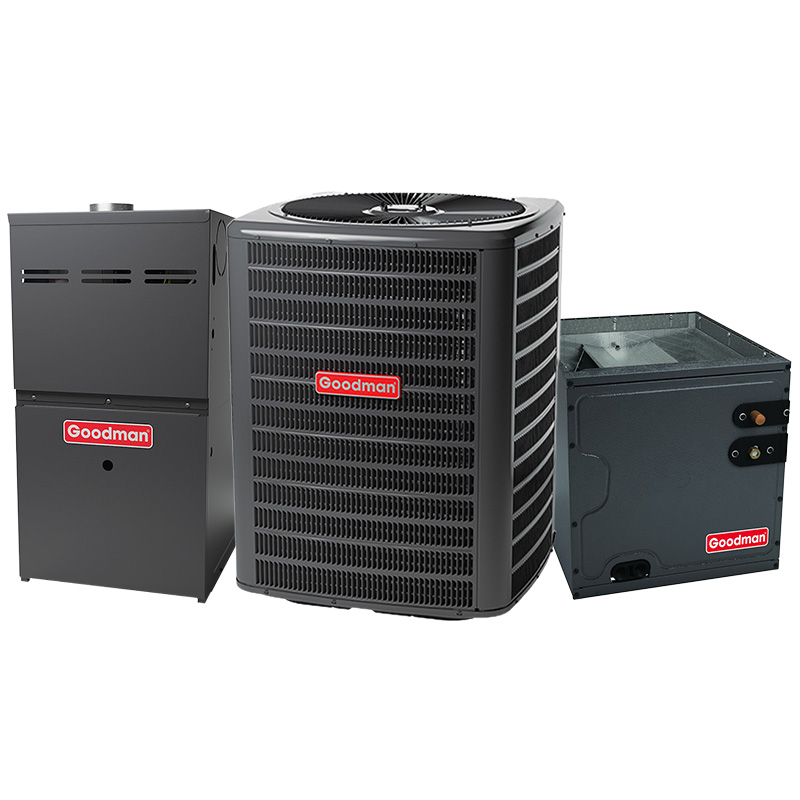
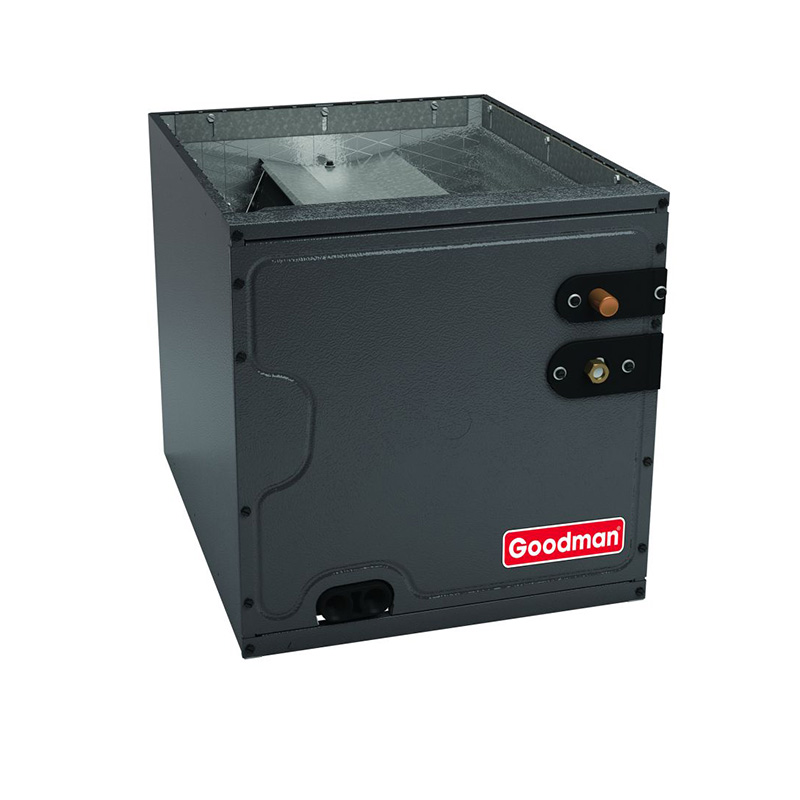
Goodman 3 Ton AC And 80000 BTU 80% AFUE Gas Furnace System | 16 SEER2 AC | Multi-Speed ECM Low NOx Furnace | Upflow | R32
View on AC Direct see your lowest price →Check current price on AC Direct →
Key features
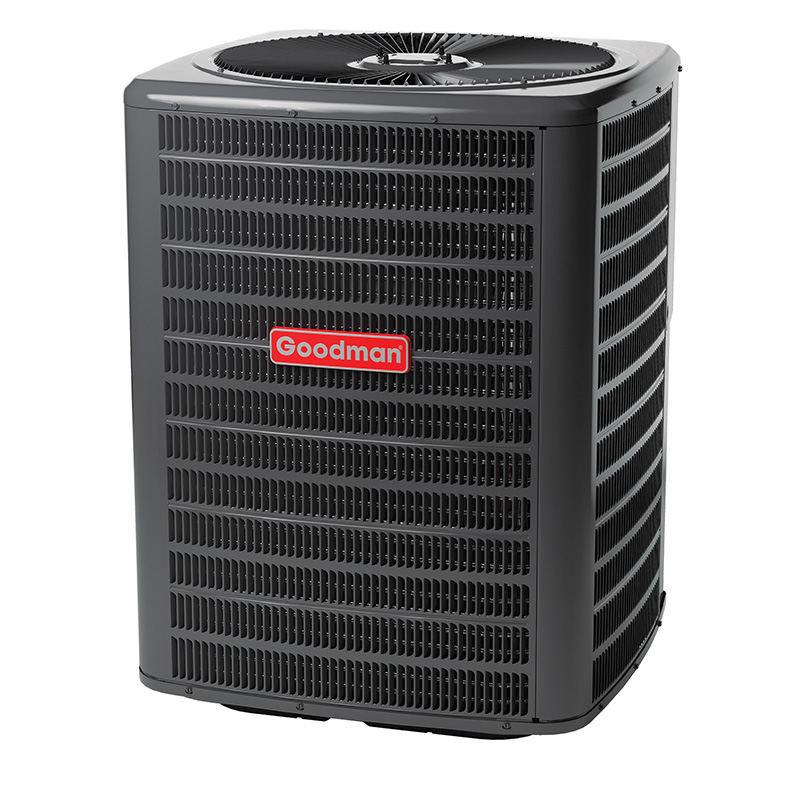
- 3-ton, 16 SEER2 central air conditioner using R-32 refrigerant
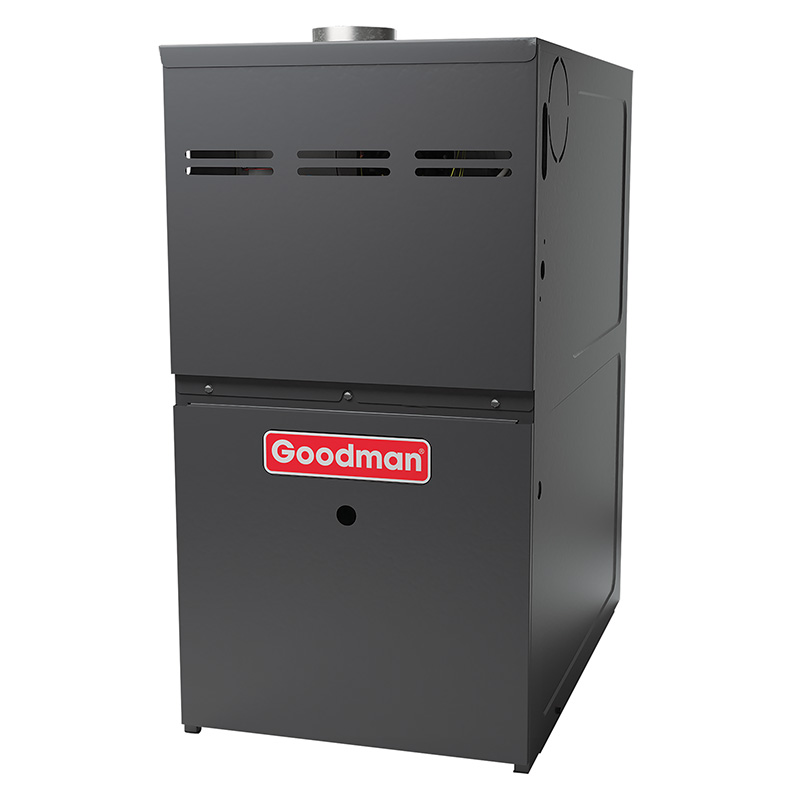
- 80,000 BTU 80% AFUE upflow gas furnace with Low NOx burners
- Multi-speed ECM blower motor for smoother airflow and lower blower electricity use
- R-32 refrigerant offers a lower global-warming potential than R-410A
- Upflow cabinet design suits basement, utility closet, and crawlspace installations
- Goodman price point typically 15 to 25 percent below Trane, Carrier, and Lennox equivalents
About this system
This Goodman bundle pairs a 3-ton, 16 SEER2 air conditioner with an 80,000 BTU, 80% AFUE upflow gas furnace to cover homes roughly in the 1,400 to 1,900 square-foot range, depending on climate zone and insulation. The AC runs on R-32 refrigerant, a lower-global-warming-potential option that is becoming more common in residential equipment as the industry moves away from R-410A. At 16 SEER2, efficiency sits at the entry point for current federal minimums in most northern regions and one step above the floor in the South and Southwest, meaning real-world energy bills will be noticeably lower than an older R-22 or entry-level R-410A system, but not as low as a 17-plus SEER2 or inverter-driven unit.
The furnace side uses a multi-speed ECM blower motor, which ramps airflow more gradually than a single-speed PSC motor, improving comfort and slightly reducing electricity consumption during heating cycles. The 80% AFUE rating means one-fifth of every fuel dollar exits through the flue as exhaust, which is adequate in moderate climates but worth reconsidering if you live somewhere with very cold winters and high gas prices, where a 96% AFUE condensing furnace would pay back the price difference faster. The Low NOx designation meets California and other air-quality-district emissions standards, making this bundle eligible in markets where standard furnaces are restricted. Upflow configuration fits the most common residential installation scenario: furnace in a basement or closet blowing conditioned air upward into supply ducts above.
This Goodman bundle delivers a functional, code-compliant system at a price that undercuts the major premium brands by a meaningful margin, making it a reasonable choice for budget-conscious buyers who prioritize upfront cost. Efficiency is solid but not class-leading, and long-term reliability sits a step below premium competitors, with compressor lifespan and coil integrity being the areas where owners most often report disappointment after year seven. Getting a skilled installer is not optional here; Goodman's real-world performance is more dependent on installation quality than most brands at this price.
Overall score is the average of the five ratings above.
What we like
- Price is typically 15 to 25 percent lower than comparable Trane, Carrier, and Lennox systems
- R-32 refrigerant is better for the environment than R-410A and is increasingly serviceable
- Multi-speed ECM blower motor improves comfort and cuts blower operating costs versus single-speed
- Low NOx rating qualifies this furnace in California and other strict air-quality districts
- 16 SEER2 meets or exceeds federal minimums in all U.S. regions, providing a measurable efficiency step up from aging systems
Trade-offs
- 80% AFUE loses 20 cents of every heating dollar to exhaust, which is a real cost in cold climates with high gas rates
- Compressor lifespan averages 10 to 14 years, versus 15 to 20 years for premium-brand compressors
- Dual-run capacitors are the most frequently reported failure point, and evaporator coil leaks show up in a meaningful share of owner reviews
- ConsumerAffairs scores average around 2.5 out of 5, with recurring complaints about rising repair costs after year seven
What homeowners and pros say about Goodman
Homeowners who purchase Goodman equipment tend to split into two camps, and the pattern is consistent with what the ratings reflect. Google dealer reviews land around 3.8 out of 5, where the most common positive feedback is straightforward: the system does what it promises and cost significantly less than competing quotes. That affordability story holds up at the point of sale. The friction surfaces later. ConsumerAffairs scores average closer to 2.5 out of 5, a channel that skews toward people motivated to write by a frustrating experience, and the recurring theme there is repair costs accumulating after the seven-year mark. The two specific failure modes that appear most consistently in owner accounts are dual-run capacitor failures, a relatively low-cost fix typically in the 300 to 600 dollar range, and evaporator coil leaks, which are a more involved and expensive repair. Compressor longevity is a quieter concern: Goodman compressors average roughly 10 to 14 years in documented owner experience, compared to 15 to 20 years that premium brands typically see.
HVAC technicians who work on Goodman units professionally tend to view them as workable equipment whose outcome is heavily shaped by whoever installs them. A clean installation with correct refrigerant charge, proper airflow, and well-sealed ductwork can get solid years out of this bundle. A rushed or under-supervised installation amplifies every weak point the brand already carries, including the first-year refrigerant leak risk that a minority of owners report, which technicians note is almost always a charge or connection issue rather than a product defect. The honest framing for this 3-ton, 16 SEER2 R-32 system is that it is a competent, budget-positioned package that rewards buyers who spend their savings on a quality contractor rather than on the lowest installation bid they can find.
Sources: ConsumerAffairs Goodman owner reviews, AHRI Directory of Certified Product Performance, U.S. DOE appliance and equipment efficiency standards, Goodman product specification sheets.
What it costs to run
At 16 SEER2, cooling this 3-ton system for a typical 1200-hour cooling season at the U.S. average electricity rate of $0.17/kWh works out to roughly $459 per year in cooling, about $89 less per year than a minimum-efficiency 13.4 SEER2 unit of the same size. Your real cost depends on your climate and local rate.
Method: (36,000 BTU/hr ÷ 16 SEER2) × 1200 hours ÷ 1000 × $0.17/kWh. Rate source: U.S. EIA average; cooling hours: moderate-climate estimate.
How it compares
| Brand | Comparable model | SEER2 | Stage | Price position |
|---|---|---|---|---|
| Goodman | GSX16 / GMVC8 Series Bundle | 16 | Single-stage AC / Multi-speed furnace | Value pick |
| Carrier | Comfort 16 (24ACC6) with 58SB0 Furnace | 16 | Single-stage | Typically 15 to 25 percent more than this Goodman bundle |
| Trane | XR16 (4TTR6) with S8X1 Furnace | 16 | Single-stage | Typically 15 to 25 percent more than this Goodman bundle |
| Lennox | Merit 16 (14ACX) with ML180 Furnace | 16 | Single-stage | Typically 15 to 25 percent more than this Goodman bundle |
Competitor rows are comparable single-stage units at similar efficiency; price is relative position, not a quote.
Questions about this system
Will this system work in California given Low NOx requirements?
Yes. The furnace carries a Low NOx rating that satisfies California Air Resources Board and South Coast AQMD requirements, so it is eligible for installation in districts where standard furnaces are banned. Confirm with your local jurisdiction before ordering, as some areas layer additional requirements on top of state minimums.
Is R-32 refrigerant easy to find and service if the AC develops a leak?
R-32 is increasingly stocked by HVAC wholesalers and is handled by any EPA Section 608-certified technician, so availability is not a major concern in most metro areas. It is mildly flammable, which requires technicians to follow specific handling protocols, but this is a well-understood property and is not a safety issue under normal residential service conditions.
The 80% AFUE furnace is cheaper, but should I upgrade to a 96% AFUE model instead?
In climates with mild winters or low natural gas prices, the payback on a 96% AFUE furnace can stretch to ten years or more, making 80% a defensible choice. In cold climates where the furnace runs four to six months a year and gas is expensive, a 96% AFUE unit typically pays back the price difference in five to eight years and meaningfully lowers your monthly bills in the meantime.
What is the most common repair this Goodman AC system will need, and what does it cost?
Dual-run capacitors are the most frequently documented failure on Goodman condensing units and typically cost between 300 and 600 dollars to diagnose and replace, parts and labor included. Evaporator coil leaks are a secondary concern reported by a meaningful share of owners; those repairs are more expensive and may require refrigerant recovery, a coil replacement, and a new charge.
Does an upflow furnace configuration work if my ducts run in the attic rather than the basement?
Upflow means the furnace draws return air from the bottom and pushes conditioned air upward, which suits installations where supply ducts are above the unit, such as a basement or first-floor utility closet feeding second-floor or attic ducts. If your air handler location and duct layout are oriented differently, you may need a horizontal or downflow configuration instead, so confirm the physical setup with your installer before purchasing.
Specifications
| Cooling capacity | 3 Ton |
| Efficiency | 16 SEER2 |
| Furnace output | 80000 BTU |
| Furnace efficiency | 80% AFUE |
| Configuration | Upflow |
| Refrigerant | R-32 |