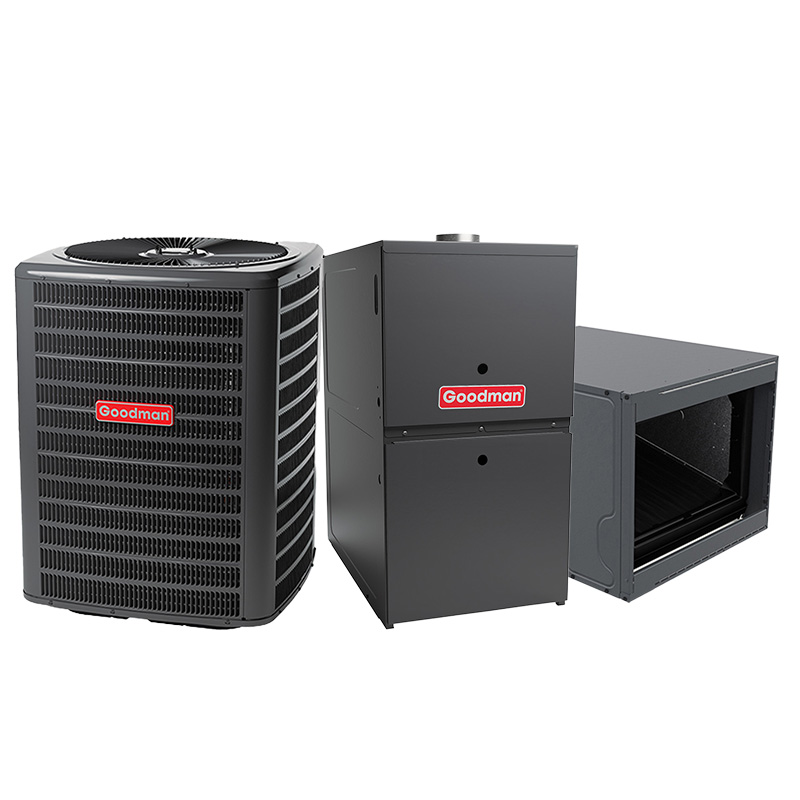
Goodman 3 Ton AC And 80000 BTU 80% AFUE Gas Furnace System | 17.2 SEER2 Two Stage AC | Variable Speed Two Stage Furnace | Horizontal | R32
View on AC Direct see your lowest price →Check current price on AC Direct →
Key features
- 17.2 SEER2 two-stage compressor for improved humidity control and part-load efficiency
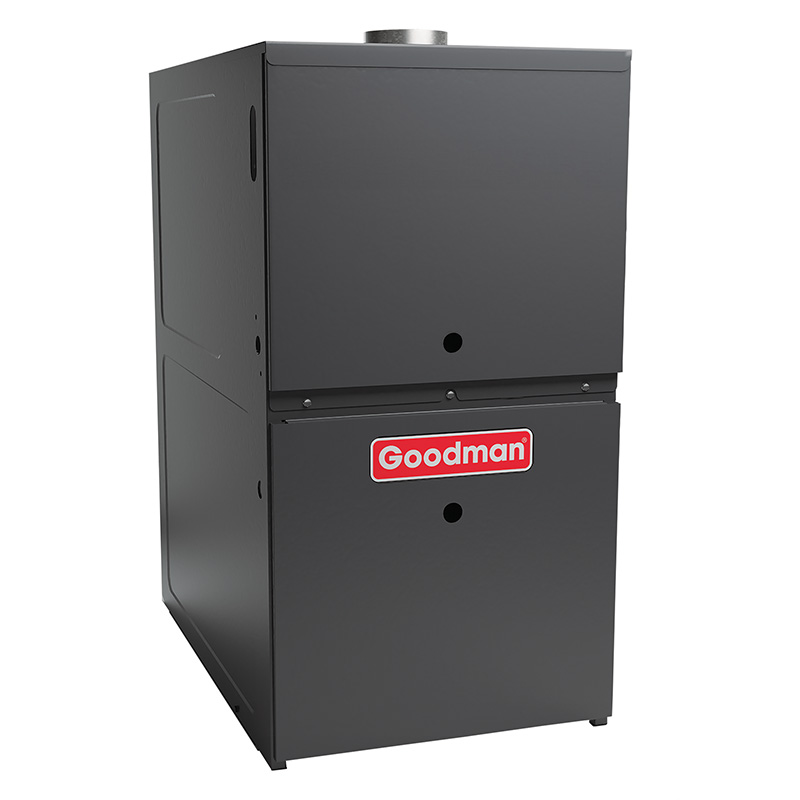
- 80,000 BTU two-stage gas furnace rated at 80% AFUE with variable-speed ECM blower
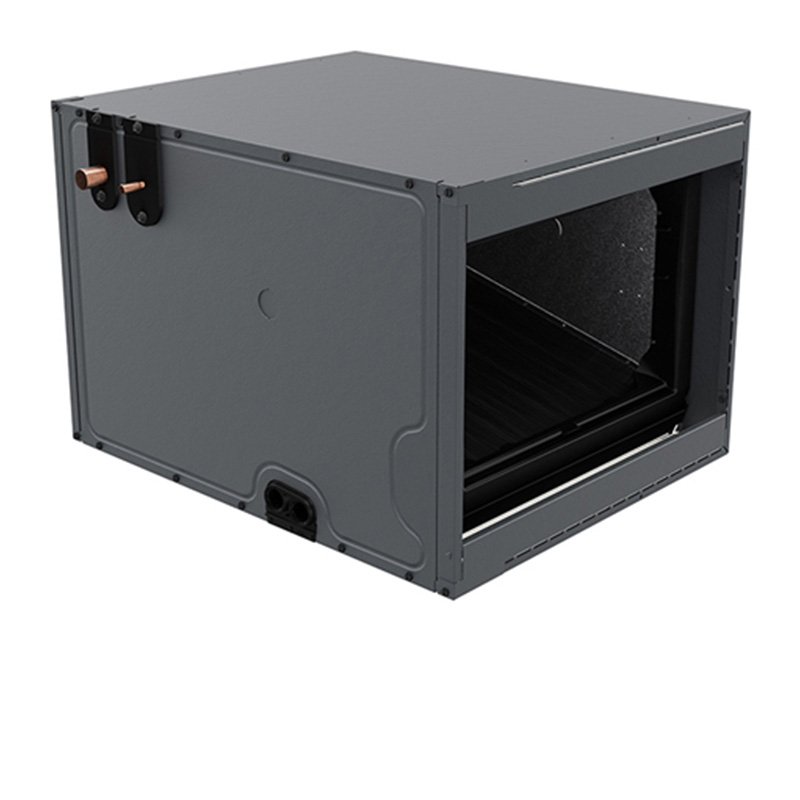
- Horizontal configuration for attic, crawlspace, or side-load closet installations
- R-32 refrigerant: lower global-warming potential than R-410A
- Two-stage operation on both heating and cooling reduces short-cycling and temperature swings
- Priced approximately 15 to 25 percent below comparable Carrier, Trane, and Lennox systems
About this system
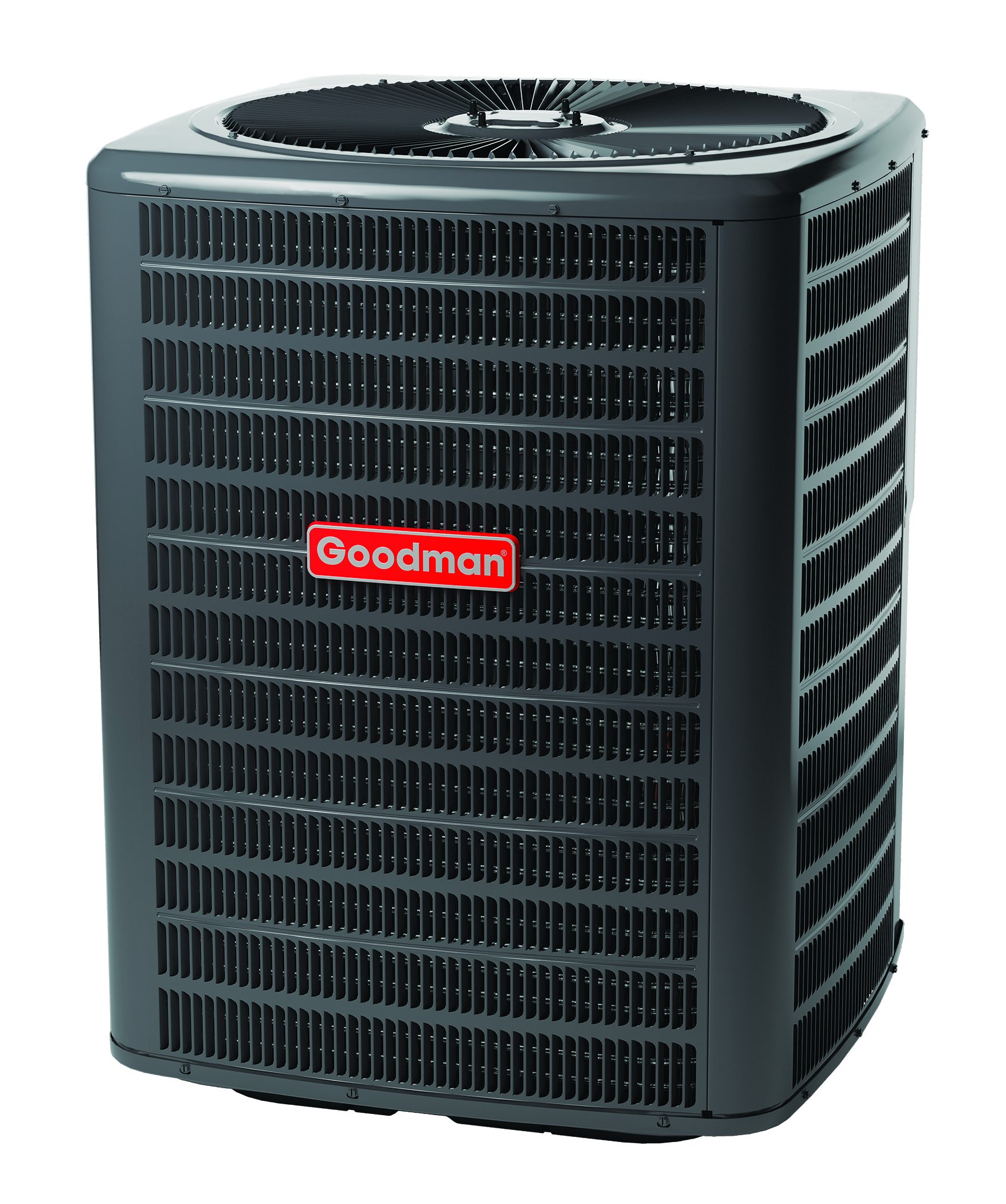
This Goodman bundle pairs a 3-ton, 17.2 SEER2 two-stage air conditioner with an 80,000 BTU, 80% AFUE two-stage gas furnace in a horizontal configuration, making it a practical fit for homes that use attic or crawlspace installations where the air handler must lie on its side. The R-32 refrigerant charge is a notable forward-looking choice: R-32 has a lower global-warming potential than the R-410A it replaces and is increasingly the industry standard as manufacturers phase out older refrigerants. Two-stage cooling means the compressor runs at a lower capacity on mild days, which improves humidity removal and reduces temperature swings compared to single-stage equipment.
The 17.2 SEER2 rating sits in the upper-mid efficiency band. It clears the federal minimums for most U.S. climate regions by a meaningful margin and may qualify for the federal energy-efficiency tax credit under current IRS guidance, though buyers should confirm with a tax professional. The variable-speed furnace blower pairs well with two-stage cooling by moving air more quietly and consistently than a single-speed motor. The 80% AFUE furnace is straightforward to install and does not require a dedicated condensate drain line, which simplifies the retrofit process in older homes. Buyers in northern climates who want lower heating bills should weigh whether upgrading to a 96% or higher AFUE unit makes more financial sense for their heating load.
This system is well suited to budget-conscious homeowners replacing aging equipment in a home with existing horizontal ductwork, or to rental property owners and contractors who need reliable mid-efficiency performance without the premium price tag of Trane, Carrier, or Lennox. As with all Goodman equipment, long-term satisfaction correlates strongly with the quality of the installing contractor and whether the refrigerant charge is set precisely at startup.
This Goodman bundle delivers legitimate two-stage comfort and a forward-looking refrigerant choice at a price that undercuts major premium brands by a noticeable margin. The 80% AFUE furnace keeps the system approachable for contractors and avoids condensate complexity, though homeowners in cold climates will give up meaningful heating efficiency compared to a 96% unit. Durability sits in the average-to-adequate range for residential equipment, with long-term outcomes hinging heavily on installer quality and prompt attention to the brand's known weak points.
Overall score is the average of the five ratings above.
What we like
- Two-stage cooling improves humidity removal and reduces on/off cycling compared to single-stage units
- R-32 refrigerant is more environmentally responsible and increasingly the industry standard
- Horizontal configuration opens up attic and crawlspace installs that many vertical-only systems cannot cover
- Variable-speed ECM blower operates more quietly and consistently than standard single-speed motors
- Lower upfront cost than comparable Carrier, Trane, or Lennox packages, freeing budget for a quality installation
Trade-offs
- Dual-run capacitors are the most commonly reported failure point and typically need replacement within the first several years
- Compressor lifespan averages 10 to 14 years, shorter than the 15 to 20 years documented for premium brands
- Evaporator coil leaks appear in a meaningful share of owner reviews, particularly in systems that are not commissioned carefully
- 80% AFUE is the minimum-efficiency tier; homeowners in heating-dominated climates will pay more in gas costs over the system's life compared to a 96% unit
What homeowners and pros say about Goodman
Owners who bought Goodman equipment for cost reasons often describe the first several years as uneventful, and that lines up with the brand’s Google dealer review average of around 3.8 out of 5, where affordability and the value of getting a two-stage system at this price point are the most repeated positives. The picture shifts in longer-term feedback: on complaint-weighted channels like ConsumerAffairs, Goodman scores around 2.5 out of 5, and the recurring story is repair bills that start stacking up after roughly year seven. For a horizontal two-stage system like this one, the most relevant documented failure modes are dual-run capacitor failures, which are common, relatively inexpensive to fix, and not unique to Goodman but show up frequently in owner reports; evaporator coil leaks, which appear in a meaningful share of reviews and tend to be more costly; and compressor lifespan that averages 10 to 14 years rather than the 15 to 20 years that premium brands typically achieve.
HVAC technicians who work on Goodman equipment regularly make a consistent point: the brand’s outcomes are more installation-dependent than those of Trane or Carrier. A well-commissioned Goodman system with a properly set R-32 charge and tight duct connections tends to run without drama for many years. A rushed installation, an imprecise refrigerant charge, or a missed startup check is where the early refrigerant leak reports that show up in a minority of first-year owner reviews tend to originate. For this horizontal bundle specifically, the advice from the trade is to spend whatever it takes to get a qualified installer who has worked with R-32 and to budget for a capacitor replacement somewhere in years three through eight so it does not feel like a surprise when it happens.
Sources: ConsumerAffairs Goodman owner reviews, AHRI Directory of Certified Product Performance, U.S. DOE appliance and equipment efficiency standards, Goodman product specification sheets.
What it costs to run
At 17.2 SEER2, cooling this 3-ton system for a typical 1200-hour cooling season at the U.S. average electricity rate of $0.17/kWh works out to roughly $427 per year in cooling, about $121 less per year than a minimum-efficiency 13.4 SEER2 unit of the same size. Your real cost depends on your climate and local rate.
Method: (36,000 BTU/hr ÷ 17.2 SEER2) × 1200 hours ÷ 1000 × $0.17/kWh. Rate source: U.S. EIA average; cooling hours: moderate-climate estimate.
How it compares
| Brand | Comparable model | SEER2 | Stage | Price position |
|---|---|---|---|---|
| Goodman | 3-Ton 17.2 SEER2 Two-Stage AC / 80K BTU 80% AFUE Two-Stage Furnace (this system) | 17.2 | Two-stage | Value pick |
| Carrier | Comfort 16 / Performance 96 Series | 16-17 | Two-stage | Typically 15 to 25 percent more than this Goodman bundle |
| Trane | XR17 / S9V2 Series | 17 | Two-stage | Typically 15 to 25 percent more than this Goodman bundle |
| Lennox | Merit 16ACX / ML196 Series | 16-17 | Two-stage | Typically 15 to 25 percent more than this Goodman bundle |
Competitor rows are comparable single-stage units at similar efficiency; price is relative position, not a quote.
Questions about this system
Is this system eligible for the federal energy-efficiency tax credit?
The 17.2 SEER2 rating and two-stage operation may qualify under current IRS guidelines for the 25C residential energy-efficiency credit, but eligibility depends on the specific installed equipment, your tax situation, and whether requirements change year to year. Get the system's AHRI certificate from your installer and confirm with a tax professional before counting on the credit.
Why does the horizontal configuration matter, and can this system be installed vertically?
Horizontal configuration means the air handler is designed to lie on its side, which is required for attic platforms and some crawlspace or closet installations where there is not enough headroom for an upright unit. Installing a horizontal-rated unit in a vertical position is not supported and will cause condensate drainage problems and potentially void the warranty.
What should I know about R-32 refrigerant before buying?
R-32 has a lower global-warming potential than R-410A and is becoming the new baseline for residential equipment as older refrigerants are phased down. It does require technicians to be certified to handle it, so confirm your installing contractor is familiar with R-32 before they show up, as improper charging is one of the documented causes of early refrigerant leaks in Goodman systems.
How often do Goodman capacitors fail, and what does that repair cost?
Dual-run capacitors are the single most commonly reported failure mode in Goodman air conditioners, and they can fail within the first several years of operation. The repair is typically straightforward and falls in the $300 to $600 range including a service call, so it is worth budgeting for it rather than being caught off guard.
Should I upgrade to a 96% AFUE furnace instead of using the 80% unit in this bundle?
If your home is in a northern climate where the furnace runs heavily from October through April, the long-term gas savings from a 96% unit often justify the higher upfront cost, and the math generally favors the upgrade in heating-dominated regions within four to seven years. In mild or mixed climates with shorter heating seasons, the 80% furnace is a reasonable and much simpler installation since it does not require a PVC flue or condensate drain.
Specifications
| Cooling capacity | 3 Ton |
| Efficiency | 17.2 SEER2 |
| Furnace output | 80000 BTU |
| Furnace efficiency | 80% AFUE |
| Configuration | Horizontal |
| Refrigerant | R-32 |