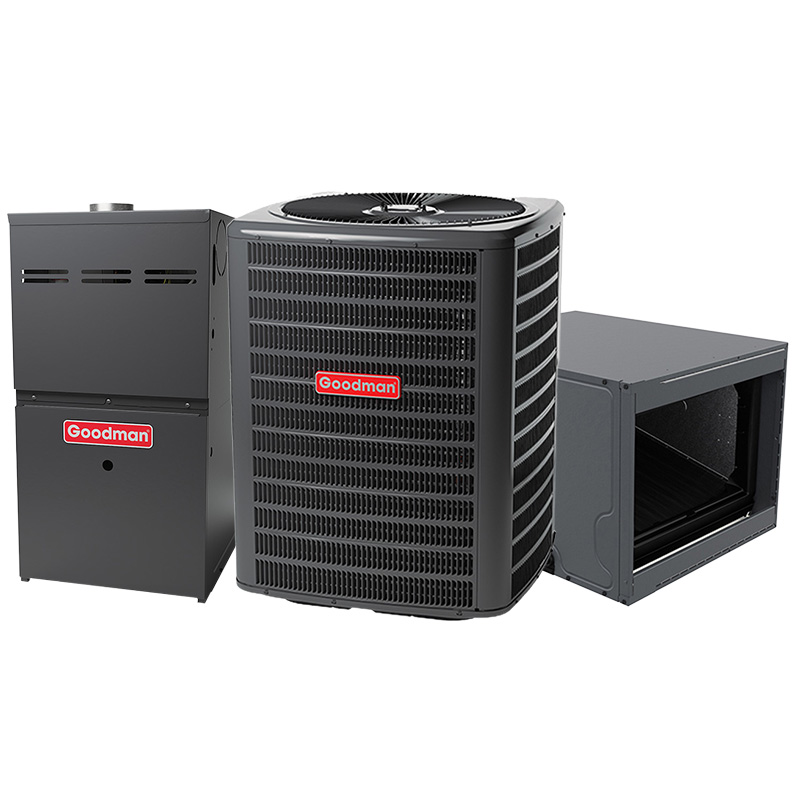
Goodman 3 Ton AC And 80000 BTU 80% AFUE Gas Furnace System | 15.2 SEER2 AC | Multi-Speed ECM Low NOx Furnace | Horizontal | R32
View on AC Direct see your lowest price →Check current price on AC Direct →
Key features
- 3-ton cooling capacity at 15.2 SEER2, meeting current federal minimum efficiency standards for most U.S. regions
- R-32 refrigerant with roughly 70% lower global warming potential than R-410A
- 80,000 BTU gas furnace rated at 80% AFUE for code-minimum heating efficiency
- Multi-speed ECM blower motor reduces electricity use and improves airflow consistency
- Horizontal configuration suits attics, crawlspaces, and side-mount utility closets
- Low NOx furnace burner design meets California and other strict emissions requirements
About this system
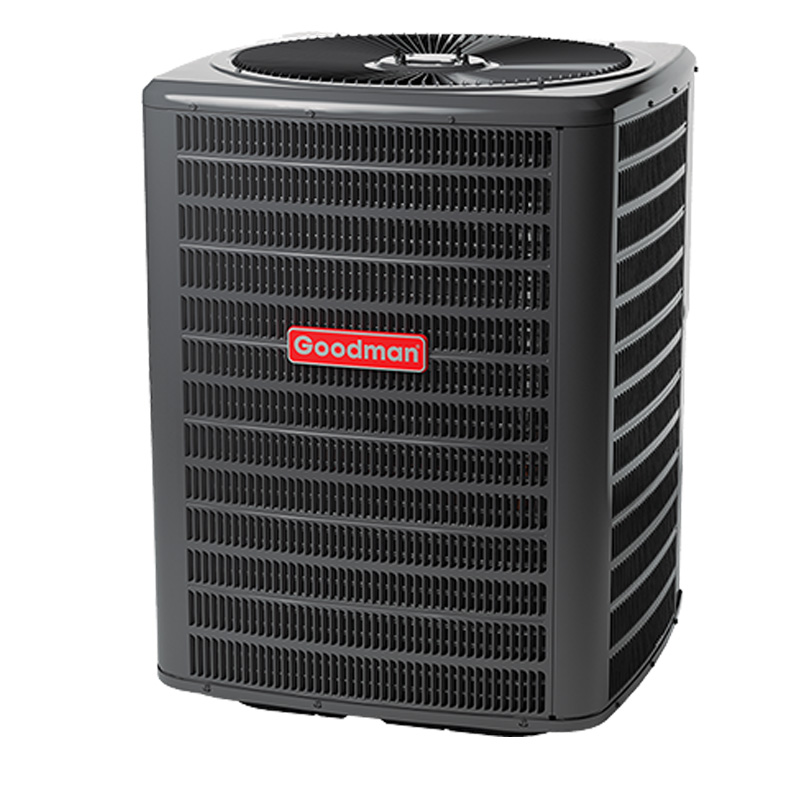
This Goodman bundle pairs a 3-ton, 15.2 SEER2 central air conditioner with an 80,000 BTU, 80% AFUE gas furnace in a horizontal configuration, meaning both units are designed to lie on their sides in a crawlspace, attic, or utility closet where vertical clearance is limited. The R-32 refrigerant charge is a meaningful step forward: R-32 has a global warming potential roughly 70 percent lower than the R-410A it replaces, and it operates at slightly higher efficiency for a given coil size. If your home already has horizontal air handler space and compatible duct runs, this system slots in with fewer modifications than a configuration change would require.
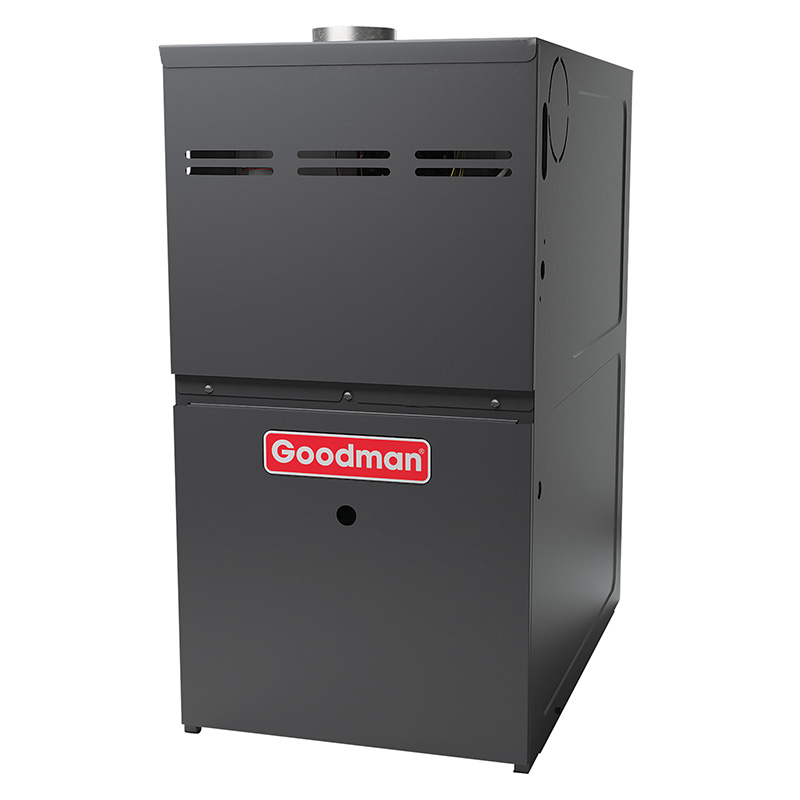
The furnace side runs a multi-speed ECM blower motor, which ramps fan speed up or down based on demand rather than running flat out all the time. That reduces electricity consumption during blower operation and tends to produce steadier temperatures room to room. The 80% AFUE rating means 20 cents of every gas dollar goes up the flue, which is the code-minimum efficiency tier in most U.S. climate zones. Homeowners in northern states who run their furnace hard from October through April may want to weigh whether the lower upfront cost offsets the operating cost gap versus a 96% AFUE unit over a decade or more. In mild to moderate heating climates, the 80% furnace is a perfectly reasonable fit.
Goodman prices this class of system 15 to 25 percent below comparable Trane, Lennox, and Carrier equipment, which makes it a serious option for budget-conscious buyers replacing an aging system, landlords managing rental properties, or homeowners who plan to move within five to eight years. The trade-off is a compressor that historically averages 10 to 14 years versus 15 to 20 for premium brands, along with a reliability record that depends heavily on who installs it and how carefully the refrigerant charge is set on the first call.
This Goodman horizontal system delivers a functional, code-compliant cooling and heating package at a price point that undercuts the major premium brands by a noticeable margin. It is a workable choice for cost-focused buyers, but the 80% AFUE furnace, documented compressor longevity below premium peers, and a reliability record that hinges on installer quality mean it is not the best fit for every household. Buyers who plan to stay long-term in a cold climate should run the math on higher-efficiency alternatives before committing.
Overall score is the average of the five ratings above.
What we like
- Priced 15 to 25 percent below comparable Trane, Lennox, and Carrier systems, reducing upfront replacement cost
- R-32 refrigerant is more environmentally responsible and is positioned well for near-term regulatory changes
- ECM multi-speed blower lowers fan electricity costs and provides more even air distribution than single-speed alternatives
- Horizontal configuration is a direct drop-in for homes with attic or crawlspace air handler placement, limiting modification costs
- Low NOx burner satisfies strict California Air Resources Board rules and similar regional emissions standards
Trade-offs
- 80% AFUE is the lowest efficiency tier available; homes in cold climates will pay meaningfully more in gas bills compared to a 95-96% AFUE furnace
- Compressor lifespan averages 10 to 14 years in documented owner experience, shorter than the 15 to 20 years typical of premium brands
- Dual-run capacitor failures and evaporator coil leaks are the two most commonly reported repair issues, and a minority of owners have reported refrigerant leaks within the first year
- Overall reliability is strongly dependent on installation quality; a rushed or underqualified install amplifies every potential failure mode
What homeowners and pros say about Goodman
Homeowners and HVAC contractors tend to land in the same place when discussing Goodman: the price is real and the equipment works, but results are uneven. On Google dealer reviews, Goodman installations average around 3.8 out of 5 stars across hundreds of reviews per location, and the most consistent praise is straightforwardly about cost. On ConsumerAffairs, which skews toward dissatisfied owners filing complaints, the brand sits at roughly 2.5 out of 5, with the recurring theme being repair bills that start climbing after year seven. Neither number tells the whole story, but together they suggest a brand that delivers acceptable performance early in its life and then separates into two camps: units that were installed carefully and serviced regularly, and units that were not.
The specific failure modes that show up most often in owner accounts are dual-run capacitor failures, evaporator coil refrigerant leaks, and compressors that tend to reach end of life in the 10-to-14-year range rather than the 15-to-20 years more commonly seen with premium brands. The capacitor issue is the least worrying of the three because it is a relatively inexpensive fix, typically in the 300 to 600 dollar range, and almost any technician can handle it quickly. Coil leaks are more disruptive and can be expensive depending on warranty status and refrigerant costs at the time. For this particular system, the early-year refrigerant leak reports are worth flagging: most investigators trace those back to the install rather than the factory, which means a thorough startup check by a qualified technician is not optional, it is the single best investment a new owner can make after signing the purchase agreement.
Sources: ConsumerAffairs Goodman owner reviews, AHRI Directory of Certified Product Performance, U.S. DOE appliance and equipment efficiency standards, Goodman product specification sheets.
What it costs to run
At 15.2 SEER2, cooling this 3-ton system for a typical 1200-hour cooling season at the U.S. average electricity rate of $0.17/kWh works out to roughly $483 per year in cooling, about $65 less per year than a minimum-efficiency 13.4 SEER2 unit of the same size. Your real cost depends on your climate and local rate.
Method: (36,000 BTU/hr ÷ 15.2 SEER2) × 1200 hours ÷ 1000 × $0.17/kWh. Rate source: U.S. EIA average; cooling hours: moderate-climate estimate.
How it compares
| Brand | Comparable model | SEER2 | Stage | Price position |
|---|---|---|---|---|
| Goodman | GMSS802 + GSXH503610 (this system) | 15.2 | Single-stage | Value pick |
| Carrier | Comfort 15 (24ACC636) + 58SB 80% furnace | 15.2 | Single-stage | 15 to 25% higher than this system |
| Trane | XR15 (4TTR5036) + S8X1 80% furnace | 15.0 | Single-stage | 15 to 25% higher than this system |
| Lennox | Merit 16ACX + ML180 80% furnace | 15.5 | Single-stage | 20 to 30% higher than this system |
Competitor rows are comparable single-stage units at similar efficiency; price is relative position, not a quote.
Questions about this system
Is 15.2 SEER2 enough to satisfy current federal efficiency rules in my region?
Yes. The federal minimum for split-system central air conditioners as of 2023 is 13.4 SEER2 in the North and 14.3 SEER2 in the South and Southwest, so 15.2 SEER2 clears both thresholds. It is not a high-efficiency unit, but it is fully compliant for installation anywhere in the continental U.S.
Why does this system use R-32 instead of R-410A?
R-32 has a global warming potential about 70 percent lower than R-410A and has been designated as an acceptable long-term alternative under current EPA rules, whereas R-410A production is being phased down under the AIM Act. Using R-32 now means the system is better positioned for parts availability and refrigerant pricing over its service life, though it does require technicians who are familiar with R-32 handling procedures.
What does the horizontal configuration actually mean for my install, and can it be converted to vertical?
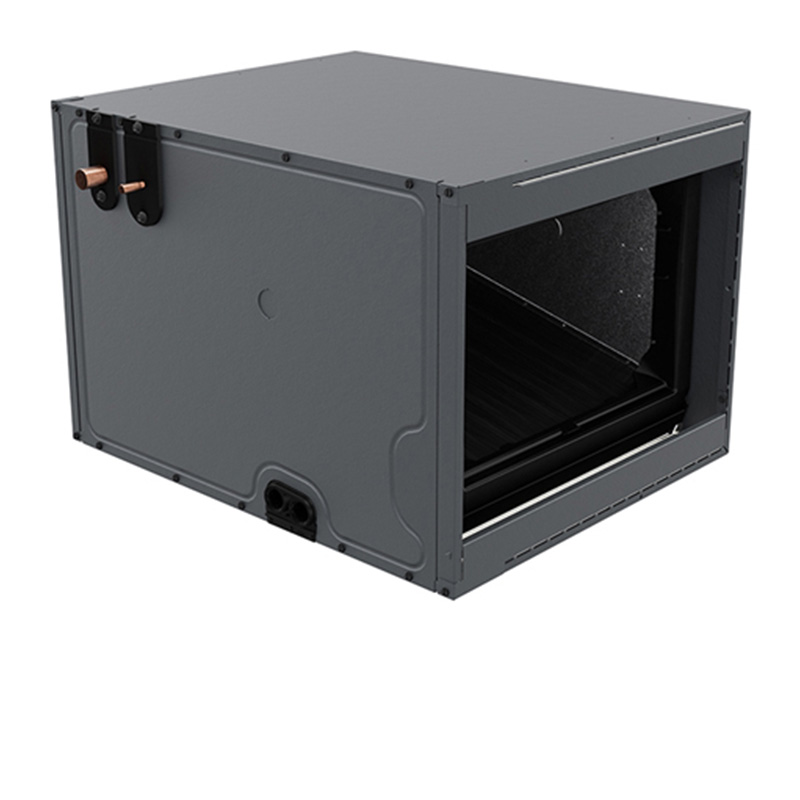
Horizontal means the air handler is oriented on its side, which is standard for attic installations and many crawlspace or closet setups with low vertical clearance. This is a dedicated horizontal unit and is not designed to be re-oriented to vertical; if your mechanical space requires a vertical cabinet, you would need a different model. Confirm with your installer before purchasing.
Should I be concerned about the documented refrigerant leak issues in the first year?
A minority of Goodman owners have reported refrigerant leaks within the first 12 months, and most traceable cases point to installation errors such as improper flaring, loose Schrader valves, or an incorrect initial charge rather than factory defects. Choosing an experienced, licensed installer and asking them to verify the charge and check all connections at startup is the most reliable way to avoid this.
Is the 80% AFUE furnace going to cost me significantly more to run than a high-efficiency model?
The difference between 80% and 96% AFUE means that for every dollar spent on gas, you lose 20 cents up the flue with this furnace versus about 4 cents with a high-efficiency unit. In a mild heating climate or a shorter ownership horizon that gap may never pay back the higher upfront cost of a 96% unit, but in a cold climate with long heating seasons the annual savings can reach several hundred dollars, and the payback period shortens considerably over 10 or more years.
Specifications
| Cooling capacity | 3 Ton |
| Efficiency | 15.2 SEER2 |
| Furnace output | 80000 BTU |
| Furnace efficiency | 80% AFUE |
| Configuration | Horizontal |
| Refrigerant | R-32 |