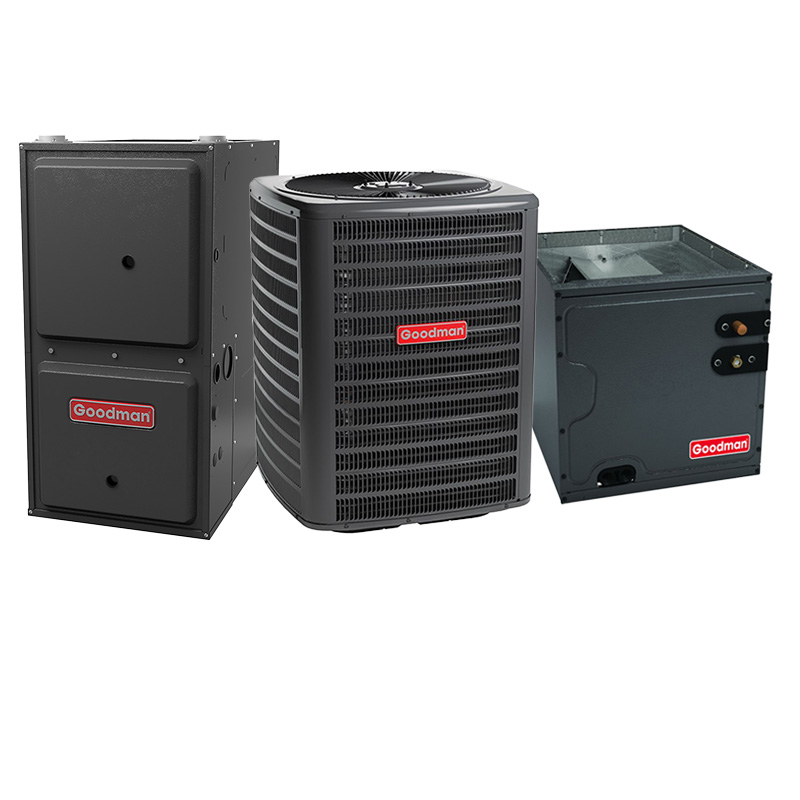
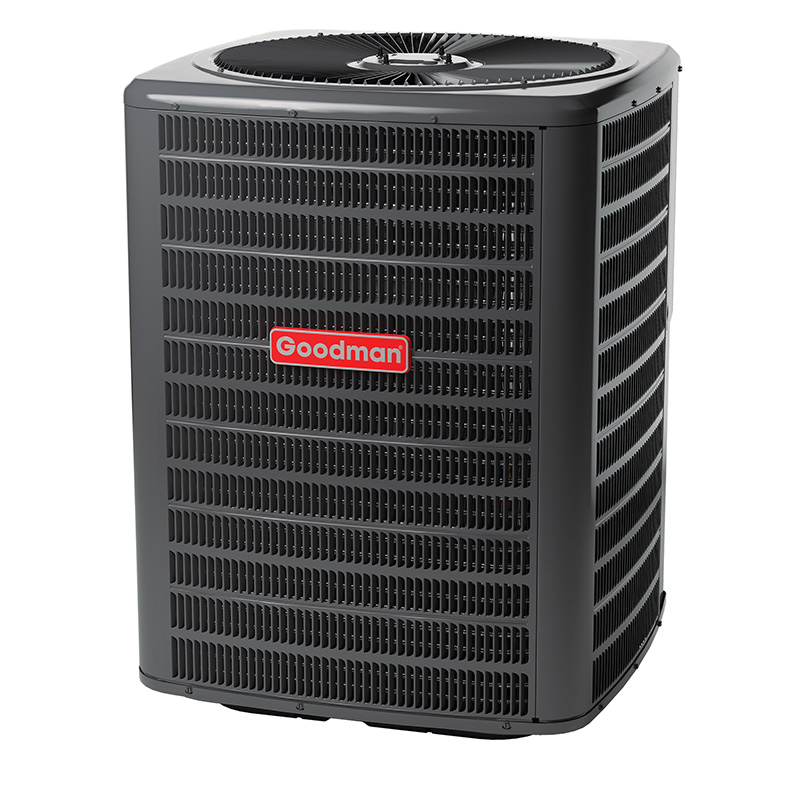
Goodman 3 Ton 15.2 SEER2 R32 AC System with 80,000 BTU 80% AFUE Gas Furnace – California & Colorado Ultra Low NOx, Upflow, Multi-Speed ECM
View on AC Direct see your lowest price →Check current price on AC Direct →
Key features
- 3-ton, 15.2 SEER2 cooling efficiency, meets current federal minimums with room to save vs. older equipment
- R-32 refrigerant, lower global warming potential than R-410A, aligned with industry refrigerant transition
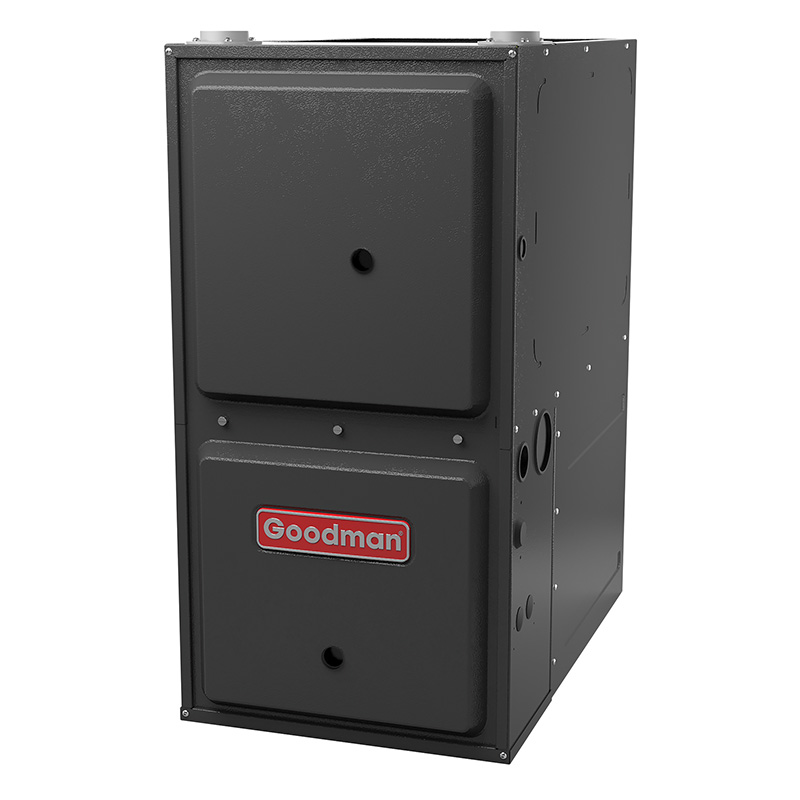
- 80,000 BTU 80% AFUE single-stage gas furnace, upflow configuration for overhead duct systems
- Multi-speed ECM blower motor for quieter operation and improved airflow efficiency over PSC motors
- California and Colorado Ultra Low NOx certified, required for permitted installs in those regulated markets
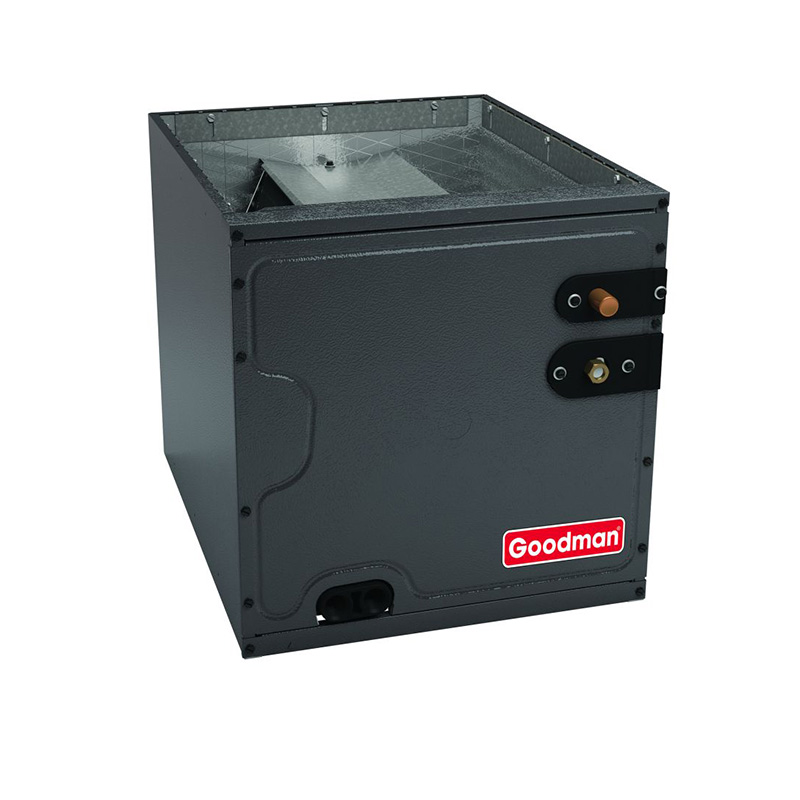
- Matched system components from a single manufacturer, simplifying warranty claims and coil compatibility
About this system
The Goodman 3-ton 15.2 SEER2 system pairs an R-32 air conditioner with an 80,000 BTU, 80% AFUE upflow gas furnace, forming a matched split system sized for homes roughly in the 1,400 to 1,900 square foot range, depending on climate, insulation, and local load calculations. The 15.2 SEER2 rating clears the federal minimum efficiency threshold for most regions and represents a modest but real improvement over older 14 SEER equipment, translating to incremental savings on cooling bills without the price premium of higher-tier variable-speed or two-stage systems. The R-32 refrigerant swap is noteworthy: R-32 carries a lower global warming potential than the R-410A it replaces and is now the industry direction, so this system is already aligned with where the refrigerant supply chain is heading.
The 80% AFUE furnace is a single-stage, multi-speed ECM unit in upflow configuration, meaning warm air exits the top of the cabinet and distributes through overhead ductwork. The ECM blower motor runs at multiple speeds to balance comfort and airflow, which is more efficient and quieter than a fixed-speed PSC motor. That said, 80% AFUE means roughly one dollar in five of gas consumed exits as flue exhaust rather than heating your home, so homeowners in cold climates with high heating loads may want to weigh a 96% AFUE alternative before committing. The California and Colorado Ultra Low NOx rating satisfies the strictest state air quality rules, making this system legal for sale and installation in those regulated markets where standard furnaces cannot be permitted.
This Goodman system delivers a competent entry-level matched split system at a price point that is genuinely hard to argue with for budget-focused homeowners, and the R-32 and Ultra Low NOx credentials add real regulatory value for California and Colorado buyers. The trade-offs are also real: Goodman's documented repair history after year seven, a compressor lifespan that trails premium brands, and an 80% AFUE furnace that leaves efficiency on the table in colder climates mean this is a system where install quality and long-term maintenance planning matter more than with higher-tier equipment.
Overall score is the average of the five ratings above.
What we like
- Priced 15 to 25 percent below comparable Trane, Lennox, and Carrier systems, reducing upfront cost significantly
- R-32 refrigerant future-proofs the system against the ongoing R-410A phase-down
- Ultra Low NOx certification allows legal permitted installation in California and Colorado
- Multi-speed ECM motor improves comfort and airflow efficiency compared to single-speed blowers
- Matched coil and furnace from one manufacturer simplifies warranty coordination and system commissioning
Trade-offs
- 80% AFUE furnace is the minimum efficiency tier; homeowners in cold climates will pay more in gas costs over time versus a 96% unit
- Compressor lifespan averages 10 to 14 years versus 15 to 20 years on premium brands, raising long-term replacement risk
- Dual-run capacitor failures and evaporator coil leaks are the most documented owner complaints, adding to maintenance costs especially after year seven
- Performance is heavily install-dependent, and a poor refrigerant charge or duct connection can trigger first-year refrigerant leak issues
What homeowners and pros say about Goodman
Homeowners who have purchased Goodman systems tend to split into two camps, and that split shows up clearly in the brand’s ratings: a ConsumerAffairs score of roughly 2.5 out of 5 reflects a channel where dissatisfied owners are more likely to post, with the recurring complaint being repair costs that start accumulating around year seven. Google dealer reviews average closer to 3.8 out of 5, where the most consistent praise is straightforward: the system cost meaningfully less than competing brands and it works. For this 3-ton R-32 system, the conversation among buyers in California and Colorado adds a practical layer, since the Ultra Low NOx requirement eliminates most standard furnaces from consideration and narrows the field to units that carry this certification.
HVAC technicians have well-documented views on Goodman, and most center on the same points: the equipment is serviceable, but the dual-run capacitors are a known wear item that many pros recommend replacing proactively before they fail on a 95-degree afternoon. Evaporator coil leaks show up in enough owner accounts to be worth factoring into long-term cost expectations, and the compressor lifespan, which tends to average 10 to 14 years rather than the 15 to 20 years typical of premium-brand compressors, affects how owners should think about extended service agreements. Technicians consistently note that a correctly installed and properly charged Goodman system performs close to spec, while a rushed or under-supervised install is where things go wrong early, including the first-year refrigerant leak complaints that appear in a minority of owner reports.
Sources: ConsumerAffairs Goodman owner reviews, AHRI Directory of Certified Product Performance, U.S. DOE appliance and equipment efficiency standards, Goodman product specification sheets.
What it costs to run
At 15.2 SEER2, cooling this 3-ton system for a typical 1200-hour cooling season at the U.S. average electricity rate of $0.17/kWh works out to roughly $483 per year in cooling, about $65 less per year than a minimum-efficiency 13.4 SEER2 unit of the same size. Your real cost depends on your climate and local rate.
Method: (36,000 BTU/hr ÷ 15.2 SEER2) × 1200 hours ÷ 1000 × $0.17/kWh. Rate source: U.S. EIA average; cooling hours: moderate-climate estimate.
How it compares
| Brand | Comparable model | SEER2 | Stage | Price position |
|---|---|---|---|---|
| Goodman | 3-Ton 15.2 SEER2 R-32 AC + 80K BTU 80% AFUE Gas Furnace (this system) | 15.2 | Single-stage | Value pick |
| Carrier | Comfort Series (24ACC636 / 58CVA) | 15.2 | Single-stage | Typically 15 to 25 percent more than this Goodman system |
| Trane | XR15 / S8B1 (XR series AC + S8B1 furnace) | 15.2 | Single-stage | Typically 15 to 25 percent more than this Goodman system |
| Lennox | Merit Series (14ACX / ML180) | 15.2 | Single-stage | Typically 15 to 25 percent more than this Goodman system |
Competitor rows are comparable single-stage units at similar efficiency; price is relative position, not a quote.
Questions about this system
Is the 80% AFUE furnace going to cost me noticeably more to run than a high-efficiency unit?
Yes, and the gap grows with how cold your winters are and how high your gas rates are. An 80% AFUE furnace loses about 20 cents of every dollar of gas as exhaust; a 96% AFUE unit loses roughly 4 cents. In mild climates the annual difference is modest, but in cold-weather states like Colorado the payback on upgrading to a 96% furnace can be five to eight years depending on gas prices.
Why does this system use R-32 instead of R-410A, and does that affect service costs?
R-32 has a global warming potential about 68 percent lower than R-410A, and manufacturers are transitioning to it ahead of tightening refrigerant regulations. For service, R-32 is handled differently from R-410A and requires technicians with the appropriate certification and equipment, but it is increasingly common and should not be difficult to source or service in most markets.
What does the Ultra Low NOx rating actually mean, and do I need it outside California or Colorado?
Ultra Low NOx furnaces emit nitrogen oxides at levels that meet the South Coast Air Quality Management District and similar Colorado Air Quality Control Commission standards. Outside those two states, the rating is not required by code, but it does not hurt you in any way and the system can be installed anywhere that accepts a standard gas furnace.
The listing says multi-speed ECM blower. Does that mean the system adjusts airflow automatically?
The ECM motor can operate at multiple preset speeds, and the furnace control board selects among them based on operating mode (heating, cooling, continuous fan), which is more efficient and quieter than a fixed-speed motor. This is not the same as a true variable-speed communicating system that continuously ramps airflow; it steps between defined speed settings rather than adjusting infinitely.
What are the most common repairs I should budget for over the first ten years?
Based on documented owner experience with Goodman equipment, dual-run capacitor replacement is the most frequent service call, typically costing between $300 and $600 including labor. Evaporator coil leaks have also appeared in a meaningful share of owner reports, which can be a more expensive fix. A small minority of owners have reported refrigerant leaks in the first year, which is usually tied to install or initial charge quality rather than a manufacturing defect.
Specifications
| Cooling capacity | 3 Ton |
| Efficiency | 15.2 SEER2 |
| Furnace output | 80,000 BTU |
| Furnace efficiency | 80% AFUE |
| Configuration | Upflow |
| Refrigerant | R-32 |