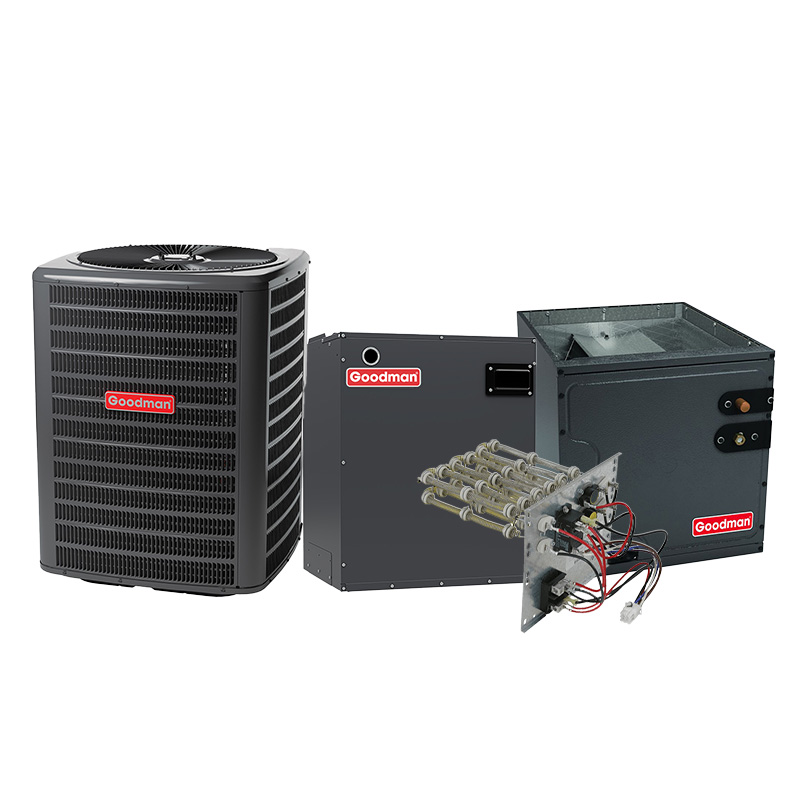
Goodman AC & Air Handler | 3 Ton 18 SEER2 2 Stage AC With Electric Heat – Upflow R32 | For Very Mild Winter Climates
View on AC Direct see your lowest price →Check current price on AC Direct →
Key features
- 18 SEER2 two-stage cooling for improved humidity control and energy savings over single-stage units
- 3-ton capacity suitable for roughly 1,400 to 1,900 sq ft depending on climate and insulation
- R-32 refrigerant with lower global warming potential than legacy R-410A
- Upflow air handler configuration for homes with overhead duct systems
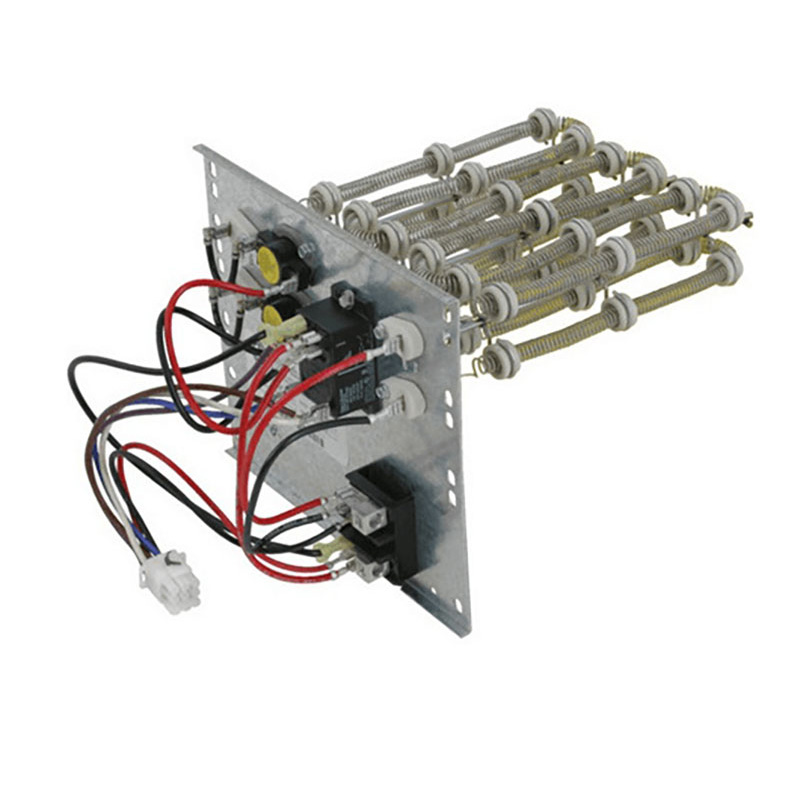
- Electric heat strips included for supplemental heating in very mild winter climates
- Goodman's 10-year parts warranty (registration required within 60 days of installation)
About this system
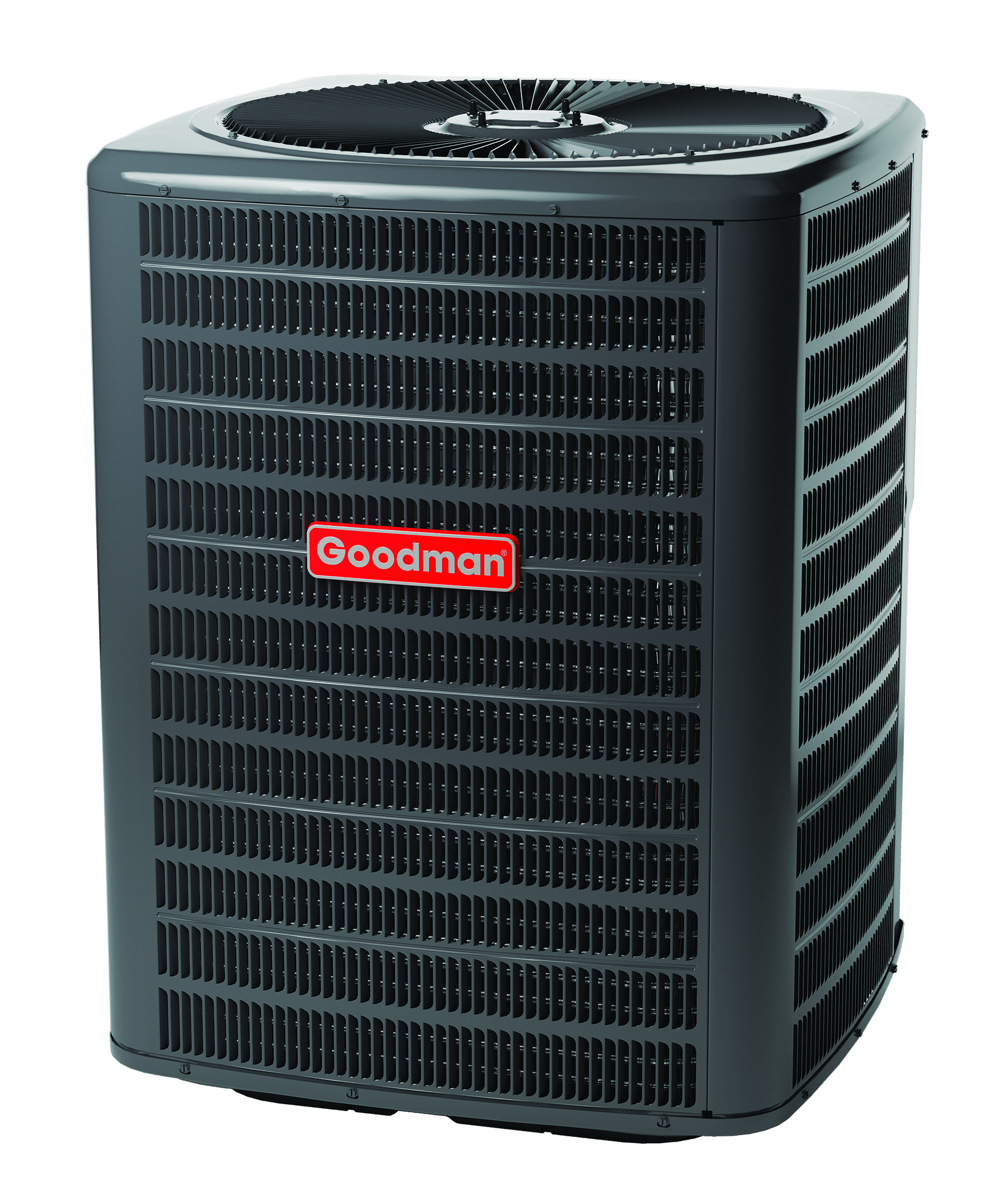
This Goodman 3-ton, 18 SEER2 two-stage air conditioner paired with an upflow electric air handler is built for homeowners in mild-winter Sun Belt climates who want above-average cooling efficiency without the premium price tag of a Trane or Lennox. The 18 SEER2 rating puts it comfortably in the upper-mid efficiency tier, noticeably more efficient than entry-level 14-15 SEER2 equipment but short of the 20-plus SEER2 territory claimed by variable-speed systems. Two-stage operation means the compressor runs at low capacity during moderate heat and ramps to full power on the hottest days, which reduces short-cycling, improves humidity control, and lowers runtime electricity costs compared to single-stage units.
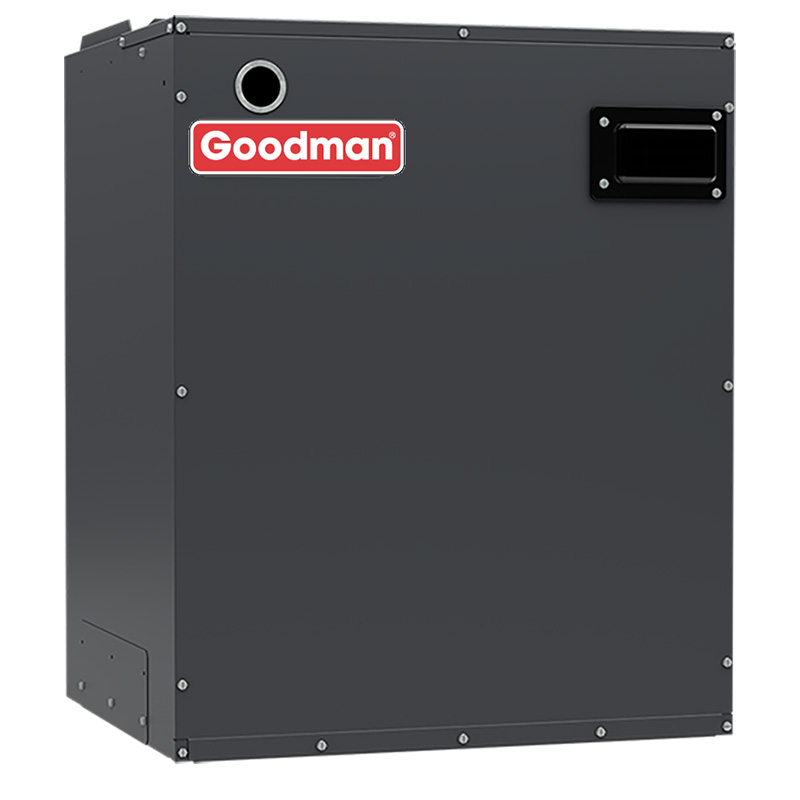
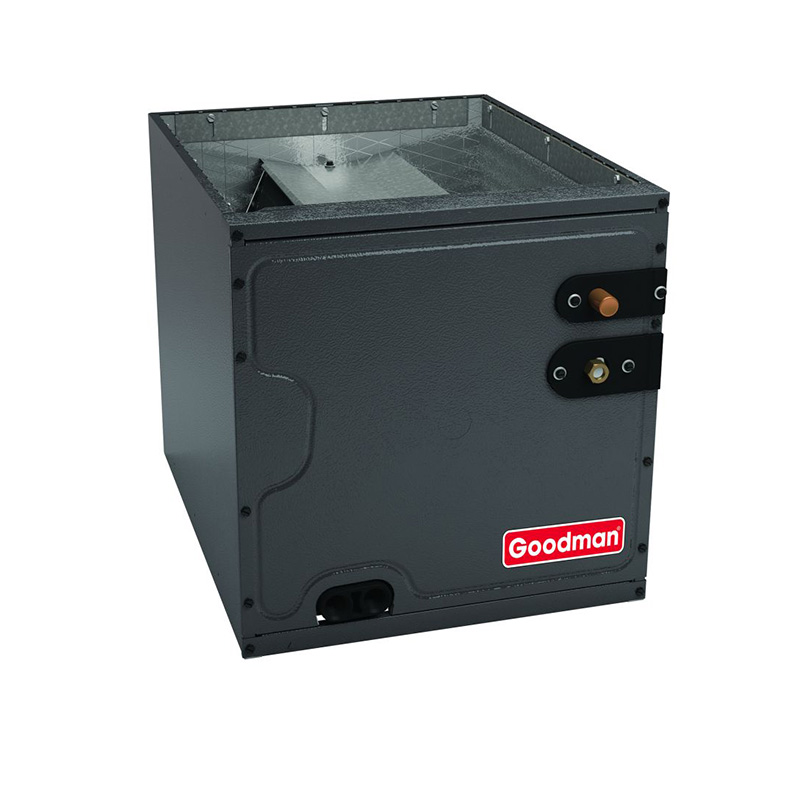
The upflow air handler configuration is common in homes where ductwork runs through an attic or upper floors, with the unit sitting in a closet, basement, or utility room and pushing conditioned air upward. R-32 refrigerant is the newer, lower-global-warming-potential alternative to R-410A; it requires technicians who are certified to handle it and equipment rated for its slightly higher operating pressures, so confirming your installer’s familiarity with R-32 before booking is worthwhile. The electric heat strips cover the heating load for genuinely mild climates, but homeowners who experience more than a handful of freezing nights per year will find operating costs climb quickly compared to a heat pump setup.
This system delivers genuine mid-tier efficiency at a price that undercuts comparable Carrier and Trane equipment by 15 to 25 percent, making it a reasonable choice for budget-conscious buyers in warm climates who can secure a skilled installer. The trade-off is a documented track record of capacitor failures and evaporator coil leaks over time, and compressor longevity that typically runs shorter than premium-brand alternatives. If your installer is experienced and you budget for one or two minor service calls in the 7-to-12-year window, the value proposition holds up.
Overall score is the average of the five ratings above.
What we like
- 18 SEER2 rating delivers meaningful efficiency gains over budget single-stage equipment
- Two-stage operation improves dehumidification and comfort during partial-load conditions
- Priced 15 to 25 percent below comparable Trane, Lennox, and Carrier systems
- R-32 refrigerant is more environmentally responsible than R-410A
- 10-year parts warranty with registration provides solid mid-tier coverage
Trade-offs
- Dual-run capacitors are the most commonly reported failure point, with repair costs typically in the $300 to $600 range
- Evaporator coil leaks appear in a meaningful share of owner feedback and can be costly to address out of warranty
- Compressor lifespan averages 10 to 14 years versus 15 to 20 years for premium brands, a real long-term cost consideration
- A minority of owners report refrigerant leaks within the first year, most often tied to installation quality rather than the equipment itself
What homeowners and pros say about Goodman
Goodman earns a ConsumerAffairs rating of roughly 2.5 out of 5, though that platform skews toward owners who experienced problems and came looking for a place to vent frustration. Google dealer reviews tell a more balanced story, averaging around 3.8 out of 5 across hundreds of reviews per location, where affordability and contractor relationships draw consistent praise. For this specific system, the feedback patterns that matter most are the ones that align with what owners report across the Goodman line: dual-run capacitor failures are the most frequently mentioned repair, usually appearing after the seven-year mark and running $300 to $600 to fix, which is a manageable cost but a real pattern worth anticipating. Evaporator coil leaks appear in a meaningful share of longer-term owner accounts and carry higher repair costs, especially once the parts warranty window closes.
Compressor longevity is the longest-range concern. Goodman compressors tend to average 10 to 14 years in documented owner experience, compared to 15 to 20 years commonly cited for premium-brand equipment. For a buyer who plans to stay in their home for 15-plus years, that gap is worth factoring into the true cost of ownership. A smaller but real share of Goodman owners report refrigerant leaks within the first year; HVAC professionals attribute most of these to installation and initial charge issues rather than factory defects, which reinforces why installer experience with R-32 equipment is particularly important for this system. Understood clearly, Goodman represents a value trade: lower upfront cost in exchange for a greater reliance on installation quality and a somewhat higher probability of mid-life service events.
Sources: ConsumerAffairs Goodman owner reviews, AHRI Directory of Certified Product Performance, U.S. DOE appliance and equipment efficiency standards, Goodman product specification sheets.
What it costs to run
At 18 SEER2, cooling this 3-ton system for a typical 1200-hour cooling season at the U.S. average electricity rate of $0.17/kWh works out to roughly $408 per year in cooling, about $140 less per year than a minimum-efficiency 13.4 SEER2 unit of the same size. Your real cost depends on your climate and local rate.
Method: (36,000 BTU/hr ÷ 18 SEER2) × 1200 hours ÷ 1000 × $0.17/kWh. Rate source: U.S. EIA average; cooling hours: moderate-climate estimate.
How it compares
| Brand | Comparable model | SEER2 | Stage | Price position |
|---|---|---|---|---|
| Goodman | 3-Ton 18 SEER2 Two-Stage AC with Upflow Electric Air Handler (R-32) | 18 | Two-stage | Value pick |
| Carrier | Comfort 18 (24ACC6 series) | 18 | Two-stage | Typically 15 to 25 percent more than this Goodman system |
| Trane | XR18 | 18 | Two-stage | Typically 20 to 30 percent more than this Goodman system |
| Lennox | Merit ML18XC2 | 18 | Two-stage | Typically 20 to 30 percent more than this Goodman system |
Competitor rows are comparable single-stage units at similar efficiency; price is relative position, not a quote.
Questions about this system
Is R-32 refrigerant safe and can any HVAC technician handle it?
R-32 is flammable in high concentrations, so it requires technicians with specific R-32 handling certification, which not every local tech holds yet. Before scheduling installation or any future service call, confirm your technician is rated for R-32 work; this is especially important in areas where the refrigerant is still relatively new to residential equipment.
The electric heat is included, but will it be expensive to run in winter?
Electric resistance heat strips are far less efficient than a heat pump, typically running at an effective efficiency of about 1:1 (one unit of heat per unit of electricity). For climates with only occasional cool nights this is manageable, but if your area regularly dips below 40 degrees Fahrenheit for extended periods, monthly heating bills can climb steeply compared to a heat pump system.
What is the most likely repair I should budget for after year seven?
Based on documented owner feedback, dual-run capacitor failure is the most commonly reported issue with Goodman equipment, usually showing up after year seven and typically costing $300 to $600 to repair. Setting aside a small annual maintenance fund and having a technician check capacitor readings during each tune-up can catch this before it becomes an emergency call.
Does the 10-year parts warranty cover compressor and coil replacements?
Goodman's 10-year parts warranty covers major components including the compressor and coil, but it requires registration within 60 days of installation; without registration it typically drops to a 5-year term. Labor is not covered, so a compressor or coil replacement will still carry a significant out-of-pocket labor cost even within the warranty period.
How important is installer quality for a Goodman system specifically?
HVAC professionals consistently flag installation quality as the single biggest factor in Goodman system longevity, more so than with some premium brands. Refrigerant charge accuracy, coil connections, and electrical work all directly affect whether you see early failures like first-year refrigerant leaks or premature coil issues, so getting multiple installer quotes and checking technician credentials is worth the extra time before committing.
Specifications
| Cooling capacity | 3 Ton |
| Efficiency | 18 SEER2 |
| Configuration | Upflow |
| Refrigerant | R-32 |