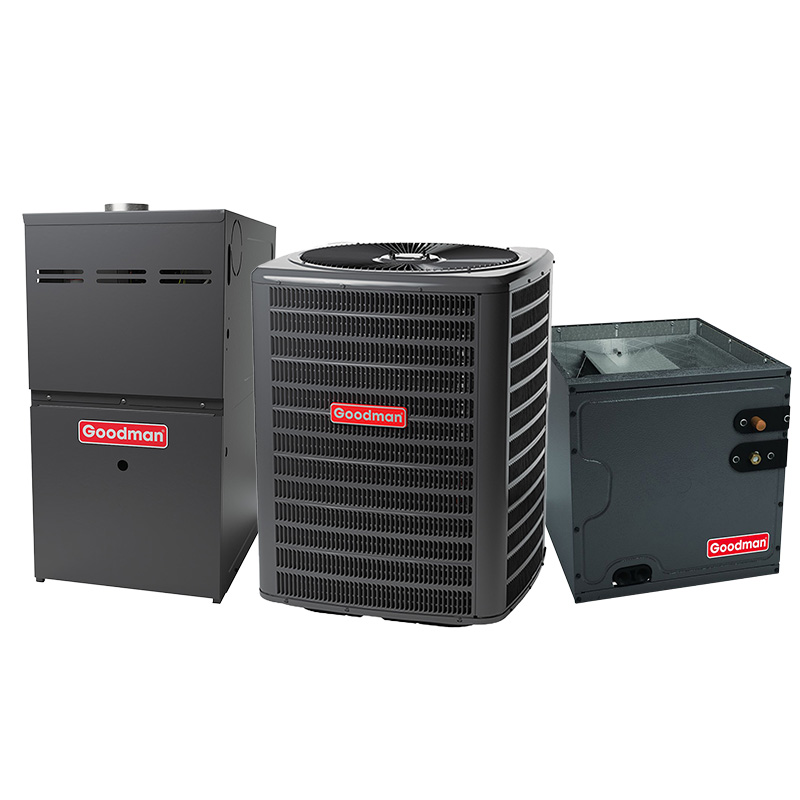
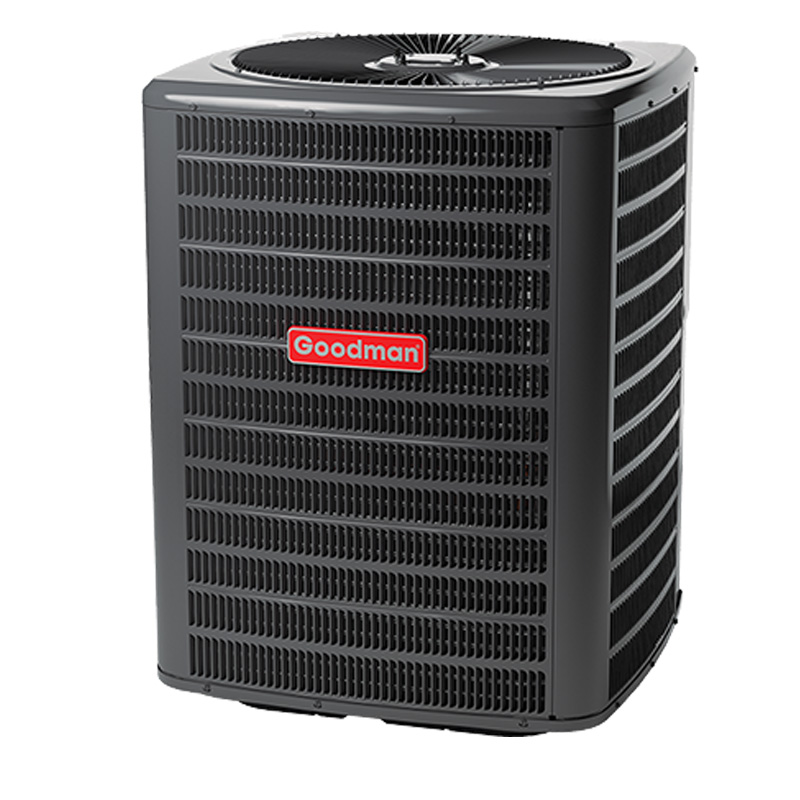
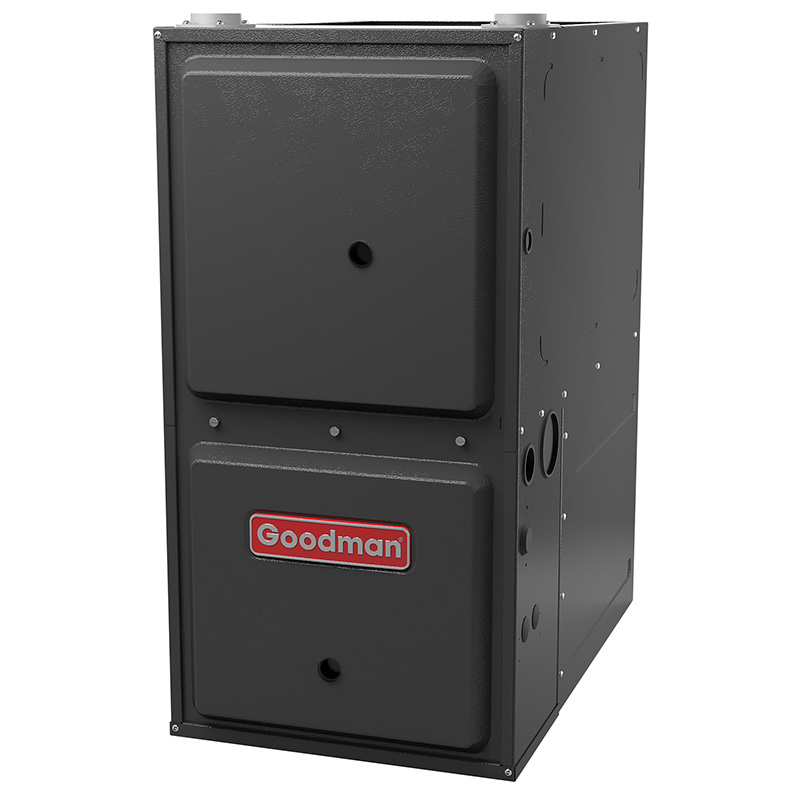
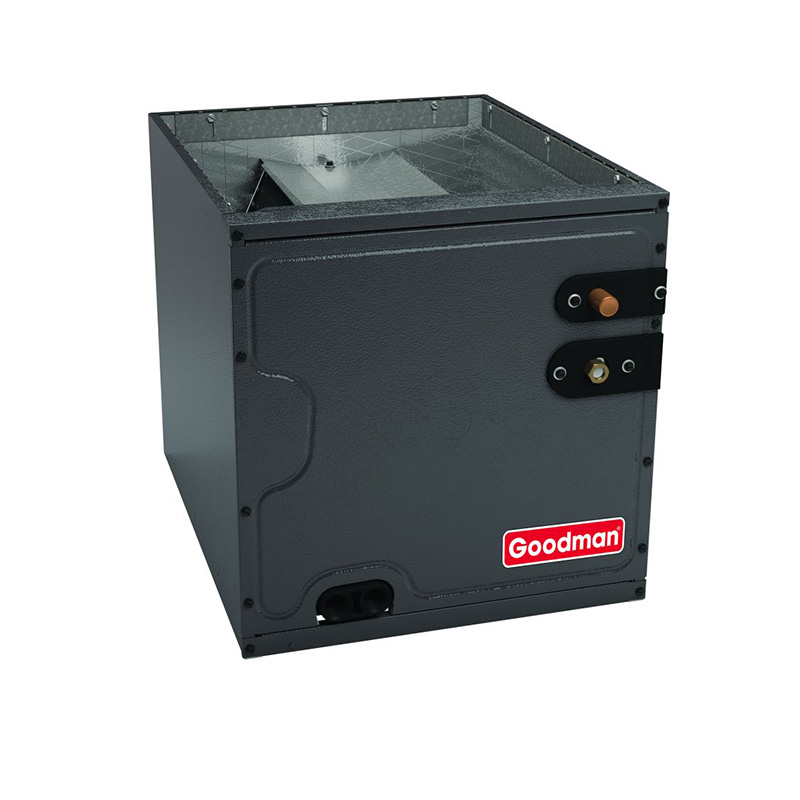
Goodman 3 Ton Dual Fuel Hybrid Heat Pump System – 100000 BTU California Low NOx Gas Furnace, 80% AFUE, 15.2 SEER2, Upflow, R32
View on AC Direct see your lowest price →Check current price on AC Direct →
Key features
- 15.2 SEER2 heat pump efficiency, meeting federal minimum standards for 2023 and beyond
- 100,000 BTU gas furnace at 80% AFUE, upflow configuration for basement or closet installs
- Dual fuel hybrid operation: automatically switches between heat pump and gas heat by outdoor temperature
- R-32 refrigerant, lower global warming potential than legacy R-410A systems
- 3-ton capacity suited to homes roughly 1,400 to 2,000 square feet depending on insulation and climate
- Single-stage compressor and single-stage gas valve for straightforward controls and serviceability
About this system
The Goodman 3-Ton Dual Fuel Hybrid Heat Pump System pairs a 15.2 SEER2 heat pump with a 100,000 BTU, 80% AFUE upflow gas furnace in a single integrated package. The “dual fuel” or “hybrid” setup means the system automatically switches between electric heat pump operation and gas heat depending on outdoor temperature, letting you lean on cheaper electricity during mild weather and fall back on gas when temperatures drop below the heat pump’s efficient range. That flexibility makes it a reasonable fit for climates with genuine winters but extended shoulder seasons where a heat pump alone would carry most of the load.
The 15.2 SEER2 rating lands just above the federal minimum efficiency standard, which keeps equipment cost down without reaching the efficiency premiums of 17+ SEER2 systems. The 80% AFUE furnace is the baseline tier for gas efficiency, meaning 20 cents of every dollar spent on gas exits as exhaust rather than heat. Households in very cold climates or with high gas usage may see meaningful long-term savings by stepping up to a 96% AFUE unit, but for moderate climates where the heat pump handles most of the heating season, the 80% furnace rarely runs enough to make that upgrade pencil out. R-32 refrigerant has a lower global warming potential than the R-410A it replaces, and is becoming the industry standard for new residential equipment. The upflow configuration requires installation in a basement, utility closet, or mechanical room where supply air discharges upward into the duct system.
Goodman positions this system squarely at buyers who want a functional, code-compliant dual-fuel solution without the price premium of Carrier, Trane, or Lennox. The trade-off is a brand with a documented history of mid-life component wear, where long-term ownership costs depend heavily on how well the system is commissioned at install. It suits cost-conscious homeowners who have a reliable local HVAC contractor and are comfortable budgeting for possible capacitor or coil service after year seven.
This Goodman hybrid system delivers a functional dual-fuel setup at a price point that undercuts comparable Carrier, Trane, and Lennox configurations by a meaningful margin. Efficiency is baseline rather than impressive, and the brand's track record shows real component wear risks after year seven, so total cost of ownership depends heavily on install quality and maintenance. Buyers who prioritize upfront affordability and have access to a skilled installer will find solid value; those who want premium longevity or hands-off ownership should look higher up the efficiency and brand tiers.
Overall score is the average of the five ratings above.
What we like
- Upfront cost is typically 15 to 25 percent below comparable Carrier, Trane, and Lennox dual-fuel systems
- Hybrid operation reduces annual energy costs versus a gas-only furnace in climates with long shoulder seasons
- R-32 refrigerant is the emerging industry standard, easing future service and refrigerant availability
- Single-stage design keeps service straightforward and replacement parts widely stocked
- Upflow configuration is the most common residential duct layout, making qualified installers easy to find
Trade-offs
- 80% AFUE is the lowest efficiency tier for gas furnaces; high-gas-usage households leave meaningful savings on the table versus 96% AFUE alternatives
- Dual-run capacitors are the most commonly reported failure, typically a 300 to 600 dollar repair, and frequency climbs after year seven based on owner reports
- Evaporator coil leaks appear in a meaningful share of owner reviews, a repair that can run into the thousands if the coil needs replacement
- Compressor lifespan averages 10 to 14 years versus 15 to 20 years for premium brands, meaning earlier replacement risk on a long ownership horizon
What homeowners and pros say about Goodman
Homeowners who post about Goodman equipment tend to self-select toward strong reactions in either direction. On ConsumerAffairs, Goodman earns roughly 2.5 out of 5, and that channel skews heavily toward complaint-driven reviews. The recurring theme is not catastrophic failure out of the box but rather repair costs that start climbing after year seven, particularly around capacitors and coil integrity. Google dealer reviews tell a somewhat different story, averaging around 3.8 out of 5 across locations where affordability is the most consistent point of praise. The gap between those two scores is partly a channel effect and partly real: buyers who get a clean install and stay current on maintenance tend to report reasonable experiences, while those who had a rushed or under-commissioned install or deferred service are more likely to show up in complaint forums.
HVAC technicians who work on Goodman equipment regularly cite dual-run capacitor failure as the single most predictable service call on these systems, a quick repair in the 300 to 600 dollar range but one that recurs with some frequency in older units. Evaporator coil leaks appear in enough owner accounts to warrant attention, and the documented compressor lifespan of 10 to 14 years sits noticeably shorter than the 15 to 20 years technicians associate with Carrier, Trane, and Lennox compressors. A minority of owners report refrigerant leaks in the first year, which technicians generally attribute to charge or installation issues rather than a factory defect. For a dual-fuel hybrid specifically, proper commissioning of the balance point and refrigerant charge is especially important, which is why experienced installers consistently say Goodman performance lives or dies with the quality of the install crew.
Sources: ConsumerAffairs Goodman owner reviews, AHRI Directory of Certified Product Performance, U.S. DOE appliance and equipment efficiency standards, Goodman product specification sheets.
What it costs to run
At 15.2 SEER2, cooling this 3-ton system for a typical 1200-hour cooling season at the U.S. average electricity rate of $0.17/kWh works out to roughly $483 per year in cooling, about $65 less per year than a minimum-efficiency 13.4 SEER2 unit of the same size. Your real cost depends on your climate and local rate.
Method: (36,000 BTU/hr ÷ 15.2 SEER2) × 1200 hours ÷ 1000 × $0.17/kWh. Rate source: U.S. EIA average; cooling hours: moderate-climate estimate.
How it compares
| Brand | Comparable model | SEER2 | Stage | Price position |
|---|---|---|---|---|
| Goodman | Dual Fuel Hybrid Heat Pump System (this unit) | 15.2 | Single-stage | Value pick |
| Carrier | Performance Series Dual Fuel (25HCE3 / 59TP6) | 15.2 | Single-stage | Typically 15 to 25 percent more than this Goodman system |
| Trane | XR15 Dual Fuel System (XR15 / S9X1) | 15.0 | Single-stage | Typically 15 to 25 percent more than this Goodman system |
| Lennox | Merit Series Dual Fuel (ML14XC1 / ML180) | 15.2 | Single-stage | Typically 15 to 25 percent more than this Goodman system |
Competitor rows are comparable single-stage units at similar efficiency; price is relative position, not a quote.
Questions about this system
How does the dual fuel system decide when to use the heat pump versus the gas furnace?
The system uses an outdoor temperature lockout setting, often called the balance point, that your installer programs during commissioning. Above that temperature the heat pump runs alone; below it the gas furnace takes over. Setting that lockout correctly for your local utility rates and climate is one of the most important commissioning steps and affects both comfort and operating cost.
Is 80% AFUE going to cost me significantly more to operate than a 96% AFUE furnace?
In a hybrid system the furnace only runs when outdoor temperatures fall below the heat pump's balance point, so it operates fewer hours per year than a furnace-only setup. In moderate climates the savings from upgrading to 96% AFUE may not recover the higher equipment cost within a typical ownership period, but in very cold climates where the furnace runs heavily, the 16-point AFUE gap translates to real money over time.
What is the warranty on this Goodman system and what does it actually cover?
Goodman typically offers a 10-year parts warranty on registered equipment, covering the compressor, heat exchanger, and most functional components. Registration must be completed within a set window after installation, and the warranty generally does not cover labor, refrigerant, or damage from improper installation. Confirm specific terms for this model at registration, as coverage details can vary by component.
My house is in a mixed climate with cold winters. Is 3 tons the right size for me?
Tonnage should be determined by a Manual J load calculation, not square footage alone. Three tons is a common fit for homes in the 1,400 to 2,000 square foot range with average insulation, but an oversized or undersized system hurts both efficiency and comfort. Ask your installer to perform or provide the load calculation before equipment is ordered.
How common are repairs on Goodman equipment, and what should I budget for?
The most frequently reported repair is dual-run capacitor failure, typically in the 300 to 600 dollar range and often occurring after year seven. Evaporator coil leaks are reported by a meaningful share of owners and can be more costly. Budgeting for an annual maintenance visit and keeping a service fund for capacitor-level repairs is a practical approach with this brand.
Specifications
| Cooling capacity | 3 Ton |
| Efficiency | 15.2 SEER2 |
| Furnace output | 100000 BTU |
| Furnace efficiency | 80% AFUE |
| Configuration | Upflow |
| Refrigerant | R-32 |