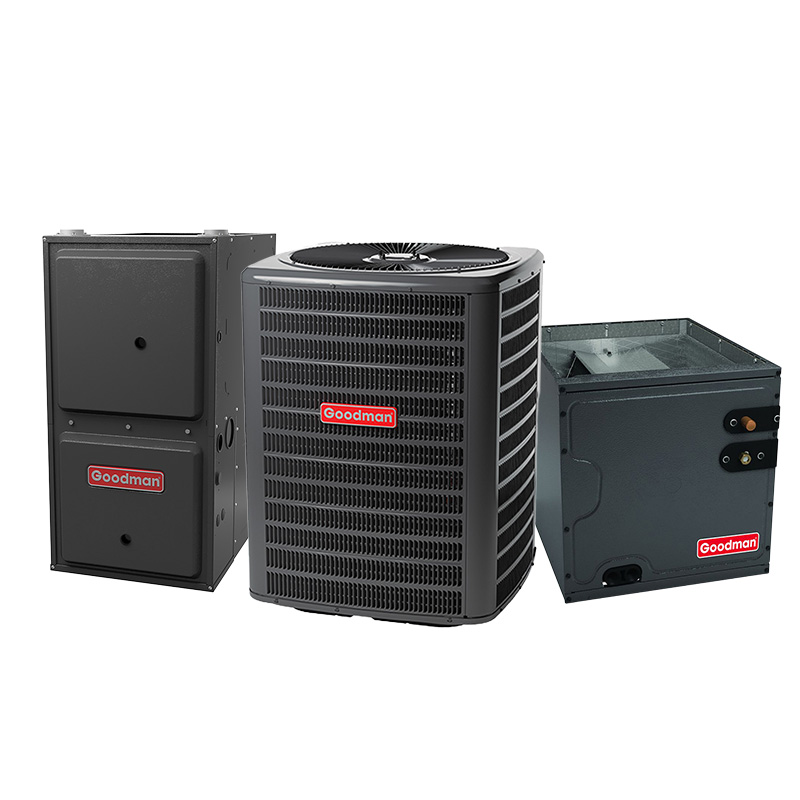
Goodman 3 Ton Dual Fuel Hybrid Heat Pump System – 60000 BTU California Ultra-Low NOx Gas Furnace, 80% AFUE, 15.2 SEER2, Upflow, R32
View on AC Direct see your lowest price →Check current price on AC Direct →
Key features
- Dual fuel hybrid design: heat pump handles mild-weather loads, 60,000 BTU gas furnace takes over in cold snaps
- 15.2 SEER2 cooling efficiency meets current federal minimum standards for nationwide compliance
- 80% AFUE furnace: baseline efficiency tier, standard under current federal rules
- R-32 refrigerant: lower global warming potential than R-410A, increasingly required in new equipment
- Upflow configuration: draws return air from the bottom, designed for basement or closet installs with overhead ductwork
- Goodman 10-year parts limited warranty when registered within 60 days of installation by a licensed contractor
About this system
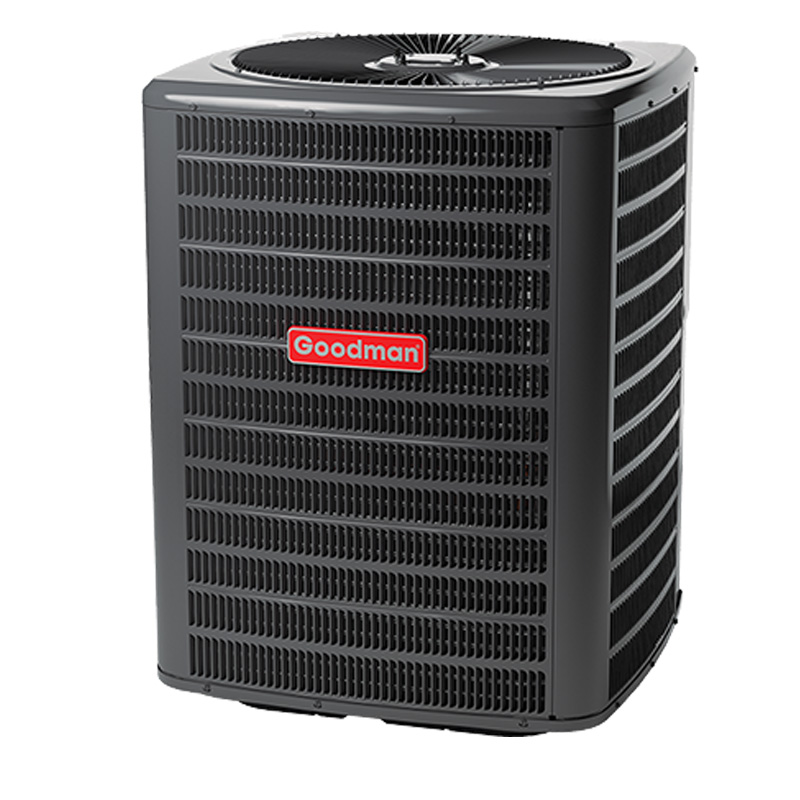
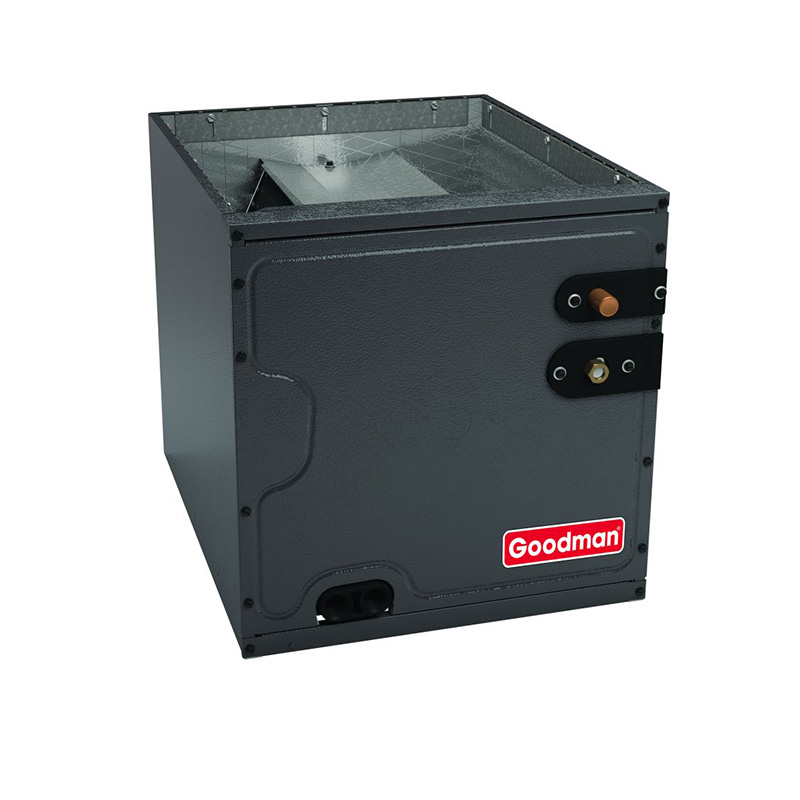
The Goodman 3-Ton Dual Fuel Hybrid Heat Pump System pairs a 15.2 SEER2 heat pump with a 60,000 BTU upflow gas furnace running at 80% AFUE. The hybrid setup means the system automatically leans on the heat pump for efficiency during milder weather and switches to the gas furnace when outdoor temps drop and heat pump performance falls off. That switching logic makes this configuration particularly well-suited to climates with cold but not brutally harsh winters, where running on electricity most of the season keeps utility bills lower than a furnace-only setup would allow.
The R-32 refrigerant charge is a meaningful spec detail. R-32 has a lower global warming potential than the R-410A it replaces and is increasingly common in new residential equipment as the industry moves away from older refrigerants under updated EPA guidelines. On efficiency, 15.2 SEER2 sits right at the current federal minimum threshold for most northern regions and a step above it in the South and Southwest, which means this system is code-compliant nationwide but does not represent a premium efficiency tier. The 80% AFUE furnace is the entry-level efficiency rating allowed under current federal standards, so roughly one in five BTUs generated goes up the flue rather than into your home. Homeowners in heating-heavy climates should weigh whether upgrading to a 96% AFUE furnace would offset the higher upfront cost over time.
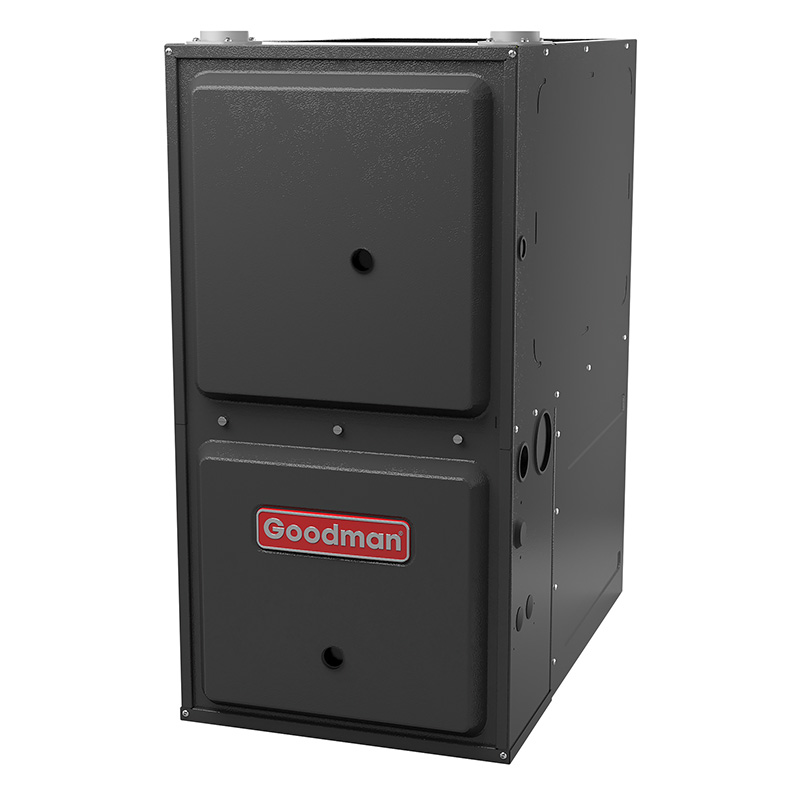
Upflow configuration means the unit draws return air from the bottom and discharges conditioned air upward through ductwork, the standard arrangement for furnaces installed in basements, closets, or utility rooms with overhead duct systems. Confirm your existing duct layout before purchasing, because rerouting ductwork to accommodate the wrong configuration adds real labor cost to the install.
This system delivers a functional, code-compliant dual fuel setup at a price that undercuts comparable Carrier, Trane, and Lennox packages by 15 to 25 percent. The trade-off is entry-level efficiency ratings on both sides of the equation and a reliability track record that depends heavily on the quality of the installation and early maintenance. It is a reasonable choice for budget-conscious buyers who understand what they are getting and who hire a skilled installer.
Overall score is the average of the five ratings above.
What we like
- Lower upfront cost than comparable equipment from Carrier, Trane, or Lennox by an estimated 15 to 25 percent
- Dual fuel logic reduces operating costs versus a straight gas system in mild-to-moderate heating climates
- R-32 refrigerant is forward-compatible with current and near-future regulatory direction
- Wide parts availability through Goodman's large dealer and distributor network keeps repair turnaround times short
- Upflow configuration matches the most common residential duct layout, simplifying installation in most homes
Trade-offs
- 80% AFUE is the lowest efficiency tier permitted under federal standards, meaning higher long-term gas costs compared to 95%+ AFUE alternatives
- 15.2 SEER2 is a minimum-compliance efficiency rating, not a high-efficiency tier, so cooling season savings are limited
- Compressor lifespan averages 10 to 14 years based on owner and technician reports, shorter than the 15 to 20 years commonly seen in premium-brand compressors
- Dual-run capacitor failures and evaporator coil leaks are documented recurring issues, and repair costs tend to climb after roughly year 7 according to ConsumerAffairs complaint data
What homeowners and pros say about Goodman
Homeowners who have lived with a Goodman system long enough to form a real opinion tend to land in one of two camps. Those who had a careful installation and kept up with annual maintenance often report years of uneventful operation and point to the lower purchase price as a genuine win. That matches the roughly 3.8 out of 5 score Goodman earns across Google dealer reviews, where affordability is cited most often as the reason buyers are satisfied. The other camp, represented more loudly in the ConsumerAffairs data where Goodman averages around 2.5 out of 5, describes repair costs that start adding up after roughly year 7. The documented failure points that show up repeatedly are dual-run capacitors, evaporator coil leaks, and compressors that tend to reach the end of their useful life somewhere in the 10-to-14-year range rather than the 15-to-20 years owners of premium brands more often see.
HVAC technicians who work on Goodman equipment regularly tend to say the same thing: the hardware is adequate, but it punishes a sloppy install more than a Trane or Carrier unit would. Refrigerant charge issues and coil leaks in the first year are typically traced back to installation rather than factory defects, which is why the installer you hire matters as much as the brand you choose. For a dual fuel hybrid system in particular, correct balance-point calibration and proper thermostat wiring at startup are not optional details. Technicians who specialize in Goodman service also flag the capacitor as a near-certain eventual repair, inexpensive but almost routine enough that some proactive owners simply ask their technician to swap it at the first service call after year five rather than wait for it to fail on the hottest day of the summer.
Sources: ConsumerAffairs Goodman owner reviews, AHRI Directory of Certified Product Performance, U.S. DOE appliance and equipment efficiency standards, Goodman product specification sheets.
What it costs to run
At 15.2 SEER2, cooling this 3-ton system for a typical 1200-hour cooling season at the U.S. average electricity rate of $0.17/kWh works out to roughly $483 per year in cooling, about $65 less per year than a minimum-efficiency 13.4 SEER2 unit of the same size. Your real cost depends on your climate and local rate.
Method: (36,000 BTU/hr ÷ 15.2 SEER2) × 1200 hours ÷ 1000 × $0.17/kWh. Rate source: U.S. EIA average; cooling hours: moderate-climate estimate.
How it compares
| Brand | Comparable model | SEER2 | Stage | Price position |
|---|---|---|---|---|
| Goodman | 3-Ton Dual Fuel Hybrid System (this unit) | 15.2 | Single-stage | Value pick |
| Carrier | Performance Series Dual Fuel (24ACC6 heat pump with 58TP furnace) | 15.2–16.0 | Single-stage | Typically 15 to 25 percent more than this Goodman system |
| Trane | XR15 Dual Fuel System (XR15 heat pump with S8X1 furnace) | 15.0–16.0 | Single-stage | Typically 15 to 25 percent more than this Goodman system |
| Lennox | Merit Series Dual Fuel (ML15XP1 heat pump with ML180 furnace) | 15.2–16.0 | Single-stage | Typically 15 to 25 percent more than this Goodman system |
Competitor rows are comparable single-stage units at similar efficiency; price is relative position, not a quote.
Questions about this system
At what outdoor temperature does the system switch from the heat pump to the gas furnace?
The switchover point, called the balance point, is typically set by the installer during commissioning and often falls between 30 and 40 degrees Fahrenheit, though it can be adjusted based on your climate and utility rates. A properly set balance point is one of the most important factors in keeping operating costs down with a hybrid system, so ask your installer to walk you through the logic before they leave.
Is 80% AFUE going to cost me noticeably more to heat my home compared to a high-efficiency furnace?
Yes, in practical terms. An 80% AFUE furnace sends roughly 20 cents of every dollar spent on gas up the flue as exhaust, while a 96% AFUE unit loses only about 4 cents. In a heating-heavy climate the annual gas cost difference can be substantial over a decade, so it is worth running the numbers against your local gas rates and typical heating degree days before deciding.
What is covered under Goodman's warranty, and do I need to register it?
Goodman offers a 10-year limited parts warranty and a lifetime heat exchanger warranty on this furnace, but only if you register the equipment with Goodman within 60 days of installation by a licensed contractor. Without registration, the parts warranty drops to 5 years. Labor is not covered under any tier, so factor in service call and labor costs for any repairs.
How often do dual-run capacitors fail on Goodman equipment, and what does it cost to fix?
Dual-run capacitor failure is the most commonly reported repair issue on Goodman heat pump and AC equipment. It is a relatively minor repair, typically in the 300 to 600 dollar range including a service call, and most HVAC technicians can complete it in under an hour. The fix is fast, but it is worth knowing it is a likely maintenance cost at some point during the system's life.
Does this system require a special thermostat to manage the dual fuel switching automatically?
Yes. A dual fuel hybrid system requires a thermostat that is specifically compatible with dual fuel operation so it can send the correct signals to both the heat pump and the furnace and manage the switchover logic. Not every smart or programmable thermostat supports this, so confirm compatibility with your installer before purchasing a thermostat separately.
Specifications
| Cooling capacity | 3 Ton |
| Efficiency | 15.2 SEER2 |
| Furnace output | 60000 BTU |
| Furnace efficiency | 80% AFUE |
| Configuration | Upflow |
| Refrigerant | R-32 |