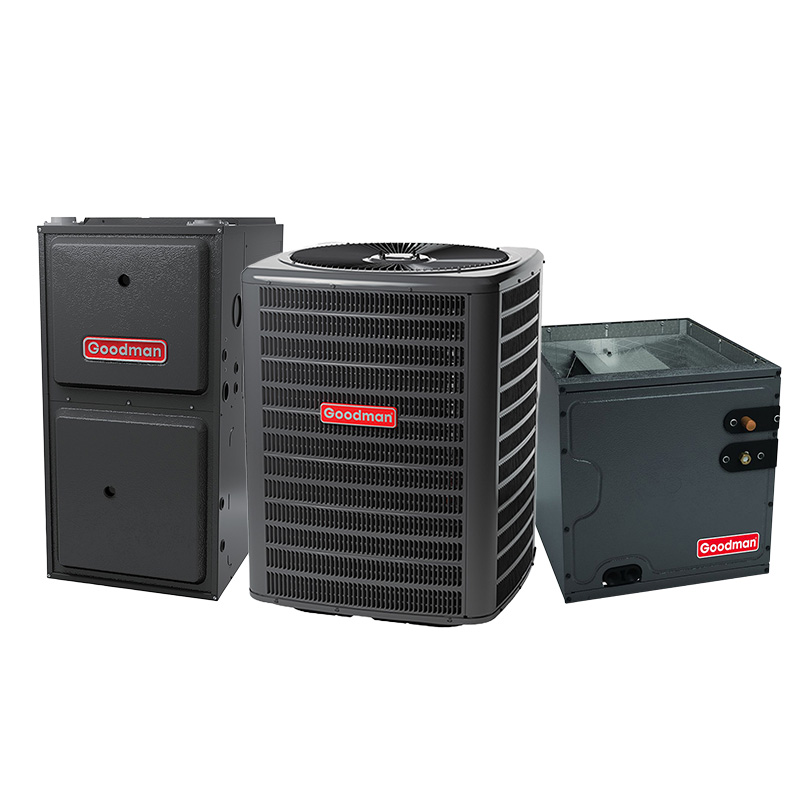
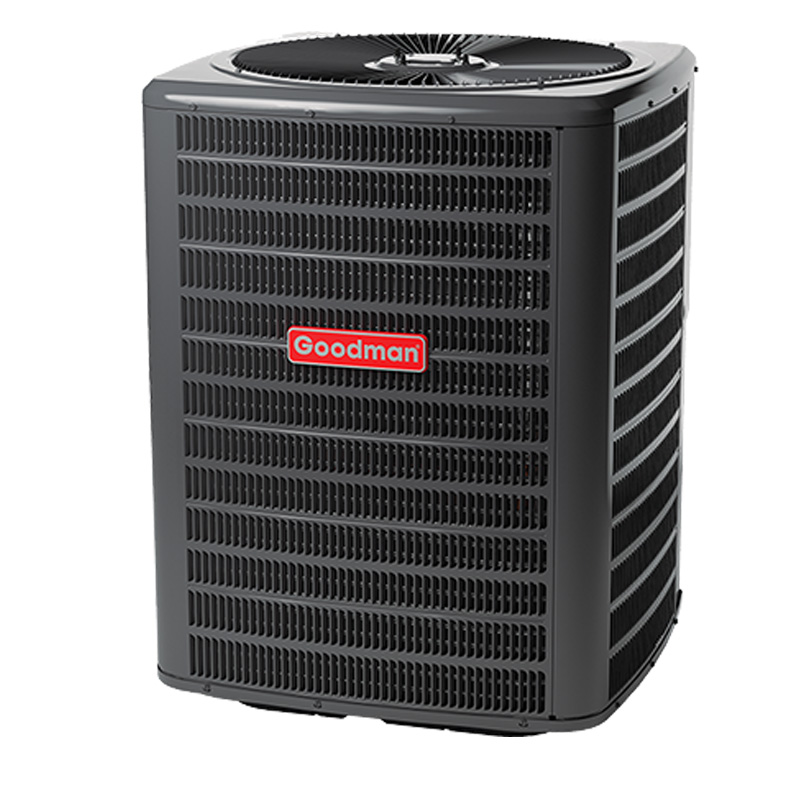
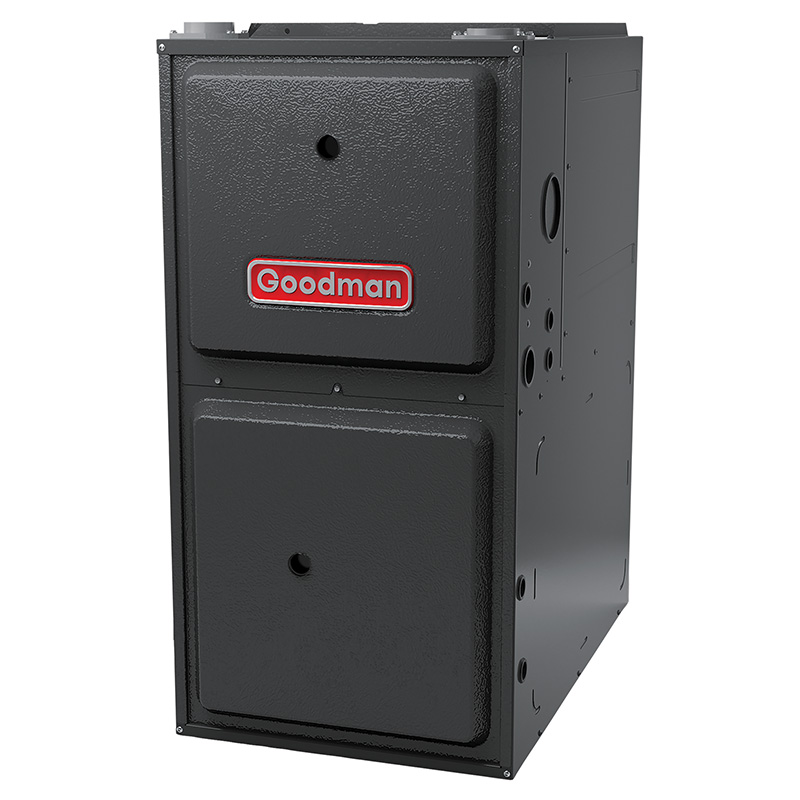
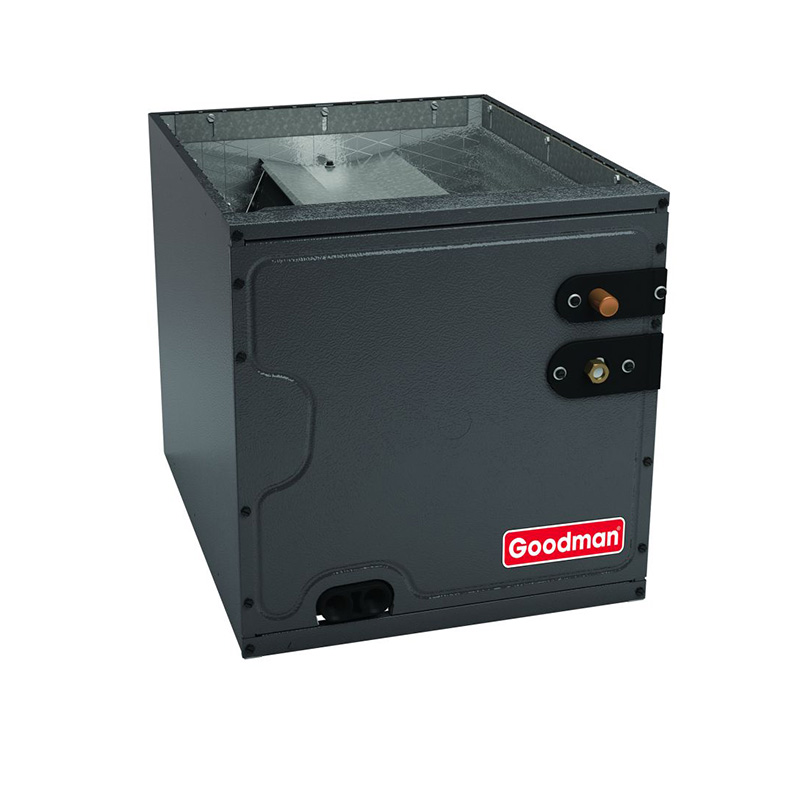
Goodman 3 Ton Dual Fuel Hybrid Heat Pump System – 60000 BTU Gas Furnace, 96% AFUE, 14.5 SEER2, Upflow, R32
View on AC Direct see your lowest price →Check current price on AC Direct →
Key features
- 14.5 SEER2 heat pump paired with 96% AFUE gas furnace for year-round hybrid operation
- 60,000 BTU heating output sized for typical 1,800 to 2,400 sq ft homes (varies by climate and insulation)
- R-32 refrigerant with roughly 68% lower global warming potential than R-410A
- Upflow configuration for basement or ground-level installs with overhead ductwork
- Dual fuel control automatically switches between heat pump and gas based on outdoor temp and efficiency threshold
- Priced approximately 15 to 25 percent below comparable Carrier, Trane, and Lennox dual fuel systems
About this system
The Goodman 3-Ton Dual Fuel Hybrid Heat Pump System pairs a 14.5 SEER2 heat pump with a 96% AFUE upflow gas furnace rated at 60,000 BTU, giving you two heating sources in one system. The heat pump handles mild-to-moderate cold efficiently, and the furnace takes over when outdoor temperatures drop below the heat pump’s economical breakeven point, typically somewhere in the low-to-mid 30s Fahrenheit depending on your local utility rates. The result is lower annual heating costs than a standalone furnace in most climates, without sacrificing the reliable output of gas heat during hard freezes.
R-32 refrigerant is a meaningful update here. It carries a global warming potential roughly 68 percent lower than the R-410A found in older systems, and its single-component makeup makes future servicing or recharging more straightforward than blended refrigerants. The upflow configuration directs conditioned air upward into overhead ductwork, so this system is specifically suited to basement or ground-level mechanical rooms feeding a conventional above-floor duct layout. Homeowners in the upper South, mid-Atlantic, and lower Midwest, where winters are cold enough to need gas backup but mild enough for the heat pump to earn its keep most of the season, tend to get the best return on a dual fuel setup like this one.
This system delivers a solid efficiency package at a noticeably lower price than premium-brand equivalents, and the dual fuel setup genuinely cuts heating bills in the right climate. The trade-off is that Goodman's real-world reliability record is uneven, with component failures becoming more common after year seven and compressor longevity running shorter than top-tier competitors.
Overall score is the average of the five ratings above.
What we like
- 96% AFUE furnace is among the highest efficiency tiers available, minimizing gas waste on cold nights
- 14.5 SEER2 meets current federal minimums and keeps cooling costs reasonable
- R-32 refrigerant is more environmentally responsible and easier to service than blended alternatives
- Dual fuel logic reduces reliance on expensive gas heat during mild cold snaps, lowering utility bills
- Purchase price runs 15 to 25 percent below Carrier, Trane, and Lennox systems at comparable specs
Trade-offs
- Dual-run capacitors are the most commonly reported failure point, and while repairs typically run $300 to $600, they recur more often after year seven
- Evaporator coil leaks appear in a meaningful share of owner reviews, which can mean costly refrigerant loss and potential coil replacement
- Compressor lifespan averages 10 to 14 years versus 15 to 20 years documented for premium brands
- A minority of first-year owners report refrigerant leaks, most traced to install quality rather than a manufacturing defect, meaning contractor selection matters greatly
What homeowners and pros say about Goodman
Homeowners who share feedback on Goodman equipment tend to split along a familiar line. Early in the equipment’s life, affordability earns consistent praise, and Google dealer reviews across multiple locations average around 3.8 out of 5, with the lower purchase price cited most often as the reason buyers chose Goodman over premium alternatives. The dual fuel concept itself draws positive comments from owners who notice real reductions in heating bills during the shoulder seasons when the heat pump does the heavy lifting. The more critical feedback concentrates on years seven and beyond, where ConsumerAffairs data puts Goodman at roughly 2.5 out of 5, a channel that skews toward dissatisfied owners, and where the recurring theme is repair costs accumulating rather than a single catastrophic failure.
HVAC technicians consistently flag install quality as the single biggest variable in how a Goodman system performs long-term. The documented failure modes back that up: dual-run capacitors are the most commonly replaced component and usually run $300 to $600 to fix, evaporator coil leaks appear in a meaningful share of owner accounts, and compressor lifespan typically lands in the 10-to-14-year range rather than the 15-to-20 years more commonly reported for Carrier, Trane, and Lennox compressors. First-year refrigerant leaks, while a minority experience, are most often traced back to the initial charge or line set connections rather than a factory defect, which reinforces why contractor selection carries so much weight with this brand. Owners who pair a Goodman installation with a qualified technician and a proactive service plan tend to report far better outcomes than those who go with the lowest-bid installer.
Sources: ConsumerAffairs Goodman owner reviews, AHRI Directory of Certified Product Performance, U.S. DOE appliance and equipment efficiency standards, Goodman product specification sheets.
What it costs to run
At 14.5 SEER2, cooling this 3-ton system for a typical 1200-hour cooling season at the U.S. average electricity rate of $0.17/kWh works out to roughly $506 per year in cooling, about $42 less per year than a minimum-efficiency 13.4 SEER2 unit of the same size. Your real cost depends on your climate and local rate.
Method: (36,000 BTU/hr ÷ 14.5 SEER2) × 1200 hours ÷ 1000 × $0.17/kWh. Rate source: U.S. EIA average; cooling hours: moderate-climate estimate.
How it compares
| Brand | Comparable model | SEER2 | Stage | Price position |
|---|---|---|---|---|
| Goodman | 3-Ton Dual Fuel Hybrid System (this unit) | 14.5 | Single-stage | Value pick |
| Carrier | Performance Series Dual Fuel (25HCB3 / 59SC5) | 15.2 | Single-stage | Typically 15 to 25 percent more than this Goodman |
| Trane | XR15 Dual Fuel (XR15 / S9X1) | 15.0 | Single-stage | Typically 15 to 25 percent more than this Goodman |
| Lennox | Merit Series Dual Fuel (14HPX / ML96DF) | 15.1 | Single-stage | Typically 15 to 25 percent more than this Goodman |
Competitor rows are comparable single-stage units at similar efficiency; price is relative position, not a quote.
Questions about this system
At what outdoor temperature will the system switch from the heat pump to the gas furnace?
The switchover point, called the balance point, is typically programmed during installation based on your local utility rates and the heat pump's efficiency curve. In most installs it falls somewhere between 30 and 40 degrees Fahrenheit, but your installer should calculate the exact setting for your area and rate structure to maximize savings.
Can this system work if my home already has gas furnace ductwork but no existing heat pump?
Yes, that is one of the most common scenarios for a dual fuel install. You will need a compatible outdoor heat pump unit, a dual fuel thermostat, and proper refrigerant line sets run to the outdoor unit. The existing ductwork and furnace location typically carry over, though a good contractor will check for duct sizing and airflow before signing off.
Is R-32 refrigerant safe and easy for technicians to service?
R-32 is mildly flammable, which means technicians need to follow updated handling procedures, but it is widely used in residential systems in Europe and Asia and is becoming standard in the U.S. market. Because it is a single-component refrigerant rather than a blend, topping off or replacing a charge is more straightforward than with blended refrigerants.
What does Goodman's warranty cover on this system, and are there any conditions?
Goodman typically offers a 10-year parts limited warranty on registered systems, which requires registration within a set window after installation. Failure to register usually drops coverage to five years, and the warranty does not cover labor costs, so a service contract or home warranty is worth considering given the documented component failure rates after year seven.
How much does a capacitor replacement typically cost, and is it something I should budget for?
Dual-run capacitors are the most frequently reported failure on Goodman equipment, and repairs generally run $300 to $600 including a service call. It is a relatively quick fix, but owners who have passed the seven-year mark are wise to keep that budget item in mind and consider a preventive replacement during annual maintenance before the capacitor fails outright.
Specifications
| Cooling capacity | 3 Ton |
| Efficiency | 14.5 SEER2 |
| Furnace output | 60000 BTU |
| Furnace efficiency | 96% AFUE |
| Configuration | Upflow |
| Refrigerant | R-32 |