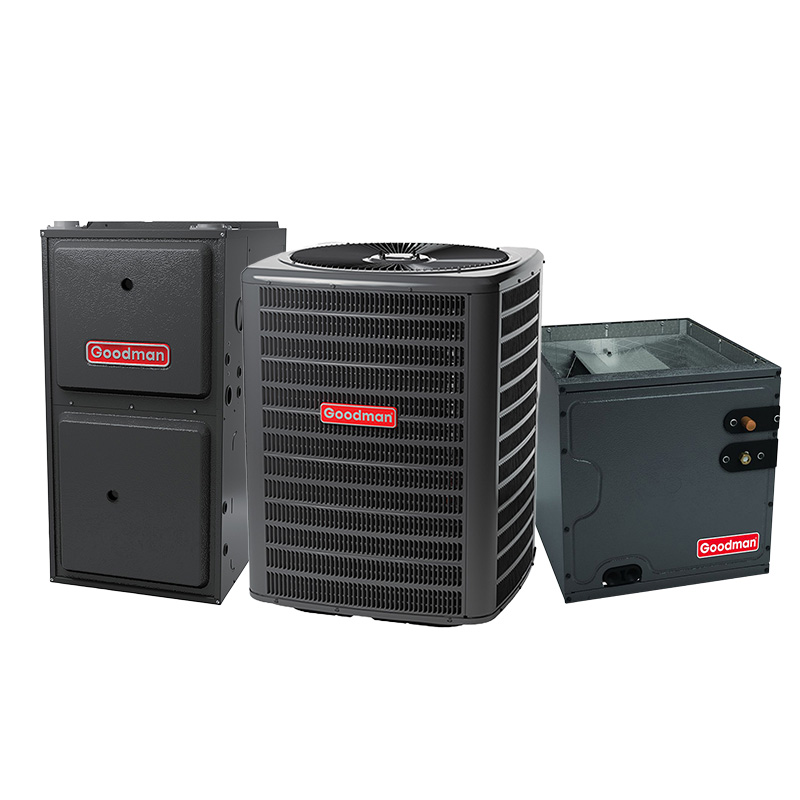
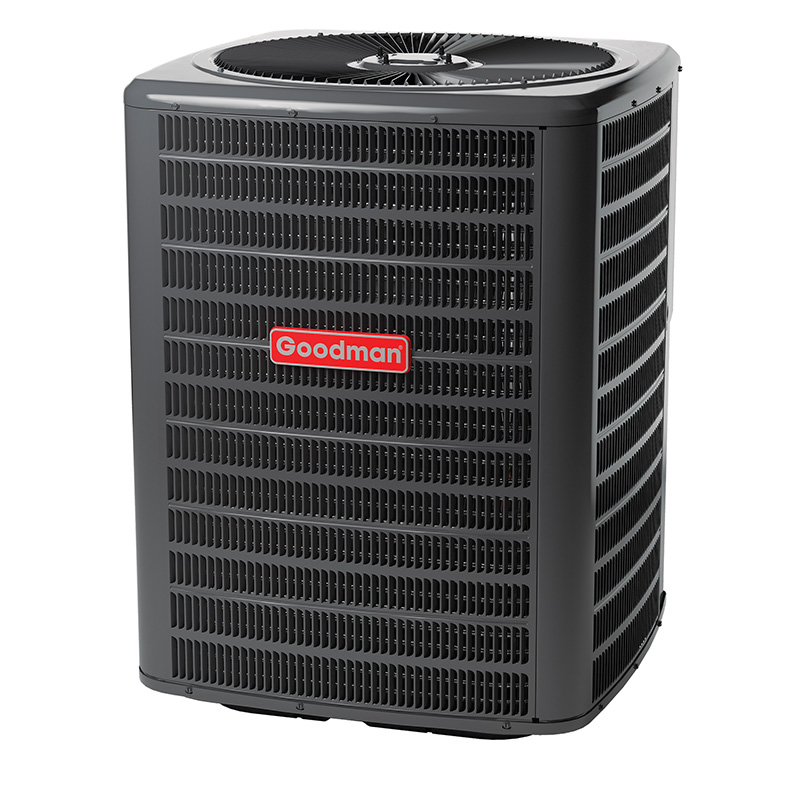
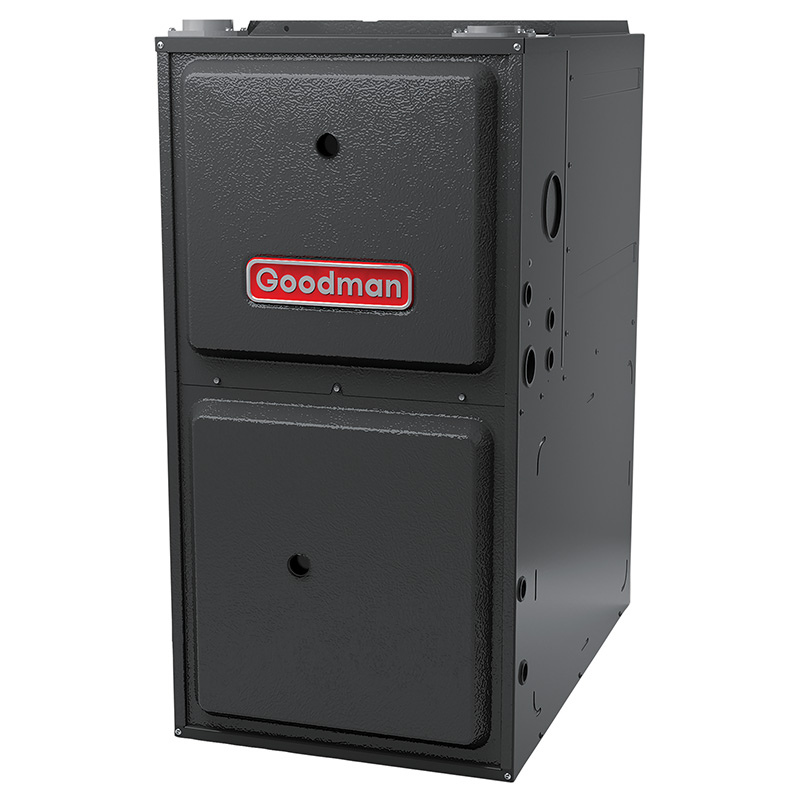
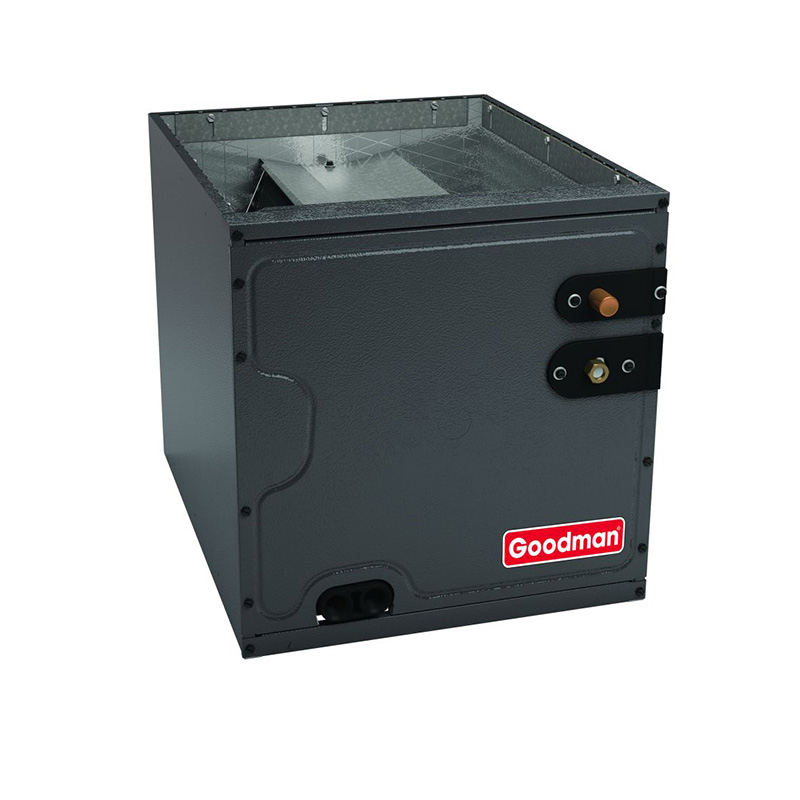
Goodman 3 Ton Dual Fuel Hybrid Heat Pump System – 60000 BTU Gas Furnace, Two Stage, 80% AFUE, Upflow, 15.2 SEER2, R32
View on AC Direct see your lowest price →Check current price on AC Direct →
Key features
- Dual fuel hybrid design: heat pump handles mild cold, 60,000 BTU gas furnace takes over at low outdoor temps
- 15.2 SEER2 cooling efficiency, meeting 2023 federal minimum standards with modest headroom
- Two-stage gas furnace operation at 80% AFUE for quieter, more even winter heating
- R-32 refrigerant with lower global-warming potential than outgoing R-410A
- Upflow configuration for basement or ground-level installations feeding ductwork above
- Priced roughly 15 to 25 percent below comparable Carrier, Trane, and Lennox dual fuel systems
About this system
The Goodman 3-Ton Dual Fuel Hybrid Heat Pump System pairs a 15.2 SEER2 heat pump with a 60,000 BTU, 80% AFUE two-stage gas furnace in an upflow configuration. A dual fuel setup is designed for climates where winters occasionally drop below the heat pump’s efficient operating range. When outdoor temperatures fall to the system’s balance point, typically somewhere between 25°F and 35°F depending on setup, the gas furnace takes over automatically, keeping heating costs reasonable without relying solely on resistance backup heat. That switchover logic makes this system a particularly practical choice for the mid-Atlantic, lower Midwest, and transition-zone climates where both heating modes get a real workout each year.
The 15.2 SEER2 rating lands this unit just above the federal minimum thresholds that took effect in 2023, so it is efficient enough to clear current code but is not in the same tier as 17 or 18 SEER2 equipment. The two-stage furnace is a meaningful upgrade over single-stage: running on low fire the majority of the time, it reduces temperature swings, lowers run-time noise, and cuts fuel consumption on moderate heating days. R-32 refrigerant is a lower global-warming-potential option compared to the older R-410A, which is being phased out industry-wide. The upflow air handler configuration suits homes where the furnace sits in a basement or utility closet and ductwork runs up through the floor system. Buyers should confirm their existing duct layout matches before purchasing.
This Goodman dual fuel system delivers a workable efficiency-and-cost combination for homeowners in mixed climates who want the flexibility of both heat pump and gas backup without paying premium-brand prices. The two-stage furnace and R-32 refrigerant are genuine selling points at this price tier, but buyers should weigh Goodman's documented reliability concerns and the added complexity that any dual fuel system brings to installation and future service calls. Getting the balance point calibrated correctly by an experienced technician is not optional here, it is the difference between a system that saves money and one that cycles inefficiently between fuel sources.
Overall score is the average of the five ratings above.
What we like
- Dual fuel flexibility cuts heating bills in mixed climates by using heat pump efficiency on mild days and gas when temperatures drop sharply
- Two-stage furnace reduces indoor temperature swings and operates more quietly on low fire than a single-stage unit
- R-32 refrigerant is better positioned for long-term regulatory compliance than R-410A equipment
- Purchase price runs 15 to 25 percent below comparable Carrier, Trane, and Lennox systems, a real upfront saving on a large purchase
- Goodman's parts are widely stocked by HVAC distributors, so replacement components are generally available without long waits
Trade-offs
- 80% AFUE furnace efficiency is mid-tier; a 96% or 97% AFUE unit would reduce annual gas costs meaningfully in cold climates
- 15.2 SEER2 is only modestly above the federal minimum, so cooling-season energy savings are limited compared to 17 or 18 SEER2 alternatives
- Dual fuel systems require careful balance-point programming and a licensed technician experienced with hybrid setups; poor installation is the most common source of owner complaints across Goodman's lineup
- Goodman compressors average 10 to 14 years versus 15 to 20 for premium brands, and dual-run capacitor failures are the most frequently reported repair, typically costing $300 to $600
What homeowners and pros say about Goodman
Owners and contractors talking about Goodman dual fuel systems land in roughly the same place: the price is hard to argue with, and the systems work reasonably well when they are set up correctly. On Google dealer reviews, Goodman equipment sits around 3.8 out of 5 across hundreds of location-level reviews, with affordability consistently listed as the top reason buyers chose it. The picture on ConsumerAffairs is less encouraging, around 2.5 out of 5, and that channel tends to capture owners who sought out a place to air frustrations. The recurring theme there is repair bills that start arriving around year 7, which lines up with the documented failure modes: dual-run capacitor replacements are the most commonly reported issue and are usually a manageable $300 to $600, but evaporator coil leaks and compressor wear start appearing in later years and cost considerably more to address. Goodman compressors tend to average 10 to 14 years in real-world use, compared to 15 to 20 years for equipment from Trane, Carrier, and Lennox.
For a dual fuel system specifically, the feedback from HVAC technicians adds an important layer: the hybrid switchover logic depends heavily on correct installation and balance-point setup, and a meaningful share of first-year refrigerant leak reports across Goodman’s lineup trace back to installation or charge errors rather than factory defects. That is not unique to Goodman, but it underscores how much this system’s long-term performance depends on finding a contractor experienced with dual fuel configurations, not just someone who installs split systems routinely. The technicians who speak positively about Goodman tend to emphasize that parts are widely available and easy to source, which keeps service calls from turning into extended wait times. Taken together, the owner and pro feedback suggests this system rewards buyers who invest in a careful installation and budget for eventual capacitor and coil maintenance, while accepting that long-term compressor reliability is a real trade-off for the lower upfront price.
Sources: ConsumerAffairs Goodman owner reviews, AHRI Directory of Certified Product Performance, U.S. DOE appliance and equipment efficiency standards, Goodman product specification sheets.
What it costs to run
At 15.2 SEER2, cooling this 3-ton system for a typical 1200-hour cooling season at the U.S. average electricity rate of $0.17/kWh works out to roughly $483 per year in cooling, about $65 less per year than a minimum-efficiency 13.4 SEER2 unit of the same size. Your real cost depends on your climate and local rate.
Method: (36,000 BTU/hr ÷ 15.2 SEER2) × 1200 hours ÷ 1000 × $0.17/kWh. Rate source: U.S. EIA average; cooling hours: moderate-climate estimate.
How it compares
| Brand | Comparable model | SEER2 | Stage | Price position |
|---|---|---|---|---|
| Goodman | 3-Ton Dual Fuel Hybrid Heat Pump System (60k BTU, Two-Stage, 80% AFUE) | 15.2 | Two-stage | Value pick |
| Carrier | Performance Series Dual Fuel (25HCE3 heat pump with 59TP6 gas furnace) | 15.2–16.0 | Two-stage | Typically 15 to 25 percent more than this Goodman system |
| Trane | XR15 Dual Fuel System (XR15 heat pump with S8X2 gas furnace) | 15.0–16.0 | Two-stage | Typically 15 to 25 percent more than this Goodman system |
| Lennox | Merit Series Dual Fuel (14HPX heat pump with ML196 gas furnace) | 15.0–16.0 | Two-stage | Typically 15 to 25 percent more than this Goodman system |
Competitor rows are comparable single-stage units at similar efficiency; price is relative position, not a quote.
Questions about this system
How does the system decide when to switch from the heat pump to the gas furnace?
A dual fuel control board or thermostat compares the outdoor temperature to a programmed balance point, often set between 25°F and 35°F. Below that point, the furnace takes over because gas heating becomes more cost-effective than the heat pump working against very cold outdoor air. Your installer should calculate and set this balance point based on your local gas and electricity rates, not just leave it at a factory default.
Is 80% AFUE going to cost me significantly more to run than a high-efficiency furnace?
Compared to a 96% AFUE furnace, an 80% unit exhausts roughly 16 cents of every dollar of gas as flue heat rather than delivering it to your home. In a mild climate where the furnace runs infrequently because the heat pump handles most of the season, that gap matters less. In a colder climate where gas runtime is high, the efficiency difference can add up to a noticeable annual cost and may affect rebate eligibility in some utility programs.
What are the most common repairs I should budget for over the life of this system?
Across Goodman's lineup, dual-run capacitor failures are the most frequently reported issue and are usually a straightforward fix in the $300 to $600 range. Evaporator coil leaks show up in a meaningful share of owner reviews and are a more significant repair. Compressors on Goodman heat pumps tend to average 10 to 14 years, shorter than the 15 to 20 years often seen with premium brands, so budgeting for a potential compressor replacement before year 15 is realistic.
Does R-32 refrigerant affect who can service the system or what it costs to recharge?
R-32 requires technicians who are EPA 608 certified, the same as any refrigerant, but not all local HVAC companies have stocked it yet since it is still being adopted in the U.S. market. Availability is improving as R-410A is phased out, but you may want to confirm your local service providers carry R-32 before buying. Charge issues in the first year are more likely to be installation-related than a refrigerant supply problem.
Will my existing ductwork and thermostat work with this dual fuel system?
The upflow furnace configuration requires ductwork that exits above the unit, so if your current setup is downflow or horizontal, this specific configuration is not compatible without significant modification. On the thermostat side, a dual fuel hybrid system needs a thermostat that can send separate signals to both the heat pump and the furnace and manage the balance-point switchover logic; a standard single-stage thermostat will not do this correctly. Confirming both duct layout and thermostat compatibility before purchase is essential.
Specifications
| Cooling capacity | 3 Ton |
| Efficiency | 15.2 SEER2 |
| Furnace output | 60000 BTU |
| Furnace efficiency | 80% AFUE |
| Configuration | Upflow |
| Refrigerant | R-32 |