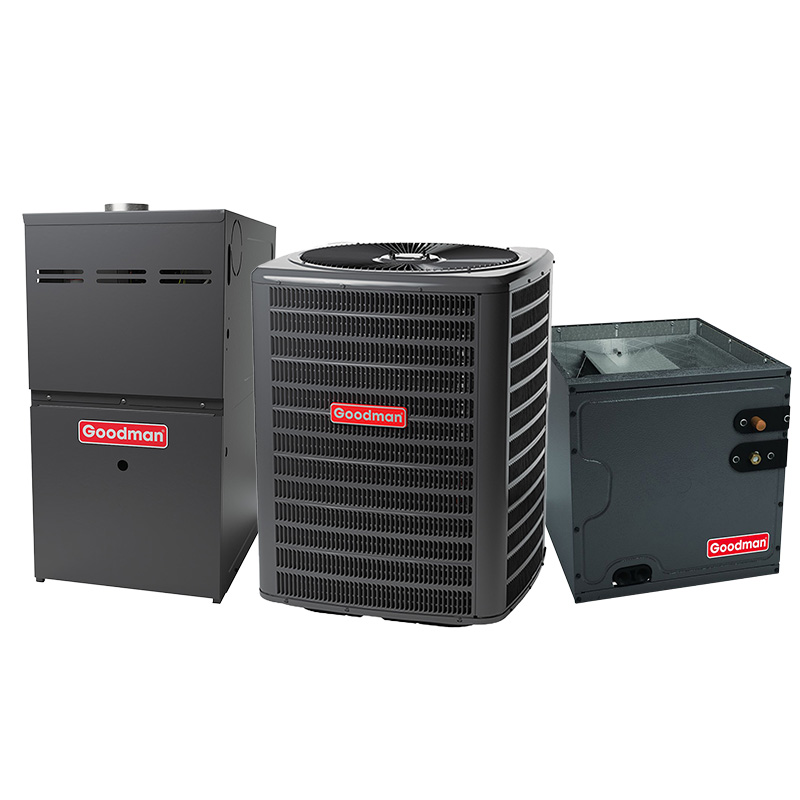
Goodman 3 Ton Dual Fuel Hybrid Heat Pump System – 80000 BTU California Low NOx Gas Furnace, 80% AFUE, 15.2 SEER2, Upflow, R32
View on AC Direct see your lowest price →Check current price on AC Direct →
Key features
- Dual fuel hybrid operation: heat pump handles moderate cold, gas furnace activates in deep freezes
- 15.2 SEER2 cooling efficiency meets current federal minimum standards
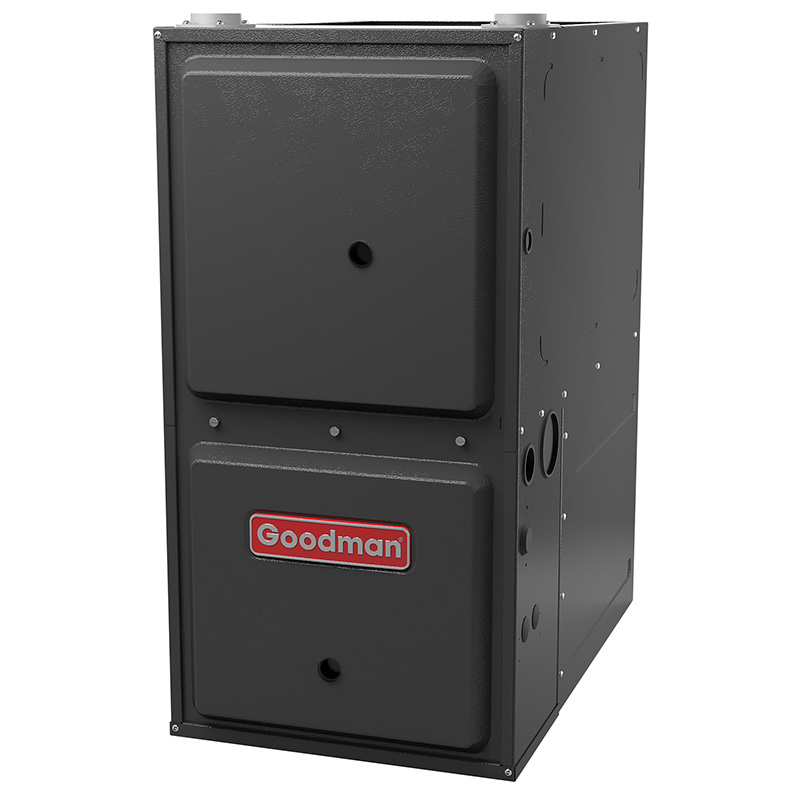
- 80,000 BTU gas furnace at 80% AFUE for upflow duct configurations
- R-32 refrigerant with lower global warming potential than outgoing R-410A
- California Low NOx compliant furnace for use in CARB-regulated air districts
- Designed for 3-ton (36,000 BTU) cooling loads in homes roughly 1,500 to 2,000 sq ft
About this system
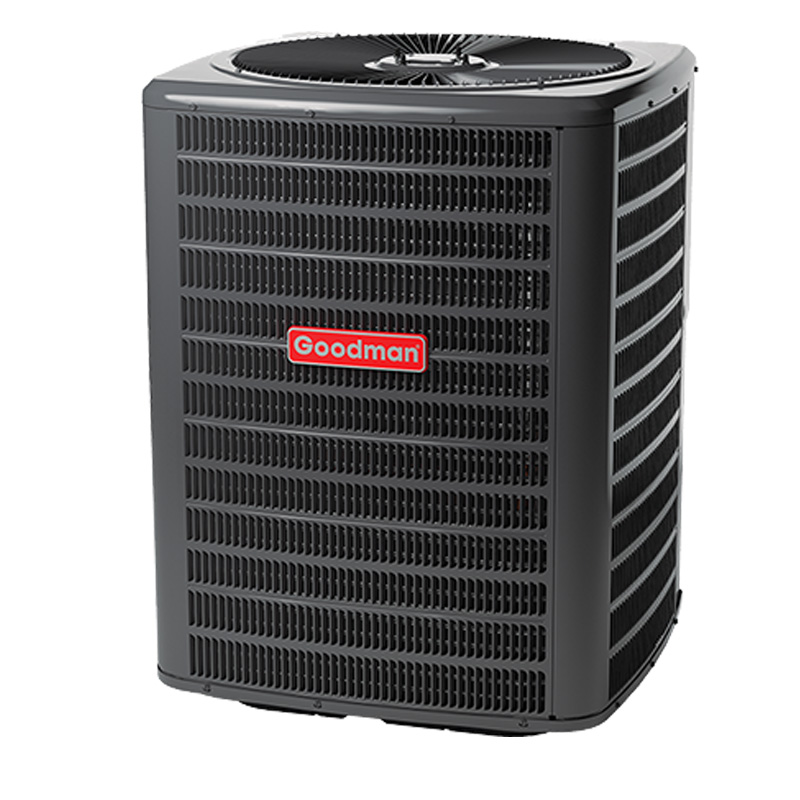
The Goodman 3-Ton Dual Fuel Hybrid Heat Pump System pairs a 15.2 SEER2 heat pump with an 80,000 BTU upflow gas furnace rated at 80% AFUE, creating a setup that automatically switches between electric heat pump operation and gas heat depending on outdoor temperatures and fuel costs. That hybrid logic makes it a practical choice for homeowners in mixed climates where winters get cold enough to push a heat pump past its efficiency sweet spot. The R-32 refrigerant charge is a newer lower-global-warming-potential option compared to the R-410A it replaces, and it is now standard across a growing share of residential equipment.
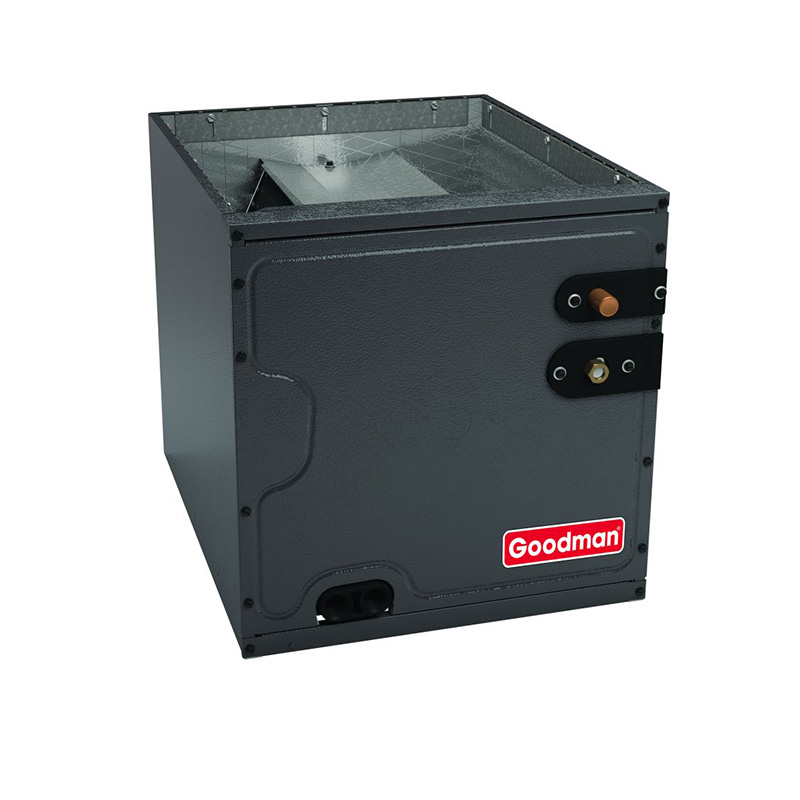
At 15.2 SEER2, this system sits at the federal minimum efficiency threshold for most U.S. regions, so it meets code but does not promise standout utility bill savings compared to higher-SEER2 alternatives. The 80% AFUE furnace likewise sits at the lower end of available efficiency, meaning roughly 20 cents of every gas dollar exits through the flue. That trade-off makes sense when the purchase price matters more than long-run fuel savings, which is exactly the position Goodman occupies in the market. Upflow configuration suits homes where the air handler sits in a basement, utility closet, or crawl space with ductwork running upward through the living area.
This Goodman dual fuel system delivers a functional hybrid heating solution at a price that undercuts major brands by 15 to 25 percent, making it accessible for budget-conscious buyers who need California Low NOx compliance. The efficiency specs are entry-level rather than impressive, and long-term reliability leans heavily on the quality of the installation and how promptly minor repairs like capacitor replacements get handled. It is a reasonable value purchase, not a set-and-forget investment.
Overall score is the average of the five ratings above.
What we like
- Hybrid dual fuel design reduces heating costs by using the heat pump when gas prices make it the costlier option
- California Low NOx certification opens it to restricted air quality districts where many units cannot be installed
- R-32 refrigerant is more environmentally responsible than R-410A and increasingly supported by technicians
- Lower upfront cost compared to equivalent Trane, Carrier, or Lennox dual fuel systems
- Upflow configuration fits the most common residential furnace placement without additional modifications
Trade-offs
- 80% AFUE is the bottom tier of furnace efficiency; a 96% AFUE unit would recover cost difference in fuel savings over 8 to 10 years in cold climates
- 15.2 SEER2 is baseline efficiency with no headroom above code minimum, leaving energy savings on the table versus 17-plus SEER2 options
- Goodman compressors average 10 to 14 years in owner experience, shorter than the 15 to 20 years reported for premium brands
- Dual-run capacitor failures and evaporator coil leaks are documented recurring issues that add maintenance costs, typically starting around year 7
What homeowners and pros say about Goodman
Homeowners who have lived with Goodman equipment for several years tend to land in one of two camps. Those who had a skilled installer and kept up with annual maintenance often describe solid, unremarkable service for the first six or seven years. Those who ran into problems early frequently point to refrigerant charge issues that trace back to installation, a concern that lines up with the brand’s documented pattern of first-year refrigerant leaks being tied to workmanship rather than equipment defects. On ConsumerAffairs, Goodman holds roughly 2.5 out of 5 stars, though that channel draws a disproportionate share of frustrated owners, so it skews negative. Google dealer reviews across multiple locations average closer to 3.8 out of 5, where affordability is the most consistently praised feature.
HVAC technicians who service Goodman equipment regularly tend to describe it as straightforward to work on, with widely available parts, but they are candid about where the weak points sit. Dual-run capacitors are the most common service call, usually an inexpensive fix but one that recurs on aging units. Evaporator coil leaks show up in a meaningful share of owner reports and represent a more significant repair. Compressor longevity averaging 10 to 14 years, compared to 15 to 20 years on premium brands, is the figure technicians cite most often when explaining the true cost of ownership gap between Goodman and brands like Trane or Carrier. For a dual fuel hybrid system specifically, where both the heat pump and furnace components need to work in coordination, getting a thorough installation from a contractor experienced with hybrid systems is not optional; it is the single biggest variable in how well this equipment performs over its life.
Sources: ConsumerAffairs Goodman owner reviews, AHRI Directory of Certified Product Performance, U.S. DOE appliance and equipment efficiency standards, Goodman product specification sheets.
What it costs to run
At 15.2 SEER2, cooling this 3-ton system for a typical 1200-hour cooling season at the U.S. average electricity rate of $0.17/kWh works out to roughly $483 per year in cooling, about $65 less per year than a minimum-efficiency 13.4 SEER2 unit of the same size. Your real cost depends on your climate and local rate.
Method: (36,000 BTU/hr ÷ 15.2 SEER2) × 1200 hours ÷ 1000 × $0.17/kWh. Rate source: U.S. EIA average; cooling hours: moderate-climate estimate.
How it compares
| Brand | Comparable model | SEER2 | Stage | Price position |
|---|---|---|---|---|
| Goodman | Dual Fuel Hybrid Heat Pump System (this unit) | 15.2 | Single-stage | Value pick |
| Carrier | Performance Series Dual Fuel (25HCE6) | 15.2 | Single-stage | Typically 15 to 25 percent more than this Goodman |
| Trane | XR15 Dual Fuel System | 15.0–15.5 | Single-stage | Typically 15 to 25 percent more than this Goodman |
| Lennox | Merit Series ML14XP1 Dual Fuel | 15.2 | Single-stage | Typically 15 to 25 percent more than this Goodman |
Competitor rows are comparable single-stage units at similar efficiency; price is relative position, not a quote.
Questions about this system
How does the dual fuel switchover actually work, and can I control the balance point temperature?
The system uses a thermostat with dual fuel logic (often called a balance point or lockout temperature) that tells the furnace to take over from the heat pump when outdoor temps drop below a set threshold, commonly between 30 and 40 degrees Fahrenheit. Most compatible thermostats let you or your installer adjust that balance point to match your local gas and electric rates. Getting that setting dialed in during commissioning is important for actual savings.
Does this system qualify for the federal energy efficiency tax credit?
At 15.2 SEER2 and 80% AFUE, this system meets the baseline efficiency required for the heat pump side of the federal 25C tax credit, but the 80% AFUE furnace does not meet the 97% AFUE threshold for the furnace credit on its own. Consult a tax professional and check current IRS guidance, since credit eligibility depends on how the system is claimed and what your installer documents.
What maintenance does R-32 refrigerant require compared to R-410A?
Day-to-day maintenance is essentially the same: annual coil cleaning, filter changes, and having a certified technician check the charge. The important difference is that R-32 is mildly flammable (A2L classification), so only technicians with A2L certification and appropriate equipment should handle refrigerant work. This is becoming standard, but confirm your service contractor is equipped before signing a maintenance agreement.
Given the documented capacitor and coil issues, what should I budget for repairs after year 7?
Dual-run capacitor replacements are the most common call and typically run 300 to 600 dollars including labor. Evaporator coil leaks are more serious and can cost 1,000 to 2,500 dollars depending on part availability and labor rates. Setting aside a few hundred dollars per year in a home repair fund starting around year 6 is a reasonable approach for any entry-tier system.
Is the California Low NOx certification required everywhere in California, or only certain areas?
The Low NOx requirement is enforced by the South Coast Air Quality Management District (SCAQMD) and certain other California air districts, not statewide. If you are in one of those regulated districts, a standard furnace will not pass permit inspection, so this certification matters. If you are outside those districts, it adds no cost penalty and does not affect performance.
Specifications
| Cooling capacity | 3 Ton |
| Efficiency | 15.2 SEER2 |
| Furnace output | 80000 BTU |
| Furnace efficiency | 80% AFUE |
| Configuration | Upflow |
| Refrigerant | R-32 |