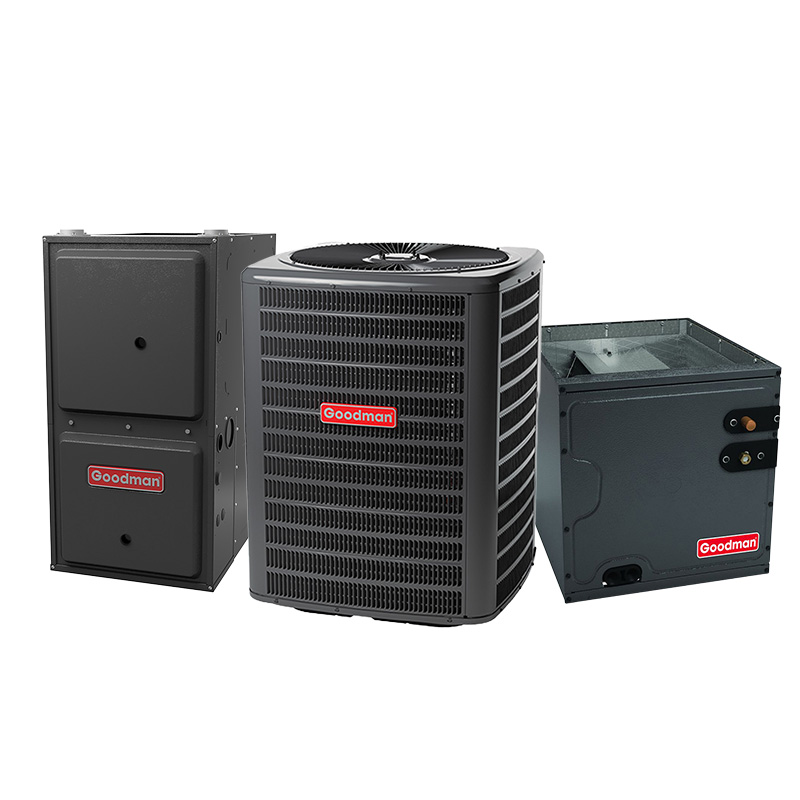
Goodman 3 Ton Dual Fuel Hybrid Heat Pump System – 80000 BTU California Ultra-Low NOx Gas Furnace, 80% AFUE, 15.2 SEER2, Upflow, R32
View on AC Direct see your lowest price →Check current price on AC Direct →
Key features
- Dual-fuel hybrid design: heat pump handles mild weather, 80,000 BTU gas furnace activates in colder conditions
- 15.2 SEER2 heat pump efficiency meets federal minimum thresholds for new equipment (effective 2023)
- 80% AFUE single-stage furnace in upflow configuration, suitable for below-unit duct systems
- R-32 refrigerant complies with California low-GWP requirements and newer environmental standards
- California Ultra-Low NOx certified furnace, required in many California air districts
- 3-ton cooling/heating capacity, appropriate for roughly 1,400 to 1,900 square feet depending on insulation and climate
About this system
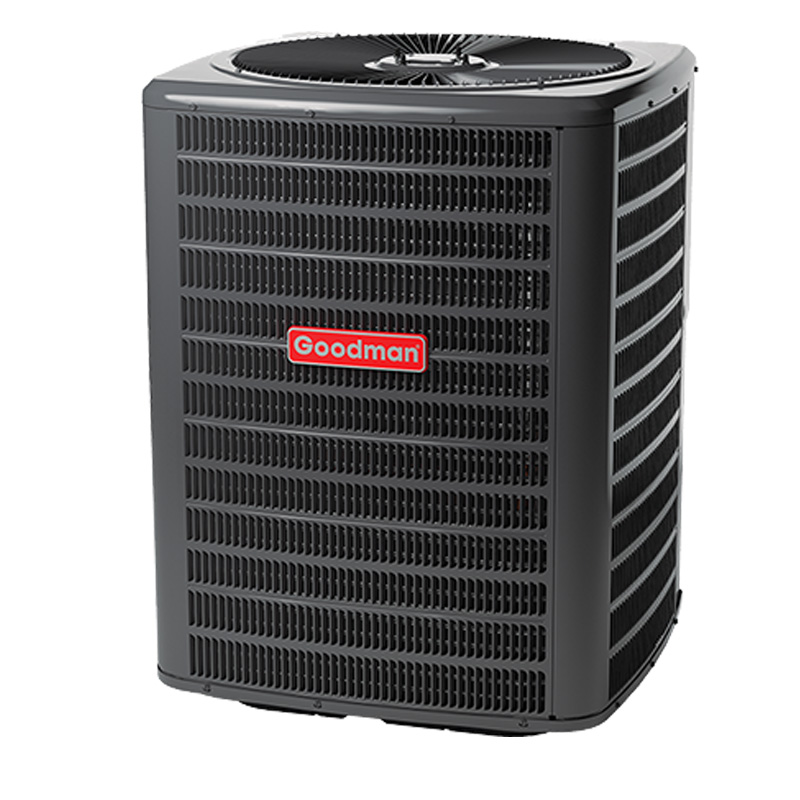
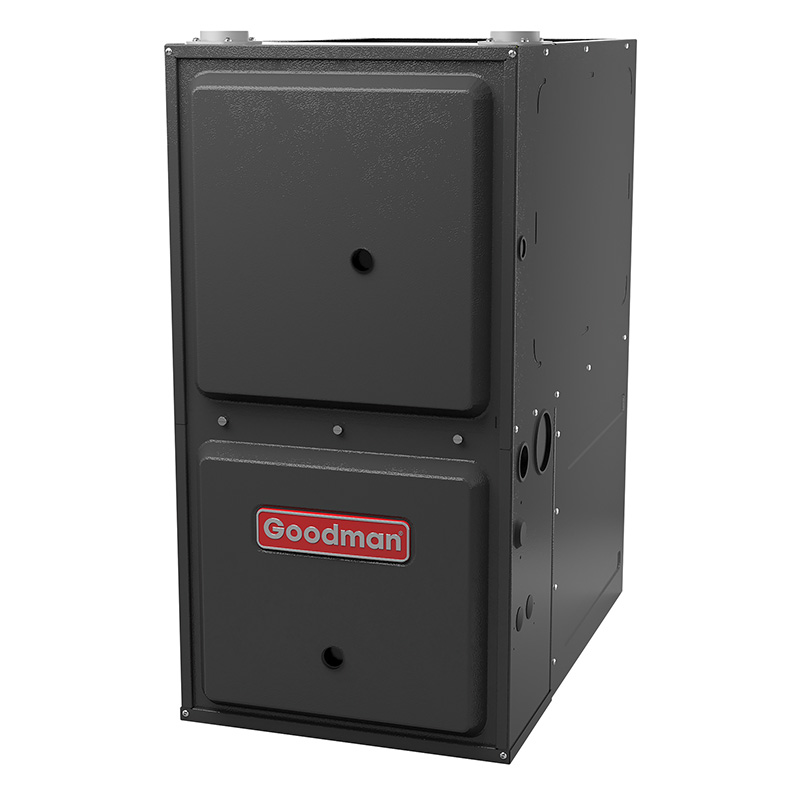
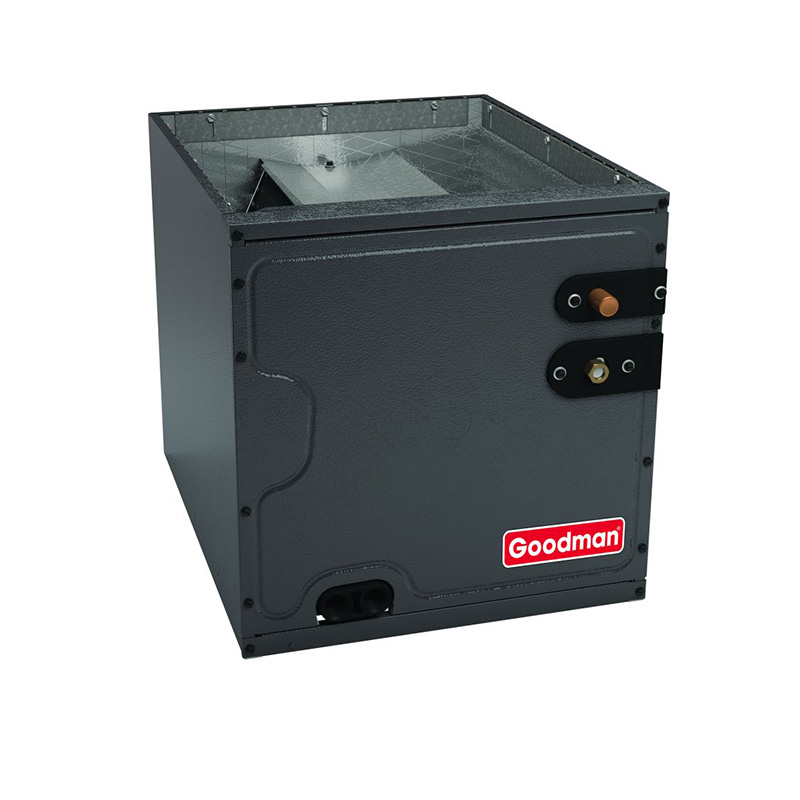
The Goodman 3-Ton Dual Fuel Hybrid Heat Pump System pairs a 15.2 SEER2 heat pump with an 80,000 BTU, 80% AFUE upflow gas furnace to give you two heating sources in one system. On mild days, the heat pump handles heating efficiently; when outdoor temperatures drop to the point where a heat pump loses its edge, the furnace takes over automatically. That switchover logic is what makes a dual-fuel setup genuinely useful in climates that see real winters but not extreme cold every single night.
The R-32 refrigerant charge is a notable detail here. R-32 has a lower global warming potential than the R-410A it is replacing across the industry, and it is increasingly required by California regulations, making this system compliant for California’s stricter environmental standards. The Ultra-Low NOx furnace rating is equally important for California buyers, meeting the South Coast AQMD and Bay Area AQMD rules that prohibit standard NOx-emitting furnaces in covered districts. The upflow configuration means warm air rises from the furnace through ductwork above it, which suits the most common basement or closet installations where the air handler sits below the living space.
At 80% AFUE, about one-fifth of the gas consumed goes up the flue rather than into your home. That is the entry tier for gas efficiency, well below the 96% or 97% condensing furnaces that dominate premium installs. The tradeoff is a simpler single-stage design with lower upfront cost and no need for PVC condensate drain lines. For homeowners in moderate climates who expect the heat pump to carry most of the heating load anyway, the furnace’s lower efficiency is a reasonable compromise since it runs less often.
This system delivers a functional, code-compliant dual-fuel setup at a price point that undercuts Carrier, Trane, and Lennox by a meaningful margin, and the R-32 refrigerant plus Ultra-Low NOx furnace make it a practical choice for California buyers specifically. The 80% AFUE furnace and entry-level 15.2 SEER2 rating leave efficiency gains on the table, and Goodman's documented reliability history means you should budget for capacitor and coil maintenance after the first several years. It is a solid value pick when installed by an experienced technician, not a premium long-term system.
Overall score is the average of the five ratings above.
What we like
- Priced roughly 15 to 25 percent below comparable Carrier, Trane, and Lennox dual-fuel systems
- California Ultra-Low NOx and R-32 refrigerant compliance removes regulatory hurdles for California installs
- Dual-fuel operation reduces gas consumption on moderate winter days while keeping heating costs manageable on cold nights
- Upflow configuration fits the most common residential installation layouts without special air handler positioning
- Goodman's wide dealer network makes parts and service available in most metro areas
Trade-offs
- 80% AFUE is the lowest efficiency tier for gas furnaces; homeowners in cold climates where the furnace runs often will pay more in gas bills versus a 96% AFUE unit
- 15.2 SEER2 is the regulatory minimum, offering no energy savings headroom above comparable budget brands
- Goodman compressors average 10 to 14 years of service life versus 15 to 20 years for premium-brand compressors, meaning earlier replacement probability on a longer ownership horizon
- Documented owner reports of dual-run capacitor failures and evaporator coil leaks mean maintenance costs can climb noticeably after year 7
What homeowners and pros say about Goodman
Homeowners who bought Goodman equipment leave a divided record. On ConsumerAffairs, Goodman sits at roughly 2.5 out of 5, a score shaped by a platform that attracts frustrated owners more than satisfied ones. The consistent complaint in those reviews is repair costs rising after about year 7, with dual-run capacitor failures and evaporator coil leaks cited most often. Capacitor replacements are a manageable expense, usually 300 to 600 dollars, but coil leaks can run significantly higher. On the other hand, Google dealer reviews average around 3.8 out of 5 across locations, and the most repeated praise there is straightforward: the price makes Goodman accessible for homeowners who could not otherwise afford a new system at all.
HVAC technicians tend to have a measured view of the brand. They will tell you a Goodman installed carefully by an experienced crew performs reasonably well in the first decade, but that compressor longevity is the real gap versus premium brands. Goodman compressors have been documented to average 10 to 14 years of service life, compared to 15 to 20 years in Trane, Carrier, and Lennox equipment. For this specific dual-fuel system, the R-32 refrigerant charge and Ultra-Low NOx furnace rating draw some genuine professional respect in California markets, where those features are no longer optional in many jurisdictions. The standing advice from most technicians is consistent: budget for maintenance, do not skip annual service visits, and make sure your installer is comfortable with dual-fuel systems specifically, because a poor setup will shorten any system’s life regardless of brand.
Sources: ConsumerAffairs Goodman owner reviews, AHRI Directory of Certified Product Performance, U.S. DOE appliance and equipment efficiency standards, Goodman product specification sheets.
What it costs to run
At 15.2 SEER2, cooling this 3-ton system for a typical 1200-hour cooling season at the U.S. average electricity rate of $0.17/kWh works out to roughly $483 per year in cooling, about $65 less per year than a minimum-efficiency 13.4 SEER2 unit of the same size. Your real cost depends on your climate and local rate.
Method: (36,000 BTU/hr ÷ 15.2 SEER2) × 1200 hours ÷ 1000 × $0.17/kWh. Rate source: U.S. EIA average; cooling hours: moderate-climate estimate.
How it compares
| Brand | Comparable model | SEER2 | Stage | Price position |
|---|---|---|---|---|
| Goodman | Dual Fuel Hybrid System (this unit) | 15.2 | Single-stage | Value pick |
| Carrier | Performance Series Dual Fuel (25HCB / 59SP5) | 15.2 – 16.0 | Single-stage | Typically 15 to 25 percent more than this Goodman system |
| Trane | XR15 Dual Fuel (XR15 heat pump / S8X1 furnace) | 15.0 – 16.0 | Single-stage | Typically 15 to 25 percent more than this Goodman system |
| Lennox | Merit Series Dual Fuel (14HPX / ML180 furnace) | 15.0 – 15.5 | Single-stage | Typically 15 to 25 percent more than this Goodman system |
Competitor rows are comparable single-stage units at similar efficiency; price is relative position, not a quote.
Questions about this system
At what outdoor temperature does the system switch from heat pump to gas furnace?
The switchover temperature, often called the balance point, is typically set during installation by your HVAC technician based on your climate and utility rates. Most installers set it somewhere between 30 and 40 degrees Fahrenheit, but this is a programmable parameter on the thermostat, not a fixed factory setting.
Is this system actually required in California, or is the Ultra-Low NOx designation just a bonus?
In many California air districts, including the South Coast AQMD and Bay Area AQMD, Ultra-Low NOx furnaces are now the only gas furnaces that can be installed legally. If your home is in a covered district, this is not optional. Verify your specific district's rules with your contractor before purchasing any furnace.
Why does this system use R-32 refrigerant instead of R-410A?
R-410A is being phased out under EPA regulations because of its high global warming potential, and California has additional rules accelerating that timeline. R-32 has roughly one-third the global warming potential of R-410A, meets current and near-term regulatory requirements, and is increasingly the standard refrigerant in new residential systems.
What does the Goodman warranty actually cover on a dual-fuel system like this?
Goodman typically offers a 10-year parts limited warranty when the equipment is registered within 60 days of installation. The compressor often carries a separate limited lifetime replacement warranty under registered conditions. Read the warranty certificate carefully, because coverage details differ between the heat pump and furnace components, and labor is not included.
Should I be worried about the documented failure modes like capacitor failures and coil leaks?
Dual-run capacitor failure is the most commonly reported issue on Goodman equipment and is generally a low-cost repair in the 300 to 600 dollar range when caught early. Evaporator coil leaks are a more significant concern and appear in a meaningful share of owner reviews, often after several years of use. Scheduling annual maintenance checks and asking your technician to inspect the coil and capacitor each visit is the practical way to catch these issues before they become expensive.
Specifications
| Cooling capacity | 3 Ton |
| Efficiency | 15.2 SEER2 |
| Furnace output | 80000 BTU |
| Furnace efficiency | 80% AFUE |
| Configuration | Upflow |
| Refrigerant | R-32 |