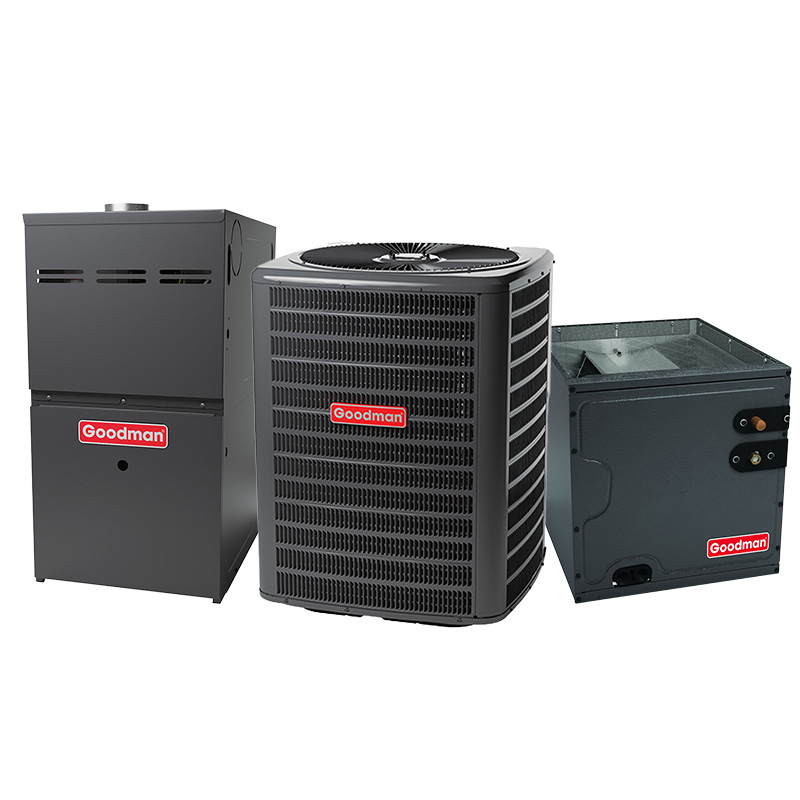
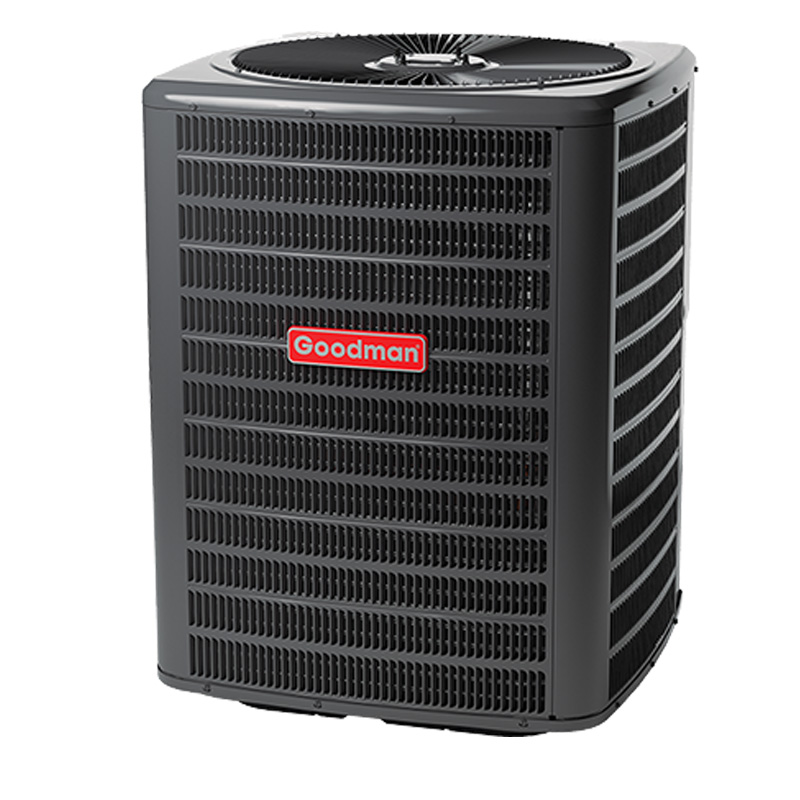
Goodman 3 Ton Dual Fuel Hybrid Heat Pump System – 80000 BTU Gas Furnace, 80% AFUE, 15.2 SEER2, Upflow, R32
View on AC Direct see your lowest price →Check current price on AC Direct →
Key features
- Dual fuel operation: heat pump handles mild weather, 80,000 BTU gas furnace takes over in deep cold
- 15.2 SEER2 cooling efficiency, meeting 2023 federal minimums with a modest efficiency margin
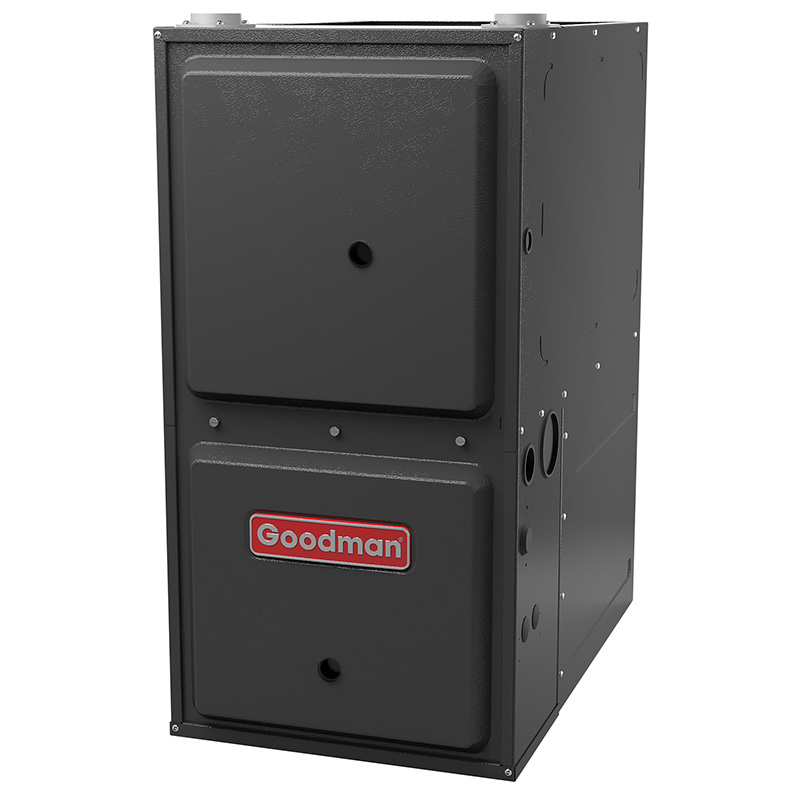
- 80% AFUE gas furnace — straightforward single-stage heat, upflow cabinet orientation
- R-32 refrigerant, which carries a lower global warming potential than the outgoing R-410A standard
- 3-ton (36,000 BTU) cooling capacity, appropriate for roughly 1,400 to 2,000 sq ft depending on climate and insulation
- Goodman factory warranty backed by registered coverage on compressor, parts, and heat exchanger (registration required within 60 days)
About this system
The Goodman 3-Ton Dual Fuel Hybrid Heat Pump System pairs a 15.2 SEER2 heat pump with an 80,000 BTU, 80% AFUE upflow gas furnace, giving your home two heating sources that switch automatically based on outdoor temperature and operating cost. When electric heating is cheaper or mild enough, the heat pump runs; when temperatures drop and gas becomes more economical, the furnace takes over. That split-fuel approach is particularly useful in climates that see genuine winters but not sustained extreme cold, such as the mid-Atlantic, lower Midwest, or parts of the Pacific Northwest.
The 15.2 SEER2 cooling rating lands this unit in the entry tier of today’s efficiency standards, comfortably clearing the federal minimums but sitting well below variable-speed or two-stage premium systems in the 17 to 20 SEER2 range. The 80% AFUE furnace is similarly entry-level on the gas side, meaning roughly 20 cents of every dollar in gas is lost as exhaust heat. Buyers who prioritize low upfront cost over long-run efficiency savings will find the trade-off reasonable; those with high heating loads or rising gas prices in their market should price out a 96% AFUE alternative before committing. R-32 refrigerant is a notable positive: it has a lower global warming potential than R-410A and is increasingly the industry standard for newer systems.
The upflow configuration means warm or cooled air exits the top of the furnace cabinet and feeds ductwork routed through a ceiling or attic, which is the most common arrangement in homes built on slabs or with basement installations. Confirm your existing duct layout before ordering, as swapping to a different configuration typically requires cabinet modifications that add labor cost.
This Goodman dual fuel system is a cost-accessible entry point for homeowners who want hybrid heating flexibility without paying premium-brand prices. The efficiency specs are honest and adequate rather than impressive, and the savings story depends heavily on local utility rates and a quality installation. Buyers who keep maintenance current and use a qualified installer get a functional, workable system; buyers expecting premium longevity or low lifetime repair costs should look at a higher tier.
Overall score is the average of the five ratings above.
What we like
- Priced roughly 15 to 25 percent below comparable Carrier, Trane, and Lennox dual fuel systems
- Dual fuel logic reduces monthly energy bills in climates with cold winters and variable gas-versus-electric pricing
- R-32 refrigerant is more environmentally responsible and increasingly serviceable as the industry transitions away from R-410A
- Upflow cabinet fits the most common residential duct configurations without modification
- Dual run capacitor failures, the most common documented issue, are a relatively quick and affordable repair in the $300 to $600 range
Trade-offs
- 80% AFUE furnace wastes about 20% of gas input, a real cost penalty in regions with high gas rates or long heating seasons
- Compressor lifespan averages 10 to 14 years versus 15 to 20 years for premium-brand compressors, affecting long-term cost of ownership
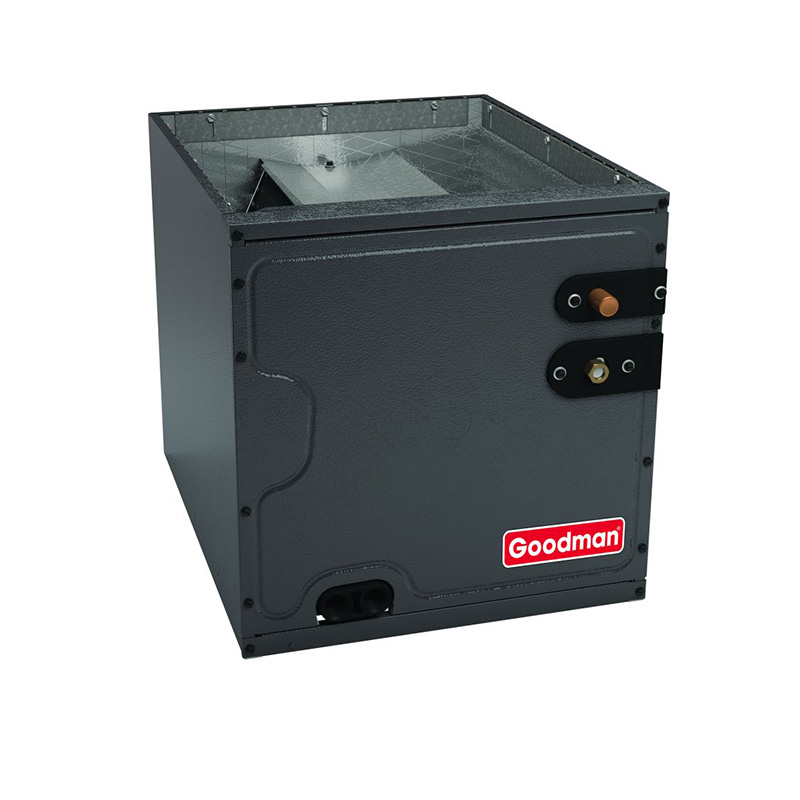
- Evaporator coil leaks appear in a meaningful share of owner reviews, and a minority of owners report refrigerant leaks within the first year
- ConsumerAffairs scores average around 2.5 out of 5, with recurring complaints about repair costs climbing after year 7
What homeowners and pros say about Goodman
Homeowners who share feedback on Goodman systems tend to land in two camps. Those who had a skilled installer and kept up with annual maintenance often report years of reliable operation and point to the lower purchase price as a genuine win. Those who ran into problems more frequently cite repair costs that crept up after around year 7, which aligns with ConsumerAffairs’ aggregate score of roughly 2.5 out of 5 on that platform. It is worth noting that ConsumerAffairs skews toward complaint-motivated reviews, but the pattern of late-ownership cost increases is consistent enough to take seriously when budgeting. Google dealer reviews paint a more moderate picture, averaging around 3.8 out of 5 across multi-hundred-review dealer locations, where affordability is the praise that shows up most often.
HVAC technicians who work on Goodman equipment regularly point to dual run capacitors as the most commonly replaced component, usually a straightforward repair in the $300 to $600 range that does not necessarily signal deeper trouble. More consequential are evaporator coil leaks, which appear in a meaningful share of owner reports and can be a more involved repair, and compressor longevity that averages 10 to 14 years rather than the 15 to 20 years more typical of premium-brand compressors. A minority of owners also report refrigerant leaks in the first year, which professionals generally attribute to install or initial charge issues rather than a factory defect. The consensus from the field is that Goodman’s value proposition holds up best when the installation is done right from day one and the owner commits to annual tune-ups rather than waiting for something to break.
Sources: ConsumerAffairs Goodman owner reviews, AHRI Directory of Certified Product Performance, U.S. DOE appliance and equipment efficiency standards, Goodman product specification sheets.
What it costs to run
At 15.2 SEER2, cooling this 3-ton system for a typical 1200-hour cooling season at the U.S. average electricity rate of $0.17/kWh works out to roughly $483 per year in cooling, about $65 less per year than a minimum-efficiency 13.4 SEER2 unit of the same size. Your real cost depends on your climate and local rate.
Method: (36,000 BTU/hr ÷ 15.2 SEER2) × 1200 hours ÷ 1000 × $0.17/kWh. Rate source: U.S. EIA average; cooling hours: moderate-climate estimate.
How it compares
| Brand | Comparable model | SEER2 | Stage | Price position |
|---|---|---|---|---|
| Goodman | Dual Fuel Hybrid Heat Pump System (this unit) | 15.2 | Single-stage | Value pick |
| Carrier | Performance Series Dual Fuel (25HCB6 heat pump with 80% furnace) | 15.2 | Single-stage | Typically 15 to 25 percent more than this Goodman |
| Trane | XR15 Dual Fuel System (XR15 heat pump with S8X1 80% furnace) | 15.0–15.5 | Single-stage | Typically 15 to 25 percent more than this Goodman |
| Lennox | Merit Series Dual Fuel (ML14XP1 heat pump with ML180 80% furnace) | 15.0–15.5 | Single-stage | Typically 15 to 25 percent more than this Goodman |
Competitor rows are comparable single-stage units at similar efficiency; price is relative position, not a quote.
Questions about this system
At what outdoor temperature does the system switch from heat pump to gas furnace?
The changeover point, called the balance point, is typically set by your installer in the thermostat or control board and is usually programmed somewhere between 35 and 45 degrees Fahrenheit depending on your local utility rates and climate. Getting this setting right is important for maximizing savings, so confirm it with your installer at startup and ask them to explain the logic they used.
Why does this system use R-32 instead of R-410A, and does that affect service?
R-32 has a significantly lower global warming potential than R-410A and is the direction most manufacturers are heading under EPA phasedown rules. Most certified HVAC technicians are already handling R-32, but it does require specific equipment and training, so confirm your service contractor is certified before scheduling any refrigerant work.
How important is installation quality with a Goodman system specifically?
Very important. Technicians consistently cite install quality as the single biggest factor in how long a Goodman unit lasts, and a minority of owners have reported refrigerant leaks within the first year that trace back to charge or connection issues at installation. Budget for a licensed, experienced installer and ask for a commissioning sheet showing the system was checked at startup.
What does the Goodman warranty cover on this dual fuel system, and is there anything I need to do to activate it?
Goodman typically offers a 10-year parts warranty, a lifetime heat exchanger warranty, and extended compressor coverage on registered units. You generally must register the product online within 60 days of installation to receive the full coverage; unregistered units default to a shorter base warranty. Read the registration terms for this specific model before your install date.
Is a 3-ton system the right size for my home, or should I get a load calculation done?
Three tons is not automatically correct for any home. A proper Manual J load calculation accounts for square footage, ceiling height, insulation levels, window area, and local climate, and an oversized or undersized system will cause comfort and efficiency problems regardless of brand. Request a load calculation from your installer before the equipment is ordered.
Specifications
| Cooling capacity | 3 Ton |
| Efficiency | 15.2 SEER2 |
| Furnace output | 80000 BTU |
| Furnace efficiency | 80% AFUE |
| Configuration | Upflow |
| Refrigerant | R-32 |