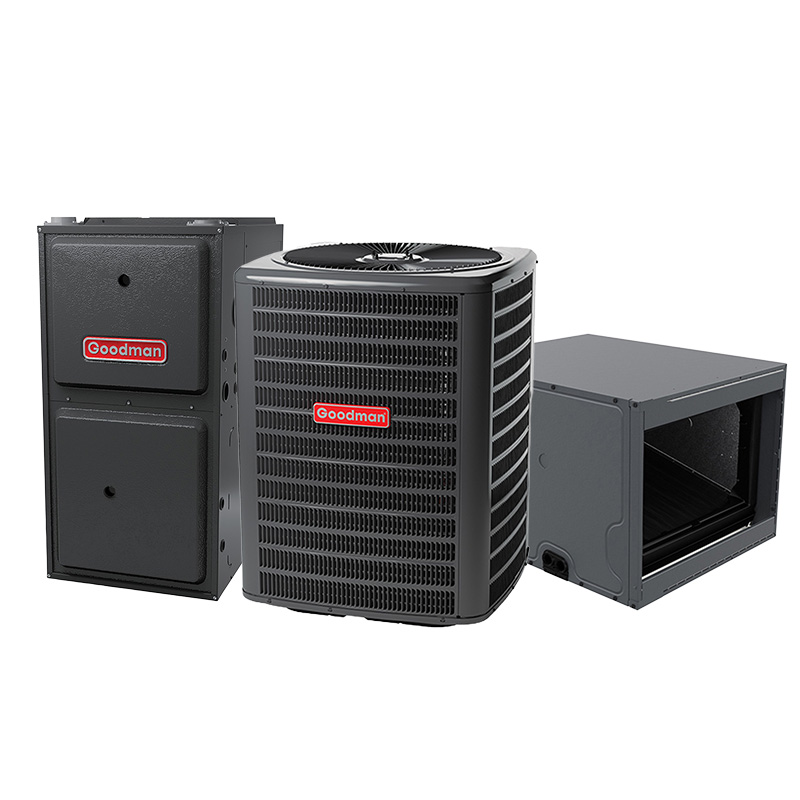
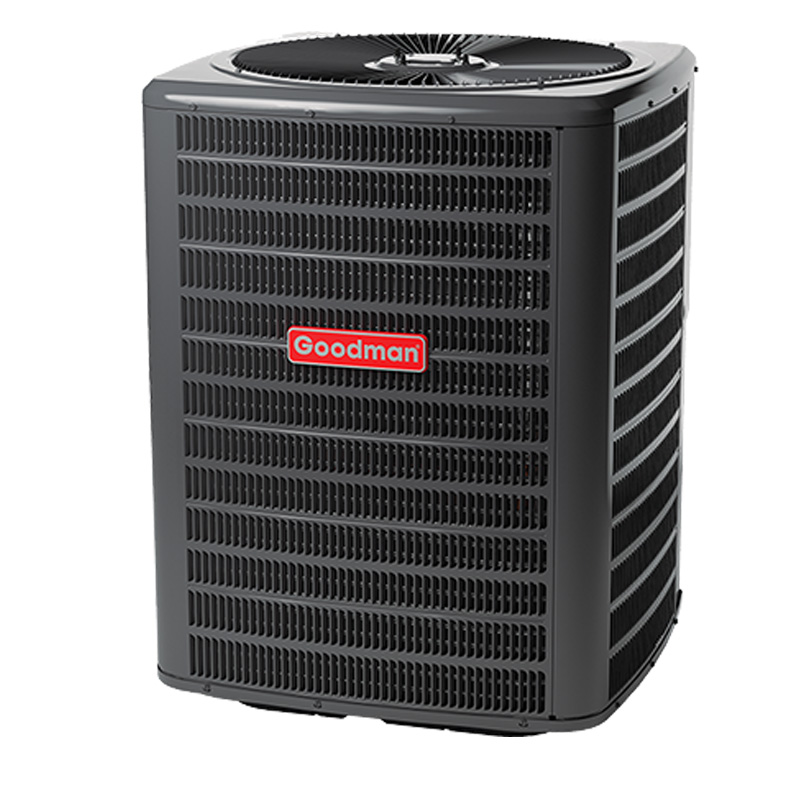
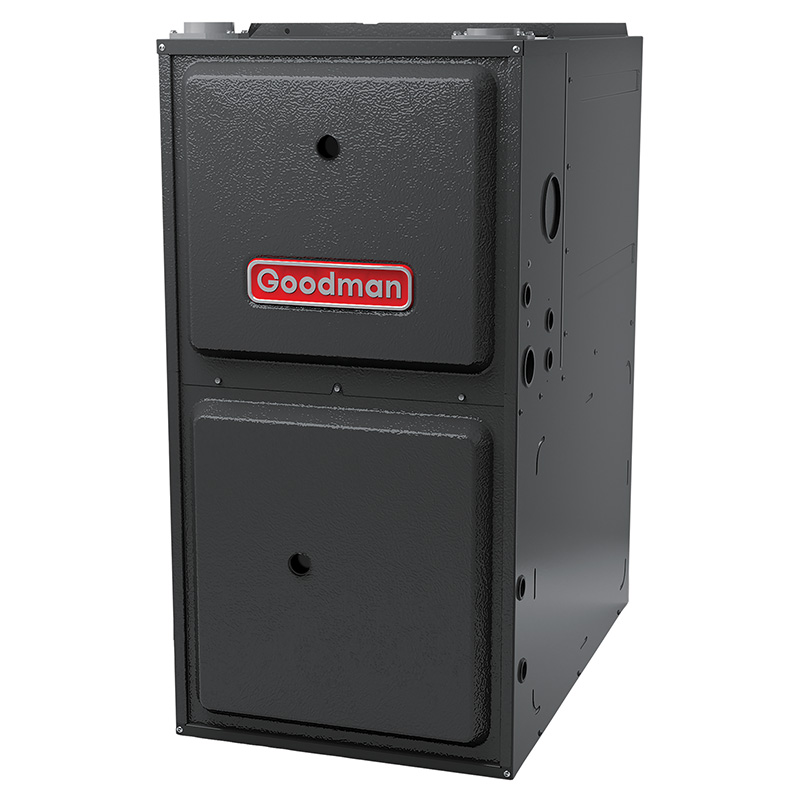
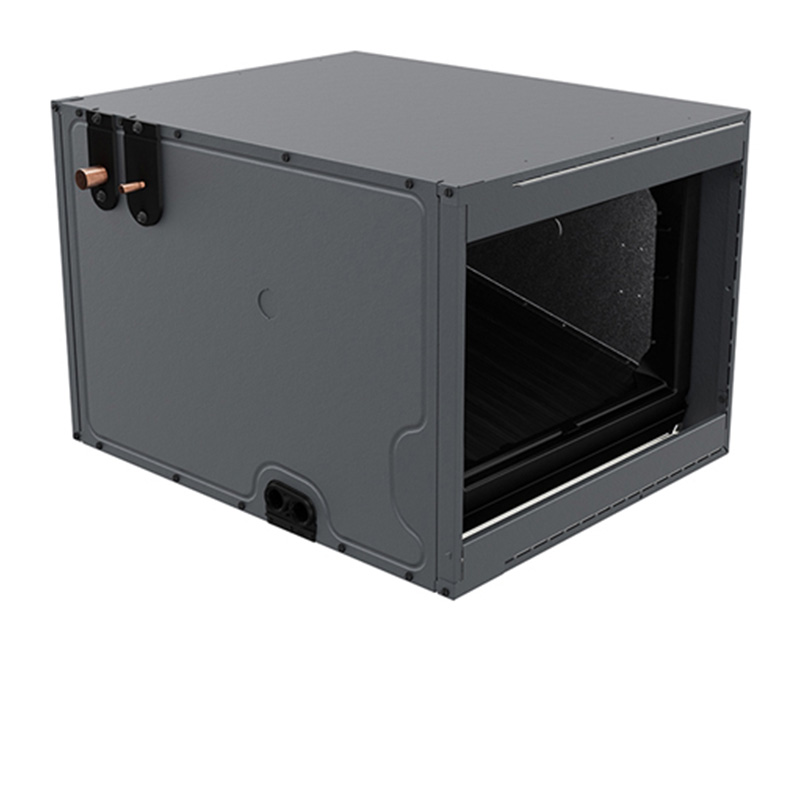
Goodman 3 Ton Dual Fuel Hybrid Heat Pump System – 80000 BTU Gas Furnace, 96% AFUE, 15.2 SEER2, Horizontal, R32
View on AC Direct see your lowest price →Check current price on AC Direct →
Key features
- 15.2 SEER2 heat pump efficiency, meeting federal minimums with a modest margin
- 96% AFUE gas furnace with 80,000 BTU capacity for high-efficiency backup heat
- Dual fuel hybrid operation: automatic switchover between heat pump and gas furnace
- Horizontal cabinet configuration designed for attic or crawlspace installations
- R-32 refrigerant, a lower global warming potential alternative to R-410A
- 3-ton capacity suited to homes approximately 1,500 to 2,000 square feet depending on climate and insulation
About this system
The Goodman 3-Ton Dual Fuel Hybrid Heat Pump System pairs a 15.2 SEER2 heat pump with an 80,000 BTU, 96% AFUE gas furnace in a horizontal configuration, making it a strong fit for homes in mixed climates where winter temperatures occasionally drop below the efficient operating range of a heat pump alone. The “dual fuel” setup lets the system automatically lean on electric heat pump operation during milder weather and switch to the gas furnace when outdoor temps fall far enough that gas becomes the cheaper and more effective heating source. That flexibility can translate to real utility savings over a straight gas or straight electric system, particularly in climate zones 4 and 5.
The horizontal cabinet orientation is purpose-built for attic or crawlspace installations where vertical clearance is limited, and the use of R-32 refrigerant is a forward-looking choice: R-32 has a lower global warming potential than the older R-410A it replaces and is increasingly the industry standard. At 15.2 SEER2, this system clears the federal minimums for most U.S. regions with a modest margin but does not reach the higher efficiency tiers of two-stage or variable-speed equipment. Buyers prioritizing upfront cost savings over long-term energy optimization will find this tier reasonable; those focused on maximum efficiency or whisper-quiet operation may want to look at higher-SEER2 options. The 96% AFUE rating on the furnace side is legitimately high and will keep gas waste minimal on the coldest days.
This system suits replacement projects in older homes with existing horizontal ductwork, vacation properties, or any application where a straightforward, competitively priced dual-fuel package is the priority. Installation quality is especially critical with Goodman equipment, so budgeting for a licensed, experienced HVAC contractor rather than the lowest bidder is not optional advice here, it is the single biggest factor in how this system performs over its lifetime.
This Goodman dual fuel system delivers a genuinely useful hybrid heating setup at a price point that undercuts comparable Carrier, Trane, and Lennox packages by 15 to 25 percent, and the 96% AFUE furnace is a real strength. The trade-off is a brand track record that shows more repair activity after year 7, a compressor lifespan that averages shorter than premium competitors, and performance that is highly sensitive to installation quality.
Overall score is the average of the five ratings above.
What we like
- Dual fuel design provides automatic, efficient switchover between electric and gas heat based on outdoor conditions
- 96% AFUE furnace minimizes gas waste on the coldest heating days
- Horizontal configuration expands installation locations to attics and crawlspaces where vertical units cannot fit
- R-32 refrigerant is lower-impact environmentally and positions the system for longer regulatory shelf life
- Priced 15 to 25 percent below comparable Carrier, Trane, and Lennox dual fuel systems
Trade-offs
- Dual-run capacitors are the most commonly reported failure point, typically requiring a 300 to 600 dollar repair
- Evaporator coil leaks appear in a meaningful share of owner reviews, a cost that can exceed capacitor repairs significantly
- Compressor lifespan averages 10 to 14 years versus 15 to 20 years for premium-brand counterparts
- A minority of owners report refrigerant leaks within the first year, usually traceable to install or initial charge issues rather than the equipment itself
What homeowners and pros say about Goodman
Owners and technicians who share feedback on Goodman equipment tend to split along familiar lines. On Google dealer review pages, Goodman systems average around 3.8 out of 5 stars across hundreds of reviews per location, with affordability cited most often as the reason buyers chose the brand. On ConsumerAffairs, the score drops to roughly 2.5 out of 5, a platform where dissatisfied owners are more likely to post, and the recurring theme there is repair costs that start climbing after about year 7. For this specific dual fuel system, those patterns are relevant: the horizontal configuration adds no particular failure risk, but the documented failure modes that follow Goodman equipment generally still apply here. Dual-run capacitor failures are the most commonly reported issue and are typically a straightforward, lower-cost fix. Evaporator coil leaks show up in a meaningful share of owner accounts and can be more disruptive and expensive. A minority of owners report refrigerant leaks in the first year, which technicians generally attribute to installation or initial charge problems rather than a defect in the equipment itself.
Experienced HVAC pros who work with Goodman equipment regularly point out that compressor longevity is where the brand most clearly trails premium competitors: averages of 10 to 14 years versus 15 to 20 years for Trane, Carrier, or Lennox systems in similar conditions. That gap matters most if you are planning to stay in the home for 15 or more years. The professionals who speak most positively about Goodman do so in the context of budget-conscious installs where they can control installation quality themselves, noting that a well-installed Goodman often performs acceptably for a decade before the cost difference between it and a premium brand starts to erode. The consistent message from both owner reviews and trade feedback is that this brand rewards careful contractor selection more than almost any other variable.
Sources: ConsumerAffairs Goodman owner reviews, AHRI Directory of Certified Product Performance, U.S. DOE appliance and equipment efficiency standards, Goodman product specification sheets.
What it costs to run
At 15.2 SEER2, cooling this 3-ton system for a typical 1200-hour cooling season at the U.S. average electricity rate of $0.17/kWh works out to roughly $483 per year in cooling, about $65 less per year than a minimum-efficiency 13.4 SEER2 unit of the same size. Your real cost depends on your climate and local rate.
Method: (36,000 BTU/hr ÷ 15.2 SEER2) × 1200 hours ÷ 1000 × $0.17/kWh. Rate source: U.S. EIA average; cooling hours: moderate-climate estimate.
How it compares
| Brand | Comparable model | SEER2 | Stage | Price position |
|---|---|---|---|---|
| Goodman | 3-Ton Dual Fuel Hybrid System (80K BTU, 96% AFUE, 15.2 SEER2, Horizontal, R-32) | 15.2 | Single-stage | Value pick |
| Carrier | Performance Series Dual Fuel (25HCB / 58TP pairing) | 15.0–16.0 | Single-stage | Typically 15 to 25 percent more than this Goodman |
| Trane | XR15 Dual Fuel (XR15 heat pump / S8X1 furnace pairing) | 15.0–16.0 | Single-stage | Typically 15 to 25 percent more than this Goodman |
| Lennox | Merit Series Dual Fuel (14HPX / ML180 pairing) | 15.0–16.0 | Single-stage | Typically 15 to 25 percent more than this Goodman |
Competitor rows are comparable single-stage units at similar efficiency; price is relative position, not a quote.
Questions about this system
How does the dual fuel switchover actually work, and can I control what temperature it switches at?
The system uses an outdoor thermostat or a communicating thermostat to monitor ambient temperature and automatically switches from heat pump to gas furnace when it becomes more cost-effective or when the heat pump loses efficiency in deep cold. Most compatible thermostats allow you to set the balance-point temperature, which is the outdoor temp at which the switchover happens, so you can tune it to your local utility rates.
Why does a horizontal configuration matter, and will it affect performance compared to a vertical unit?
Horizontal units are mechanically equivalent to vertical ones in terms of heating and cooling capacity; the cabinet orientation is purely about fitting the space where the air handler must be installed, such as an attic or side-load closet. The main installation consideration is ensuring proper condensate drainage runs correctly in a horizontal orientation, which is something your installer should verify before commissioning the system.
What can I expect from the warranty coverage on this Goodman system?
Goodman typically offers a 10-year parts limited warranty on registered systems, which covers components including the compressor, but labor is not included. Registration within a set window after installation is required to activate the full 10-year term; missing that window can reduce coverage, so completing registration promptly after your contractor finishes the job is important.
Is R-32 refrigerant harder to find or more expensive to service than R-410A?
R-32 is gaining ground in the U.S. market and is widely available through HVAC distributors, so supply is not currently a concern. Technicians do need specific training and equipment because R-32 is mildly flammable, which means not every older service tech will be set up for it; confirming your service provider is certified to work with R-32 before you call for a repair is worth doing.
Given Goodman's lower price point, how worried should I be about repair costs over the life of this system?
Dual-run capacitor failures are the most frequently reported repair for Goodman equipment and are generally low-cost fixes in the 300 to 600 dollar range. More significant concerns are evaporator coil leaks, which show up in a meaningful share of owner reviews and can cost considerably more, and a compressor lifespan that averages 10 to 14 years rather than the 15 to 20 years owners of premium brands tend to see. Budgeting for a service contract or a dedicated repair fund after year 7 is practical advice.
Specifications
| Cooling capacity | 3 Ton |
| Efficiency | 15.2 SEER2 |
| Furnace output | 80000 BTU |
| Furnace efficiency | 96% AFUE |
| Configuration | Horizontal |
| Refrigerant | R-32 |