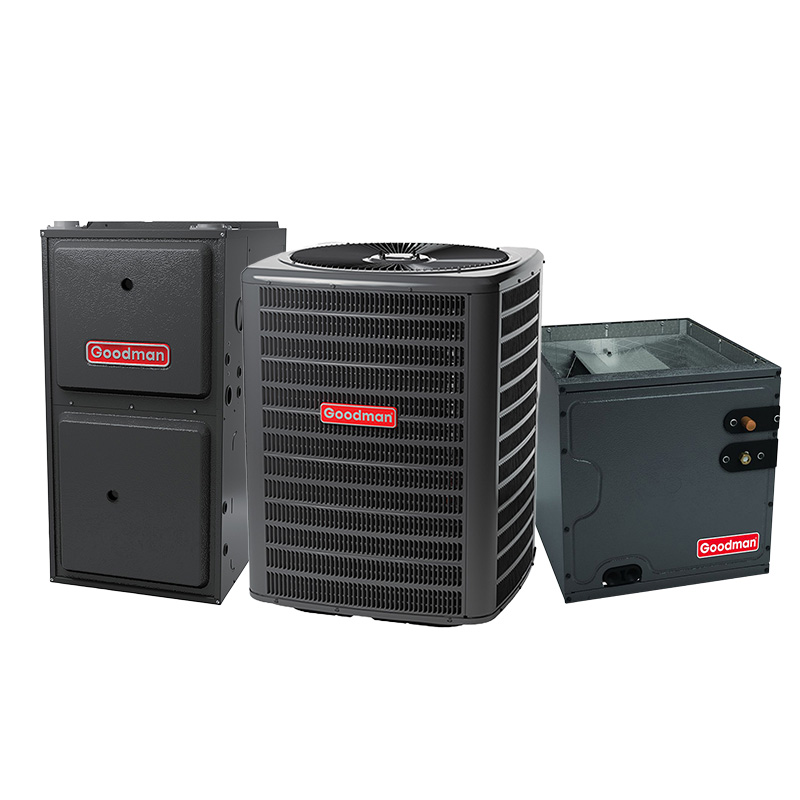
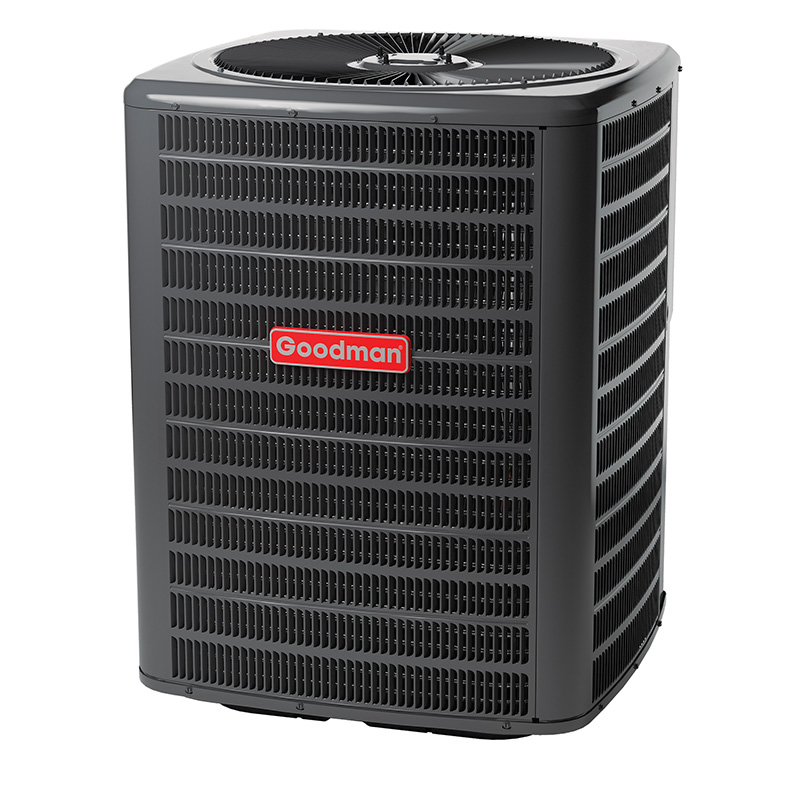
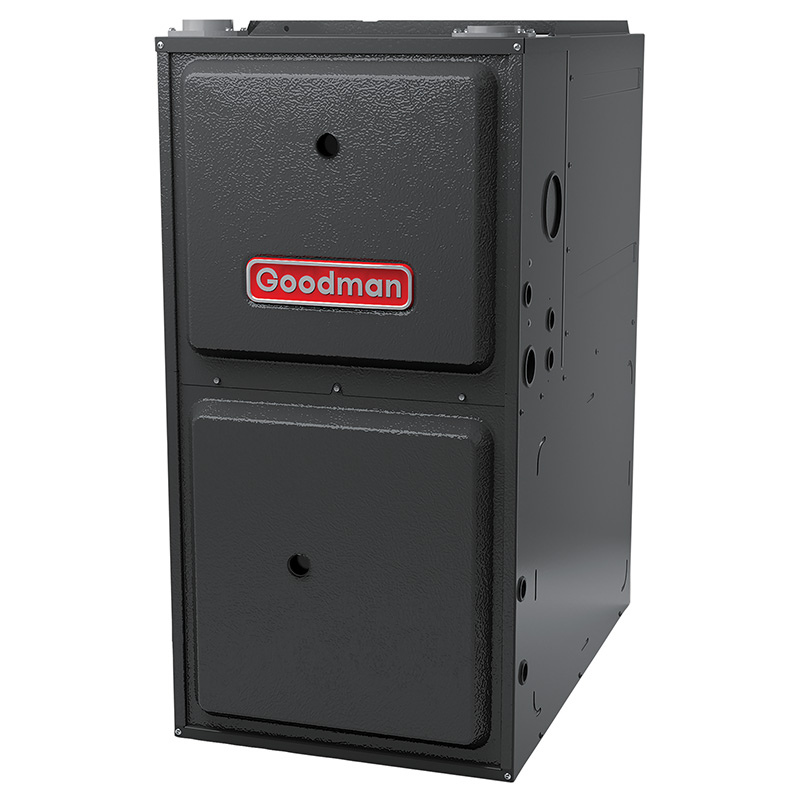
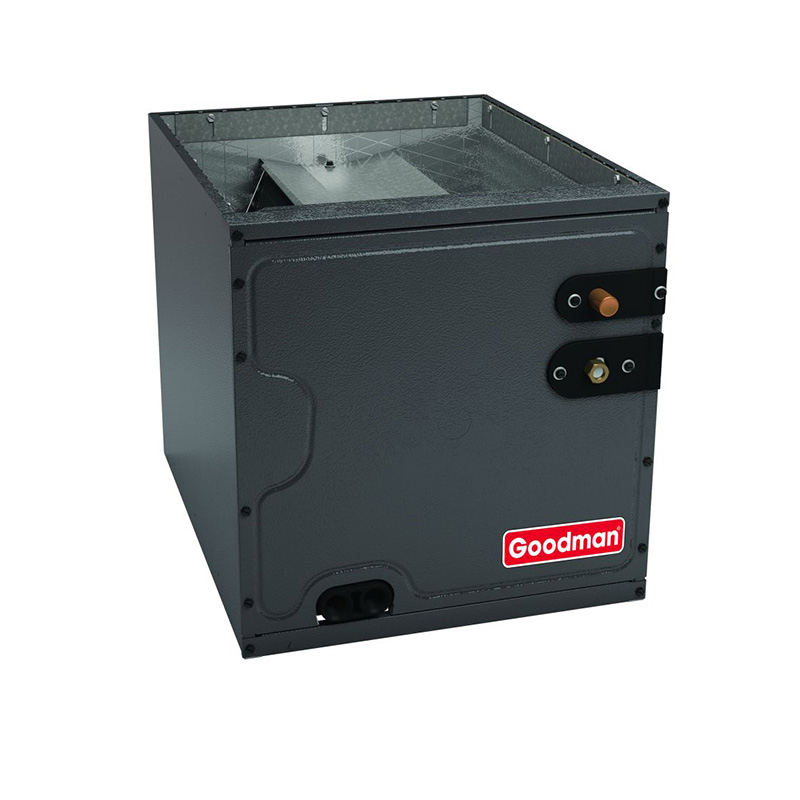
Goodman 3 Ton Dual Fuel Hybrid Heat Pump System – 80000 BTU Gas Furnace, Two Stage, 80% AFUE, Upflow, 15.2 SEER2, R32
View on AC Direct see your lowest price →Check current price on AC Direct →
Key features
- Dual fuel hybrid design: heat pump runs primary, 80,000 BTU gas furnace kicks in during cold snaps
- 15.2 SEER2 cooling efficiency meets current federal minimums for most U.S. climate zones
- Two-stage gas furnace operates at lower capacity most of the time for quieter, more even heating
- 80% AFUE furnace rating: entry-level efficiency, standard flue venting, no PVC required
- Upflow configuration suits the most common residential duct layout with a basement or utility closet install
- R-32 refrigerant: lower global-warming potential than R-410A, increasingly well-supported by service technicians
About this system
The Goodman 3-Ton Dual Fuel Hybrid Heat Pump System pairs a 15.2 SEER2 heat pump with an 80,000 BTU, two-stage, 80% AFUE upflow gas furnace. A dual fuel setup runs the heat pump as the primary heating source in mild weather, then automatically hands off to the gas furnace when outdoor temperatures drop below the switchover point, usually somewhere in the low 30s Fahrenheit. That switchover logic is where the real energy savings happen: you burn the least expensive energy source at any given moment rather than forcing the furnace to run during shoulder-season weather where a heat pump is more efficient.
The 15.2 SEER2 rating meets the 2023 federal minimums for most U.S. regions and sits at the lower tier of mid-efficiency equipment. It will outperform an older 13 or 14 SEER system noticeably, but it will not match the operating costs of a 17 or 18 SEER2 variable-speed unit. The 80% AFUE furnace is similarly entry-level for efficiency; roughly 20 cents of every dollar of gas is exhausted as heat loss. That trade-off makes this system most attractive when upfront cost is a priority and the gas backup role limits annual furnace run hours. R-32 refrigerant has a lower global-warming potential than the R-410A it replaces and is becoming the standard for new residential equipment, so serviceability should remain straightforward for years ahead.
This configuration suits homeowners in mixed-climate zones, typically IECC Zones 4 through 6, who already have gas service and want backup heat security without committing to a premium variable-speed system. It is a solid entry point for a hybrid setup, though buyers should understand that long-term performance depends heavily on a properly sized and charged installation.
This system gives homeowners a genuine dual fuel hybrid capability at a price point that is 15 to 25 percent below Carrier, Trane, and Lennox equivalents, and the two-stage furnace adds real comfort value over single-stage alternatives. The 80% AFUE and 15.2 SEER2 ratings are honest entry-level numbers, not standouts, and Goodman's documented history of capacitor failures, evaporator coil leaks, and shorter average compressor lifespan means buyers should budget for service and consider an extended warranty.
Overall score is the average of the five ratings above.
What we like
- Noticeably lower purchase price versus comparable Carrier, Trane, or Lennox dual fuel systems
- Hybrid operation reduces gas consumption during mild weather, lowering seasonal heating bills
- Two-stage furnace provides quieter low-fire operation and more consistent indoor temperatures than single-stage
- R-32 refrigerant is a forward-looking choice with good technician availability and lower environmental impact
- Upflow furnace design is the most widely compatible configuration for existing duct systems
Trade-offs
- 80% AFUE is the lowest efficiency tier available; a 96% AFUE two-stage furnace would cut gas costs substantially in cold climates
- 15.2 SEER2 delivers only baseline cooling efficiency; variable-speed systems at 17+ SEER2 offer meaningfully lower summer operating costs
- Goodman's documented failure modes, including dual-run capacitor failures, evaporator coil leaks, and compressor lifespans averaging 10 to 14 years versus 15 to 20 for premium brands, point to higher lifetime service costs
- A minority of owners have reported refrigerant leaks within the first year, typically tracing back to installation or charge issues rather than the equipment itself, which underscores how critical installer selection is
What homeowners and pros say about Goodman
Homeowners who have owned Goodman equipment tend to split into two camps. Those who had a skilled installer and kept up with maintenance, particularly annual capacitor and coil checks, often report years of trouble-free operation and point to the lower purchase price as money well spent. Those who ran into problems after year seven, which aligns with the recurring theme on ConsumerAffairs where Goodman scores around 2.5 out of 5, tend to describe escalating repair bills that eroded the upfront savings. Google dealer reviews paint a somewhat more favorable picture at around 3.8 out of 5, where affordability is consistently the most praised quality, though those reviews are collected at the point of sale rather than after years of ownership.
HVAC technicians who service Goodman equipment frequently cite dual-run capacitor failure as the single most common service call on these systems, a relatively inexpensive repair in the 300 to 600 dollar range but one that shows up with enough regularity to be worth noting. Evaporator coil leaks are a documented concern across owner reviews and carry a higher repair cost when they occur. The compressor lifespan question is worth weighing honestly: Goodman compressors have averaged 10 to 14 years in service, compared to 15 to 20 years that technicians associate with Trane, Lennox, and Carrier equipment. For a dual fuel hybrid system where the heat pump compressor runs year-round for both heating and cooling, that lifespan gap has real long-term cost implications that buyers should factor into the total cost of ownership alongside the lower sticker price.
Sources: ConsumerAffairs Goodman owner reviews, AHRI Directory of Certified Product Performance, U.S. DOE appliance and equipment efficiency standards, Goodman product specification sheets.
What it costs to run
At 15.2 SEER2, cooling this 3-ton system for a typical 1200-hour cooling season at the U.S. average electricity rate of $0.17/kWh works out to roughly $483 per year in cooling, about $65 less per year than a minimum-efficiency 13.4 SEER2 unit of the same size. Your real cost depends on your climate and local rate.
Method: (36,000 BTU/hr ÷ 15.2 SEER2) × 1200 hours ÷ 1000 × $0.17/kWh. Rate source: U.S. EIA average; cooling hours: moderate-climate estimate.
How it compares
| Brand | Comparable model | SEER2 | Stage | Price position |
|---|---|---|---|---|
| Goodman | 3-Ton Dual Fuel Hybrid Heat Pump with 80,000 BTU 80% AFUE Two-Stage Upflow Furnace | 15.2 | Two-stage | Value pick |
| Carrier | Performance Series Dual Fuel System (25HCB / 59TP6) | 15.2 | Two-stage | Typically 15 to 25 percent more than this Goodman package |
| Trane | XR15 Heat Pump with S8X2 Two-Stage Gas Furnace | 15.0–15.2 | Two-stage | Typically 15 to 25 percent more than this Goodman package |
| Lennox | Merit Series ML15XP1 Heat Pump with ML180 Gas Furnace | 15.2 | Single-stage heat pump, two-stage furnace | Typically 15 to 25 percent more than this Goodman package |
Competitor rows are comparable single-stage units at similar efficiency; price is relative position, not a quote.
Questions about this system
At what outdoor temperature does the system switch from the heat pump to the gas furnace?
The balance point is typically set during installation, often somewhere between 30 and 40 degrees Fahrenheit, and depends on your home's heat load and local energy costs. A qualified installer should calculate and configure this switchover point rather than leaving it at a factory default, because an incorrectly set balance point can increase your operating costs.
Is an 80% AFUE furnace going to cost noticeably more to operate than a high-efficiency 96% AFUE unit?
Yes, in practice. On every 100,000 BTUs of gas burned, an 80% furnace delivers 80,000 BTUs of heat while a 96% unit delivers 96,000. If the gas furnace runs frequently, that gap adds up over a heating season. In this hybrid system the furnace runs less than it would as a standalone unit, which softens but does not eliminate the efficiency penalty.
What are the most common repairs I should budget for with this Goodman system?
Dual-run capacitors are the most frequently reported failure on Goodman equipment, and replacement typically runs 300 to 600 dollars including labor. Evaporator coil leaks have shown up in a meaningful share of owner accounts and are more expensive to address. Compressors on Goodman units have averaged 10 to 14 years in service, shorter than the 15 to 20 years more commonly seen with premium brands, so a compressor replacement or full outdoor unit swap is a realistic long-term consideration.
Does this system qualify for federal tax credits or utility rebates?
The heat pump component may qualify for the federal 25C energy efficiency tax credit if it meets the current efficiency thresholds in effect for the year of installation. You should verify the specific SEER2 and HSPF2 figures against the IRS requirements and check with your local utility for additional rebate programs, as availability varies widely by region.
How important is installer choice with a Goodman dual fuel system?
Critically important. Technicians consistently identify install quality as the single biggest factor in how long a Goodman system lasts and how reliably it performs. The documented first-year refrigerant leaks in some owner reports typically trace back to installation or charging errors, not factory defects, making a licensed, experienced HVAC contractor a higher priority than any single equipment feature.
Specifications
| Cooling capacity | 3 Ton |
| Efficiency | 15.2 SEER2 |
| Furnace output | 80000 BTU |
| Furnace efficiency | 80% AFUE |
| Configuration | Upflow |
| Refrigerant | R-32 |