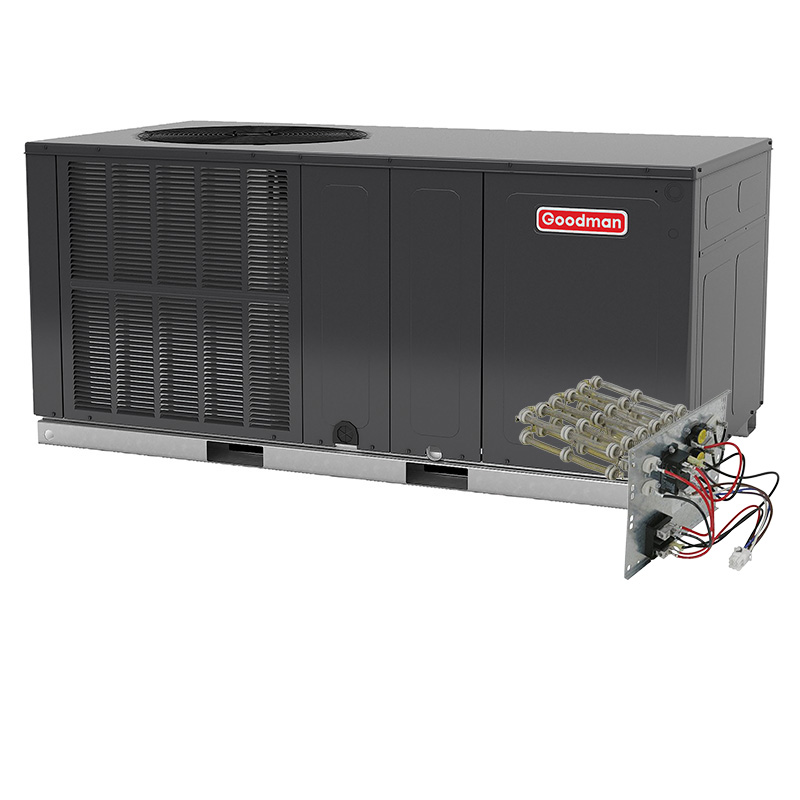
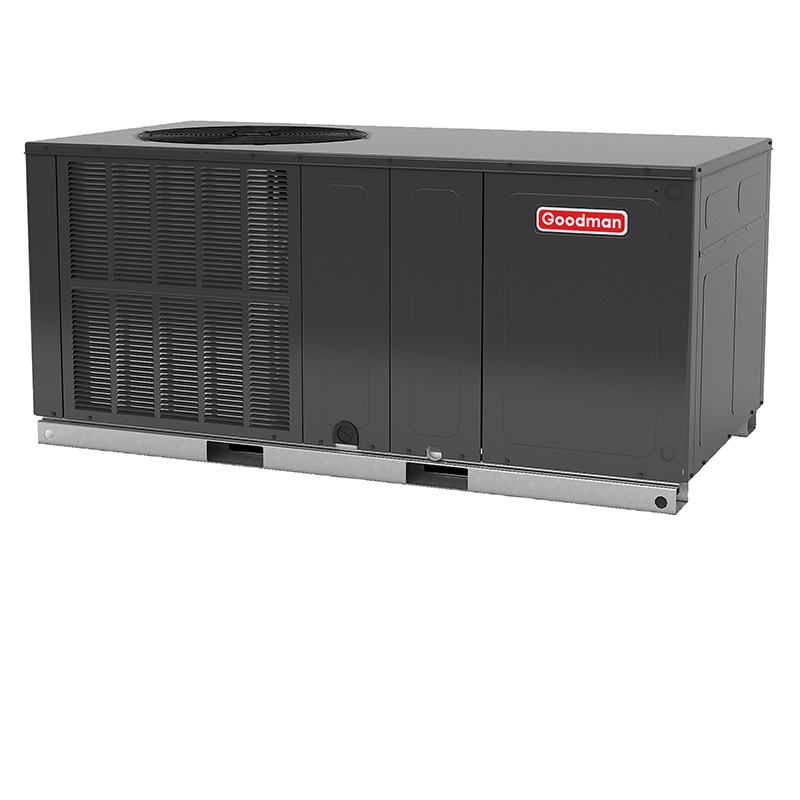
Goodman 3 Ton Package Unit Air Conditioning Cooling Only With Electric Heating | 13.4 SEER2 | Horizontal | R32
View on AC Direct see your lowest price →Check current price on AC Direct →
Key features
- 3-ton cooling capacity in a single horizontal-discharge package cabinet
- 13.4 SEER2 efficiency rating, meeting current minimum DOE standards
- R-32 refrigerant with lower global warming potential than R-410A
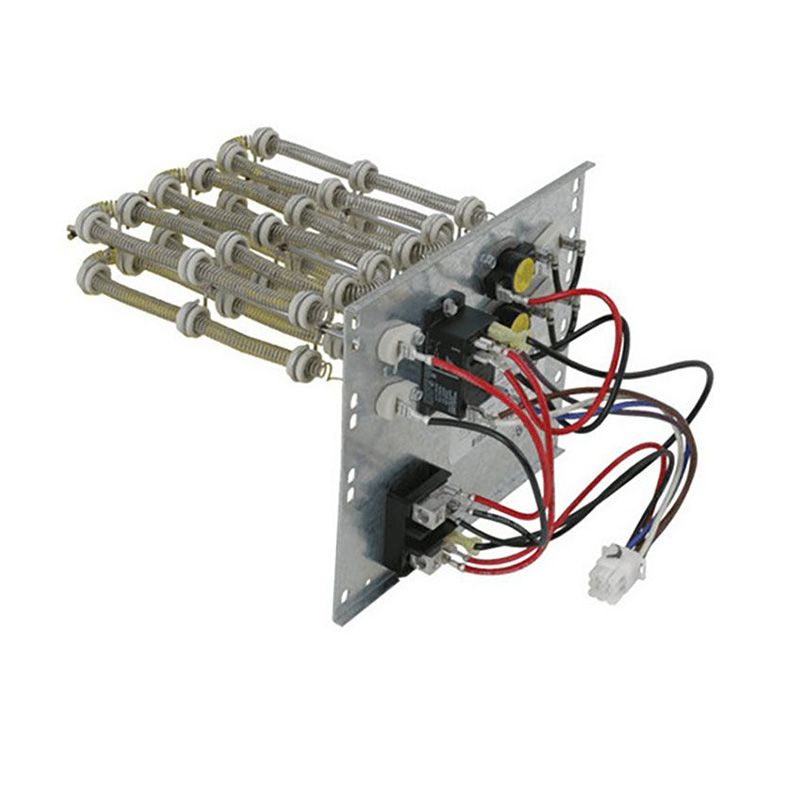
- Integrated electric heating section, no gas line or flue required
- Horizontal airflow configuration for rooftop curb or slab-side installation
- Single-stage compressor operation with straightforward controls integration
About this system
The Goodman 3-Ton Cooling-Only Package Unit with electric heat is a self-contained system designed for horizontal installation, meaning the entire cooling and heating assembly ships in a single cabinet that mounts on a rooftop curb or sits at grade on a slab with horizontal ductwork connections. That configuration makes it a natural fit for ranch-style homes, manufactured housing, light commercial spaces, and additions where a split system would require running refrigerant lines through finished walls. The R-32 refrigerant charge is a meaningful modern touch: R-32 has a lower global warming potential than R-410A and carries a higher efficiency potential per pound, which is part of how this unit reaches its 13.4 SEER2 rating under the current DOE test standard.
A 13.4 SEER2 rating lands at the baseline of today’s efficiency requirements for most U.S. climate regions, so this unit will satisfy code in the majority of installations but will not earn utility rebates aimed at higher-efficiency equipment. The electric heating section avoids the need for gas piping or a flue, which simplifies the mechanical rough-in considerably, though operating costs for electric resistance heat run higher than gas or heat pump alternatives in cold climates. Buyers who need dependable cooling and only occasional supplemental heat in a mild climate get the most value from this configuration.
This unit delivers a code-compliant, no-frills cooling and electric-heat solution for horizontal-application buildings at a price point that undercuts major-brand equivalents by a meaningful margin. The R-32 refrigerant and 13.4 SEER2 rating keep it current, though efficiency stops at the baseline rather than exceeding it. Long-term ownership costs depend heavily on installation quality and the willingness to budget for component repairs, particularly capacitors, after the first several years.
Overall score is the average of the five ratings above.
What we like
- Priced 15 to 25 percent below comparable Trane, Carrier, and Lennox package units
- R-32 refrigerant is lower-GWP and aligns with the industry's ongoing refrigerant transition
- All-in-one horizontal cabinet simplifies installation where split systems are impractical
- Electric heating section eliminates gas piping, combustion venting, and associated permits
- Widely available parts network makes capacitor and minor repairs straightforward for most technicians
Trade-offs
- 13.4 SEER2 is entry-level efficiency and will not qualify for most utility rebate programs
- Dual-run capacitor failures are the most commonly reported repair, typically surfacing after year 5 to 7
- Compressor lifespan averages 10 to 14 years versus 15 to 20 years for premium-brand compressors
- Electric resistance heating carries substantially higher operating costs than gas or heat pump alternatives in colder months
What homeowners and pros say about Goodman
Owners and dealers who leave feedback on Google rate Goodman dealers around 3.8 out of 5, and the most consistent praise centers on price: buyers report paying noticeably less for a functional, code-compliant system than they would for a Carrier, Trane, or Lennox equivalent. For a horizontal package unit like this one, that upfront savings argument is especially strong because the all-in-one cabinet already limits installation labor compared to a split system. That said, the ConsumerAffairs profile for Goodman sits at roughly 2.5 out of 5, and that channel skews toward owners who encountered problems. The recurring pattern in those complaints is repair costs that start climbing around year 7, often driven by dual-run capacitor failures, which are typically a 300 to 600 dollar fix but can feel disproportionate on a budget-positioned unit. A minority of owners also report refrigerant leaks within the first year, and technicians consistently attribute those to charge or installation issues rather than a factory defect.
HVAC professionals who work on Goodman equipment regularly tend to hold a pragmatic view: the equipment performs adequately when installed correctly and maintained on schedule, but compressor longevity averages 10 to 14 years rather than the 15 to 20 years associated with premium brands, and evaporator coil leaks appear in a meaningful share of long-term owner accounts. For this specific R-32 horizontal package unit, technicians also flag that familiarity with A2L refrigerant handling is necessary for any coil or leak service, which is worth confirming before signing a maintenance agreement. The bottom line from both camps is consistent: Goodman is a reasonable choice when the budget is the primary constraint and a qualified installer is doing the work, but it rewards owners who set aside a small annual maintenance budget rather than treating it as a set-and-forget purchase.
Sources: ConsumerAffairs Goodman owner reviews, AHRI Directory of Certified Product Performance, U.S. DOE appliance and equipment efficiency standards, Goodman product specification sheets.
What it costs to run
At 13.4 SEER2, cooling this 3-ton system for a typical 1200-hour cooling season at the U.S. average electricity rate of $0.17/kWh works out to roughly $548 per year in cooling, about $0 less per year than a minimum-efficiency 13.4 SEER2 unit of the same size. Your real cost depends on your climate and local rate.
Method: (36,000 BTU/hr ÷ 13.4 SEER2) × 1200 hours ÷ 1000 × $0.17/kWh. Rate source: U.S. EIA average; cooling hours: moderate-climate estimate.
How it compares
| Brand | Comparable model | SEER2 | Stage | Price position |
|---|---|---|---|---|
| Goodman | 3-Ton Horizontal Package Unit Cooling Only with Electric Heat | 13.4 | Single-stage | Value pick |
| Carrier | WeatherMaster 50XC Series | 14.0 | Single-stage | Typically 15 to 25 percent more than this Goodman |
| Trane | Precedent YSC Series | 14.0 | Single-stage | Typically 15 to 25 percent more than this Goodman |
| Lennox | LRP14 Series | 14.0 | Single-stage | Typically 15 to 25 percent more than this Goodman |
Competitor rows are comparable single-stage units at similar efficiency; price is relative position, not a quote.
Questions about this system
Does this unit need a special roof curb, or can it sit on a ground slab?
It can do either. The horizontal configuration supports standard rooftop curb mounting or grade-level slab installation with side-discharge ductwork. Confirm the curb dimensions match the cabinet footprint before ordering, since curb sizes vary by tonnage and manufacturer.
Why does this use R-32 instead of R-410A, and does that change how a technician services it?
R-32 is a single-component refrigerant with a lower global warming potential than R-410A, and Goodman has adopted it as part of the industry's broader refrigerant transition. Most certified HVAC technicians can work with R-32, but it does require specific handling procedures because it is mildly flammable; confirm your service contractor is familiar with A2L refrigerant protocols before scheduling any coil or leak work.
What is the most common repair this unit needs, and roughly what does it cost?
The dual-run capacitor is the most frequently reported failure point across Goodman package and split equipment. Replacement typically runs in the 300 to 600 dollar range including labor, and it is generally a same-day repair. Evaporator coil leaks and refrigerant leaks are reported less often but carry higher repair costs.
Will 3 tons be enough cooling for my home?
Three tons handles roughly 1,500 to 2,100 square feet in a moderately insulated home, though the right size depends on your climate zone, ceiling height, window area, and insulation quality. An oversized unit will short-cycle and leave humidity problems; an undersized one will run constantly and still not cool adequately. Ask your installer to perform a Manual J load calculation before ordering.
How does the electric heat strip compare to a gas furnace section for winter operating costs?
Electric resistance heat converts electricity to heat at roughly 100 percent efficiency, but electricity typically costs two to three times more per BTU than natural gas in most U.S. markets, making it more expensive to operate for frequent winter heating. This configuration makes the most economic sense where winters are mild, heating hours are low, or gas service is unavailable.
Specifications
| Cooling capacity | 3 Ton |
| Efficiency | 13.4 SEER2 |
| Configuration | Horizontal |
| Refrigerant | R-32 |